
Amaran
is
effective
as
an
intimate,
well
researched
piece
of
storytelling,
but
does
not
break
any
new
ground,
observes
Arjun
Menon.
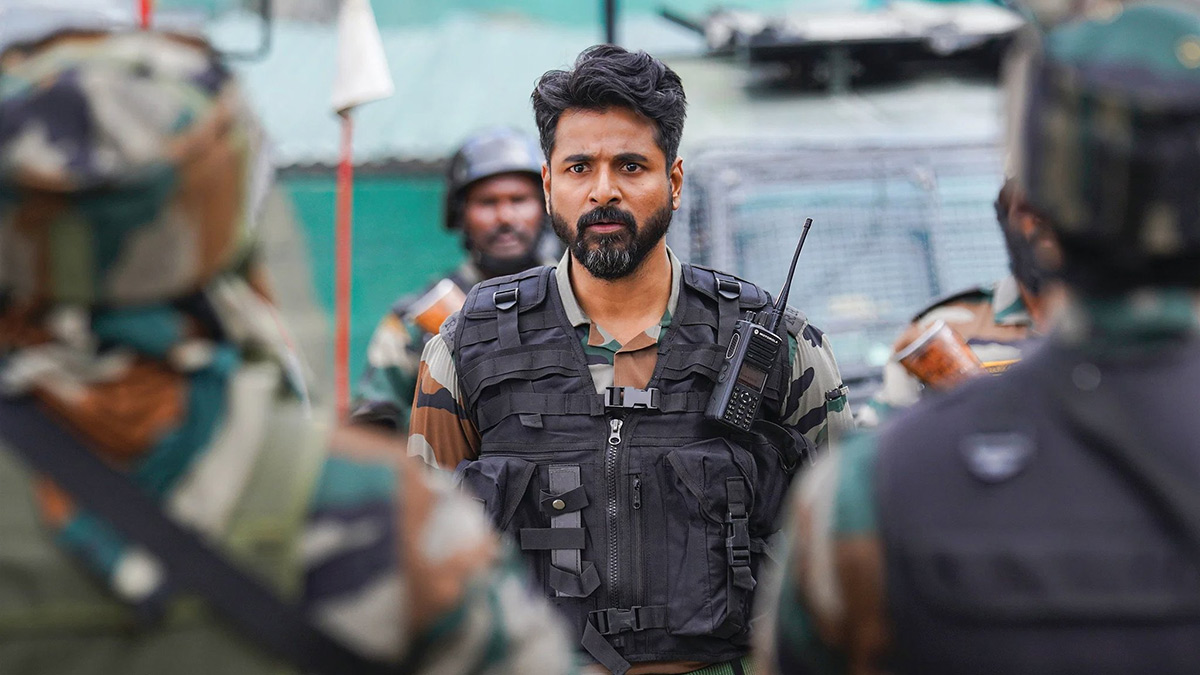
Amaran,
based
on
the
real
life
story
of
Major
Mukund
Varadarajan
and
his
wife
Indu
Rebecca
Varghese,
and
their
one-of-a-kind
journey,
treads
familiar
ground
and
still
manages
to
elevate
certain
anchor
points
in
the
life
of
an
army
officer
with
an
air
of
subdued
dignity.
Director
Rajkumar
Periasamy
is
interested
in
the
impact
of
the
details
that
are
often
bygone
in
films
revolving
around
the
military
and
armed
forces.
The
constant
need
for
sensationalism
and
chest
thumping
patriotism
has
hindered
the
narrative
possibilities
of
army
movies.
But
there
is
an
intimate
swerve
in
the
way
the
film
treats
this
subject.
The
film
is
framed
through
the
viewpoint
of
Indhu
Rebecca
Varghese
(Sai
Pallavi),
the
dutiful
wife
of
Major
Varadarajan
(Siva
Karthikeyan),
who
introduces
us
to
their
story
through
a
voiceover
that
underlines
the
nature
of
their
relationship.
Amaran
does
not
break
any
new
ground
in
terms
of
the
routine
construction
or
formal
qualities
associated
with
the
‘biopic’.
But
there
is
a
keen
attention
to
the
way
the
makers
have
pledged
loyalty
to
the
real
life
story
and
we
can
see
the
reverence
for
the
subject
sweeps
through
the
film’s
predictable
story.
Having
said
that,
the
film
does
merely
gleam
through
the
major
events
in
the
life
of
Major
Mukund,
whose
real
life
valorous
personal
journey
is
limited
by
the
mundane,
self
congratulatory
film-making.
There
are
details
like
an
army
man’s
wife
forced
to
listen
to
an
ongoing
ambush
with
no
way
to
know
whether
her
husband
is
alive
or
not
as
their
phone
call
gets
interrupted
with
the
action
playing
out
in
the
background.
Or
the
confused
soldier
and
his
wife
discussing
the
segregation
of
his
meagre
savings
on
a
video
call
and
aspiring
to
buy
a
flat
for
themselves.
Or
additions
like
the
‘half
widow’
gate,
where
missing
men’s
wives
are
forced
to
wait
in
hope
of
news
about
their
husbands
who
have
crossed
over
the
Jammu
and
Kashmir
border.
Or
the
way
the
hero
and
team
are
punished
for
an
intuitive
action
through
an
outreach
programme
where
they
are
asked
to
help
the
villagers
out
in
their
day-to-day
affairs,
a
mission
that
they
accept
wholeheartedly.
All
these
glorious
details
are
often
left
behind
by
our
action-centric
film
culture
where
plot
progression
is
mistaken
for
momentum.
But
there
is
a
dearth
of
conviction
in
the
way
the
film
relies
on
the
well
established
cliches
of
military
films.
You
see
the
rough
dialogues
and
awkwardly
conceived
high
points
that
are
not
registered
due
to
the
film’s
tonal
imbalance.
Rajkumar
comes
up
with
scenes
to
establish
the
camaraderie
and
jovial
relationships
amongst
the
Rashtriya
Rifles,
the
group
led
by
the
hero
that
vary
in
effectiveness.
There
is
a
sequence
which
begins
with
the
team
en
route
a
covert
mission,
only
to
be
lost
in
a
random
two
minute
discussion
about
cinema
between
the
tensed
group
and
titles
like
Enthiran
and
Thuppakki
are
thrown
about
and
a
brief
line
about
the
hero’s
adamant
insistence
to
watch
a
film
back
home,
only
in
Tamil,
when
only
an
Hindi
language
version
was
available.
These
sort
of
introspective
moments
are
scarce
and
the
poor
writing
and
staging
of
the
sequence
deprives
the
effect
the
makers
are
trying
to
establish.
For
instance,
such
a
revelation
in
between
the
harsh
realities
of
an
impending
terror
attack
is
the
most
vulnerable
space
to
situate
your
hero,
in
a
place
of
seeming
openness
that
the
film
never
explores
any
further.
You
get
a
glimpse
into
what
kind
of
man
lies
beneath
the
crusty
yet
amiable
exterior
of
the
hero.
But
every
other
conflict
is
solved
with
a
generic
alternative.
Sai
Pallavi
gives
an
earnest
yet
slightly
misjudged
performance.
She
is
clearly
relishing
the
part
and
finding
new
ways
to
connect
the
void
left
by
the
writing,
in
setting
up
the
awkward
energy
of
the
romance
conceived
by
the
makers.
Siva
Karthikeyan
is
effective
as
Major
Mukund
and
is
asked
to
go
to
places
where
he
has
been
rarely
allowed
to
by
directors
in
the
past,
thanks
to
the
nature
of
films
he
has
attached
himself
to
till
now.
The
actor
seems
up
to
the
task
but
the
film
sees
him
as
cipher
to
reflect
the
inspiring
life
of
the
real
Major
Mukund
and
is
left
with
some
fiery
speeches
and
impressive
physical
prowess.
You
tear
up
towards
the
end
for
the
foregone
conclusion
owing
to
the
inherent
strength
of
real
life
‘major’
Mukund
and
his
wife’s
ultimate
sacrifice
alone,
and
not
entirely
due
to
the
film’s
dramatic
rigour.
Cardboard
villains
and
one
note
representation
of
geo-political
conflicts
in
and
around
J&K
does
not
help
either.
But
the
decision
to
underplay
the
patriotic
fervour
associated
with
this
sub-genre
of
films
is
a
welcome
sign.
The
film
rarely
makes
noise
around
the
notion
of
nationhood
and
overt-preachy
patriotism
as
the
makers
understand
that
this
is
ultimately
the
story
of
a
brave
soldier,
who
laid
down
his
life
for
his
country
above
anything
else.
The
romance
takes
the
central
stage
and
we
get
a
couple
navigating
the
contours
of
a
bumpy
yet
one-of-a-kind
romance
that
sees
no
barriers,
even
post
the
ultimate
goodbye.
The
name
of
Major
Mukund
will
shine
on
forever,
but
it
has
to
be
seen
whether
this
on
screen
iteration
of
the
braveheart
will
shine
through
with
the
same
intensity
over
the
years.
Amaran
Review
Rediff
Rating:
