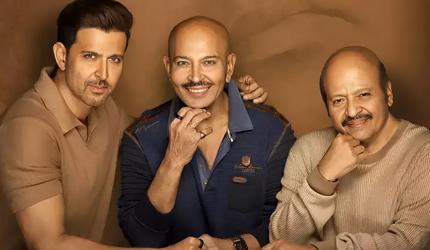
The
Roshans
is
somewhat
like
leafing
through
a
glossy
coffee
table
book
full
of
trivia
—
no
depth,
but
such
a
shiny
collection
of
memories,
observes
Deepa
Gahlot.
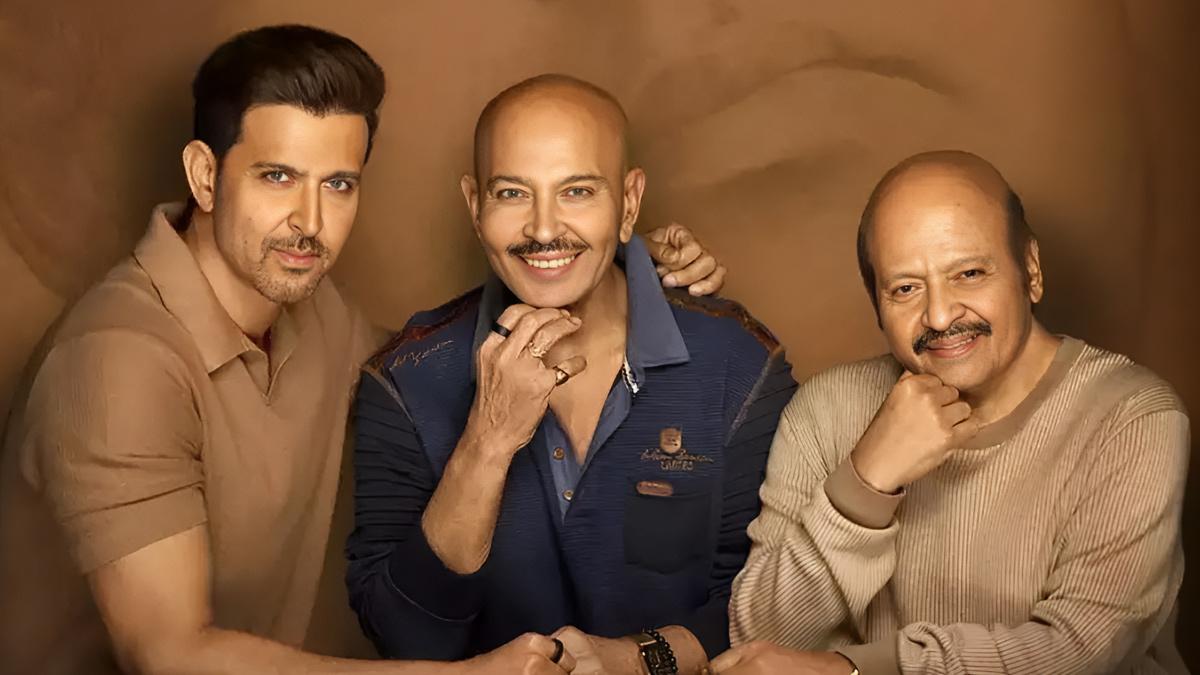
The
nepotism
debate
is
dialed
down
quite
a
bit,
since
a
strong
case
is
made
for
the
passing
on
of
creative
genes
from
one
generation
to
the
next.
The
other
advantage
of
producing
a
docuseries
on
one’s
own
family
is
that
there
is
unlimited
access
to
the
cream
of
the
film
industry,
all
lined
up
to
share
memories,
impressions,
anecdotes
and,
of
course,
unstinted
praise.
With
audiences
having
woefully
short
memories,
it
is
important
to
record
the
achievements
of
the
greats,
and
it
is
a
good
thing
that
documentary
series
like
The
Romantics
(on
Yash
Chopra),
Angry
Young
Men
(on
Salim-Javed)
and
now,
The
Roshans,
were
produced.
But
a
slightly
more
analytical
and
less
hagiographical
approach
would
have
a
greater
historical
value
—
even
just
placing
the
work
of
the
subjects
of
the
documentary
within
a
social
context,
and
looking
more
closely
at
their
process
of
working.
That
said,
what
this
four-part
series,
directed
by
Shashi
Ranjan,
shows
is
a
golden
era,
when
a
man
could
come
in
from
nowhere,
get
a
chance
to
prove
his
talent,
and
be
absorbed
into
the
great
tribe
that
was
the
film
industry.
There
must
have
been
camps
and
cliques
even
when
Roshan
Lal
Nagrath
came
to
Mumbai
to
become
a
music
composer.
It
was
a
struggle,
and
had
director
Kidar
Sharma
not
reposed
faith
in
the
young
composer,
he
would
have
returned
to
his
hometown
after
his
first
flop,
Neki
Aur
Badi
(1949).
When
his
producers
wanted
to
change
the
music
director
for
Sharma’s
next
film,
Baawre
Nain
(1950),
the
director
refused.
This
film
was
a
hit,
and
Roshan’s
career
took
off.
It
is
delightful
to
get
such
nuggets
of
information,
such
as
Rakesh
Roshan
being
born
in
music
directors
Husnlal-Bhagatram’s
garage,
where
Roshan
and
his
wife,
singer
Ira,
lived
before
he
became
successful
enough
to
buy
his
own
home.
There
is
also
the
phenomenon
of
true
music
fandom,
when
filmmakers
as
well
as
listeners
understood
the
intricacies
of
a
hit
composition.
This
is
voiced
not
just
by
younger
composers
(Anu
Malik,
Vishal
Dadlani)
and
singers
(Asha
Bhosle,
Suman
Kalyanpur)
but
also
connoisseurs
like
Javed
Akhtar
and
Sanjay
Leela
Bhansali.
The
interviews
and
music
clips
from
various
films
reveal
the
real
depth
of
Roshan’s
artistry.
What
the
show
could
have
done
without
is
the
clumsy
enactments
using
actors
—
viewers
are
quite
capable
of
visualising
a
scene
as
it
is
narrated.
Roshan
passed
away
at
just
50,
passing
the
baton
of
music
to
his
son
Rajesh.
Rajesh
worked
as
an
assistant
to
Laxmikant-Pyarelal
for
a
few
years
before
branching
off
on
his
own
and
building
up
a
collection
of
hits
in
films
like
Julie,
Des
Pardes,
Lootmaar
and
Kunwara
Baap.
He
scored
music
for
many
of
his
brother
Rakesh
Roshan’s
films
too.
Very
often,
the
current
generation
dances
to
remixed
tunes
without
bothering
about
the
original
composer,
and
Mungda
could
be
counted
as
one
of
those
all-time
favourite
dance
numbers.
Rajesh
Roshan
has
had
a
fairly
successful
career
but
admits
that
he
never
managed
to
do
what
it
takes
to
get
more
work.
He
never
went
to
a
producer
to
pitch
for
composing
assignments,
so
even
with
his
expertise,
he
did
not
reach
the
heights
he
could
have
with
more
A-list
projects.
Rakesh
Roshan
is
honest
enough
to
admit
that
he
did
not
make
it
as
an
actor,
despite
his
talent
and
good
looks.
He
found
his
forte
as
a
filmmaker
and
has
given
Hindi
cinema
some
genre-breaking
films
like
the
reincarnation
drama,
Karan
Arjun,
sci-fi
and
superhero
films
like
Koi…
Mil
Gaya
and
Krrish,
besides,
of
course,
launching
his
son
Hrithik
Roshan
in
Kaho
Naa…
Pyaar
Hai,
which
made
him
a
craze
with
young
audiences.
Rakesh
Roshan
was
also
shot
at
in
an
underworld
hit
and
recovered
from
cancer.
His
indomitable
will
and
inner
strength
are
spoken
about
with
admiration
by
wife
Pinky
and
Hrithik.
Hrithik
Roshan’s
career
from
being
as
assistant
to
his
father
to
getting
overnight
superstardom,
and
then
tackling
difficult
roles
in
so
many
films
is
something
that
is
well-documented
in
fanzines.
Rakesh
and
Rajesh
Roshan’s
wives
and
the
other
children
and
grandchildren
make
an
appearance.
Hrithik’s
failed
marriage
and
current
romance
are
judiciously
kept
out.
Obviously,
the
best
stories
come
from
the
stars
who
worked
with
them.
Shah
Rukh
Khan’s
quotes
are
full
of
warmth
and
wit,
like
turning
down
Karan
Arjun
because
he
did
not
want
to
play
yet
another
romantic
hero,
then
nudging
Aamir
Khan
out
and
snapping
it
up.
Both
Shah
Rukh
and
his
co-star
Salman
Khan
gave
the
director
a
lot
of
trouble
because
they
could
not,
or
did
not,
want
to
understand
his
way
of
working.
After
the
film
turned
out
to
be
a
hit,
at
least
SRK
apologised.
Salman
does
not
appear
in
the
series.
The
show
is
crammed
with
talking
heads.
Besides
Asha
Bhosle,
Javed
Akhtar,
SRK
and
Bhansali,
there
are
Karan
Johar,
Farhan
Akhtar,
Zoya
Akhtar,
Madhuri
Dixit,
Anil
Kapoor,
Jackie
Shroff,
Priyanka
Chopra,
Preity
Zinta,
Ranbir
Kapoor,
Vicky
Kaushal,
Tiger
Shroff,
Udit
Narayan,
Alka
Yagnik,
Kumar
Sanu,
Sachin-Jigar…
so
many
industry
lights
shining
on
this
one
gifted
family.
Add
to
this
archival
interview
footage
and
family
moments,
and
it
is
an
entertaining
package.
It’s
somewhat
like
leafing
through
a
glossy
coffee
table
book
full
of
trivia
—
no
depth,
but
such
a
shiny
collection
of
memories.
The
Roshans
is
streaming
on
Netflix.
The
Roshans
Review
Rediff
Rating: