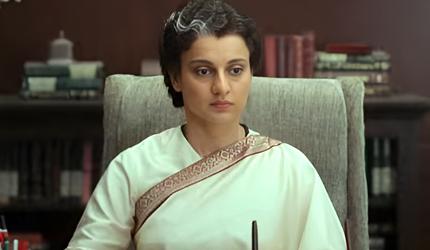
Kangana
Ranaut’s
decline
as
an
actor
feels
complete,
observes
Utkarsh
Mishra.
What
would
you,
my
fellow
Indian,
envision
if
I
asked
you
to
imagine
a
dramatic
depiction
of
the
sequence
when
Prime
Minister
Indira
Gandhi
declared
war
on
Pakistan
in
1971?
Whatever
you
picture,
I’m
certain
it
wouldn’t
involve
Opposition
leaders
—
including
Atal
Bihari
Vajpayee
(even
though
he
was
a
poet)
—
breaking
into
song,
thumping
their
desks
in
Parliament,
and
later
being
joined
by
Treasury
Bench
members.
Nor
would
it
include
the
legendary
General
Sam
Manekshaw
singing
along
with
his
men
in
the
War
Room,
thumping
their
chests,
and
saluting
the
Indian
map.
(Thankfully,
Sam
is
not
around
to
witness
this.)
Yet,
that
is
how
Bharatiya
Janata
Party
MP
Kangana
Ranaut
portrays
this
chapter
in
Emergency,
her
biopic
of
India’s
first
woman
prime
minister,
finally
released
after
a
protracted
battle
with
the
censors.
It’s
surprising
the
censors
didn’t
demand
this
scene
be
cut.
The
film
leaves
you
grasping
for
the
mot
juste
to
describe
it.
Nobody
expects
Bollywood
to
produce
biographical
or
historical
films
on
par
with
Lincoln
(2012)
or
All
the
Way
(2016).
But
the
industry
has
evolved
enough
to
at
least
spare
us
the
agony
of
seeing
historical
figures
breaking
into
song
during
pivotal
moments.
And
what
is
with
the
deafening
background
score
that
sometimes
even
drowns
out
the
dialogue?
It’s
futile
to
try
separating
fact
from
fiction
in
this
film.
The
performances
are
so
superficial
that
they
don’t
warrant
a
discussion
of
nuance,
or
the
lack
thereof.
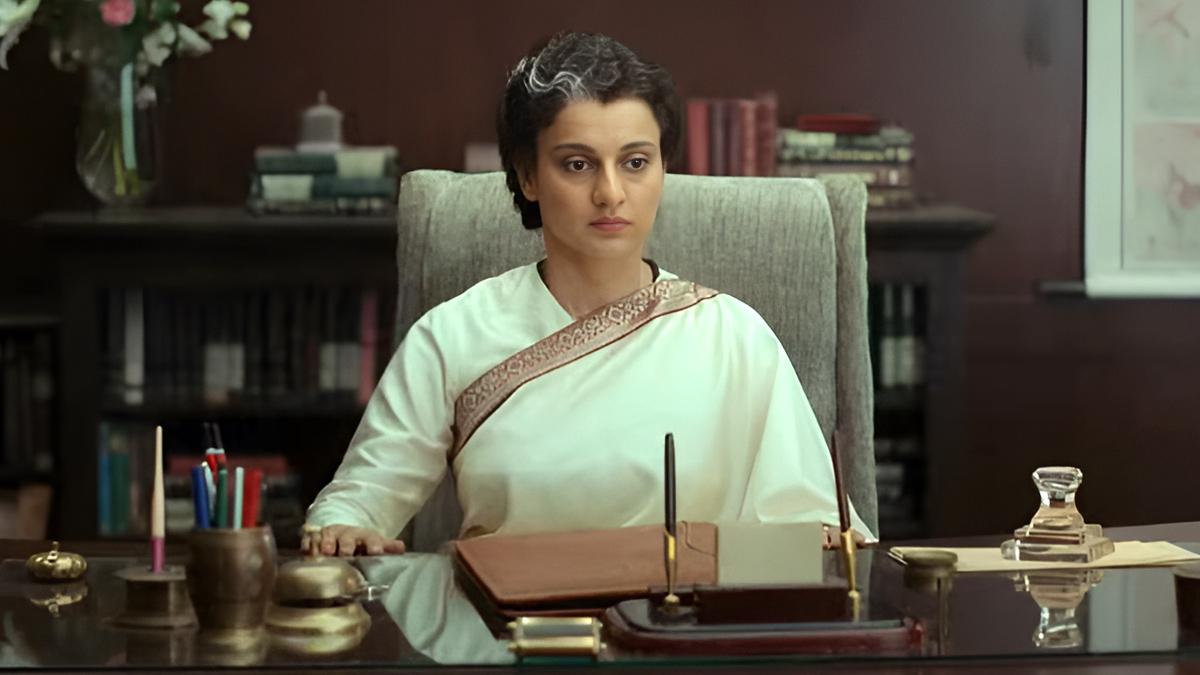
Kangana
Ranaut’s
decline
as
an
actor
feels
complete.
In
the
age
of
social
media,
most
of
us
have
watched
archival
footage
of
Mrs
Gandhi’s
interviews
and
speeches.
The
resolute,
decisive
eyes
and
confident
demeanor
are
glaringly
absent
in
Ranaut’s
portrayal.
Instead,
her
character
is
almost
always
teary-eyed
and
lacking
in
confidence.
It
is
not
always
necessary
to
burst
into
tears
to
convey
that
a
character
is
grappling
with
deep
internal
struggle.
Ranaut’s
attempt
at
voice
modulation
to
sound
like
Mrs
Gandhi
falls
completely
flat,
much
like
Anupam
Kher’s
portrayal
of
Dr
Manmohan
Singh
in
The
Accidental
Prime
Minister.
Her
gestures
often
appear
impulsive
or
abrupt,
further
detracting
from
the
authenticity
of
the
role.
The
overdramatisation
of
historical
events
is
almost
unbearable.
For
instance,
how
do
you
depict
Indira
Gandhi
regretting
the
excesses
of
the
Emergency
—
if
she
ever
truly
did?
Surely,
making
her
see
herself
as
a
witch
in
the
mirror
wouldn’t
even
make
it
to
your
top
10
ideas!
Sanjay
Gandhi,
played
by
Vishak
Nair,
is
portrayed
as
the
obvious
villain.
While
stories
about
his
rash
behaviour
and
short
temper
are
well
known,
the
film
takes
liberties
by
exaggerating
his
portrayal.
Anupam
Kher
as
Jayaprakash
Narayan
and
Shreyas
Talpade
as
Atal
Bihari
Vajpayee
are
the
film’s
saving
grace
though
Talpade’s
performance
doesn’t
quite
live
up
to
his
full
potential.
The
only
moment
where
the
film
appears
to
find
its
footing
is
when
Ranaut’s
Indira
visits
a
village
in
Bihar
to
meet
peasants
tormented
by
landlords.
But
even
this
fizzles
out
as
the
film
abruptly
jumps
to
her
swearing-in
in
1980,
glossing
over
significant
events
in
between.
Other
crucial
chapters
of
history
are
treated
with
similar
haste.
The
film
opens
with
overt
Nehru-baiting,
depicting
how
he
supposedly
‘surrendered’
to
the
Chinese.
This
serves
only
to
juxtapose
Indira
Gandhi’s
resolve
to
not
‘look
defeated’
like
her
father,
framing
her
as
the
kind
of
‘ruler’
her
grandfather
envisioned.
But
this
intent
is
undermined
by
Ranaut’s
portrayal
of
Mrs
Gandhi,
as
described
earlier.
Furthermore,
if
the
goal
was
to
emphasise
Indira’s
determination
to
avoid
surrendering
like
Nehru,
the
film
could
have
included
other
significant
historical
episodes,
such
as
the
1967
skirmishes
at
Nathu
La
or
the
integration
of
Sikkim
into
India
in
1975,
which
left
the
Chinese
second-guessing.
The
film
progresses
to
portray
a
weak
and
broken
Indira
Gandhi
rising
to
power,
her
sinister
attempts
to
consolidate
it,
her
eventual
regret
and
self-reflection
and
finally,
her
redemption
through
public
engagement
and
martyrdom.
It
is
true
that
the
Congress
Syndicate
chose
Indira
over
Morarji
Desai
in
1966,
believing
her
to
be
‘pliable
and
malleable’.
But
as
history
shows,
she
proved
them
all
wrong
by
breaking
the
party
and
putting
the
syndicate
in
its
place.
Unfortunately,
this
crucial
detail
is
glaringly
absent
from
the
film.
The
movie
would
have
been
far
more
impactful
had
it
focused
solely
on
the
Emergency.
By
attempting
to
cover
the
entirety
of
Mrs
Gandhi’s
life
and
career,
the
film
glosses
over
the
very
subject
it
claims
to
explore.
The
details
about
the
Emergency
presented
in
the
movie
are
already
well-known:
Buses
and
trains
running
on
time,
opposition
leaders
jailed,
censorship
imposed,
and
forced
sterilisation
campaigns.
The
film
does
highlight
the
trigger
for
the
Emergency
—
the
1975
Allahabad
high
court
verdict
that
found
Indira
Gandhi
guilty
of
‘electoral
malpractices’
and
barred
her
from
holding
elected
office
for
six
years.
But
other
significant
details,
such
as
the
widespread
JP
Movement,
the
efforts
to
replace
state
governments
in
Gujarat
and
Bihar,
intelligence
inputs
and
Jayaprakash
Narayan’s
call
to
the
armed
forces
to
disobey
orders,
are
all
glossed
over.
There
is,
however,
one
silver
lining.
The
film
emphasises
that
gagging
the
media,
instilling
fear
in
citizens
to
prevent
them
from
speaking
freely,
and
suppressing
fundamental
rights
are
reprehensible
actions.
It
subtly
reminds
viewers
that
beautifying
cities
or
ensuring
punctual
trains
cannot
compensate
for
the
erosion
of
constitutional
and
fundamental
rights.
If
nothing
else,
this
is
a
valuable
lesson
for
the
audience
to
take
away.
That
said,
even
if
the
film
chose
to
take
the
trajectory
it
did,
it
could
have
been
executed
far
better.
In
fact,
almost
any
other
approach
would
have
been
an
improvement.
Emergency
Review
Rediff
Rating: