‘I
am
fascinated
by
the
lurking
presence
of
the
tiger.’
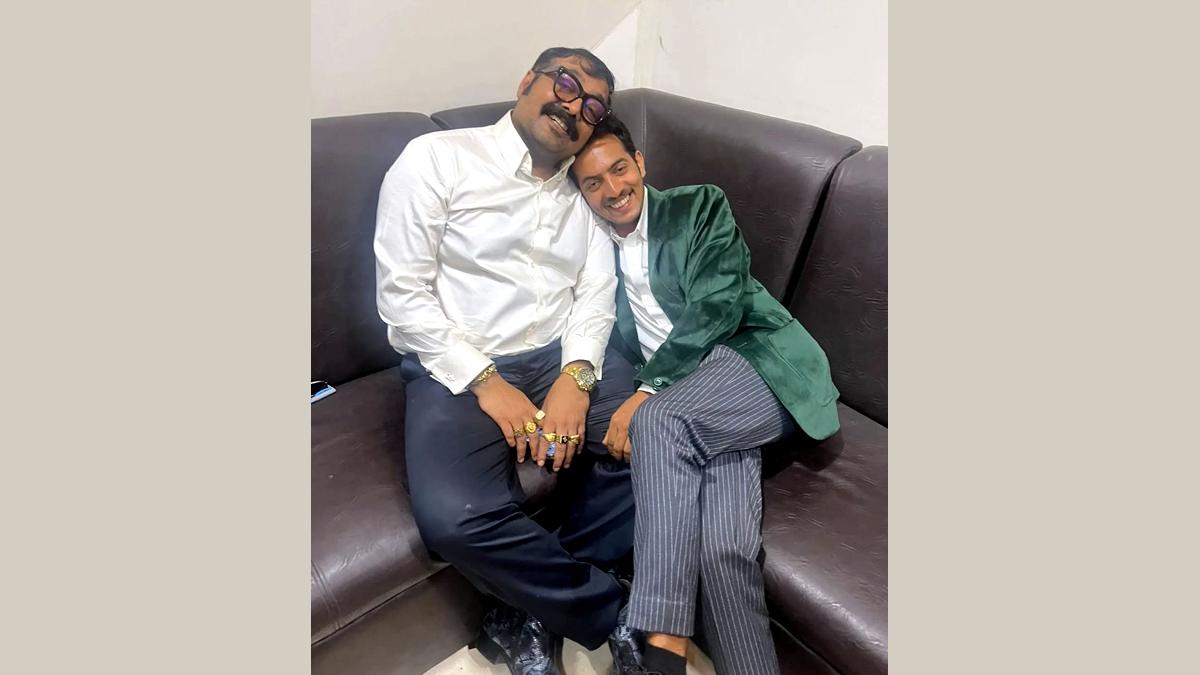
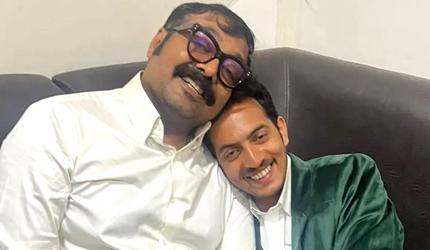
Natesh
Hegde
with
Anurag
Kashyap,
who
his
co-produced
his
film
Vaghachipani.
Photograph:
Kind
courtesy
Natesh
Hegde/Instagram
Natesh
Hegde’s
full-length
Kannada
feature
film,
Vaghachipani,
is
one
of
the
’30
films
from
five
continents’
and
the
first
Kannada
film
being
chosen
in
the
Forum
Main
category
at
the
75th
International
Film
Festival
Berlin,
popularly
called
Berlinale,
scheduled
from
February
13
to
23.
Vaghachipani
is
Hegde’s
second
film.
His
first
feature
film
Pedro
—
which
received
acclaim
from
global
film
festivals
and
is
produced
by
Rishabh
Shetty
—
is
yet
to
see
a
theatrical
release
in
India.
Even
the
Bengaluru
International
Film
Festival
is
yet
to
screen
the
film.
But
it
is
Pedro
which
helped
him
find
his
producer
for
Vaghachipani
in
Anurag
Kashyap,
who
in
turn
brought
in
Ranjan
Singh,
who
had
produced
Kashyap’s
Kennedy.
“Anurag
and
I
met
in
a
film
festivals
screening
Pedro,
and
we
became
friends.
He
told
me
he
wanted
to
be
associated
with
my
next
project.
That
is
how
he
ended
up
co-producing
Vaghachipani,”
Hegde
tells
PTI.
Pedro
also
introduced
Hegde
to
to
Singapore-based
Jeremy
Chua,
the
producer
of
Inside
Yellow
Cocoon
Shell,
which
won
the
Camera
d’Or
at
the
77th
Cannes
Film
Festival.
Chua
was
happy
to
co-produce
Vaghachipani.
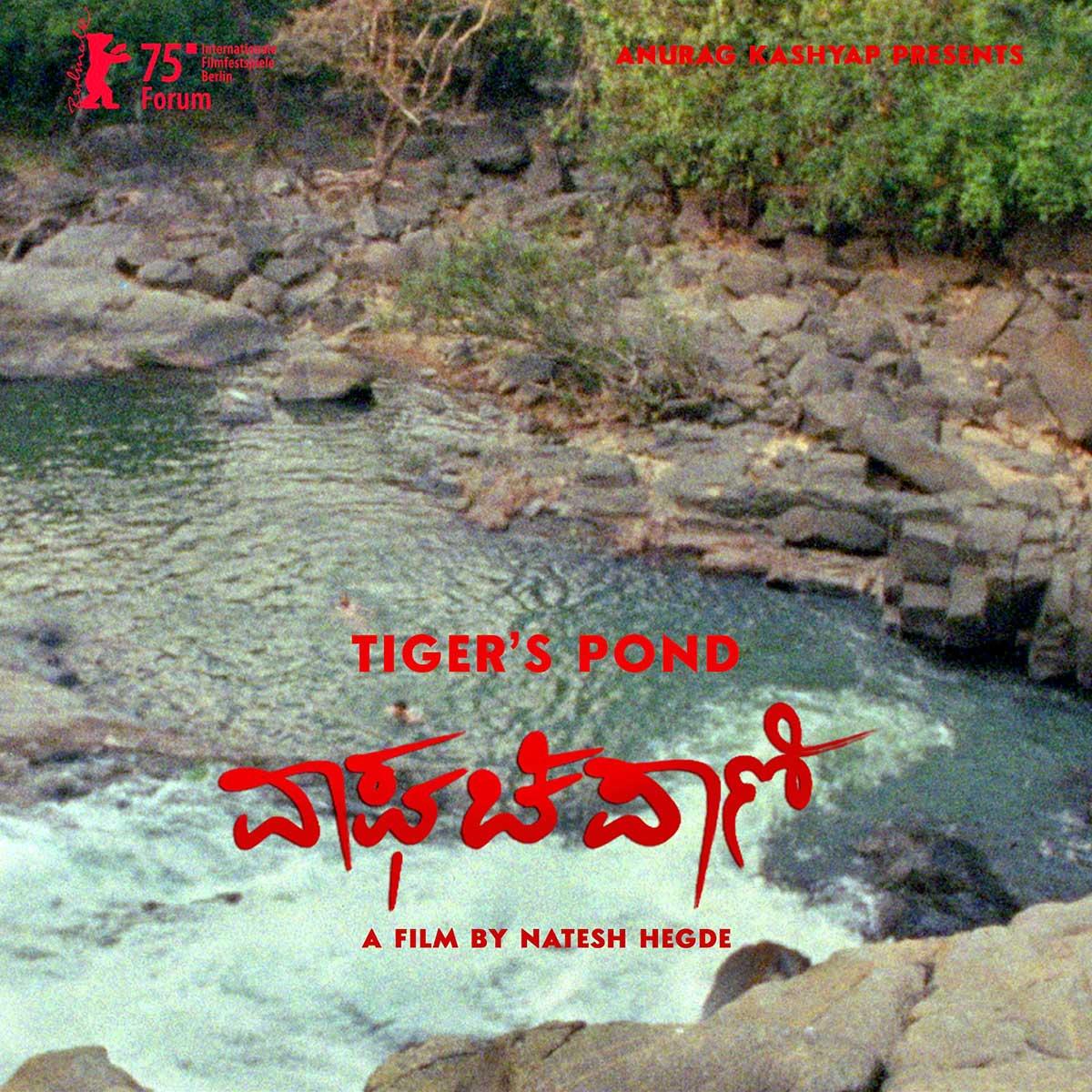
The
poster
for
Natesh
Hegde’s
film
Vaghachipani.
Photograph:
Kind
courtesy
Natesh
Hegde/Instagram
In
a
statement
issued
by
the
press
office
at
the
Berlinale,
Vaghachipani
is
described
as
‘Indian
cinema
of
stylish
assurance
and
concision’.
Hegde
said
the
way
he
approaches
a
film
is
what
probably
sets
his
films
apart
from
the
‘template’
versions
that
are
churned
out
by
the
dozen
by
the
Kannada
film
industry.
“For
me,
it
is
not
just
storytelling.
It
is
also
about
what
I
want
to
convey
or
achieve
through
the
film,”
said
Hegde.
He
describes
himself
as
an
‘alien’
in
the
Kannada
film
industry.
“I
come
from
a
village
(in
the
Sirsi
district
of
Karnataka)
that
you
cannot
even
locate
on
Google
maps.
I
still
live
there.
So
I
had
to
create
my
own
ecosystem.
The
one
great
advantage
is
that
I
could
skip
existing
templates
and
do
my
own
thing,”
said
Hegde.
Hegde
also
does
not
subscribe
to
the
notion
that
a
place
can
define
a
person’s
taste
in
art.
“It
is
a
notion
that
only
if
you
have
unfettered
access
to
art,
you’d
be
an
artist
or
connoisseur.
One
could
have
the
fastest
speed
Internet,
but
that
does
not
necessarily
teach
him
or
her
how
to
develop
a
taste
in
the
arts,”
said
Hegde.
Hegde
says
he
was
always
interested
in
films.
“I
was
watching
everything
that
came
my
way.
Just
like
most
people
do
when
they
want
to
explore
films
beyond
their
region
and
language,
I
too
started
streaming
films
from
pirated
Web
sites.
Then
one
day,
I
watched
that
a
film
that
made
me
want
to
do
more
than
just
watch,”
said
Hegde.
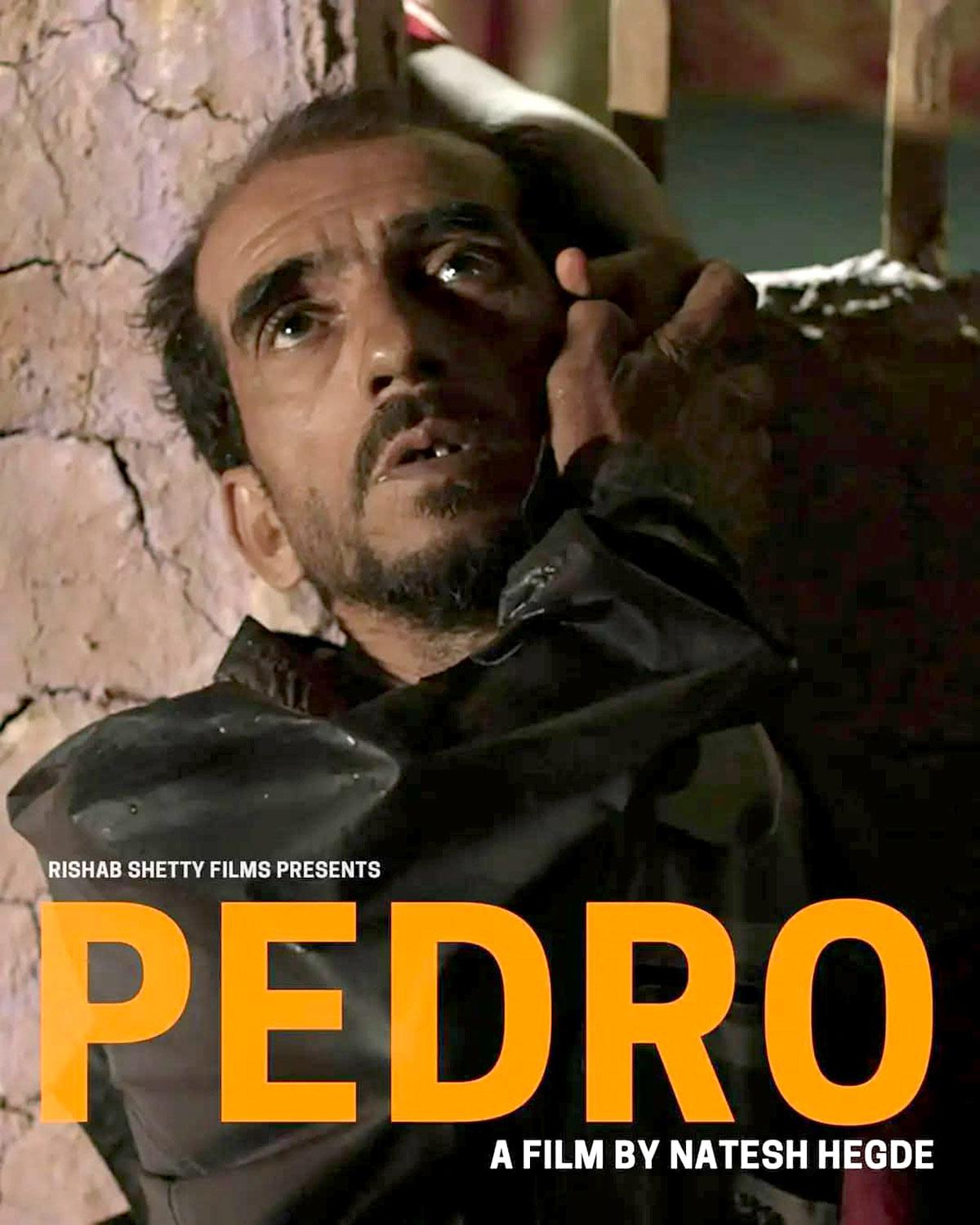
Natesh
Hegde’s
father
Gopal
Hegde
on
the
Pedro
poster.
Photograph:
Kind
courtesy
Natesh
Hegde/Instagram
After
that,
Hegde
said
he
sought
out
films
made
by
filmmakers
whose
idea
of
filmmaking
he
resonated
with.
“Abbas
Kiarostami,
Robert
Bresson,
G
Aravindan,
Ritwik
Ghatak
and
Kenji
Mizaguchi
are
some
of
the
directors
whose
work
made
me
realise
that
I
wanted
to
make
films
like
that,”
said
Hegde.
Hegde
said
he
was
lucky
that
his
parents
stood
with
him
and
his
quest
to
become
a
filmmaker,
although
they
did
not
understand
the
whys
and
hows.
“They
are
your
regular
village
people.
They
did
agriculture
like
everybody
else
there.
My
father
doubled
as
an
electrician
in
the
village,”
said
Hegde.
When
Hegde
turned
filmmaker,
his
father
turned
an
actor,
the
director
said.
“I
cast
him
as
Pedro
out
of
necessity
and
he
surprised
me
with
his
acting
skills.
He
was
even
nominated
as
the
Best
Actor
at
the
Indian
Festival
Melbourne
2024,”
said
Hegde.
Vaghichipani,
said
Hegde,
is
named
after
his
neighbouring
village
in
the
Western
Ghats
of
Karnataka,
which
derives
its
name
from
a
pond
where
tigers
come
to
quench
their
thirst.
“I
am
fascinated
by
the
lurking
presence
of
the
tiger,”
said
Hegde.
Vaghichipani
tells
the
story
of
a
mentally
challenged
shepherdess,
who
is
preyed
upon
by
patriarchy.
The
film
was
shot
on
a
16mm
camera
by
Cinematographer
Vikas
Urs,
who
also
worked
on
Pedro.
Photographs
curated
by
Satish
Bodas/Rediff.com