At
a
time
when
the
‘my
country,
right
or
wrong’
attitude
is
sweeping
over
the
majority,
the
Pyaasa
songm
Jinhe
Naaz
Hai
Hind
Par
Woh
Kahan
Hain
brings
a
much-needed
sense
of
reality.
It
questions:
How
can
one
feel
any
sense
of
pride
when
women
are
treated
like
this?
Utkarsh
Mishra
salutes
Guru
Dutt’s
classic
that
turns
68
this
month.
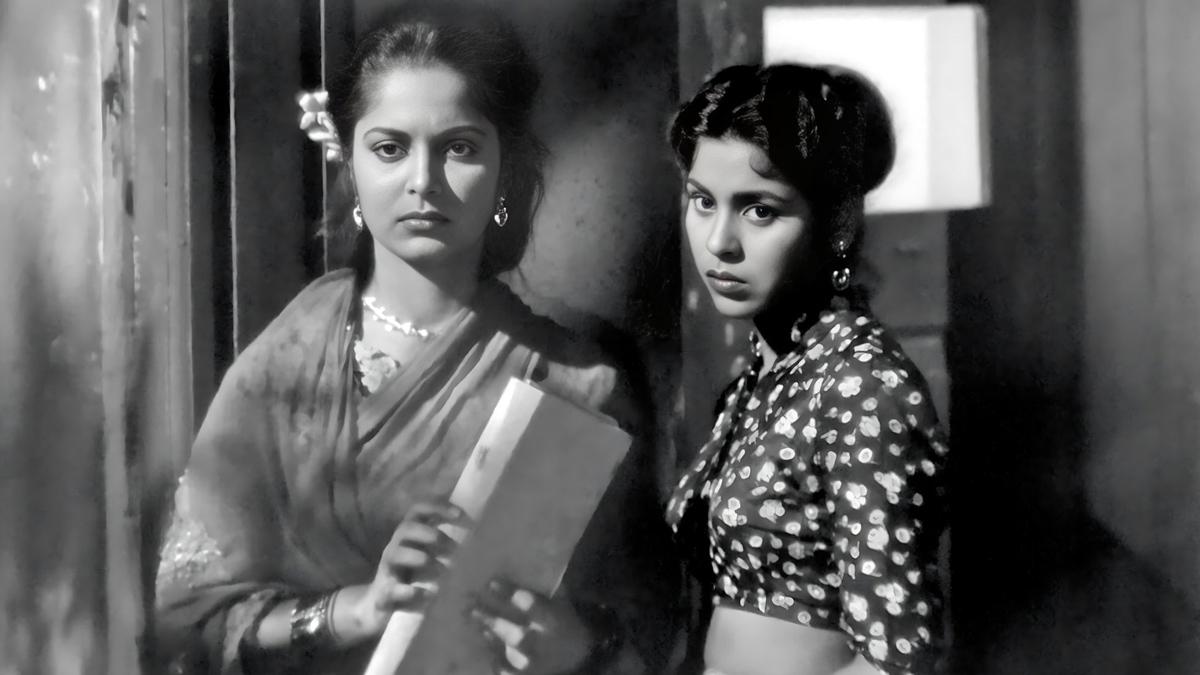
Waheeda
Rehman
and
Mala
Sinha
in
Pyaasa.
Photograph:
Kind
courtesy
Film
History
Pics/
X
Guru
Dutt’s
immortal
classic
Pyaasa
released
on
February
22,
1957.
The
film
is
often
dubbed
as
‘ahead
of
its
time’,
and
that’s
more
than
just
a
cliché.
In
fact,
Pyaasa
feels
even
more
relevant
today
than
it
did
upon
its
release.
The
struggles
of
an
artist
against
an
apathetic
society
resonate
deeply
in
an
era
where
the
onslaught
of
technology
threatens
the
very
essence
of
artistic
expression.
Despite
its
brilliance,
Pyaasa
was
considered
a
risky
venture
at
the
box
office.
Legend
has
it
that
distributors
were
so
uncertain
about
its
commercial
viability
that
they
insisted
on
adding
the
song
Hum
Aapki
Aankhon
Mein,
offering
a
lighter
moment
of
respite
to
the
audiences
from
the
film’s
pervasive
melancholy.
In
fact,
there
was
a
debate
between
Guru
Dutt
and
writer
Abrar
Alvi
regarding
the
film’s
ending.
The
latter
wanted
the
protagonist
to
embrace
the
recognition
and
love
finally
bestowed
upon
him,
while
the
former
insisted
that
he
renounce
it
all.
In
the
end,
Guru
Dutt
prevailed.
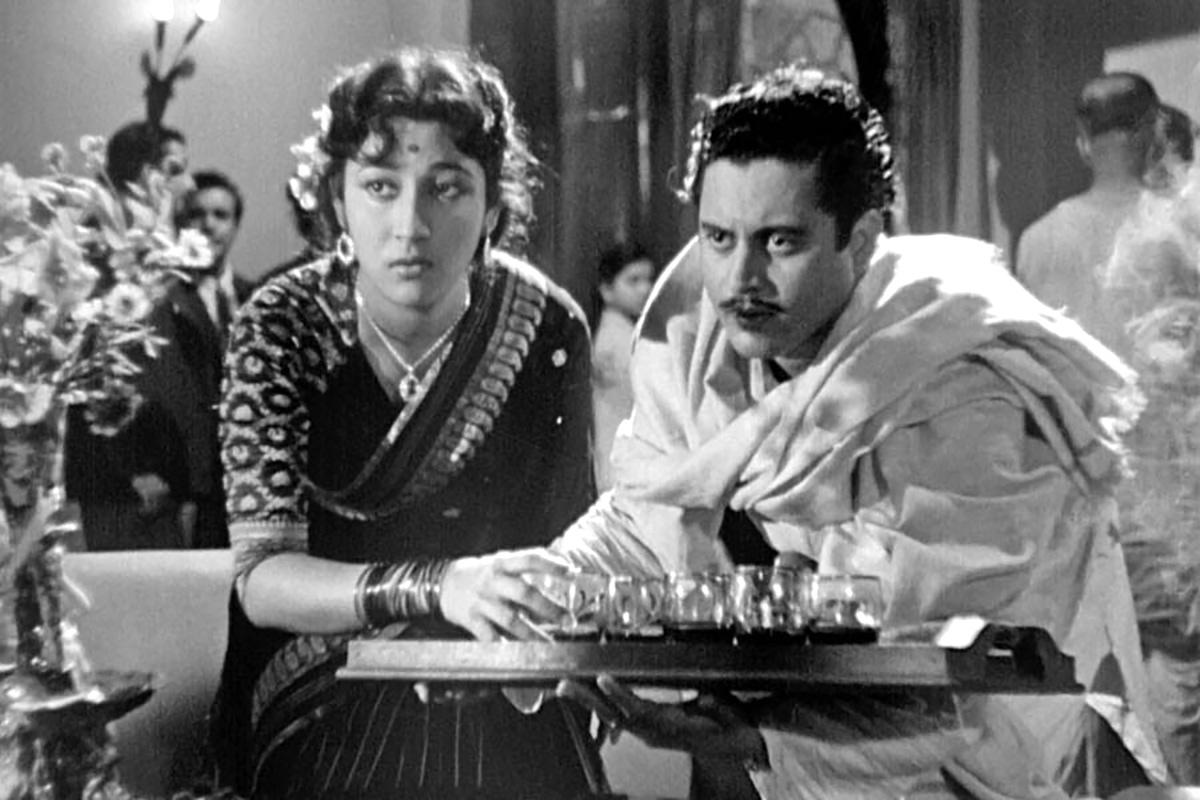
Mala
Sinha
and
Guru
Dutt
in
Pyaasa.
Pyaasa
tells
the
story
of
a
struggling
poet,
Vijay,
played
by
Guru
Dutt,
and
his
experiences
in
a
heartless
world
where
‘the
dead
are
worshipped,
and
the
living
are
trampled
upon.’
Vijay
fails
to
secure
a
job
after
finishing
college
and
struggles
to
make
a
living
by
getting
his
poetry
published.
However,
since
he
writes
too
much
about
the
real
world
rather
than
penning
down
rosy
verses,
his
work
always
ends
up
in
the
dustbin
of
publishers.
Reduced
to
a
pauper,
Vijay
is
thrown
out
of
his
house
by
his
elder
brothers,
who
don’t
want
a
freeloader
in
the
family.
Only
his
mother
loves
and
cares
for
him.
Vijay
later
discovers
that
his
brothers
have
also
sold
his
collection
of
poems
as
scrap.
He
rushes
to
the
scrap
dealer,
only
to
find
out
that
a
woman
has
already
bought
it.
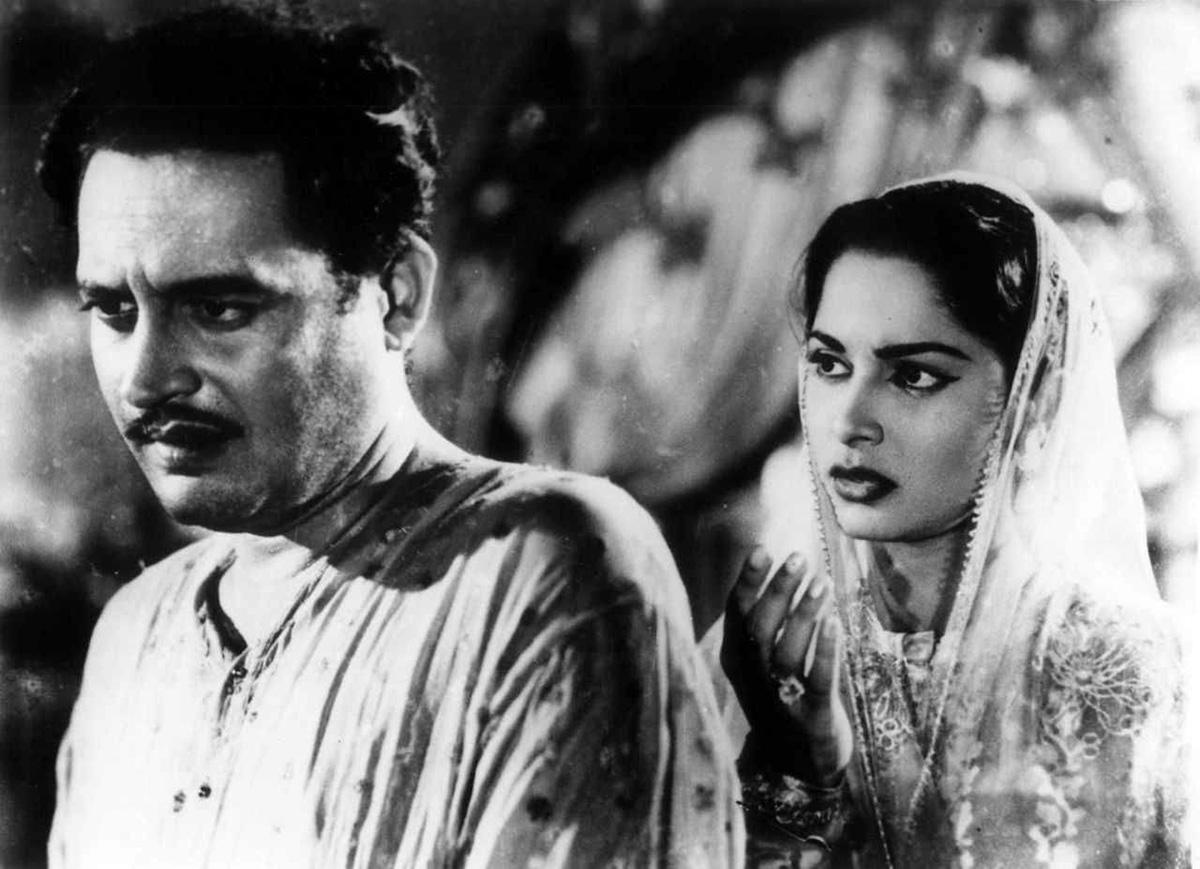
Waheeda
Rehman
and
Guru
Dutt
in
Pyaasa.
Disheartened
and
dejected,
Vijay
chooses
to
sleep
on
park
benches
or
at
a
friend’s
place
rather
than
return
to
a
home
where
no
one
recognises
his
art.
A
chance
invitation
to
a
college
reunion
introduces
Vijay
to
a
wealthy
publisher,
who
offers
him
a
job
—
not
to
publish
his
poems,
but
to
confirm
a
doubt
that
he
has.
Vijay
is
in
for
more
shocks
and
surprises.
However,
he
finally
meets
an
admirer.
One
night,
on
the
streets,
Vijay
hears
a
prostitute
singing
a
song
he
wrote
and
realises
that
she
is
the
woman
who
bought
his
poetry
collection
from
the
scrap
dealer.
Yet,
Vijay
does
not
seek
love
or
romance.
He
is
too
disturbed
by
the
ways
of
society,
where
everyone
seems
to
care
only
for
themselves.
However,
he
does
want
his
poetry
back.
Portrayal
of
Women
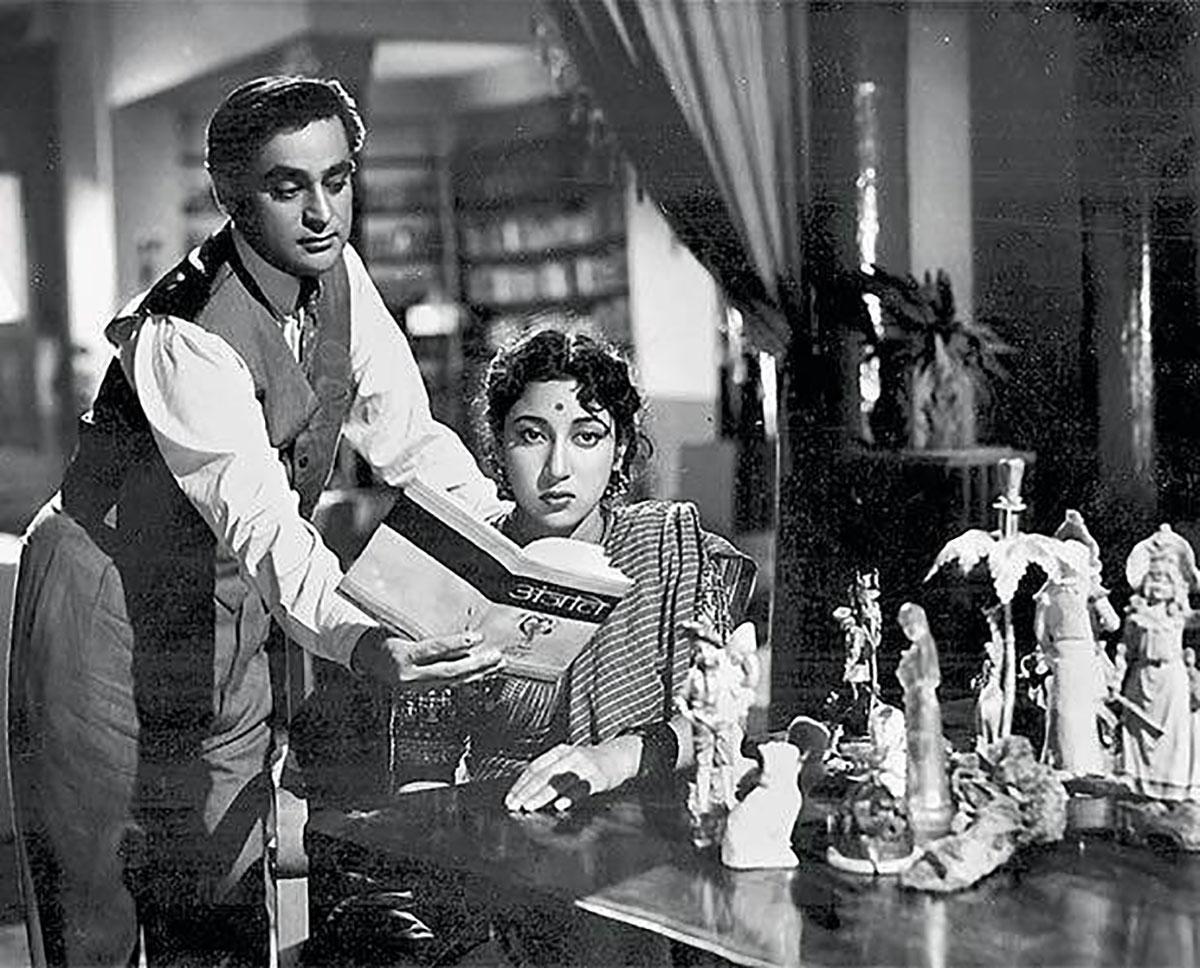
Rehman
with
Mala
Sinha
in
Pyaasa.
Photograph:
Kind
courtesy
Film
History
Pics/
X
Two
female
characters
play
pivotal
roles
in
the
movie.
One
is
Meena,
played
by
Mala
Sinha,
Vijay’s
former
lover
from
college.
Vijay
sarcastically
introduces
her
as
a
‘decent
woman
of
high
society’,
who
left
him
to
marry
a
wealthy
man
because
he
was
unemployed.
I
believe
this
is
the
weakest
point
of
the
movie,
where
Meena’s
choice
is
condescendingly
portrayed
as
wrong.
To
his
surprise,
Vijay
discovers
that
Meena
is
married
to
his
boss,
Mr
Ghosh,
the
publisher,
who,
having
sensed
their
past
relationship
during
the
reunion
party,
employed
Vijay
with
the
sole
intention
of
exposing
them.
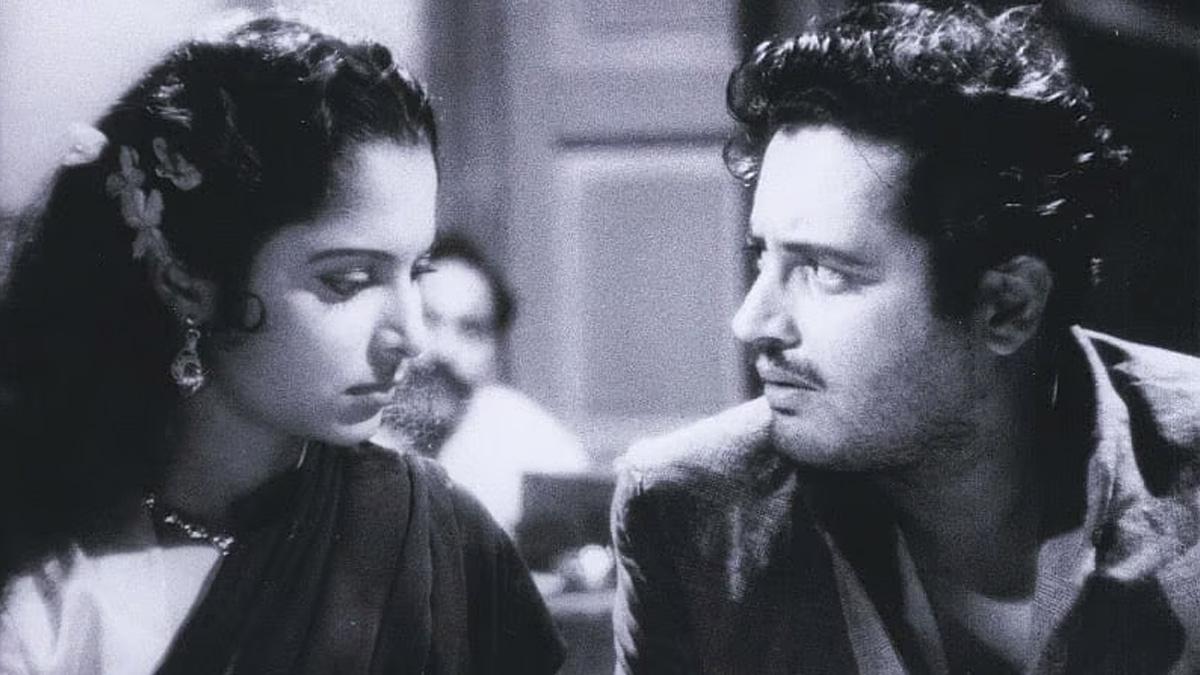
Waheeda
Rehman
and
Guru
Dutt
in
Pyaasa.
The
other
character
is
Gulabo,
played
by
Waheeda
Rehman,
the
prostitute
who
bought
Vijay’s
poems
from
the
scrap
dealer
and
eventually
falls
in
love
with
him.
She
is
a
kind-hearted
woman
who,
despite
being
abused
and
exploited
by
society,
continues
to
admire
life
and
love.
Though
Vijay
is
deeply
sensitive
in
general,
he
is
especially
sympathetic
toward
oppressed
women.
This
aspect
is
brought
out
elaborately
in
the
movie.
Not
only
is
the
portrayal
of
Gulabo
and
other
prostitutes
refreshingly
humane,
but
there
are
also
moments
where
Vijay
is
visibly
disturbed
by
their
suffering.
One
scene
stands
out:
His
friends
take
a
grief-stricken
Vijay
to
a
brothel,
where
one
of
the
dancers
is
forced
to
leave
behind
her
ailing,
crying
baby
to
tend
to
clients.
This
provokes
Vijay
to
recite
Jinhe
Naaz
Hai
Hind
Par
Woh
Kahan
Hain,
one
of
Sahir
Ludhianvi’s
many
classics.
At
a
time
when
the
‘my
country,
right
or
wrong’
attitude
is
sweeping
over
the
majority,
this
song
brings
a
much-needed
sense
of
reality.
It
questions:
How
can
one
feel
any
sense
of
pride
when
women
are
treated
like
this?
Zara
mulk
ke
rahbaron
ko
bulao,
Ye
kooche,
ye
galiyan,
ye
manzar
dikhao,
Jinhe
naaz
hai
Hind
par
unko
laao.
(Bring
the
rulers
of
this
country
to
these
streets
and
show
them
this
reality.
Bring
here
those
who
are
proud
of
India.)
A
Nihilistic
Movie?
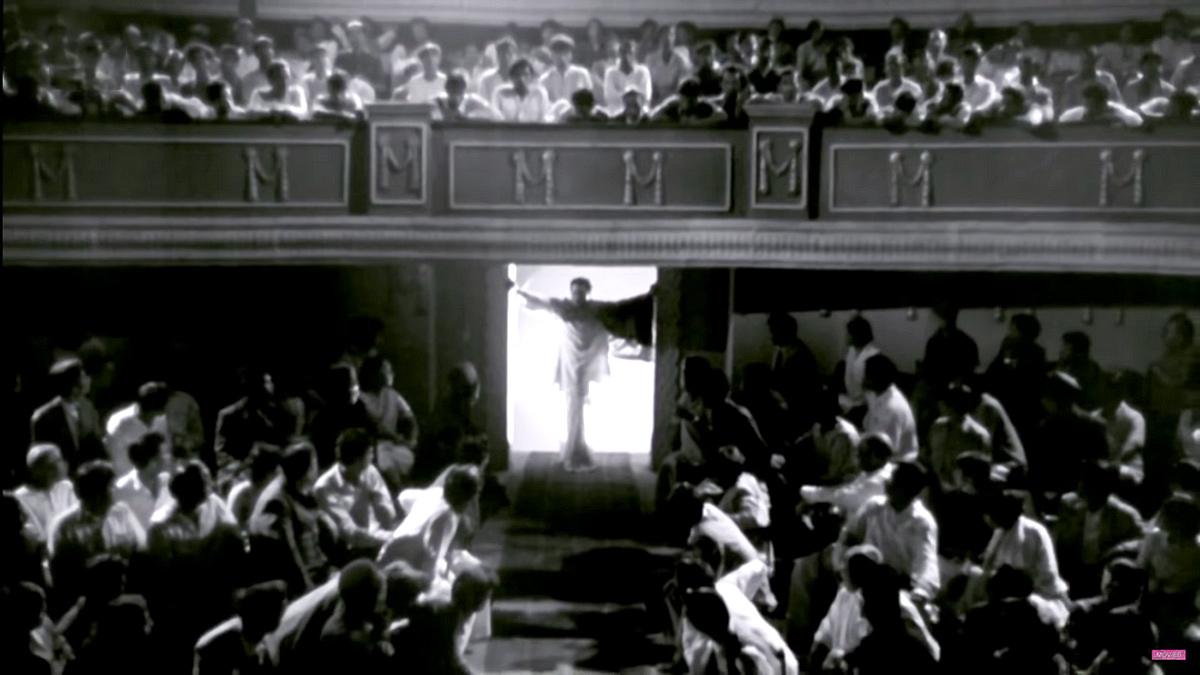
Guru
Dutt
in
Pyaasa.
I
have
often
come
across
reviews
or
commentaries
that
call
Guru
Dutt’s
character
in
Pyaasa
nihilistic.
I
believe
such
interpretations
misunderstand
the
film
or
lack
a
proper
understanding
of
the
term.
Yes,
one
might
be
misled
by
the
last
song,
Yeh
Duniya
Agar
Mil
Bhi
Jaye
To
Kya
Hai,
which
contains
lines
like:
Jala
do
ise,
phoonk
daalo
yeh
duniya,
Mere
saamne
se
hata
lo
yeh
duniya.
(Burn
down
this
whole
world,
take
it
away
from
my
sight.)
But
these
lines
are
not
a
rejection
of
life
itself.
They
denounce
the
order,
traditions,
and
attitudes
that
torment
Vijay,
the
very
structures
he
wishes
to
see
changed.
Lying
unconscious
in
a
hospital
bed,
Vijay
is
shocked
to
learn
that
his
poems
have
been
published
and
have
become
widely
popular
—
but
only
because
the
world
believes
he
is
dead.
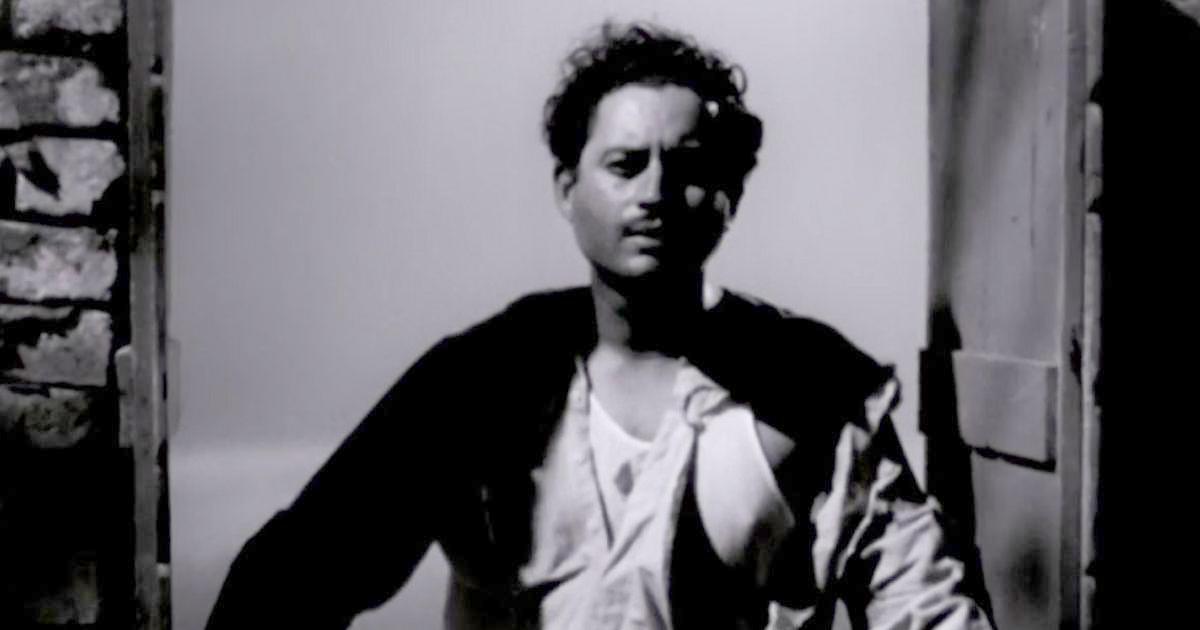
Guru
Dutt
in
Pyaasa.
When
those
who
once
ignored
him
and
who
now
profit
from
his
posthumous
fame
discover
that
he
is
alive,
they
refuse
to
acknowledge
him.
They
fear
losing
the
wealth
and
prestige
they
have
gained
off
his
name.
This
betrayal
infuriates
Vijay.
He
realises
that
his
so-called
admirers
love
his
poems
only
because
they
believe
the
writer
is
no
longer
alive
to
claim
them.
If
he
is
found
to
be
living,
their
status
and
profits
will
vanish.
Eventually,
one
publisher,
who
had
previously
rejected
his
work,
acknowledges
him
as
alive.
But
Vijay
soon
understands
that
even
this
recognition
is
not
out
of
compassion
—
it
is
just
another
business
opportunity.
His
so-called
‘loved
ones’
now
rush
to
stake
their
claim
to
his
fame.
That
is
when
he
delivers
his
final
verdict:
Even
if
I
get
this
world,
it
isn’t
worth
having
because
I
do
not
accept
it
in
its
current
form.
Vijay
rejects
the
stardom
that
comes
his
way,
not
because
he
is
a
nihilist,
but
because
embracing
it
would
contradict
everything
he
has
fought
against.
He
makes
this
clear
in
his
final
conversation
with
Meena
when
she
asks
why
he
is
walking
away
from
the
recognition
he
once
craved.
‘I
do
not
complain
about
any
individual.
I
complain
about
a
society
that
strips
a
man
of
his
compassion.
A
society
that
turns
brothers
and
friends
into
enemies
for
the
sake
of
self-interest.
I
object
to
a
world
that
worships
the
dead
and
tramples
the
living
underfoot.’