‘I
saw
Bimal
Roy’s
Devdas
again
a
few
years
ago,
almost
50
years
after
it
had
been
made.’
‘I
found
it
very
intelligently
made;
the
scenes
flowed
so
beautifully.’
‘There
is
just
one
scene
with
both
Suchitra
Sen
and
me
in
the
film,
and
it’s
beautiful.’
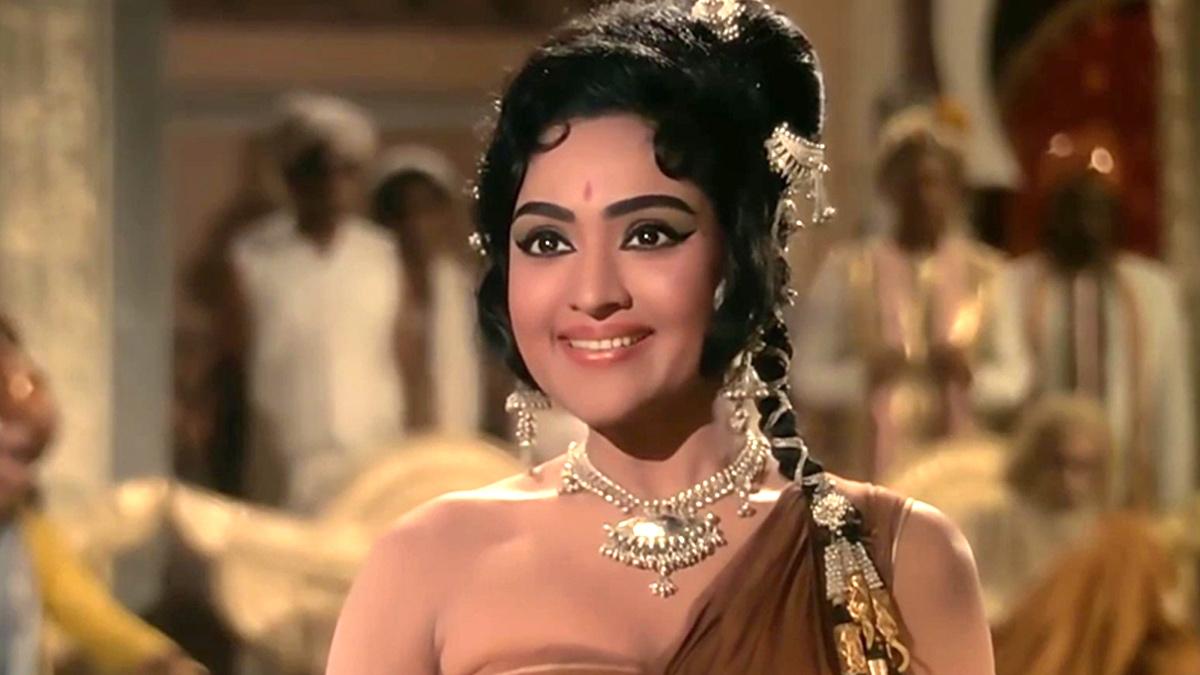
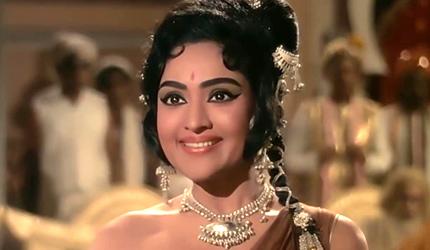
Vyjayanthimala
in
Amrapali.
Vyjayanthimala
is
not
only
an
immensely
talented
danseuse
(Hothon
Pe
Aisi
Baat,
Main
Kya
Karoon
Ram,
Man
Dole
Mera
Tan
Dole
are
emulated
till
date)
but
also
a
hugely
popular
star-actress
in
the
1950s
and
1960s,
thanks
to
a
long
string
of
hits
like
Nagin,
Naya
Daur,
Madhumati,
Ganga
Jamuna,
Sangam,
Sooraj
and
Jewel
Thief
We
revisit
a
2003
interview
with
Rediff
Senior
Contributor
Dinesh
Raheja,
where
Vyjayanthimala
“.”
You
started
your
career
with
South
Indian
films.
Did
you
shift
to
Hindi
films
only
after
Nagin
(1954)
became
a
blockbuster?
S
Mukherjee
of
Mumbai’s
Filmistan
Studio
sent
Director
Nandlal
Jaswantlalji
(who
had
just
helmed
the
hit
film
Anarkali)
to
my
hometown
Madras
to
sign
me
for
Nagin.
This
was
after
my
debut
film,
AVM’s
Bahar
(1951),
had
become
successful
in
Tamil,
Telugu
and
Hindi.
Though
I
was
brought
up
and
educated
in
Madras,
I
had
come
to
Bombay
a
few
times
for
my
dancing
programmes
and
had
found
it
a
pleasant
city.
After
the
shooting
of
Nagin
wrapped,
I
went
back
to
Madras.
But
Nagin
became
a
blockbuster,
and
film
offers
poured
in.
My
contract
with
AVM
forbade
me
from
doing
films
with
other
Madras
producers
but
didn’t
restrict
me
from
working
in
films
made
in
Bombay.
Nagin‘s
success
made
you
a
major
star
in
the
Hindi
film
industry
and
turned
your
life
around.
What
do
you
remember
of
the
shoot?
Nagin‘s
director
Nandlal
Jaswantlal
had
been
making
films
from
Bollywood’s
silent
era
and
he
was
fond
of
close-ups.
He
would
tell
me
not
to
open
my
eyes
wide
because
‘you
already
have
big
eyes.’
In
the
struggle
to
keep
my
eyes
half-closed,
my
eyelashes
would
begin
to
flatter.
But
he
was
happy
as
he
wanted
a
dreamy
look.
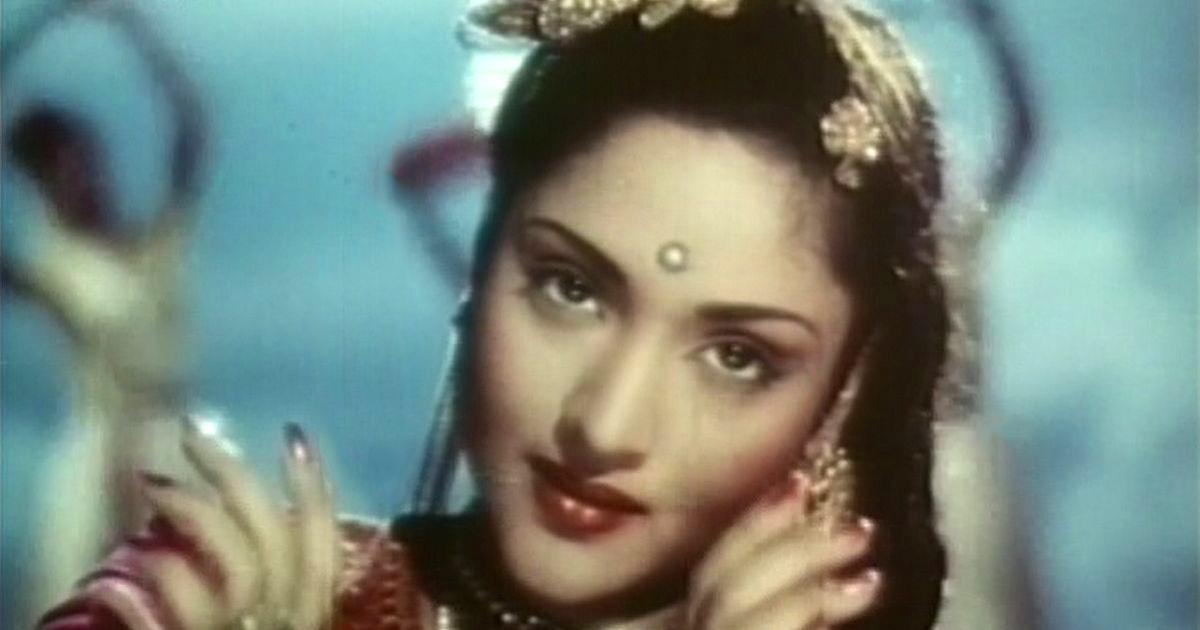
Vyjayanthimala
in
Nagin.
What
recollections
come
to
mind
when
you
look
back
at
those
early
days
of
your
career?
The
famous
(lawyer)
Nana
Palkhivala
stayed
in
the
same
building
as
us
at
Commonwealth
(Nariman
Point).
He
was
fond
of
playing
the
piano.
I
would
listen
with
fascination
as
I
had
learned
to
play
the
piano
at
school.
My
family
purchased
the
Station
Wagon
because
we
needed
a
big
car.
An
entourage
of
eight
people
always
accompany
me
to
the
studios.
Since
it
was
a
long
drive
from
Nariman
Point
to
the
studios
which
were
largely
in
the
suburbs
I
would
do
my
makeup
in
the
car.
Did
you
adjust
quickly
to
working
in
Hindi
films?
Working
in
Bombay
was
different
from
working
with
AVM
in
Madras.
There,
I
was
treated
like
a
child.
I’m
affectionately
called
‘Pappu
Kutty’
whereas
in
Bombay
nobody
knew
me
by
that
name.
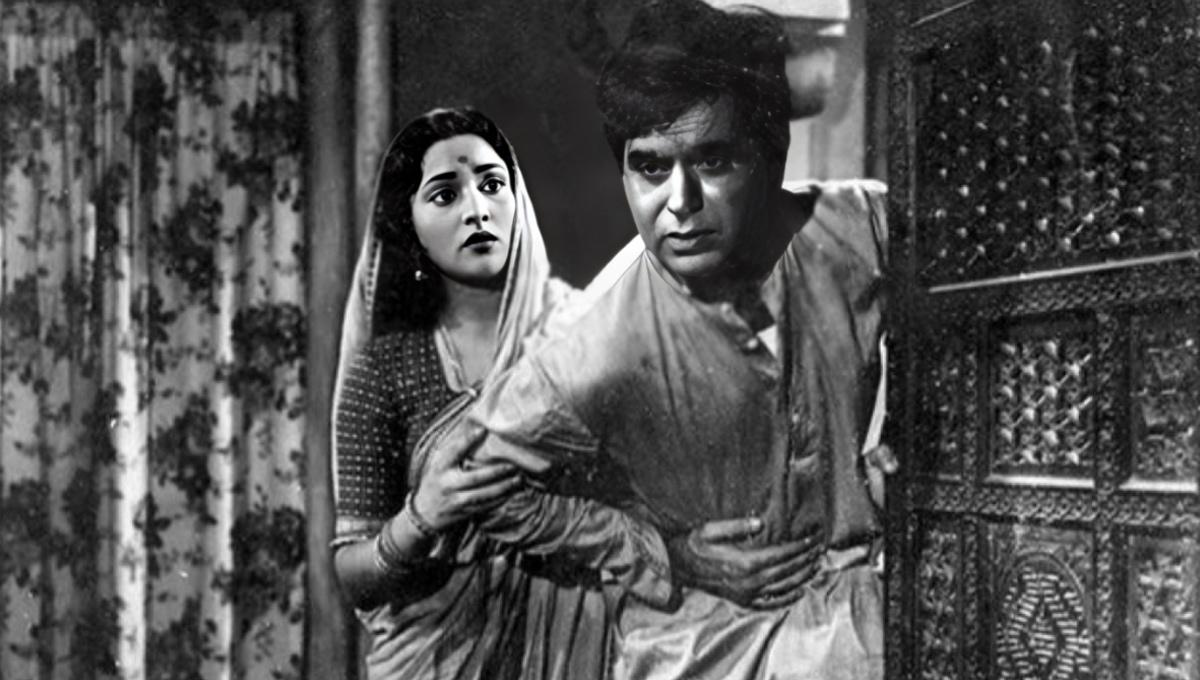
Vyjayanthimala
and
Dilip
Kumar
in
Devdas.
Devdas
(1955)
was
what
got
you
critical
recognition
as
an
actress.
I
must
credit
Bimalda
(Roy)
with
expanding
my
histrionic
image
and
making
people
realise
my
acting
potential.
Before
Devdas,
I
was
called
Twinkle
Toes
as
dancing
was
the
most
important
aspect
of
my
films.
In
Devdas
too,
I
did
do
a
lot
of
dancing
(in
songs
like
Jise
Tu
Kabool
Kar
Le,
O
Aanewwale,
Ab
Aage
Teri
Marzi).
After
all,
I
was
playing
the
courtesan
Chandramukhi.
At
the
same
time,
there
were
also
a
lot
of
shades
to
my
character.
My
dance
training
helped
me
tremendously
while
portraying
Chandramukhi’s
unrequited
love
for
Devdas
as
well
as
all
those
subtle
emotions
that
were
Bimalda‘s
forte.
As
Natyashastra
says,
‘The
tear
should
be
in
the
eyes
of
the
beholder,
not
in
the
eyes
of
the
dancer.’
I
tried
to
live
up
to
that.
What
was
it
like
to
be
directed
by
Bimal
Roy
in
two
classics?
Being
directed
by
a
creative
person
like
Bimalda
was
wonderful.
He
was
in
total
tandem
with
his
cameraman
Dilip
Gupta
and
people
still
talk
about
the
wonderful
top-angle
shot
of
me
swirling
whilst
dancing
to
the
song
O
Aanewale.
What
an
eye
Bimalda
had
for
framing
shots!
I
saw
Bimal
Roy’s
Devdas
again
a
few
years
ago,
almost
50
years
after
it
had
been
made!
I
found
it
very
intelligently
made;
the
scenes
flowed
so
beautifully.
There
is
just
one
scene
with
both
Suchitra
Sen
and
me
in
the
film,
and
it’s
beautiful.
Bimalda
showed
me
walking
down
a
village
road
and
Paro
passes
by
in
a
palanquin
which
he
shot
separately.
Bimalda
made
us
just
look
at
each
other
in
the
scene.
He
was
a
gentle
person
who
would
answer
my
queries
most
softly.
With
all
his
greatness,
he
was
simplicity
personified.
He
explained
the
Devdas
shot,
saying
that
neither
woman
knew
of
the
other’s
connection
to
Devdas,
but
some
unknown,
uncanny
instinct
made
them
look
in
the
other’s
direction.
This
shot
has
a
tremendous
impact
when
seen
in
the
context
of
the
story.
Did
you
interact
with
Suchitra
Sen?
Since
we
didn’t
have
a
scene
together,
Suchitra
Sen
and
I
didn’t
meet
each
other.
I
would
have
loved
to
meet
Suchitra
Sen
as
I
admired
her
a
lot
as
an
actress.
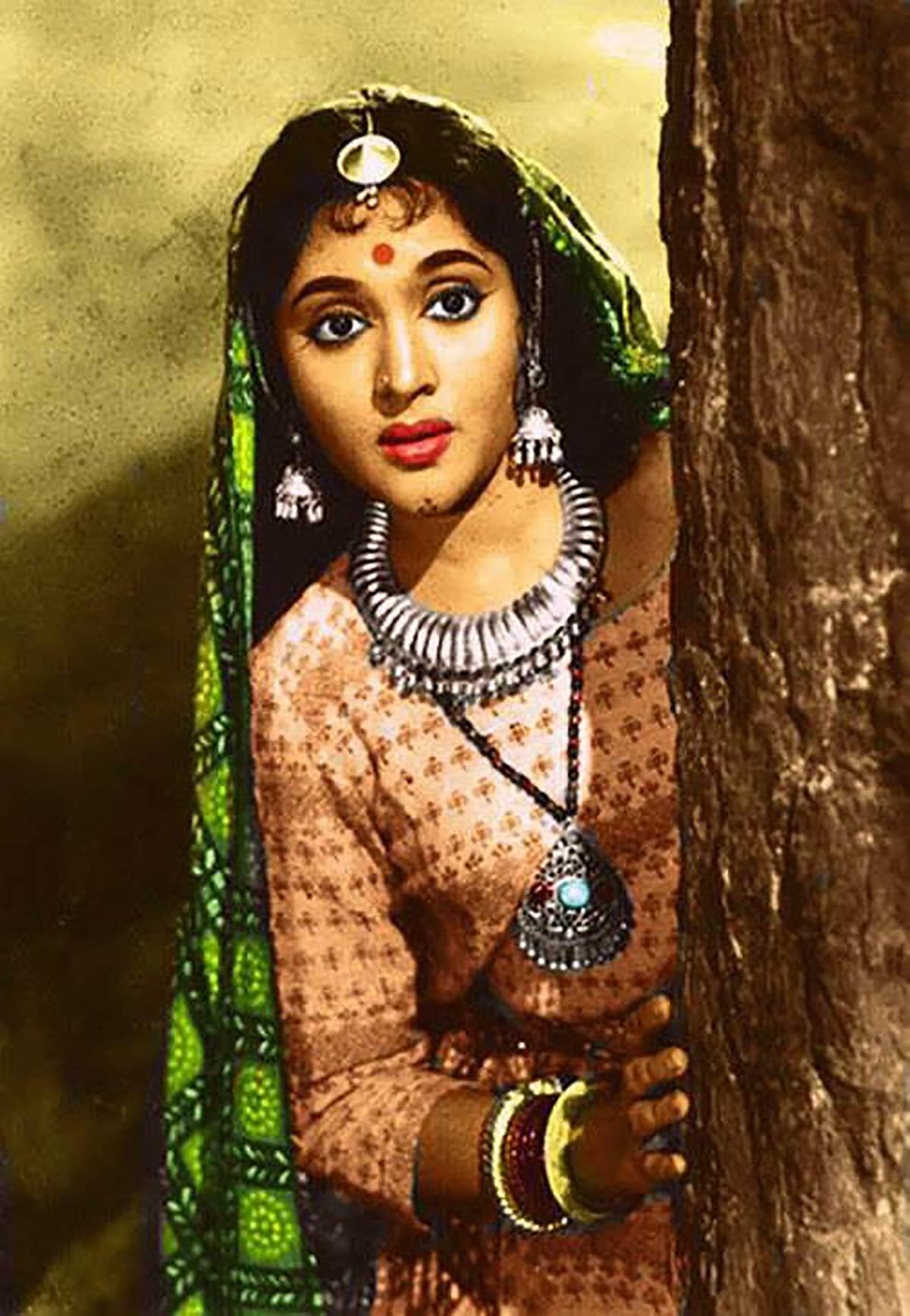
Vyjayanthimala
in
Madhumati.
Immediately
after
Devdas,
Bimal
Roy
cast
you
in
the
title
role
in
Madhumati
(1958).
What
was
your
reaction?
I
was
thrilled.
Madhumati‘s
song
Aaja
Re
Pardesi
Main
Toh
Kab
Se
Khadi
Iss
Paar
was
hauntingly
sung
by
Lata
Mangeshkar
and
I
find
it
is
still
popular.
The
song
was
originally
shot
in
Nainital
but
had
to
be
reshot
near
Bombay
because
of
some
technical
glitch.
Bimalda
was
a
perfectionist.
Bimalda
also
gave
us
a
lot
of
creative
liberty.
Madhumati
had
several
song-and-dance
numbers
and
for
one
of
them,
Ghadi
Ghadi
Mera
Dil
Dhadke,
instead
of
employing
a
choreographer,
he
just
asked
me
to
do
the
song
my
way.
I
thought
long
and
hard
about
it
and
devised
some
exuberant,
running
movements.
I
decided
to
run
like
a
deer
in
a
jungle
to
capture
my
rustic
character’s
essence.
It
wasn’t
a
dance
in
the
true
sense,
yet
I
thought
the
end
result
was
very
graceful.
In
both
the
Roy
films,
you
starred
opposite
Dilip
Kumar
with
whom
you
made
one
of
the
golden
era’s
most
famous
screen
pairs.
This
was
a
definite
high
for
me.
Dilip
Kumar
and
I
eventually
starred
in
as
many
as
seven
films
together.
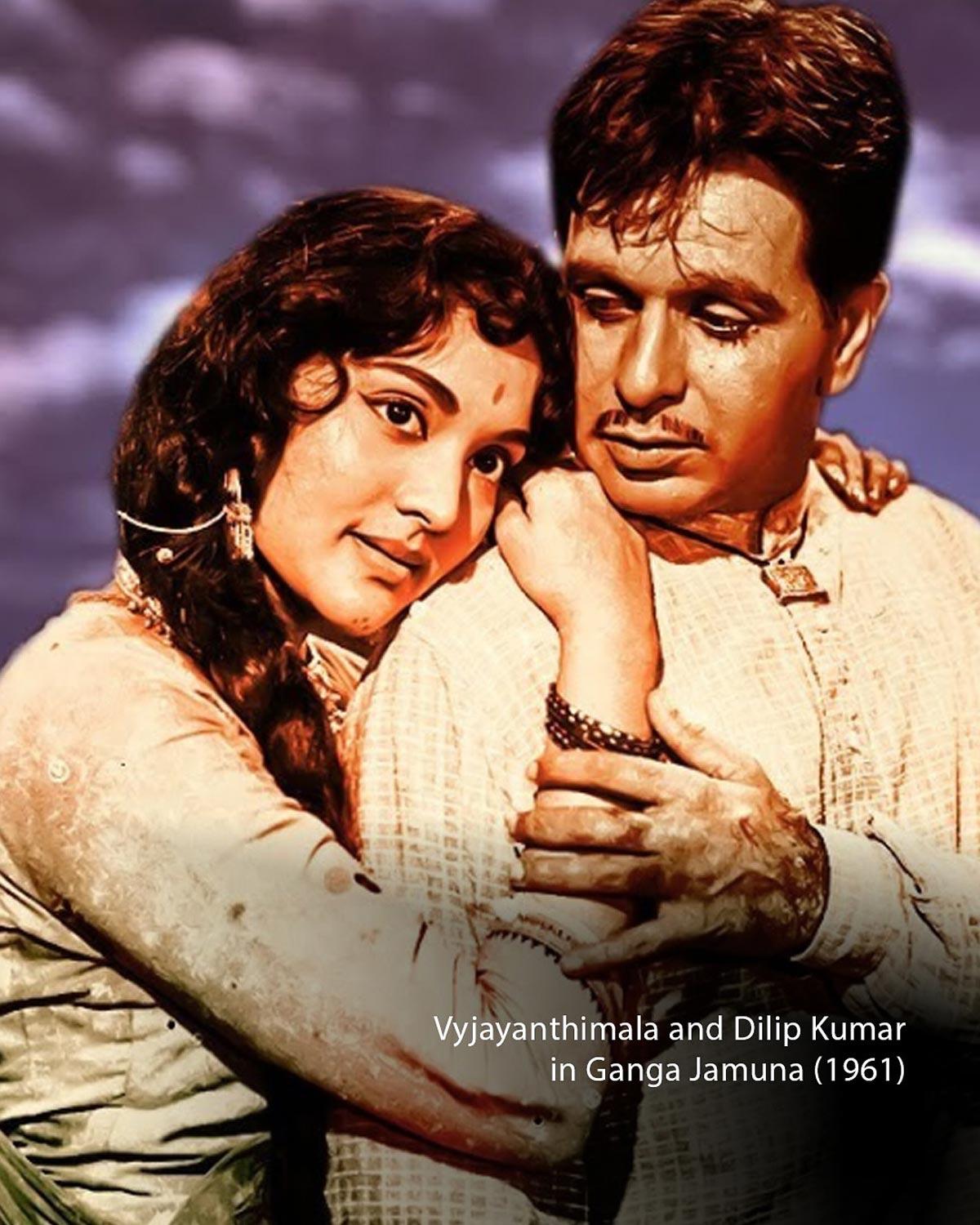
Vyjayanthimala
and
Dilip
Kumar
in
Ganga
Jumna.
Throughout
the
1950s
and
the
1960s,
you
were
one
of
the
most
popular
heroines
on
the
Hindi
screen.
Besides
my
Bimalda
movies,
I’ve
done
some
wonderful
films
like
Ganga
Jumna,
Sadhana
and
Sangam.
I
worked
with
directors
of
the
calibre
of
B
R
Chopra
in
Sadhana,
Amiya
Chakraborty
in
Kathputli
and
Raj
Kapoor
in
Sangam.
You
were
also
known
for
being
rather
aloof
and
keeping
to
yourself.
I
didn’t
socialise
at
all.
So
what
would
you
do
when
not
shooting?
I
would
practise
my
dance.
My
outings
were
limited
to
award
functions
or
special
occasions.
I
remember
a
benefit
cricket
match
in
which
Nargis,
Raj
Kapoor,
Suraiya,
Nimmi
and
Pran
participated.
I
didn’t
befriend
my
contemporaries.
What
was
the
point?
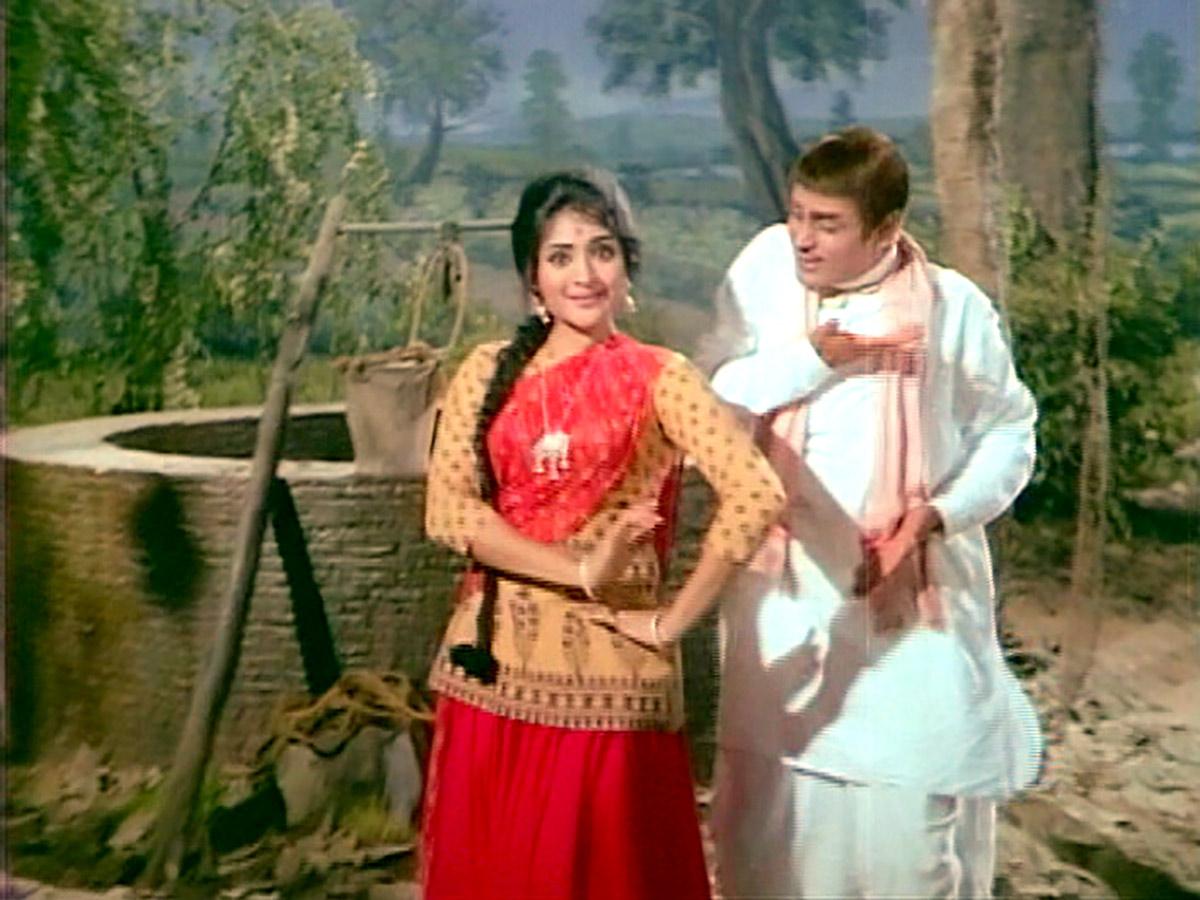
Vyjayanthimala
and
Rajendra
Kumar
in
Ganwar.
You
chose
to
draw
the
curtains
on
your
film
career
when
you
are
still
a
successful
star.
In
fact,
your
last
film
Ganwar
(1970)
was
a
box
office
success.
Was
it
difficult
for
you
to
make
this
decision?
I
said
goodbye
to
films
in
1968
after
I
got
married
to
Dr
Bali.
In
1974,
after
my
son
Suchhindra
was
born,
I
moved
to
Madras.
When
I
shifted,
I
had
to
close
down
my
dancing
academy
in
the
Bombay
locations
of
Matunga
and
Peddar
Road
even
though
they
were
flourishing.
Parting
from
my
dance
students
was
the
most
painful
aspect
of
leaving
Bombay.
You
remained
devoted
to
dance.
Just
as
my
film
Madhumati
was
a
reincarnation
subject,
I
too
believe
in
reincarnation.
Of
course,
we
take
new
births
till
we
attain
moksha.
In
fact,
my
dancing
is
a
way
of
attaining
moksha,
by
surrendering
completely
to
the
Lord.