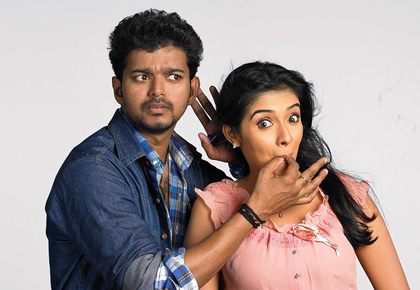
As
Thalapathy
Vijay
embarks
on
a
career
in
politics,
Arjun
Menon
looks
at
his
glorious
filmography.
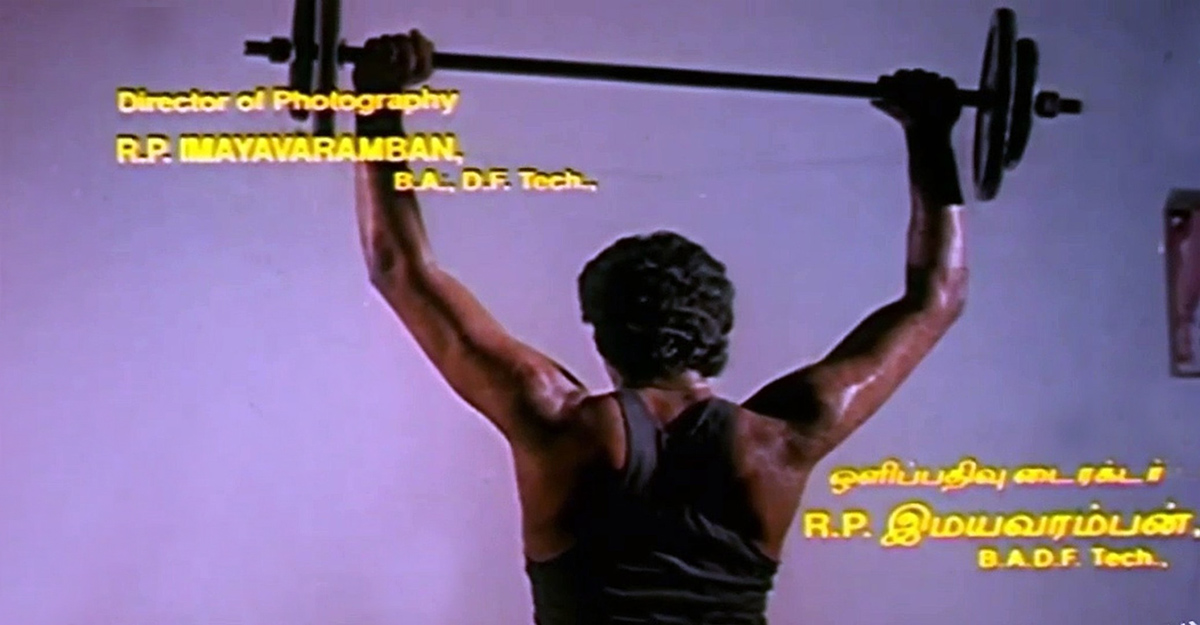
Vijay
in
his
debut
film
Naalaiya
Theerpu.
Two
muscular
hands
lifting
dumbbells
come
into
focus
in
the
first
shot
from
S
A
Chandrasekhar’s
directorial,
Naalaiya
Theerpu
(1992).
It’s
a
film
where
he
cast
his
then
18-year-old
son
as
the
hero.
We
get
an
extended
workout
routine
featuring
a
yet-unrevealed
hero
with
the
opening
credits.
There
is
a
sense
of
déjà
vu
in
the
way
the
film
frames
its
young
hero,
who,
despite
his
lean
and
boyish
appearance,
holds
a
rebellious
streak
as
well
as
a
sensitive
demeanour.
The
young
hero
in
question
is
Vijay
who
made
his
acting
debut
as
a
wise-beyond-years
son
out
to
avenge
his
largely
absent,
abusive,
father,
ironically
in
a
project
produced,
written
and
directed
by
his
dad.
The
part
promised
to
be
a
tough
hang
for
the
young
actor
with
extended
dialogue
scenes
and
a
stilted
performance
style
did
him
no
favours.
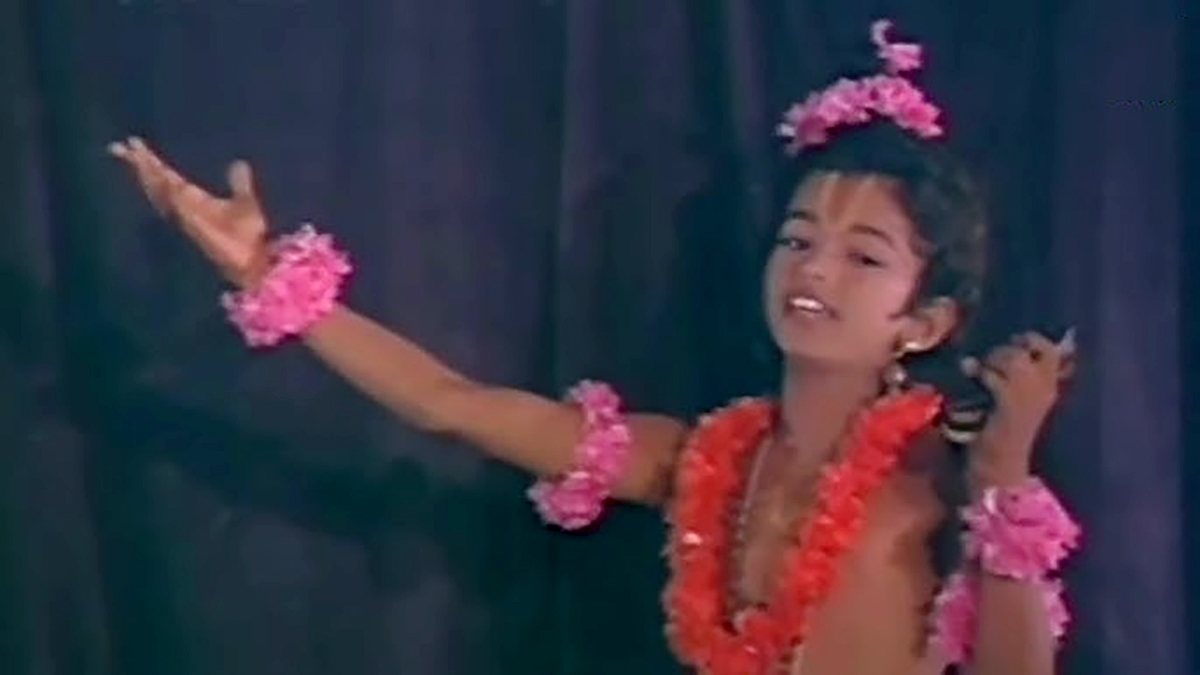
Vijay
in
Kudumbam.
Vijay’s
film
debut
(after
playing
many
minor
parts
as
a
child
artist
in
many
of
his
father’s
films)
is
coincidentally
one
that
encompassed
all
the
traits
that
we
have
come
to
associate
with
his
brand
of
cinema
with
the
Devil
May
Care
attitude,
physical
agility
and
tomboyish
charm.
As
is
often
the
case
with
many
star
kid
launches,
the
first
film
is
expected
to
be
a
lightweight
romantic
drama
or
coming-of-age
story
that
can
officially
catapult
an
unknown
face
into
the
sphere
of
audience
familiarity.
But
here,
we
get
a
melodramatic
template
commercial
film
that
is
thrust
into
the
hands
of
an
inexperienced
actor.
We
get
glimpses
of
the
rebellious
angst
and
breezy
screen
presence
often
associated
with
his
later-day
filmography
but
the
baby-faced
Vijay
was
not
up
to
the
task
of
elevating
the
already
antiquated
film-making
sensibility
at
play.

Vanitha
Vijayakumar
and
Vijay
in
Chandralekha.
His
father
cast
him
as
the
lead
in
his
subsequent
directorial
outings
too,
and
that
gave
the
actor
a
footing
as
a
‘chocolate
hero’
with
three
back-to-back
romances
with
Senthoorapandi
(1993),
Rasigan
(1994)
and
Vishnu
(1995).
The
actor
was
quickly
gaining
traction
with
the
relative
commercial
success
of
these
films
and
he
rose
up
the
ranks
to
the
title
of
‘Ilaya
Thalapathy‘
(young
commander-in-chief)
in
the
course
of
this
five-film
dry
run
along
with
titles
like
Chandralekha
(1995)
and
Coimbatore
Mappillai
(1995)
which
were
all
not
traditionally
well
made
mainstream
potboilers
but
kept
him
engaged.

Sangita
Madhavan
and
Vijay
in
Poove
Unakkaga.
Vijay,
however,
had
his
next
big
break
with
the
iconic
romantic
drama
Poove
Unakkaga
(1996),
a
film
that
proved
to
be
a
game-changer
in
his
still
nascent
film
career.
The
star-making
turn
saw
him
pair
opposite
actress
Sangeetha
on
screen,
in
a
familiar
story
of
feuding
families
and
a
faithful
romance.
It
made
Vijay
a
household
name,
and
the
film
showed
a
tender,
comedic
sensibility
of
his
on-screen
persona.
But
he
had
an
almost
dry
run
for
the
next
few
years
with
decent
box
office
results
but
no
standout
films
that
would
make
him
a
major
breakout
star.
Even
in
this
lowkey
run,
his
father
gifted
him
the
much-awaited
‘action
hero’
image
with
Maanbumigu
Maanavan
(1997),
making
most
of
his
dynamic
physique
and
rising
matinee
idol
trappings.

Shalini
and
Vijay
in
Kadhalukku
Mariyadhai.
Though
the
quality
of
Vijay’s
output
at
this
juncture
was
questionable,
he
found
a
following
in
a
middle-class
audience,
who
were
craving
for
a
star
to
follow
in
the
footsteps
of
Rajinikanth
and
Kamal
Haasan,
but
appealing
to
the
younger
demographic
with
relatable
love
stories
and
coming-of-age
narratives.
He
found
himself
comfortable
within
the
trappings
of
the
‘next
door
romantic’
hero
image
with
a
series
of
remakes
of
other
language
hits
like
Ninaithen
Vandhai
(1997)
and
Kadhalukku
Mariyadhai
(1997),
which
kept
his
growing
fanbase
happy.
Faasil’s
remake
of
his
Malayalam
original
Aniyathipravu
(1997)
with
Kadhalukku
Mariyadhai
(1997)
had
a
huge
impact
on
his
upcoming
films
with
the
blockbuster
run
and
iconic
status
that
the
film
enjoyed
in
its
initial
run.

Kausalya
and
Vijay
in
Priyamudan.
Towards
the
end
of
the
1990s,
Vijay
had
developed
a
formula
of
sorts
for
his
films
by
playing
tragic
lovers,
who
end
up
losing
his
love
or
sacrificing
his
love
in
the
film’s
final
moments.
This
was
a
recurring
trope
in
Vijay’s
career
trajectory
and
a
successful
one
at
that
as
he
was
slowly
morphing
his
screen
image
to
that
of
an
adequately
flexible
actor
who
could
accommodate
action,
pathos,
and
romantic
iconography,
into
his
evolving
rooster
of
the
toolkit
as
a
star.
Films
like
Priyamudan
(1997)
saw
him
perfect
the
formulae
to
a
tee,
playing
a
suave
yet
manipulative
lover,
who
misappropriated
his
identity
for
winning
over
the
love
of
a
woman,
only
to
lead
to
tragic
consequences.

Simran
and
Vijay
in
Thulladha
Manamum
Thullum.
The
doomed
lover
trope
was
further
pushed
to
the
extremes
with
films
like
Thulladha
Manamum
Thullum
(1999)
which
to
this
day,
is
revered
as
one
of
his
finest
works
by
fans
and
general
audiences
alike.
This
romantic
classic
about
the
ultimate
sacrifice
for
love
saw
him
pair
opposite
Simran
for
the
first
time
as
he
played
a
man
hiding
his
identity
and
selflessly
loving
a
woman
who
does
not
even
know
what
he
has
done
for
her
in
the
process.
The
film
was
a
sensational
box
office
success.
The
soundtrack
marked
the
beginning
of
a
similar
song-based
market
for
his
films,
where
the
songs
broke
out
as
chartbusters
even
before
the
release
of
Vijay
films.

Rambha
and
Vijay
in
Minsara
Kanna.
Vijay
collaborated
with
debutant
directors
like
Vincent
Selva
and
Ezhil
as
well
as
veteran
hitmakers
like
K
S
Ravikumar
for
Minsara
Kanna
(1999)
and
Faasil
for
Kannukkul
Nilavu
(1999),
and
the
mix
continued
his
hot
streak
towards
the
beginning
of
the
new
millennium.
He
continued
to
star
in
his
father’s
films
like
Nenjinile
(1999),
which
kept
his
success
ratio
afloat.
His
performance
in
Kannukkul
Nilavu,
as
a
man
suffering
from
retrograde
amnesia,
garnered
critical
acclaim
at
the
time
and
shed
light
on
an
untapped
aspect
of
his
work
as
an
actor.
At
times,
Vijay
challenged
preconceived
notions
of
his
persona
as
a
screen
idol
with
these
minor
detours
in
his
filmography
where
he
explored
the
psychological
aspects
of
his
characters
in
mostly
one-note
traditional
commercial
cinema.
But
this
would
be
spread
out
in
his
work
as
the
unmanageable
ascend
to
stardom
in
such
a
short
span
also
meant
that
he
had
to
indulge
in
fan
service
and
star-making
parts
to
consolidate
his
standing
in
the
industry
with
actors
like
Ajith,
Surya,
and
Vikram
also
making
ripples
felt
in
the
box
office
game
over
the
subsequent
years.
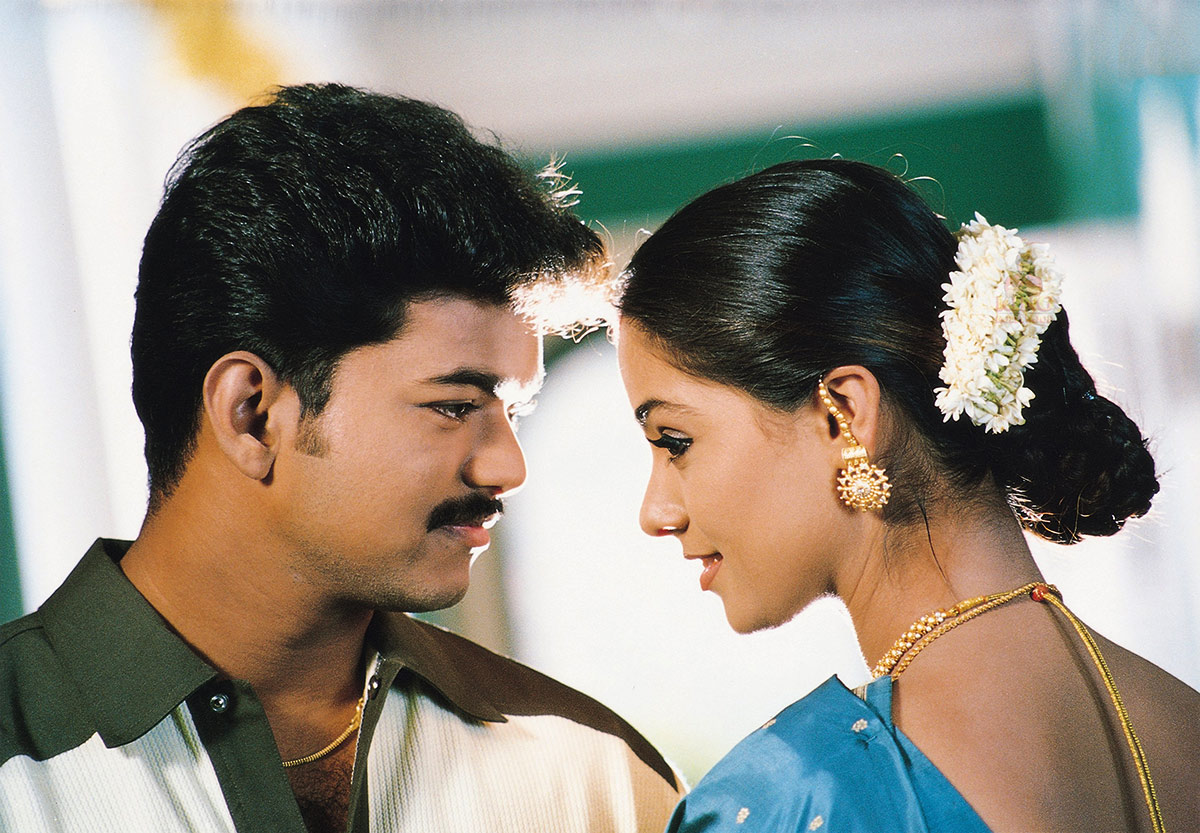
Simran
and
Vijay
in
Priyamanavale.
Vijay
took
his
hot
streak
into
the
2000s
with
films
like
Kushi
(2000),
Priyamanavale
(2000)
and
Friends
(2001).
These
films
are
iconic
benchmarks
in
his
career,
when
romantic
comedies
were
the
order
of
the
day
and
he
could
turn
in
his
successful
loverboy
image.
But
this
softer,
wide-eyed,
young
man
Vijay
aesthetic
would
soon
be
consumed
by
the
advent
of
the
updated
version
of
the
‘masala’
subgenre
of
Tamil
cinema,
earlier
adopted
by
the
likes
of
Rajinikanth
and
Vijaykanth,
with
successful
results.
Vijay
balanced
romance
with
a
sprinkling
of
action
beats
with
films
like
Bagavathi
(2002),
Vaseegara
(2002)
and
Thirumalai
(2003)
but
one
film
changed
all
that:
Ghilli
(2004).
The
sports
drama
was
about
a
student
kabbadi
player,
who
bites
off
more
than
he
can
chew,
when
he
rescues
a
woman
from
the
hands
of
an
influential
gangster,
only
to
disturb
his
seemingly
routine
existence.
The
film
is
the
starting
point
of
the
Vijay
mythology
as
we
know
it
today,
as
we
can
clearly
demarcate
his
career
as
a
‘Pre-Ghilli‘
and
‘Post-Ghilli‘
phenomenon.
Such
is
the
impact
the
film
had
on
his
body
of
work
and
Tamil
cinema
in
general.
The
film
perfectly
calibrated
his
charm
and
larger-than-life
persona
within
the
confines
of
a
rewarding
sports
drama
story.
The
‘massy’
approach
caught
Vijay
at
the
right
time
of
his
career
and
started
his
box
office
rampage
with
superhits
like
Thirupaachi
(2004)
and
Sivakasi
(2005).
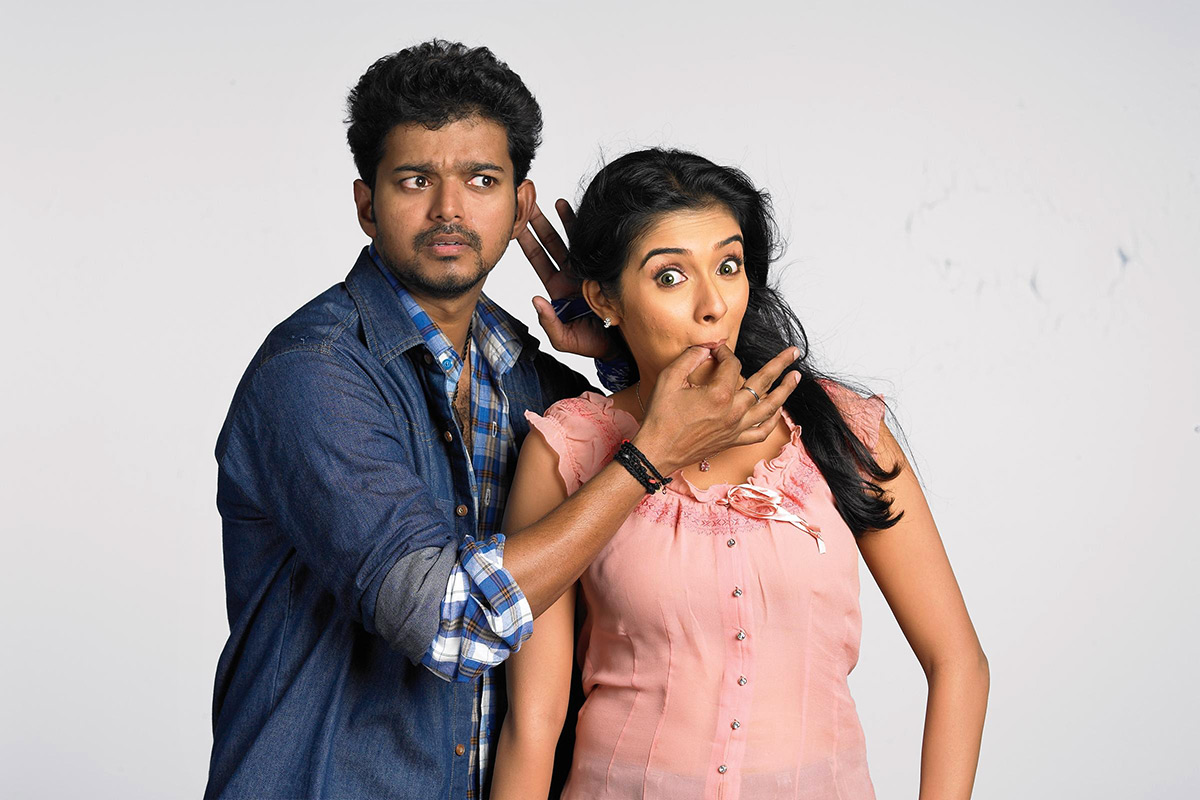
Asin
and
Vijay
in
Pokkiri.
Prabhu
Deva’s
Pokkiri
(2007)
was
the
next
major
career
highlight
for
Vijay
as
it
doubled
his
newfound
superstardom.
The
film
sealed
the
deal
for
Vijay
and
his
dedicated
fan
following
took
roots
with
the
iconic
lines,
massy
demeanour
and
stylish
action
sequences,
all
making
him
the
biggest
of
the
young
stars
in
Tamil
cinema.

Kajal
Aggarwal
and
Vijay
in
Thuppakki.
Vijay
had
a
bit
of
a
career
slump
for
the
next
few
years
with
films
like
Azhagiya
Tamil
Magan
(2007),
Kuruvi
(2008),
Villu
(2009),
Sura
(2010)
and
Velayudham
(2011)
all
underperforming
and
garnering
poor
reviews.
He
did
have
short
burst-out
hits
with
Kaavalan
(2011)
and
Nanban
(2012),
both
remakes
directed
by
legendary
directors
like
Siddique
and
Shankar.
Thuppakki
(2012),
directed
by
A
R
Muragadoss
(their
first
blockbuster
collaboration),
got
Vijay
out
of
the
rut
of
the
box
office
slumber
into
a
fan
favourite
position
again.
Their
next
collaboration
in
Kaththi
(2014)
pushed
the
envelope
of
the
social
issues
that
can
be
addressed
in
a
crowd-pleasing
mass
film
and
by
this
point,
Vijay
had
made
his
way
back
on
top,
reigning
his
supremacy
as
a
box
office
icon.

Vijay
in
Bigil.
Vijay
also
thrust
his
confidence
on
the
back
of
Atlee,
a
one
film
old
film-maker
at
the
time,
with
Theri
(2016),
a
straightforward
cop
revenge
drama
that
secured
a
good
run.
It
led
to
two
more
collaborations,
Mersel
(2017)
and
Bigil
(2019).
The
three
films
also
tested
Vijay’s
ability
to
play
multiple
characters
simultaneously
as
Atlee
developed
a
narrative
of
using
Vijay
in
two
or
three
role
parts
in
a
single
film.
This
made
things
interesting
for
fans,
who
got
to
relish
the
newfound
versatility
in
Vijay’s
on-screen
persona.
Vijay
encouraged
collaboration
with
the
younger
crop
of
film-makers
like
Lokesh
Kanagaraj
for
Master
(2021).
He
entered
a
phase
in
his
career
where
his
salary
skyrocketed
in
keeping
with
his
‘Pan
Indian’
salability
as
a
star.
Only
a
few
stars
in
the
history
of
Indian
cinema
have
been
able
to
rake
in
the
kind
of
pay
cheques
and
back-end
deals
that
Vijay
has
been
able
to
get
for
his
later
films.
Master
saw
his
larger-than-life
persona
being
channeled
in
the
right
ways
by
Lokesh
Kanagaraj,
who
made
him
a
college
professor
who
takes
it
upon
himself
to
straighten
out
a
child
trafficking
gang.
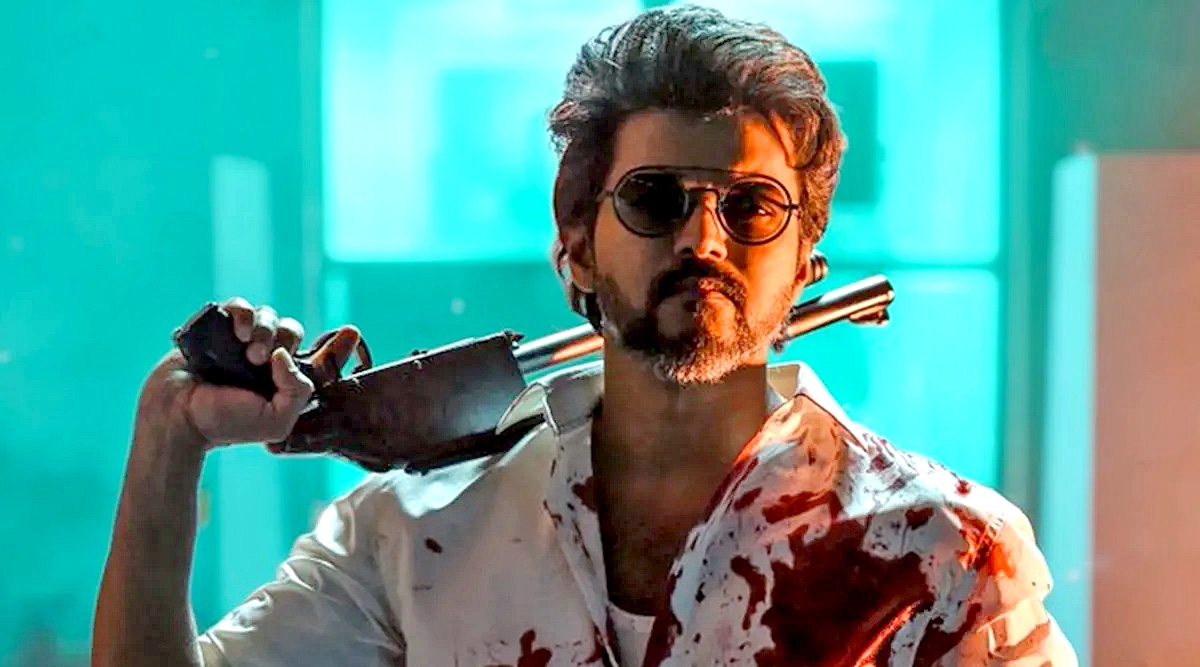
Vijay
in
Beast.
Vijay
reached
a
point
in
his
filmography
where
his
mere
silhouettes
or
just
the
mention
of
his
name
can
send
fans
into
a
tizzy.
This
kind
of
unparalleled
stardom
also
comes
with
its
demerits
as
fans
can
easily
be
restrictive
in
their
appreciation
of
him
trying
something
more
contained
and
family-centric
with
his
persona.
For
instance,
Vijay
got
a
lot
of
flak
for
being
part
of
an
experimental
Die
Hard
rip-off
like
Beast
(2022)
with
director
Nelson.
The
star
felt
out
of
place
in
Nelson’s
self-contained,
deeply
structured
story
world.
He
also
got
discouraged
in
going
the
Telugu
cinema
template
way
in
Varisu
(2022),
as
he
was
let
down
by
poor
writing.
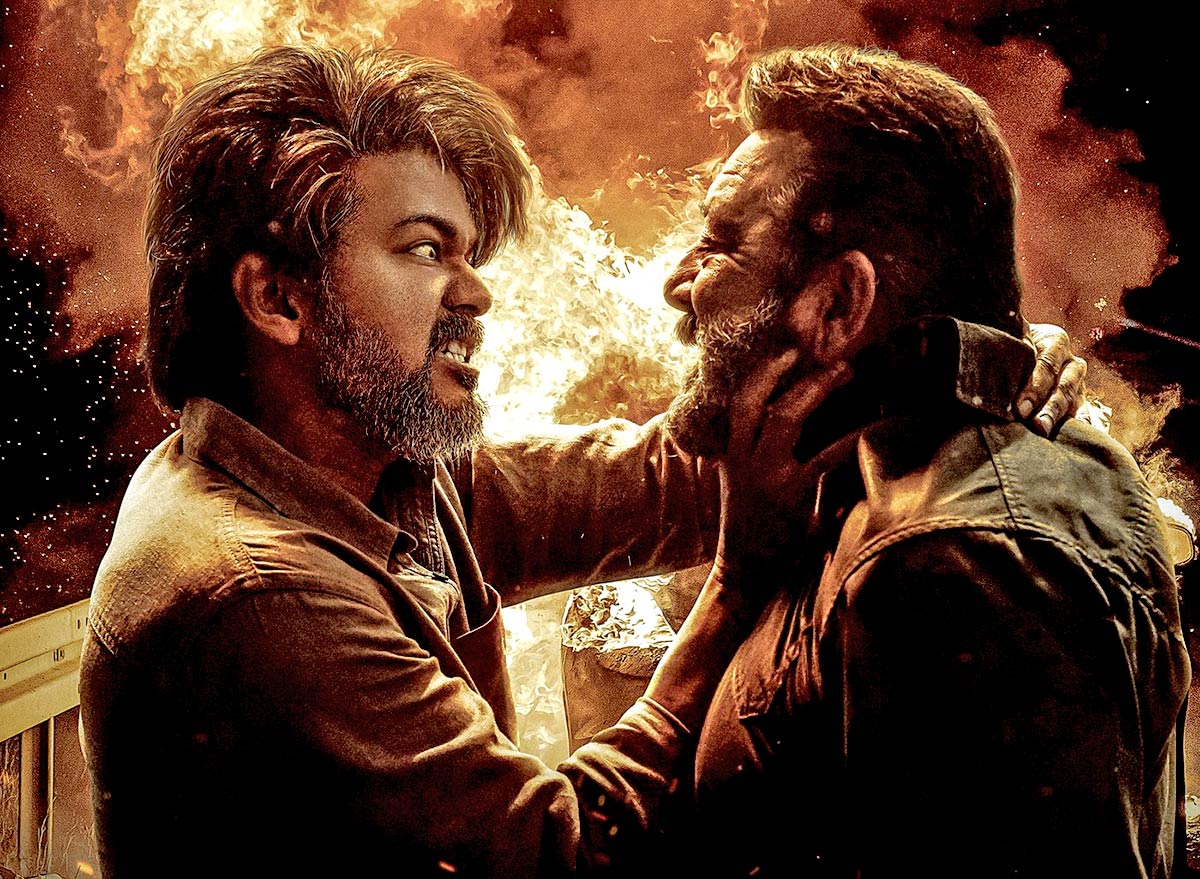
Vijay
and
Sanjay
Dutt
in
Leo.
Lokesh
Kanagaraj
seems
to
know
how
to
tackle
Vijay’s
stardom
head-on
and
not
bend
under
unfair
expectations
and
pre-release
hype
that
a
Vijay
starrer
entails.
In
Leo
(2023),
Kanagaraj
finds
interesting
ways
to
use
Vijay’s
stardom
to
the
film’s
advantage.
He
gives
Vijay
some
character
beats
to
work
with,
a
facet
gravely
underutilised
in
the
actor’s
recent
films.
But
the
tonal
imbalance
and
generic
tendencies
prevented
it
from
being
what
it
could
have
been.
Still,
no
recent
film
has
gotten
so
close
to
the
raw,
innate
charm
of
Vijay,
the
actor.

Vijay
in
GOAT
aka
Greatest
of
All
Time.
GOAT
is
Vijay’s
latest
film
after
he
announced
his
entry
into
politics
with
his
newly
formed
party,
the
Tamilaga
Vettri
Kazhagam.
He
will
now
contest
the
2026
Tamil
Nadu
assembly
elections
after
which
he
will
quit
acting.
This
news
comes
as
a
shock
to
many,
but
his
fascination
with
a
life
in
public
service
and
mainstream
politics
has
been
no
secret
to
film
goers
and
the
general
public
alike.
GOAT
is
a
fan
service
vehicle
struggling
to
get
out
of
the
spy
thriller
origins
of
its
screenplay.
Venkat
Prabhu,
who
was
put
in
the
uncomfortable
position
of
helming
Vijay’s
penultimate
feature
film,
had
too
many
targets
to
hit
and
missed..
But
there
is
promise
for
one
more
film
before
Vijay
bids
us
farewell
and
one
hopes
that
it
will
live
up
to
the
towering
legacy
of
one
of
the
country’s
biggest
superstars.