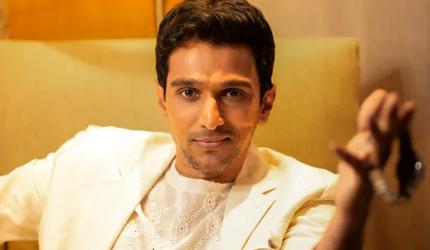
‘We
want
to
hide
it
(by
saying)
we
are
too
busy
in
our
lives,
we
have
other
things
to
attend
to,
we
have
families.’
‘But
they
all
had
families,
including
Jyotiba
Phule
or
Mahatma
Gandhi,
or
anybody
who
challenged
the
system.’
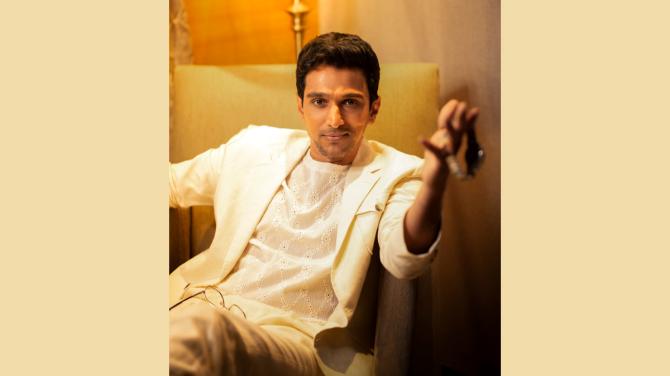
Photograph:
Kind
courtesy
Pratik
Gandhi/Instagram
After
he
was
catapulted
to
stardom
in
2020
with
Scam
1992,
Pratik
Gandhi
didn’t
restrict
himself
to
mainstream
opportunities.
He
is
one
of
those
few
actors
who
adeptly
straddled
the
line
between
mainstream
and
arthouse.
The
actor
began
2025
with
the
goofy
comedy
Dhoom
Dhaam.
Up
next,
is
the
period
drama
Phule,
in
which
Pratik
portrays
social
reformer
Mahatama
Jyotiba
Phule.
The
Ananth
Narayan
Mahadevan
directorial
co-stars
Patralekhaa
as
Jyotiba’s
wife,
Savitribai
Phule.
“If
we
seriously
think
that
movies
can
change
lives,
movies
can
change
the
thought
process
of
the
nation,
or
one
movie
can
actually
move
a
lot
of
things
socially,
politically,
personally,
if
we
believe
in
all
that,
then
Phule
should
move
people,”
Pratik
tells
Mayur
Sanap/Rediff.
What
was
your
first
reaction
when
the
makers
approached
you
to
play
Mahatma
Phule?
I
was
really
excited.
It
was
great
to
be
given
this
opportunity
to
portray
the
first
Mahatma
of
our
country.
It’s
always
exciting
to
create
something
like
this.
You
play
a
Maharashtrian
in
this
film.
Being
a
Gujarati,
how
did
you
familiarise
yourself
with
the
milieu?
Marathi
is
very
close
to
Gujarati.
My
aunts
and
uncles
are
from
Mumbai,
so
we
visited
Mumbai
since
childhood.
In
fact,
I
was
born
in
Mumbai.
So
I
have
heard
Marathi
since
a
young
age.
I
completed
my
graduation
from
North
Maharashtra
University,
Jalgaon.
That
dialect
is
a
little
different
than
the
Marathi
you
hear
in
Pune.
I
always
felt
that
proximity
and
closeness
to
the
language.
It’s
just
that
I
can’t
speak
it
fluently
but
I
understand
everything.
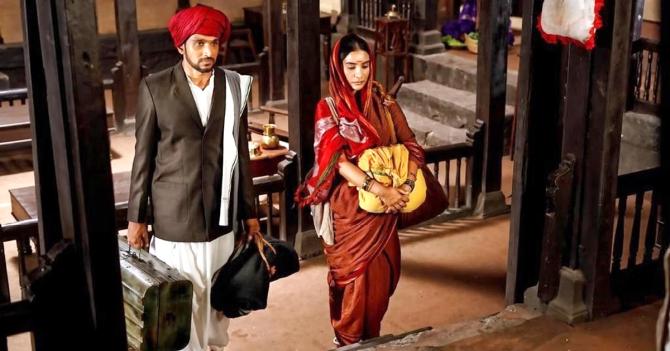
Pratik
Gandhi
and
Patralekhaa
in
Phule.
Most
people
would
know
Jyotiba
Phule
as
a
social
reformer
but
he
was
also
a
businessman,
a
trader,
a
teacher
and
a
playwright.
What
was
your
process
to
assimilate
such
a
diverse
personality?
It’s
a
vast
subject.
His
body
of
work
is
so
huge
and
diverse
that
to
compile
everything
and
put
it
into
a
film
of
two
hours
was
not
an
easy
task.
There
are
certain
traits
that
we
will
show
on
screen,
but
may
not
spell
it
out.
That’s
how
we
have
tried
to
achieve
that
balance
and
I
hope
it
has
translated
well.
You
are
playing
Mahatma
Gandhi
in
Director
Hansal
Mehta’s
upcoming
series.
Gandhi
greatly
admired
Jyotiba
Phule’s
work
in
social
reform
and
called
him
the
real
Mahatma.
As
someone
who
has
studied
both
these
personalities,
how
do
you
compare
them?
Jyotiba
happened
to
India
almost
a
century
before
Gandhi.
The
social
condition,
social
challenges,
political
scenario
and
the
complexities
were
much,
much
different
in
the
times
of
Jyotiba.
As
Gandhiji
said,
he
deserved
to
be
called
Mahatma
Jyotiba
Phule.
But
as
the
century
passed
and
Gandhi’s
time
came,
there
were
more
challenges,
newer
challenges.
I
guess
they
are
both
Mahatmas
in
their
own
right.
The
kind
of
work
they
have
done,
you
can’t
imagine
anybody
even
thinking
about
it.
In
today’s
modern
times,
we
are
scared
to
ask
questions
against
the
system.
At
that
time,
people
were
not
ready
to
listen
to
anything
that
was
beyond
certain
norms.
When
you
portray
such
dynamic
characters,
do
they
leave
a
mark
on
you?
Yes.
I
feel
privileged
that
I
am
an
actor
and
get
to
be
a
part
of
these
stories.
So
many
profound
lines
came
out
of
their
mouth,
they
did
so
many
things
without
making
any
noise.
When
you
perform
these
characters,
when
you
say
those
lines,
when
you
recreate
these
sequences,
they
move
you.
Some
things
stay
with
you
the
whole
life.
Mahatma
Gandhi’s
simplicity
touched
me.
Not
only
in
terms
of
the
appearance
and
clothes,
but
in
his
thoughts
and
process.
For
Jyotiba
Phule,
there
are
so
many
things.
He
was
a
practical
person.
Like
you
said,
he
was
not
only
a
reformer,
there
are
so
many
different
aspects
to
his
life.
He
used
to
take
labour
contracts
from
the
government
and
he
would
put
the
money
he
earned
in
reforms
by
opening
vidhva
ashrams
(community
homes
for
widows),
child
education
and
all
those
things.
That’s
such
a
practical
approach
towards
life.
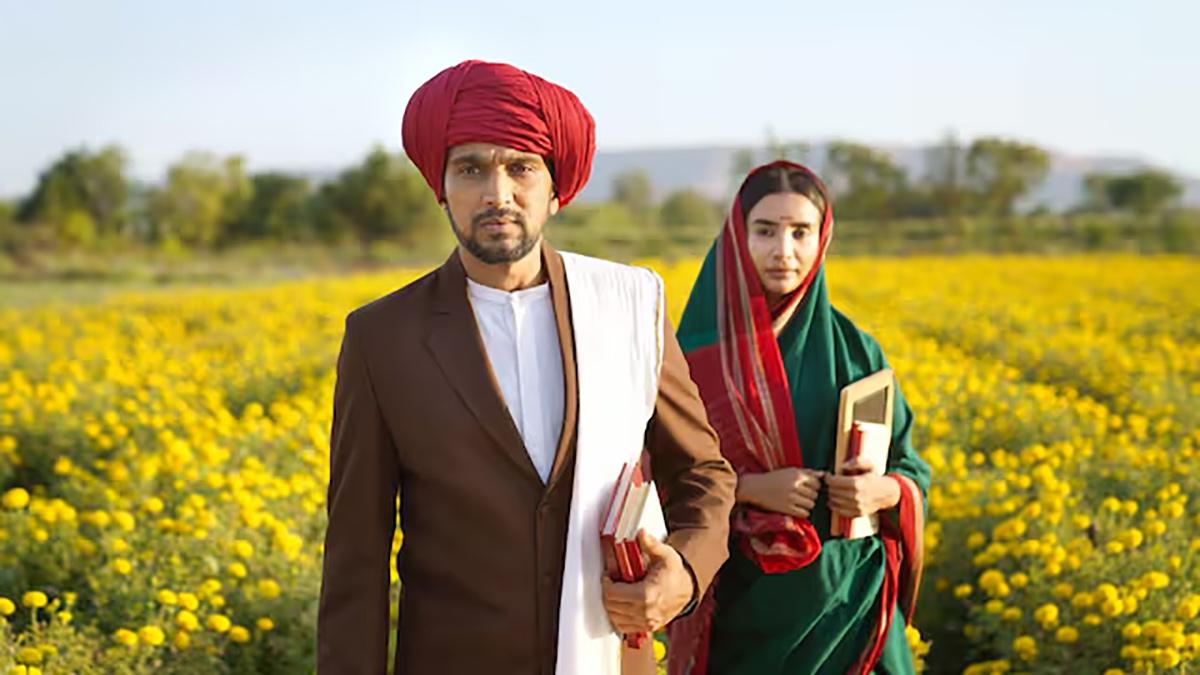
Pratik
Gandhi
and
Patralekhaa
in
Phule.
Can
you
share
any
particular
moment
from
this
film
that
impacted
you?
I
will
give
you
spoilers
if
I
talk
about
it!
(Laughs)
When
he
is
given
the
name
Mahatma,
he
delivers
a
speech.
Some
part
of
that
speech
is
a
part
of
the
trailer.
‘Humara
desh
ek
bhavuk
desh
hai.
Yahan,
dharam
aur
jaati
ke
naam
par
logo
ko
ladhana
bada
hi
saral
hai.
Yeh
bhavishya
mein
bhi
hoga
(Our
country
runs
on
sentiments.
It
is
very
easy
to
make
people
fight
in
the
name
of
religion
and
caste.
This
will
happen
in
the
future
too).’
Such
a
profound
line.
Not
just
today
or
hundred
years
back,
this
will
stand
true
in
centuries
to
come.
There’s
something
called
Powada
(a
form
of
poetry
that
glorifies)
in
Maharashtra.
When
I
was
performing
that
line,
a
Powada
group
came
and
created
a
song
for
Jyotiba
and
Savitribai
Phule.
When
the
song
reached
its
crescendo,
I
got
goosebumps.
There’s
another
sequence
where
Jyotiba
is
down
with
paralysis
and
he
thinks
his
life
will
end.
There
are
certain
things
that
he
wants
to
discuss
with
Savitribai
Phule.
That
scene
is
very
close
to
my
heart.
Did
you
visit
his
published
works
as
a
part
of
your
prep?
Like
his
most
notable
book,
Gulamgiri.
Gulamgiri
will
be
a
part
of
the
film.
The
book
was
with
us
during
the
shoot.
I
read
many
anecdotes
and
things
from
that.
The
script
itself
is
good
research
material
because
it
is
such
a
vast
topic
that
you
have
to
research
almost
everything
and
then
decide
on
the
flow
of
the
story.
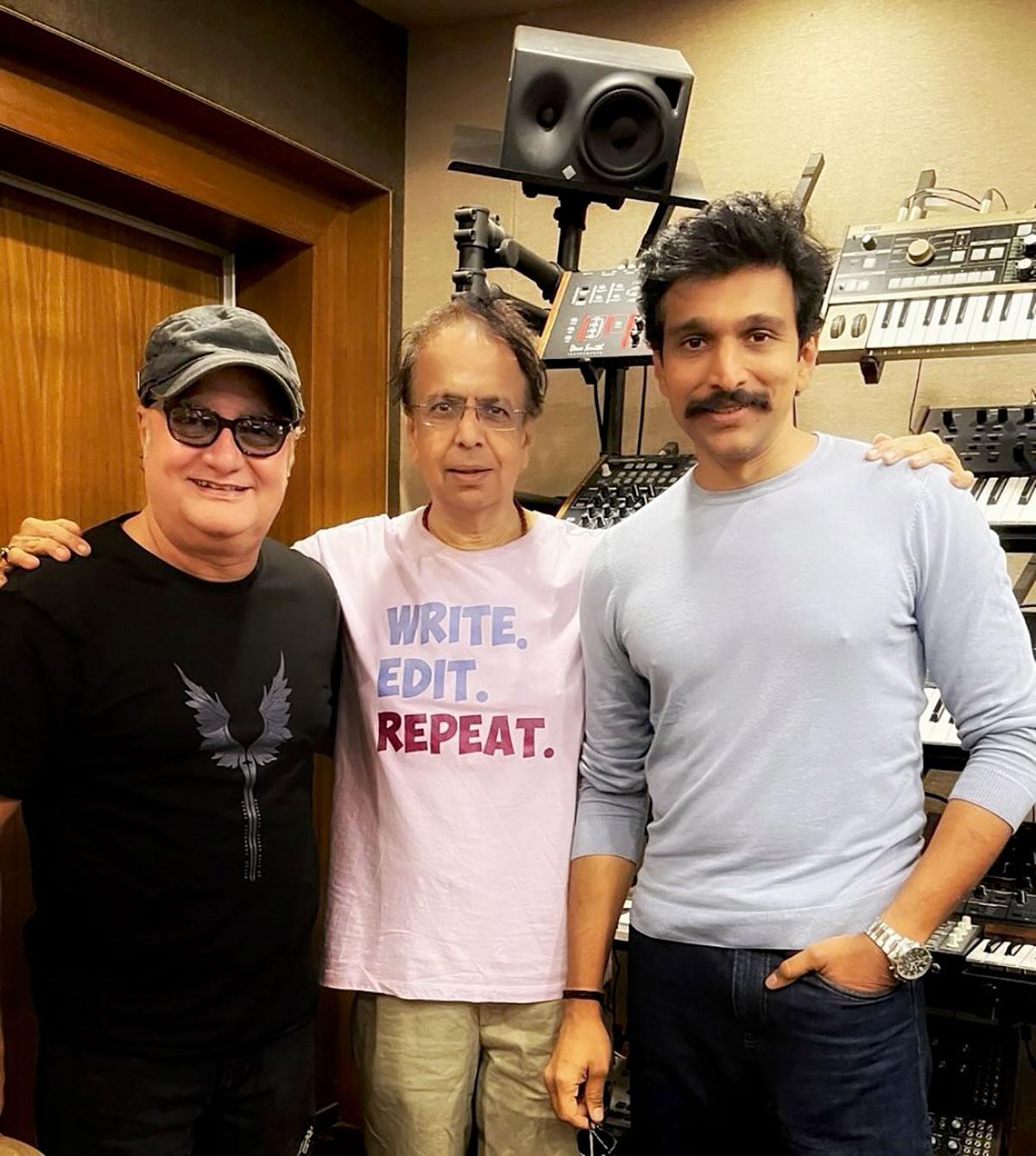
Vinay
Pathak,
Ananth
Narayan
Mahadevan
and
Pratik
Gandhi.
Photograph:
Kind
courtesy
Pratik
Gandhi/Instagram
How
does
the
social
commentary
in
this
film
mirror
our
current
times?
I
think
socially,
somewhere
we
are
losing
that
selflessness.
Everybody
is
scared.
We
want
to
hide
it
(by
saying)
we
are
too
busy
in
our
lives,
we
have
other
things
to
attend
to,
we
have
families.
But
they
all
had
families,
including
Jyotiba
or
Mahatma
Gandhi,
or
anybody
who
challenged
the
system.
It’s
just
that
the
courage
is
missing.
And
I’m
including
myself.
We
all
have
some
angst.
We
ask
why
are
things
not
changing.
But
what
are
we
doing?
We
live
in
difficult
times.
Jyotiba’s
philosophy
says:
‘People
die,
thoughts
don’t
die’.
Do
you
relate
to
his
words?
Absolutely.
This
is
the
philosophy
that
the
world
survives
on.
All
the
reformers
and
thinkers
have
given
us
something
different
in
life,
which
stays
with
us
for
centuries.
Like
the
concept
of
Ahimsa
(non-violence).
Jyotiba
had
said
that
if
you
want
to
fight
the
British,
or
any
system,
arms
and
ammunition
is
not
required.
What
you
require
is
knowledge.
It
fits
in
today’s
context
also.
The
recent
trend
shows
that
the
masses
are
lapping
up
angry
movies,
and
these
movies
are
doing
well.
Where
does
a
film
like
Phule
stand
in
such
a
scenario?
If
we
seriously
think
movies
can
change
lives,
the
thought
process
of
a
nation
or
move
things
socially,
politically,
personally,
then
this
film
should
move
people.
A
film
which
shows
anger
or
violence
in
a
different
way
is
largely
working,
as
you’re
saying.
If
that
is
true,
it
shows
the
sentiment
around
us,
right?
There
is
a
lot
of
angst
in
people’s
minds.
Most
of
the
people
are
angry
and
that
anger
wants
to
come
out.
But
Phule
will
tell
them
that
if
you
are
angry
or
not
happy
with
certain
things,
violence
is
not
the
only
way.
There
are
other
powerful
ways
to
tackle
this
situation.
Phule
was
really
angry,
really
hurt.
He
was
discriminated
on
the
basis
of
his
caste
and
that
triggered
what
he
did.
If
you
are
really
angry
about
certain
things,
this
is
the
most
sustainable
way
to
set
things
right
and
change.
That’s
how
I
understand
Phule’s
life,
and
I
hope
it
translates
for
people
also.
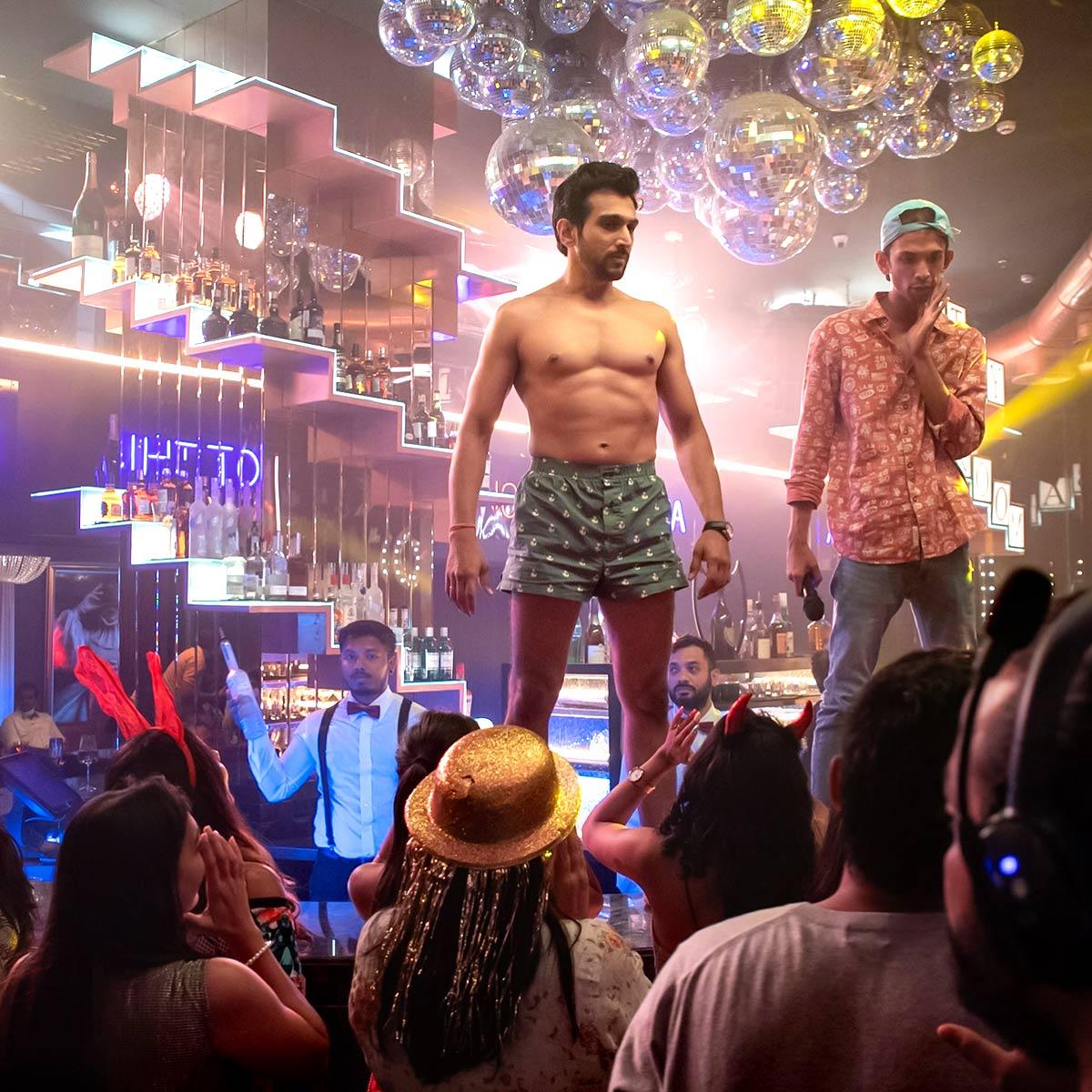
Pratik
Gandhi
in
Dhoom
Dhaam.
Photograph:
Kind
courtesy
Pratik
Gandhi/Instagram
Your
frequent
collaborator
Hansal
Mehta
recently
said
that
the
Hindi
film
industry
needs
a
disruption
in
its
process.
What
do
you
think
he
is
trying
to
say?
All
the
industries
need
innovation
consistently
and
constantly
because
everything
is
changing
extremely
fast.
I
am
sure
camera
companies
would
have
never
thought
that
mobiles
will
replace
them,
and
before
they
could
realise
that,
they
were
replaced.
The
same
thing
is
happening
in
stories
and
films.
As
an
actor,
what
I
understand
is
that
if
you
liked
certain
characters,
my
job
is
to
present
another
range
to
you
and
not
do
the
same
thing.
I
believe
in
the
first
thought
of
films:
Why
are
you
making
this
film?
Is
it
the
story
so
compelling
that
it
is
not
letting
you
sleep?
Is
it
constantly
telling
you
that
this
needs
to
come
out?
If
it
comes
from
that
point
of
passion
and
if
the
intentions
are
right,
it
will
translate
well.
But
if
the
starting
point
is
wrong,
like
if
you
begin
to
make
a
film
with
the
thought
that
let’s
make
a
Rs
100
crore
film,
then
it
it
is
bound
to
fail.
And
things
are
largely
failing.