‘I
think
because
India
is
a
bigger
country
and
Bollywood
is
such
a
well-oiled
machine,
the
star
thing
has
become
so
much
bigger
than
the
actor
thing.’
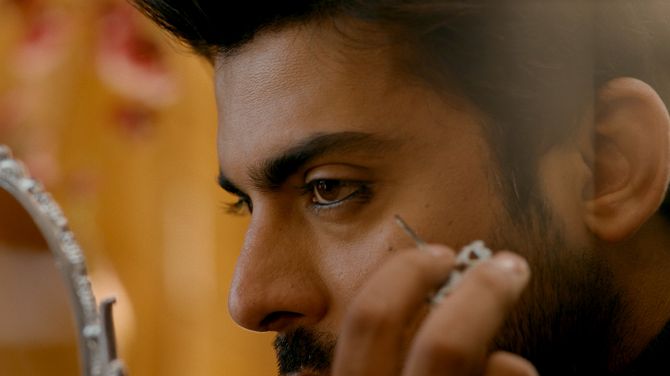
Fawad
Khan
in
Barzakh.
Film-maker
Asim
Abbasi
has
been
on
the
forefront
of
the
Pakistani
industry
since
the
success
of
his
2018
film,
Cake.
In
2019,
Pakistan
sent
Cake
as
its
official
entry
for
the
Best
International
Film
Oscar.
Two
years
later,
Abbasi
was
back
with
his
explosive
feminist
series
Churails,
backed
by
India’s
Zindagi
channel
and
Producer
Shailja
Kejriwal.
Kejriwal
and
Zindagi
are
once
again
the
producers
of
Abbasi’s
new
show
Barzakh.
Currently
streaming
on
the
ZEE5
platform
and
its
YouTube
channel,
Barzakh
is
a
gorgeously
shot
ensemble
drama,
about
a
patriarch
(Salman
Sahid)
struggling
with
dementia
and
his
estranged
sons
Shehryar
(Fawad
Khan)
and
Saifullah
(Fawad
M
Khan),
with
elements
of
the
supernatural
and
the
other
worldly
existence.
The
show
also
stars
Pakistani
actress
Sanam
Saeed
as
Scheherezade,
the
patriarch’s
adopted
daughter
whose
origins
are
part
of
the
show’s
other
worldly
mystery.
This
is
the
first
time
Fawad
Khan
and
Saeed
have
appeared
together
in
a
project
since
their
hugely
popular
2012
series
Zindagi
Gulzar
Hai.
But
the
two
actors
are
not
cast
as
romantic
leads
in
Barzakh.
Set
in
a
picturesque
mountain
location,
the
show’s
haunting
quality
slowly
pulls
the
audience
into
a
part
imaginary
world
that
Abbasi
has
created.
He
recently
said
that
Barzakh
is
like
Cake,
but
on
acid.
Aseem
Chhabra
spoke
to
London-based
Abbasi
about
Barzakh,
his
star
cast
and
the
controversies
the
show
is
beginning
to
generate
in
Pakistan:
“There
is
a
queer
subplot
and
from
episode
three
onwards,
there
has
been
some
negative
buzz
about
it.
There
is
an
almost
kiss
between
two
men.
It
happened
during Churails
also,
where
they
took
one
clip
out
of
context,
and
released
it
on
Twitter.
It
became
such
a
huge
deal
that
ZEE5
had
to
be
shut
down
in
Pakistan.”
Asim,
from
Cake
and
Churails,
how
did
you
transition
into
the
area
of
the
magic
realism,
the
other
worldly
life.
What
were
you
thinking
as
you
were
writing
this
show?
As
it
is
clear
from
the
show,
I
was
thinking
of
so
many
themes.
But
honestly,
after
the
success
of
Churails,
Shailja
and
Zindagi
were
keen
for
me
to
do
something
again.
It
was
a
unique
position
where
I
was
offered
a
blank
canvas,
which
doesn’t
happen
to
writers
and
directors
very
often.
It
was
a
thought-out
plan,
but
also
a
stream
of
consciousness
of
a
person
in
his
40s,
reflecting
back
on
the
life
he
had
lived
and
about
his
family,
his
parents.
Also,
some
existential
questions
which
were
there
anyway,
but
the
pandemic
had
highlighted
them
more
with
deaths
happening
around
us.
A
couple
of
years
ago,
I
lost
my
father
and
I
was
reading
and
thinking
about
life,
death,
and
what
happens
after.
It
also
became
an
experiment
in
how
content
is
consumed,
where
I
was
going
to
make
the
audience
become
more
active
than
they
generally
are.
What
happens
when
audiences
become
co-creators
to
a
certain
degree?
I
chose
not
to
explain
why
certain
things
happened.
Instead,
it
is
up
to
the
audience
to
figure
that
out.
Are
they
even
happening
in
the
father’s
mind
because
he
has
dementia?
Or
is
this
some
sort
of
a
supernatural
world?
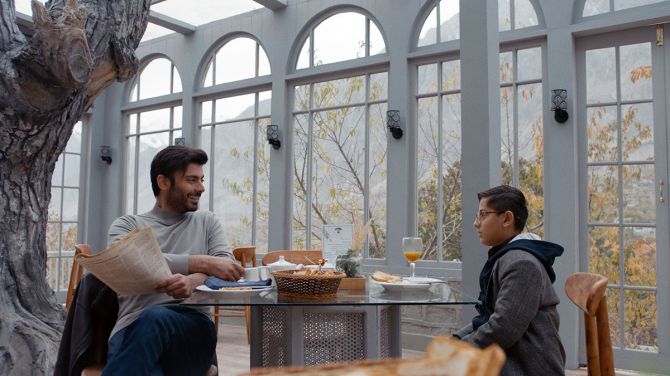
Fawad
Khan
and
Syed
Arham
in
Barzakh.
Indians
are
used
to
watching
Pakistani
family
dramas
and
romantic
tales.
But
now
quite
a
few
film-makers
are
exploring
a
range
of
subjects
in
Pakistan
—
from
Zindagi
Tamsha,
to
In
Flames,
Joyland,
Cake
and
Churails.
I
know
how
the
censors
have
reacted
to
these
films,
but
what
about
the
Pakistan
audience?
I
think
some
of
them
are
confused.
A
large
number
of
what
you
would
call
the
mass
audience
were
excited
to
see
Fawad
and
Sanam
together,
despite
my
attempt
to
be
very
clear
that
it
was
not
another
Zindagi
Gulzar
Hai.
But
I
think
it’s
hard
to
shake
those
expectations
off
from
the
audience.
There
is
a
queer
subplot
and
from
episode
three
onwards,
there
has
been
some
negative
buzz
about
it.
There
is
an
almost
kiss
between
two
men.
It
happened
during
Churails
also,
where
they
took
one
clip
out
of
context,
and
released
it
on
Twitter.
It
became
such
a
huge
deal
that
ZEE5
had
to
be
shut
down
in
Pakistan.
But
Barzakh
is
available
on
YouTube
in
Pakistan
and
they
have
again
taken
a
clip
without
giving
the
full
context
and
it’s
become
some
kind
of
an
agenda.
I
have
heard
people
say
it’s
such
a
beautiful
show,
but
why
has
Asim
Abbasi
added
a
gay
subplot?
I
am
dealing
with
the
whole
spectrum
of
masculinity,
talking
about
how
toxicity
travels
from
generation
to
generation.
That’s
the
part
of
a
dysfunctional
family
I
am
interested
in.
If
I
was
talking
about
a
straight
father
and
a
straight
son,
it
made
no
sense
to
me
to
just
talk
about
it
from
a
straight
person’s
point
of
view
because
toxicity
and
how
patriarchy
works,
how
men
become
closeted,
it’s
kind
of
important
in
that
setting.
You
can’t
argue
too
much
with
these
people.
It
will
eventual
write
itself
out.
I
am
hoping
people
will
continue
to
see
it.
Those
who
connect
with
it,
they
love
it.
But
you
get
both
sides.
You
actually
don’t
explore
the
queer
subplot
to
that
extent.
In
comparison,
that
was
the
main
theme
of
Joyland.
But
the
Joyland
version
released
in
Pakistan
was
different.
Some
of
the
most
beautiful
scenes
from
that
film
were
cut
out.
One
of
my
favourite
scenes
from
Saim’s
(Siddiq)
film
is
when
Haider
and
Biba
are
trying
to
be
intimate.
That
scene
just
knocked
me
out.
I
don’t
think
that
scene
was
there
in
the
Pakistani
version.
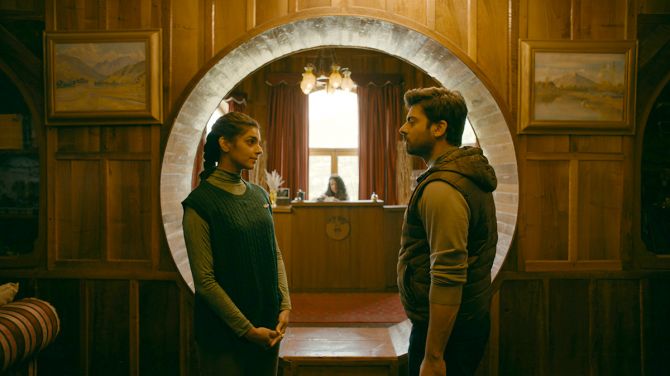
Sanam
Saeed
and
Fawad
Khan
in
Barzakh.
Talking
about
your
casting,
is
Fawad
Khan
the
biggest
star
in
Pakistan,
like
Shah
Rukh
Khan
level?
Yes.
Although
Shah
Rukh
Khan
is
a
little
different
because
India
is
such
a
large
country.
But
Fawad
is
the
biggest
superstar
in
Pakistan.
I
find
it
interesting
that
he
joined
an
ensemble
cast
for
the
show
where
he
is
not
the
lead
actor.
Some
Bollywood
actors
have
performed
in
OTT
shows
but
you
will
never
see
Shah
Rukh,
Salman
or
Ranveer
Singh
do
that.
So
what
are
the
differences
between
Pakistani
and
Bollywood
actors?
I
think
because
India
is
a
bigger
country
and
Bollywood
is
such
a
well-oiled
machine,
the
star
thing
has
become
so
much
bigger
than
the
actor
thing.
In
Pakistan,
it’s
a
double-edged
sword
where
the
industry
is
not
big
and
that’s
unfortunate,
but
people
are
still
able
to
maintain
why
they
started
doing
this
—
to
become
actors.
Shah
Rukh
also
wanted
to
be
an
actor.
This
was
his
passion.
But
somewhere
along
the
line
with
managers,
agents
and
box
office
draws,
it
becomes
so
industrial,
so
much
about
business.
And
you
have
so
many
voices
in
your
head.
In
Pakistan,
we
have
been
protected
from
that
because
our
industry
is
small.
Fawad
is
a
big
actor,
but
there
are
not
20
people
walking
with
him.
There
is
one
manager
and
perhaps
one
stylist.
It’s
not
the
same
game
as
in
Bollywood.
That
really
allows
the
Pakistani
actors
to
maintain
their
authenticity
in
terms
of
their
passion
for
acting.
But
I
didn’t
initially
reach
out
to
Fawad
because
I
also
believed
he
would
not
do
an
ensemble
project.
Eventually,
we
sent
him
the
script
he
said
he
loved
ensemble
films.
Kapoor
&
Sons
was
an
ensemble
film.
He
said
I
am
open
to
all
things
where
I
am
able
to
show
my
craft.
He
is
very
clear
that
he
wants
to
protect
himself
from
the
stardom
and
that’s
a
beautiful
place
to
be
in.
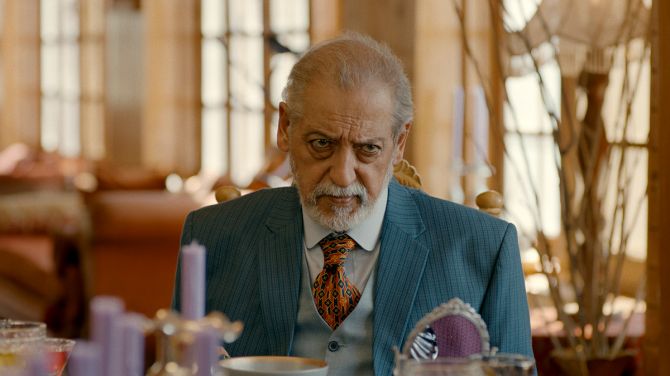
Salman
Shahid
in
Barzakh.
I
recognised
Fawad
M
Khan
from
Churails.
He
was
the
policeman
who
was
attracted
to
Nimra
Bucha’s
character.
He
is
so
good
in
this
show.
Yes,
you
are
right.
I
have
never
written
a
character
with
an
actor
in
mind.
This
was
the
first
time
when
I
was
writing
Barzakh,
I
was
hoping
that
Fawad
M
Khan
would
play
Saifullah.
I
knew
he
had
this
nuanced,
smallness
of
things
that
he
does,
which
were
very
important
for
a
character
who
wasn’t
big
on
vocalising
his
feelings.
You
have
worked
with
Sanam
in
Cake
where
she
was
almost
the
lead
character.
In
Barzakh,
there
is
no
lead
character
but
Sanam
carries
the
show
on
her
shoulders,
since
the
voice-over
is
hers.
Sanam
and
I
have
a
great
relationship.
I
wanted
her
for
Churails
as
well
but
she
was
busy
doing
another
film.
We
have
a
comfort
level
where
she
understands
how
I
work.
I
can
be
open
and
free
with
her
and
say,
‘Sanam
we
need
to
do
it
differently.’
Sanam
always
auditions
and
she
did
for
Scheherezade’s
role
as
well.
But
that
was
one
audition
I
was
hoping
would
work
out.
Sanam
has
this
unique
blend
of
hardness
and
softness.
She
can
be
hot
and
cold
at
the
same
time.
That
is
important
for
someone
who
was
playing
an
otherworldly
character.
And
it
was
super
difficult
because
she
couldn’t
emote
to
the
level
that
a
human
could.
But
she
also
couldn’t
be
stiff
and
not
be
empathetic.
Finding
that
balance
was
not
an
easy
task.
I
think
she
did
a
retty
phenomenal
job.
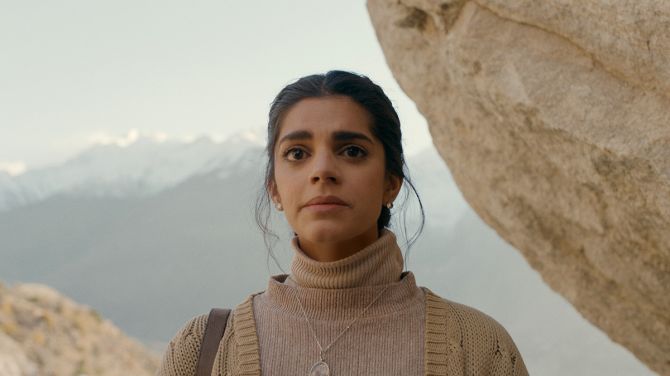
Sanam
Saeed
in
Barzakh.
You
just
said
something
very
interesting:
Sanam
auditioned
for
the
roll.
These
guys
are
big
actors
but
did
you
audition
all
three
of
them?
We
couldn’t
audition
Fawad
because
he
joined
too
late.
But
usually,
actors
do
and
Sanam
always
auditions
for
me,
no
matter
how
big
she
is,
because
we
both
want
to
be
sure
she
is
right
for
the
role.
That’s
amazing.
When
I
asked
you
about
the
differences
between
Bollywood
and
Pakistani
actors,
here
is
one.
Alia
Bhatt
and
Deepika
Padukone
will
never
audition
unless
they
are
planning
to
work
on
a
Hollywood
project.
But
that
goes
back
to
the
same
thing
when
you
are
no
longer
just
an
actor.
Auditions
are
a
huge
part
of
an
actor’s
life.
But
when
you
cross
over
to
becoming
a
star,
you
are
not
allowed
to
be
just
an
actor.
Where
was
the
show
shot?
The
locations
are
stunning.
It’s
a
place
called
Hunza
Valley,
which
is
in
northern
Pakistan
in
Gilgit
Baltistan.
The
mountainous
terrain
is
such
a
huge
character
in
this
show
that
we
had
to
get
the
geography
of
it
right.
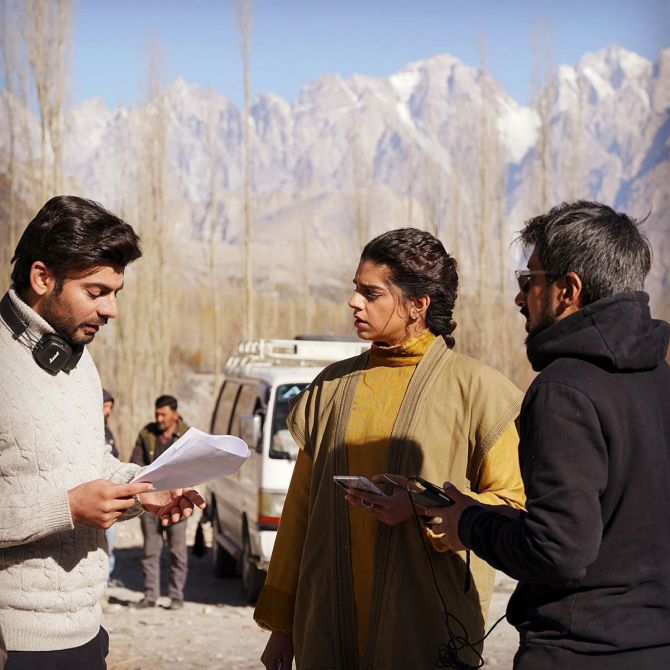
Director
Asim
Abbasi
explains
a
scene
to
Fawad
Khan
and
Sanam
Saeed.
Photograph:
Kind
courtesy
Asim
Abbasi/Instagram
It
was
stunning.
The
other
thing
that
I
noticed
you
shot
the
show
in
the
fall
because
you
have
the
leaves
changing
colours.
I
would
imagine
it
was
deliberately
planned
because
there
is
a
brown
colour
palette
throughout
the
show,
including
the
clothes
they
wear.
From
the
story
point
of
view,
fall
or
autumn
was
very
important
because
it
was
about
rebirth.
It
was
about
leaves
falling,
everything
withering
and
then
coming
back
to
life
in
spring.
We
decided
at
the
scripting
stage
that
it
needed
to
happen
in
the
fall.
And
that
ended
up
dictating
the
colour
palette.
Hunza
is
a
beautiful,
haunting
place.
But
the
mountains
can
get
very
melancholic
as
well.
I
had
always
seen
that
beauty
and
how
breathtaking
the
mountains
are.
But
once
you
start
spending
time,
there’s
something
really
sad
about
them.
Maybe
because
we
went
there
at
the
tail
end
of
summer.
We
saw
it
turn
into
fall
and
then
winter.
By
then,
I
felt
like
I
had
been
there
for
a
lifetime.
I
find
your
relationship
with
Shailja
and
Zindagi
very
fascinating.
These
professional
ties
continue,
despite
the
ups
and
downs
in
the
India-Pakistan
relationships.
But
what
does
it
bring
to
the
table?
It
opens
up
a
new
world.
I
think
it’s
especially
so
with
a
show
like
Barzakh
which
is
not
based
on
religion.
We
live
in
different
countries
where
we
have
cultural
similarities.
We
have
lots
of
things
we
can
bond
over
but
we
can
also
bring
things
to
the
table
that
are
unique
to
us
because
of
our
own
experiences.
It’s
definitely
been
a
very
enriching
process
for
me.
Of
course,
it’s
a
bigger
audience.
We
don’t
have
a
local
platform
in
Pakistan.
We
don’t
have
a
strong
Netflix
presence.
Netflix
is
now
doing
their
first
show
in
Pakistan.
So
for
an
entity
like
Zindagi
to
say
we
are
interested
in
creating
unique
content
is
very
encouraging.