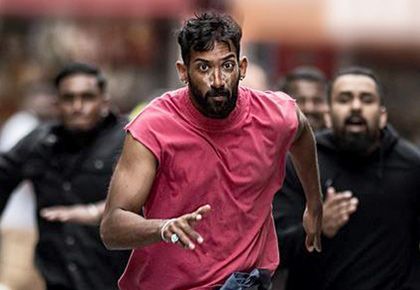
‘The
war
ended
in
2009
and
I
believe
the
new
generation
of
Tamils
don’t
know
what
was
going
on
there.’
‘I
felt
it
was
my
duty
to
tell
our
story.’
‘Since
2009,
it
seems
like
we
are
sleeping.’
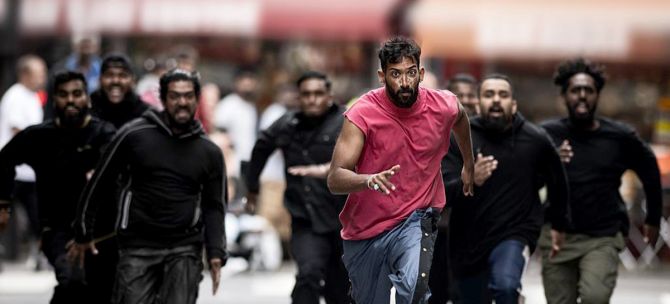
Lawrence
Valin
in
Little
Jaffna.
Tamil-French
film-maker
and
actor
Lawrence
Valin
is
having
his
grand
moment
in
film
festival
circuits
with
his
debut
feature,
Little
Jaffna.
Born
in
France,
Valin’s
parents
migrated
to
that
country
from
Sri
Lanka.
He
was
raised
by
his
grandmother,
hearing
stories
about
the
war
in
Sri
Lanka
and
the
plight
of
the
Tamil
people
there.
After
struggling
as
an
actor
in
France,
Valin
finally
decided
to
write
and
direct
his
own
films
to
narrate
the
stories
of
his
people.
Little
Jaffna
is
a
follow
up
to
a
short
with
the
same
name,
and
was
premiered
at
the
Venice
Film
Festival
as
well
as
the
Toronto
International
Film
Festival.
It
is
also
included
in
the
upcoming
MAMI
line-up.
A
gripping
thriller,
Little
Jaffna
shines
a
light
on
the
Tamil-Sri
Lankan
Diaspora
in
Paris.
Its
vast
cast
includes
two
Indian
Tamil
actors,
Radhika
Sarathkumar
and
Vela
Ramamoorthy.
Valin
plays
the
lead,
Michael,
a
Tamil
man
hired
as
a
cop
in
Paris.
His
assignment
is
to
infiltrate
the
Tamil
Tigers
and
follow
the
trail
of
money
being
raised
and
then
sent
to
Sri
Lanka.
Little
Jaffna
is
thrilling,
entertaining
and
a
colourful
representation
of
the
Tamil
community
in
Paris.
The
film
even
features
a
boisterous
scene
of
Michael
and
his
friends
watching
a
Tamil
film,
starring
Vijay,
in
a
Paris
theatre.
It
has
the
energy
of
two
Cannes
Film
Festival
winning
films
Mathieu
Kassovitz’s
La
Haine
(1995)
and
Jacques
Audiard’s
Dheepan
(2015).
Valin
is
clearly
inspired
by
Martin
Scorsese’s
films.
In
fact,
his
company
is
named
Mean
Streets,
which
was
the
title
of
Scorsese’s
1973
film.
Valin
chats
with
Aseem
Chhabra
after
the
screening
of
his
film
in
Toronto,
and
says,
“My
mother
was
cleaning
homes
and
I
have
not
known
my
father
since
I
was
three.
I
come
from
the
bottom,
and
had
to
climb
and
climb
to
get
here.”
Lawrence,
before
your
film,
Jacques
Audiard
made
Dheepan
and
it
is
the
only
other
Tamil-Sri
Lankan
film
made
in
France.
I
believe
you
were
almost
cast
as
a
lead
actor
in
Dheepan.
I
passed
the
audition
for
the
main
role.
But
after
three
months,
they
told
me
the
lead
character
was
going
to
be
an
older
man.
Instead,
they
said
they
needed
people
for
a
picnic
scene
in
a
park
and
wanted
to
cast
me.
I
thought
a
lot
and
then
said
to
myself,
‘Man,
I
cannot
do
that.’
People
told
me
that
at
least
I
could
watch
Jacques
Audiard
work
and
learn
from
him.
But
my
ego
as
an
actor
told
me
not
to
go.
The
film
went
on
to
win
the
Palme
d’Or
in
Cannes,
but
it
was
also
beginning
of
my
becoming
a
director.
I
thought
about
how
after
Dheepan,
no
one
else
in
France
will
make
a
film
about
Tamil
people.
And
I
was
right.
I
also
thought
that
if
nobody
gave
me
a
chance,
I
would
have
to
create
that
chance
myself.
So
I
have
to
thank
Audiard
because
otherwise,
I
don’t
think
I
would
have
directed
a
film.
Did
you
act
in
films
before
that?
The
offers
I
got
were
mostly
stereotypical
or
cliched
characters.
I
did
do
small
roles.
I
grabbed
whatever
little
dust
they
give
me,
and
I
would
say
okay,
this
is
my
main
character.
I
was
always
given
small
Indian
characters
because
of
my
skin
colour.
But
I
had
put
in
five
years
of
studies
at
the
La
Résidence
de
La
Fémis
to
be
an
actor.
It
is
one
of
the
best
schools
in
France.
So
finally
I
said
I
cannot
work
like
that.
That’s
when
I
realised
that
writing
was
the
only
way
for
me
to
express
myself,
and
create
characters
that
I
would
love
to
play.
My
final
year
short
film
The
Loyal
Man
got
selected
at
the
Clermont-Ferrand
Festival.
I
didn’t
even
know
that
it
was
an
important
festival,
but
I
won
the
Best
Actor
award
there.
As
a
director,
I
didn’t
face
a
lot
of
struggle.
I
managed
to
get
my
short
films
and
this
feature
financed.
But
before
that,
I
struggled
as
an
actor
for
13
years.
That
made
me
become
focused
as
a
director.
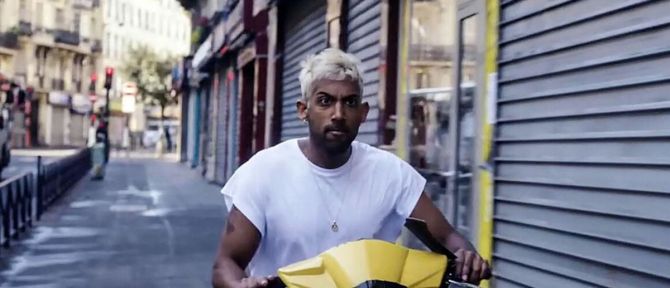
Lawrence
Valin
in
the
short
film
Little
Jaffna.
I
haven’t
seen
the
short
film
you
directed
called
Little
Jaffna
,
but
I
saw
some
photographs.
You
changed
your
look
because
you
had
blond
hair
there.
You
look
different
in
the
feature
film.
Why
did
you
decide
to
change
Michael’s
look?
Yes,
every
time
I
had
to
change
my
way
of
looking,
so
people
would
not
recognise
me.
Because
the
real
Lawrence
that
you
see
at
film
screenings
is
very
shy.
I
like
to
be
in
the
shadows.
But
when
I
am
in
character,
that
gives
me
power.
In
this
film,
I
had
put
make
up
on
my
face
to
make
it
look
like
I
had
white
marks.
Yeah,
that
was
very
interesting
because
you
were
you
trying
to
show
how
your
character
is
transitioning,
that
Michael
is
partly
white
and
French,
and
partly
brown
and
Tamil,
Sri
Lankan.
Exactly.
For
me,
it’s
very
important.
Also,
I
have
a
real
mark
on
my
back.
So
without
any
dialogue,
without
anything
to
say,
I
put
this
on
the
screen.
The
audience
can
see
there
are
white
spots,
and
two
colours
on
Michael’s
face.
He’s
French
and
he
is
Tamil.
I
am
like
that
in
real
life.
The
makeup
thing
was
a
challenge.
The
producers
were
nervous,
but
I
went
with
it.
For
the
short
Little
Jaffna,
you
worked
with
Jesuthasan
Anthonythasan,
who
was
the
lead
actor
in
Dheepan.
Yes.
He
had
worked
with
Jacques
Audiard
and
I
could
direct
him
easily.
I
also
cast
him
in
my
second
short
The
Loyal
Man
(2020).
But
you
did
not
cast
him
in
your
feature
film.
Because
then
people
would
compare
Dheepan
with
my
feature
film.
I
wanted
my
film
to
stand
on
its
own.
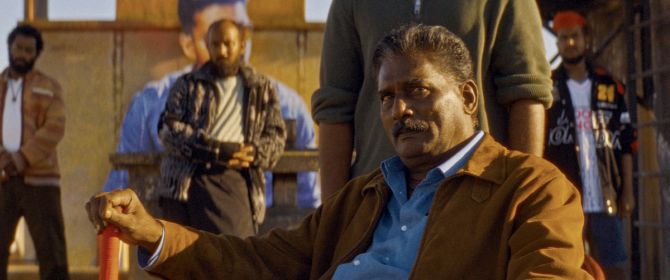
Vela
Ramamoorthy
in
Little
Jaffna.
I
couldn’t
help
but
notice
that
there’s
a
similarity
between
the
story
of
Little
Jaffna
and
Andrew
Lau’s
Hong
Kong-based
crime
trilogy
Infernal
Affairs
(2002-2003).
Because
in
those
films
also,
the
cop
infiltrates
a
Chinese
gang.
Were
you
influenced
by
Infernal
Affairs?
In
the
writing
stage,
I
was
influenced
by
Martin
Scorsese’s
The
Departed
(2006).
Yes,
The
Departed
was
a
remake
of
the
Infernal
Affairs
trilogy.
I
didn’t
see
the
original.
But
while
writing,
I
wanted
to
explore
how
a
man
enters
a
community
he
is
not
a
part
of.
And
that
idea
came
from
The
Departed.
But
I
was
also
inspired
by
We
Own
the
Night
(2007),
which
was
directed
by
James
Gray.
One
of
the
last
scenes
in
my
film
is
Michael
looking
at
his
grandmother
and
wondering
where
his
life
will
go.
That
was
inspired
by
Joaquim
Phoenix
in
We
Own
The
Night,
when
he
says
‘What’s
going
on
with
my
life?
Am
I
at
the
right
place.’
But
this
was
only
during
the
writing
phase.
When
I
planned
to
direct
the
film,
I
was
influenced
by
Anurag
Kashyap’s
Gangs
of
Wasseypur
(2012).
It
was
an
Indian
style
film
but
at
the
same
time,
European
audiences
connected
with
it.
That’s
very
difficult
thing
when
you
have
a
film
appreciated
by
Indian
as
well
as
EWestern
audiences.
I
had
to
struggle
to
maintain
a
balance
where
the
film
is
not
just
for
white
or
Tamil
people.
I
grew
up
watching
Tamil
films,
where
you
pack
a
punch
and
the
guy
falls
100
metrEs.
And
the
shot
is
repeated.
It’s
a
double
punch.
Yes,
the
double
punch.
Somebody
told
me
in
film
editing
it
is
called
the
Madras
Cut.
It
was
often
used
in
Rajinikanth’s
and
Vijay’s
films.
Exactly.
For
us,
it
is
natural
to
see
stars
like
Rajinikanth
and
Vijay
do
the
double
punches.
And
we
would
go,
wow,
that’s
action.
The
French
public
would
think
that
is
comedy,
but
as
a
Tamil
boy,
I
accepted
that
world
of
cinema.
I
liked
the
extraordinary
touches
of
film-making.
At
the
same
time,
I
grew
up
with
French
cinema
too,
where
life
can
be
really
simple.
I
wanted
to
put
beauty
in
the
film
as
well.
So
what
you
see
in
Little
Jaffna
is
a
blend
of
the
two
kinds
of
cinemas.
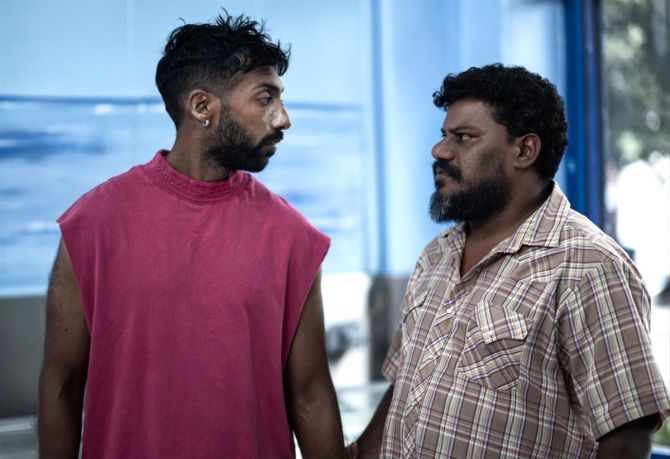
Lawrence
Valin
in
Little
Jaffna.
But
despite
the
inspiration
from
The
Departed,
you
created
your
own
story.
And
you
cast
two
Indian
actors.
I
wanted
Radhika
ma’am
and
Vela
sir
because
they
play
important
characters
and
have
strong
lines.
Young
actors
would
not
have
been
able
to
work
with
those
lines.
It
was
a
pleasure
to
work
with
professional
actors.
I
am
used
to
working
with
first-time
and
non-trained
actors,
and
both
of
them
would
deliver
in
one
or
two
takes.
They
came
from
India
and
once
they
joined
the
shoot
everybody
felt
okay,
it
is
a
professional
film.
At
the
TIFF
screening,
you
mentioned
how
in
France
you
can
make
a
film
with
Tamil
characters.
This
is
a
very
French
film,
even
though
90
percent
of
the
characters
are
actually
Tamil.
The
thing
is
people
think
that
in
France
it’s
complicated.
And
it
was
complicated
for
me
as
an
actor.
At
the
same
time,
they
gave
opportunities,
otherwise
I
would
not
have
become
a
director.
If
you
have
a
good
script,
they
will
finance
your
film.
In
India
and
Sri
Lanka,
there
are
young
film-makers
who
can
tell
their
own
stories
better
than
I
can
if
I
made
films
there.
In
France
sometimes,
I
am
too
Indian
and
in
India,
I
am
too
white.
In
France,
I
have
to
create
my
own
place
to
tell
people
my
story
in
the
Tamil
Diaspora.
I
didn’t
have
a
father
or
mother
in
the
industry.
My
mother
was
cleaning
homes
and
I
have
not
known
my
father
since
I
was
three.
I
was
raised
by
my
grandmother
(the
role
Radhika
Sarathkumar
plays
in
his
film).
I
come
from
the
bottom,
and
had
to
climb
and
climb
to
get
here.
When
you
don’t
have
role
models,
you
have
to
create
your
own.
I
am
a
father
now
and
have
two
kids.
Before
I
had
kids,
I
could
play
an
Indian
guy
in
films.
But
when
my
daughter
was
born,
I
had
to
create
something
for
her
and
her
generation.
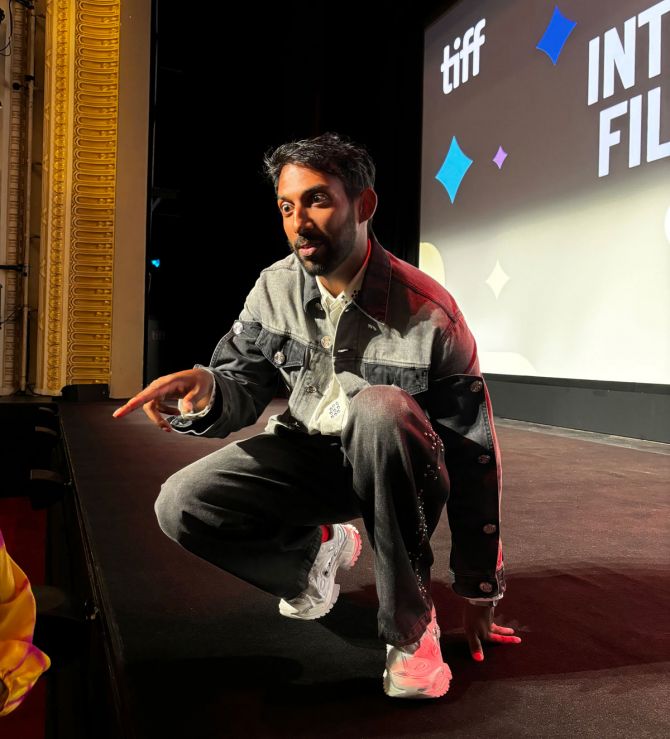
Lawrence
Valin
at
TIFF.
Photograph:
Aseem
Chhabra
This
is
a
difficult
question.
I
know
the
Tamil
population
in
Sri
Lanka
suffered
a
lot.
But
can
there
be
real
peace
now
between
the
Tamil
and
the
Sinhalese
people?
And
will
there
be
a
time
when
your
film
can
be
shown
in
Sri
Lanka?
I
would
love
to
show
the
film
there.
At
the
second
screening
in
Toronto,
a
Tamil
mother
came
to
me
and
started
to
cry
in
my
arms.
She
said
to
me,
‘Thank
you
for
telling
our
story.’
I
told
her,
‘Amma,
I
tried
to
keep
the
memories,
our
story
alive,
otherwise
we
will
forget
about
it.’
The
war
ended
in
2009
and
I
believe
the
new
generation
of
Tamils
in
the
Diaspora
don’t
know
what
was
going
on
there.
I
felt
it
was
my
duty
to
tell
our
story.
Since
2009,
it
seems
like
we
are
sleeping.
I
understand
life
has
to
go
on.
People
have
to
eat
and
everything
is
expensive.
But
we
lost
so
many
things
in
this
war.
I
had
to
think
about
how
to
put
light
on
our
story,
our
history.
But
if
I
had
made
a
film
only
for
Tamil
people
about
the
war,
just
a
few
people
would
have
watched
it.
I
thought
by
making
a
thriller,
adding
crime
and
chase
sequences,
and
the
police
into
the
mix,
non-Tamils
will
also
learn
that
there
was
a
war.
I
also
know
that
if
I
talk
about
(Velupillai)
Prabhakaran
and
the
Tamil
Tigers,
it
will
be
hard
to
show
the
film
in
Sri
Lanka.
In
India,
some
film-makers
have
been
able
to
make
movies
about
the
war
(A
Peck
on
the
Cheek,
Madras
Café)
but
it
will
be
very
complicated
for
me
to
take
the
film
to
Sri
Lanka.