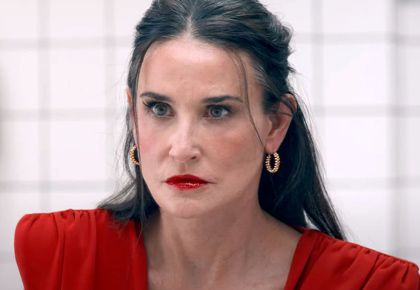
‘I
made
it
very
clear
even
at
the
casting
process
that
there
was
going
to
be
a
lot
of
nudity.
And
I
wanted
to
be
sure
that
it
would
be
done
with
ease.’
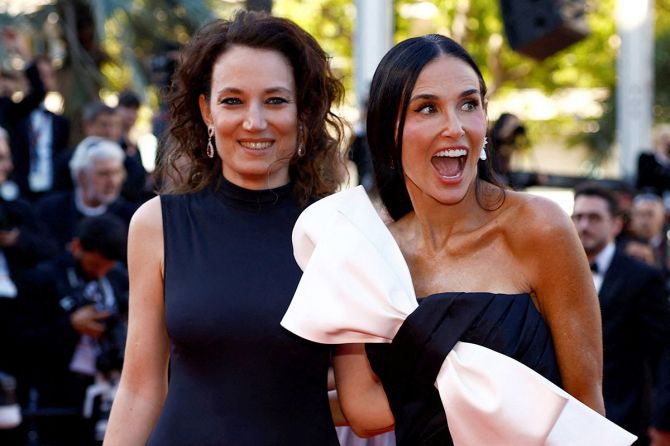
Demi
Moore,
right,
and
Director
Coralie
Fargeat
at
Cannes.
Photograph:
Sarah
Meyssonnier/Reuters
This
year,
the
Best
Screenplay
Award
at
the
Cannes
Film
Festival
was
awarded
to
French
film-maker
Coralie
Fargeat,
writer
and
director
of
The
Substance.
It
is
definitely
the
most
audacious,
bold
and
terrifying
film
of
the
year.
Following
the
Cannes
recognition,
The
Substance
won
the
People’s
Choice
Award
in
the
Midnight
Madness
section
at
the
Toronto
International
Film
Festival.
In
The
Substance,
Fargeat
explores
show
business
and
the
world
of
television
where
women
are
supposed
to
look
young
and
perfect.
Any
sign
of
aging
and
the
television
executives
will
immediately
replace
the
anchor.
Or
in
this
case,
the
star
of
an
aerobics
show.
The
Substance
stars
Demi
Moore,
the
Hollywood
celebrity,
who
had
virtually
vanished
from
the
big
screen,
although
she
was
seen
in
a
few
series.
At
62,
Moore’s
star
seemed
to
have
been
eclipsed
by
younger
actresses.
And
so
The
Substance
is
also
a
reflection
of
a
possible
situation
where
a
star
like
Moore
could
get
desperate
to
reimagine
herself
and
emerge
once
again
in
the
public
eye.
Rejected
by
her
television
channel,
Elisabeth
Sparkle,
a
famous
aerobics
instructor
(played
by
Moore)
resorts
to
extreme
measures,
taking
shots
that
create
a
chemical
reaction
in
her
body.
The
result
is
Sue
(Margaret
Qualley,
Andie
MacDowell’s
daughter),
a
younger
version
of
Elisabeth,
who
emerges
out
of
her
body.
The
violence
of
one
person
exiting
another
takes
on
an
extreme
form
as
Elisabeth
and
Sue
(essentially
one
person)
start
to
compete
with
each
other.
The
Substance
is
shocking
and
thrilling.
And
in
a
year
of
many
actors
shedding
their
clothes
—
from
Nicole
Kidman
(Babygirl)
to
Daniel
Craig
(Queer)
and
Jacob
Elordi
(On
Swift
Horses),
Moore
and
Qualley
are
often
shown
completely
naked
in
their
most
vulnerable
state.
Censors
in
India
would
surely
have
issues
with
the
content
in
The
Substance,
but
audiences
can
watch
the
film
at
the
Mumbai
Film
Festival
(MAMI).
The
film
will
also
stream
on
MUBI
India.
Fargeat
tells
Aseem
Chhabra,
“When
I
first
met
Demi
Moore,
I
had
this
image
of
a
movie
star
and
a
very
famous
actress.
Before
we
decided
to
work
together,
I
read
her
autobiography
(Inside
Out)
and
I
was
impressed.
By
reading
her
book,
I
discovered
another
side
to
the
actress
I
only
knew
on
the
screen.
I
could
understand
why
she
would
want
to
take
the
risk
and
accept
this
role.”
Coralie,
your
short
film
Reality
+
(2014
film,
currently
streaming
on
MUBI)
focused
on
this
theme
of
men
and
woman
trying
to
get
perfect
bodies
and
faces.
Why
did
you
revisit
the
theme
in
The
Substance?
And
this
time,
you
focus
only
on
women.
I
think
at
that
time,
I
wasn’t
ready
to
fully
address
the
issue
in
a
direct
way.
I
was
younger
and
so
it
was
easier
to
make
a
general
statement
that
included
men
and
women.
After
I
made
my
first
feature
film
Revenge
(2017),
I
became
more
aware
about
similar
issues.
I
was
ready
to
address
them
in
a
very
specific
way.
Also,
I
thought
about
my
own
story,
how
I
have
experienced
things
in
my
own
life.
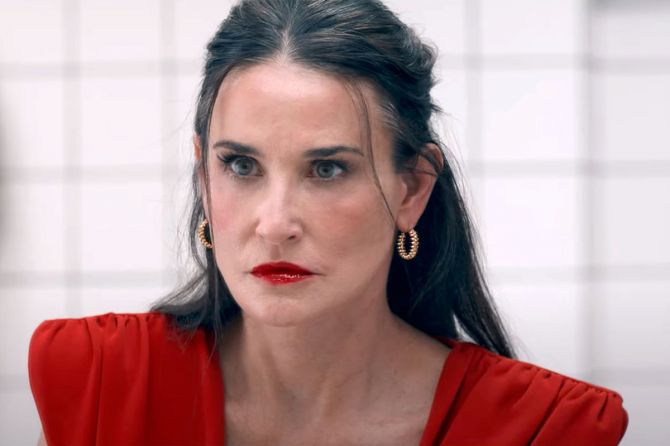
Demi
Moore
in
The
Substance.
This
question
is
no
reflection
on
Demi
Moore
because
I
think
she
is
brilliant
in
this
film,
but
did
you
consider
Andie
McDowell
for
the
role?
That
would
also
have
been
interesting
as
Margaret
Qualley’s
character
would
have
come
out
of
her
mother’s
body.
I
didn’t
want
the
film
to
be
about
a
mother-daughter
relationship
because
it
would
have
felt
awkward.
I
am
sure
that
many
actresses
could
have
been
great
in
the
role
played
by
Demi.
I
think
many
actresses
have
experienced
the
same
reactions
as
they
get
older.
They
are
offered
fewer
roles
when
they
get
to
a
certain
age.
I
believe
Demi
was
the
one
for
this
part.
It
was
a
risky
project
with
a
lot
of
nudity
and
exposure,
and
she
was
confident
enough
to
accept
it.
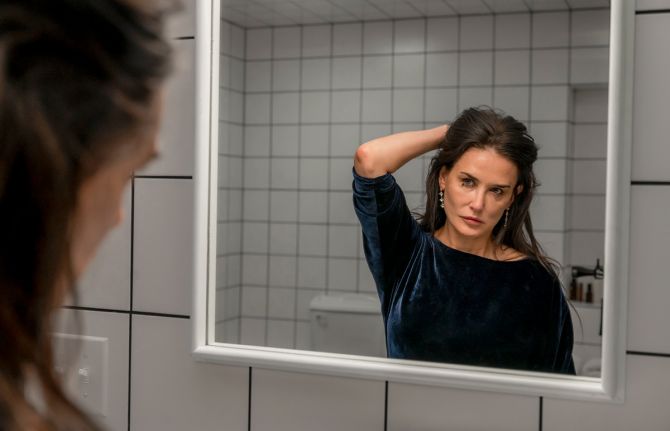
Demi
Moore
in
The
Substance.
I
think
everyone
wants
to
see
Demi
Moore
make
a
comeback
with
a
splash.
Did
she
have
any
reservations
about
the
role?
The
same
question
applies
to
Margaret
Qualley.
How
prepared
was
she
to
take
on
this
challenging
role?
It’s
interesting
because
from
the
beginning,
the
script
was
crystal
clear.
Of
course,
you
can
be
as
clear
as
you
want
on
the
page,
but
everyone
would
still
have
their
own
interpretation
of
how
it’s
going
to
be
shown.
I
made
it
very
clear
even
at
the
casting
process
that
there
was
going
to
be
a
lot
of
nudity.
And
I
wanted
to
be
sure
that
it
would
be
done
with
ease.
I
needed
partners
who
would
want
to
tell
the
same
story
the
way
I
had
visualised
it.
So
during
the
early
discussions,
I
prepared
them
about
how
the
movie
was
going
to
be
shot.
Both
were
on
board
and
understood
that
the
nudity
and
everything
that
was
quite
bold
was
there
to
serve
a
purpose.
Was
there
anything
they
said
they
wouldn’t
do?
There
really
wasn’t
anything
they
refused
to
do.
Everything
that
is
on
screen
was
in
the
script,
so
there
was
no
surprise.
I
explained
all
the
scenes
that
had
nudity,
and
how
I
would
film
them.
If
there
were
any
issues,
they
would
have
spoken
to
me.
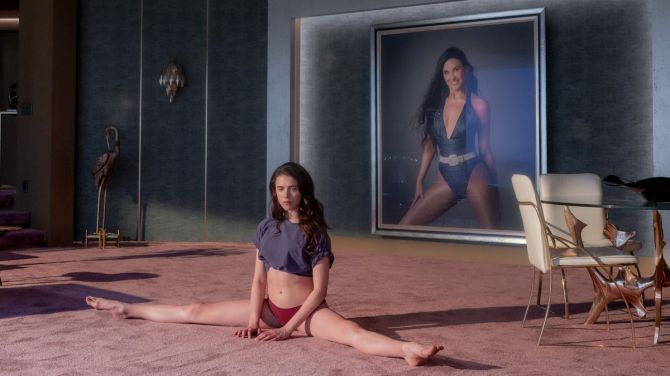
Margaret
Qualley
in
The
Substance.
After
waiting
so
long,
Demi
Moore
has
got
an
incredible
role.
This
is
her
comeback
film.
How
is
she
responding
to
the
press
and
public
reactions?
When
I
first
met
her,
I
had
this
image
of
a
movie
star
and
a
very
famous
actress.
Before
we
decided
to
work
together,
I
read
her
autobiography
(Inside
Out)
and
I
was
impressed.
I
understood
how
she
went
through
everything
on
her
own.
She
had
a
tough
life
on
many
points
and
that
made
her
the
way
she
is
today.
She
had
a
strong
will
and
was
always
thinking
out
of
the
box.
She
took
definite
feminist
positions
and
was
ahead
of
her
time.
She
is
a
smart
woman.
By
reading
her
book,
I
discovered
another
side
to
the
actress
I
only
knew
on
the
screen.
I
could
understand
why
she
would
want
to
take
the
risk
and
accept
this
role.
When
I
look
at
her
now,
I
am
so
happy.
I
feel
like
she
has
become
so
much
stronger
in
the
past
few
years.
I
think
she
has
earned
her
place
again.
It
was
really
good
to
see
her
at
the
film’s
Cannes
premiere
because
she
deserved
all
the
success.
She
is
really
brave,
and
it
was
a
long
and
tough
shooting.
She
cared
about
her
character
and
played
the
role
in
a
super
sincere
way.
That’s
what
I
love
about
film
because
you
cannot
lie.
Her
honesty
and
sincerity
shows
on
the
screen.
You
said
at
the
press
conference
that
this
was
the
first
step
towards
equality
as
far
men
and
women
are
concerned
and
how
bodies
are
shown
on
the
screen.
Can
you
explain?
To
me,
when
we
you
talk
about
feminism,
I
believe
that
we
are
really
at
the
very
beginning
of
how
everything
should
be
and
lead
to
real
equality.
To
me,
the
body
issue
is
one
big
representation
of
the
rest
of
the
power
issues
and
how
societies
are
still
so
imbalanced.
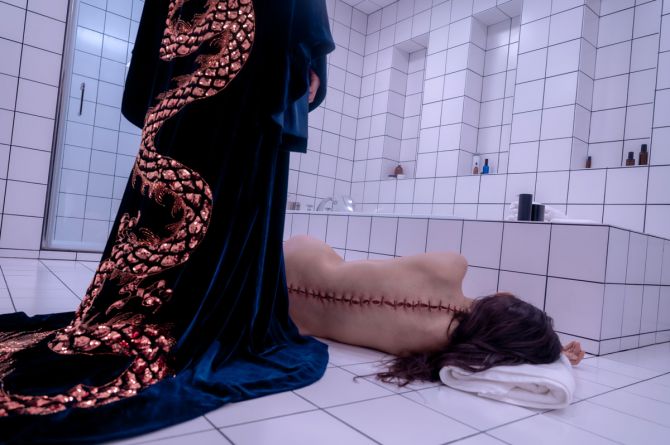
A
scene
from
The
Substance.
How
did
you
think
in
terms
of
portraying
the
female
bodies,
clothed
and
naked?
There
are
two
sides
of
showing
the
women’s
bodies
in
the
film.
One
is
in
the
external
world,
that
is
represented
by
the
TV
show
and
the
sexist
behaviour
of
the
male
executives.
The
other
is
more
internal
as
presented
in
the
bathroom
in
Elisabeth’s
apartment,
where
the
bodies
exist
on
their
own.
I
wanted
to
stress
that
the
way
you
are
looked
at
outside
influences
the
way
you
look
at
yourself,
when
you
are
facing
the
mirror
at
home
and
no
one
is
looking
at
you.
I
believe
those
two
worlds
are
related
and
one
influences
the
other.
It’s
because
there
is
all
this
gaze
outside
at
the
TV
station
and
elsewhere
that
when
Elisabeth
is
at
home
with
her
own
body
and
she
looks
at
herself,
she
feels
that
she
is
not
good
enough.
At
that
moment
when
I
show
the
naked
body,
it
is
not
sexualised
nudity.
When
the
bodies
of
the
two
protagonists
are
lying
on
the
floor,
it
is
the
reality,
real
flesh.
But
the
body
that
is
shown
on
the
TV
show
is
transformed
by
the
gaze.
It
is
objectified
and
hyper
sexualised.
It
always
has
to
be
perfect
and
gorgeous.
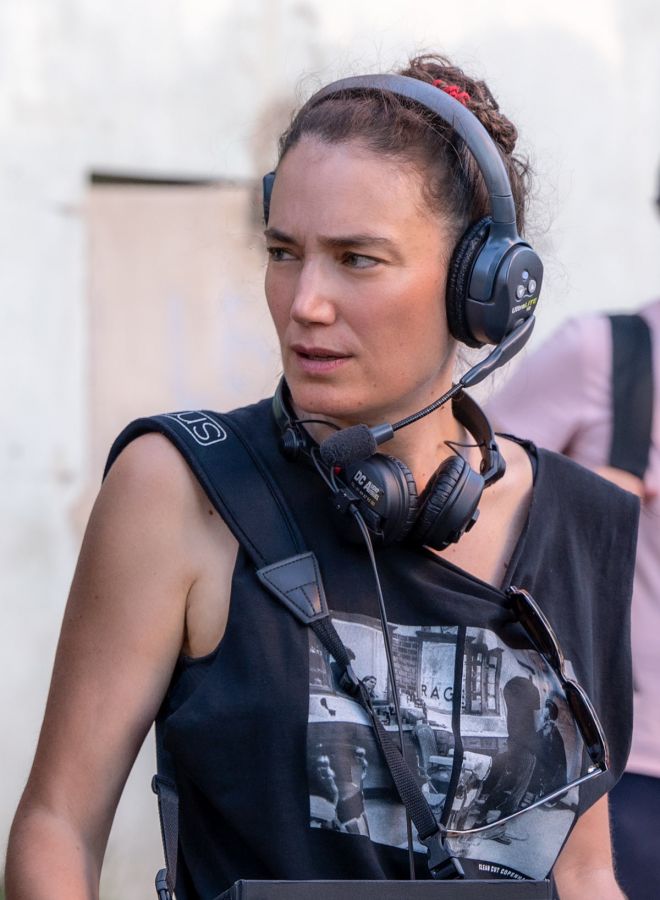
The
Substance
Director
Coralie
Fargeat.
Photograph:
MUBI
I
know
like
everywhere
else
France
also
had
its
#MeToo
movement.
So
it
is
interesting
that
you
show
a
very
clear
case
of
harassment
in
this
film,
where
a
woman
is
replaced
in
her
job
because
she
is
getting
old
and
losing
her
youthful
looks.
I
feel
it’s
always
great
when
fiction
meets
reality.
What
I
was
shocked
by
was
that
after
the
first
wave
of
#MeToo
explosion,
there
was
a
big
backlash
and
things
appeared
to
slowly
change.
But
when
you
see
the
data,
numbers
about
violence
against
women,
it’s
so
crazy.
You
realise
that
nothing
has
really
changed.
Because
to
change
things,
there
has
to
be
a
strong
will.
It’s
not
going
to
happen
by
itself.
On
a
personal
level,
I
think
my
way
to
express
what
I
feel
is
reflected
in
the
film.
So,
you
know,
after
all
the
female
nudity,
you
had
one
brief
shot
of
the
backside
of
a
minor
male
character.
I
am
sure
you
were
having
fun,
of
course,
but
can
you
just
tell
me
about
the
thinking
behind
that
scene?
Well,
it
came
naturally
during
the
writing.
When
you
are
playing
with
codes
of
the
genre
and
also
trying
to
find
a
way
to
flip
them
in
a
way.
And
also,
as
you
said,
I
was
having
fun.
I
love
to
mix
humour
in
a
genre
film
because
it
allows
the
audience
to
bear
the
excess
and
extreme
violence,
especially
when
there
are
graphic
images.
It
is
something
that
can
release
the
pressure.
And
at
that
time,
in
this
particular
scene
having
the
characters
on
the
two
sides
of
the
door
was
pretty
fun.
It
is
just
something
that
I
let
myself
go
through
in
the
writing
process.