Vikramaditya
Motwane
and
Satyanshu
Singh
have
created
an
excellent
but
grim
series,
applauds
Deepa
Gahlot.
A
fresh
faced
law
graduate
takes
the
job
of
a
jailer
in
Delhi’s
hellhole,
Tihar
Jail,
because
that
is
the
only
job
available
at
the
employment
exchange,
and
his
family
is
in
financial
trouble.
His
naivete,
honesty
and
social
conscience
will
take
an
inevitable
beating
by
the
end
of
seven
episodes
of
Black
Warrant,
but
he
also
appears
as
the
one
who
might
just
manage
to
retain
his
humanity
and
sanity
because
he
is
not
totally
corrupted
by
the
system.
In
the
excellent,
but
grim
series
created
by
Vikramaditya
Motwane
and
Satyanshu
Singh,
the
slightly-built
Sunil
Kumar
Gupta
(Zahan
Kapoor),
whose
uniform
hangs
loose
on
him,
shows
that
he
has
the
spine
and
persistence
to
survive
in
a
job
nobody
really
wants.
‘Jails
are
trash
cans,’
he
says
at
one
point,
‘and
we
jailers
are
the
lids.
The
stink
rubs
off
on
us
too.’
He
understands
that
people
turn
to
crime
because
of
poverty,
which
is
why
Tihar
has
a
large
number
of
innocents
and
undertrials,
who
cannot
afford
bail.
Initially,
nobody
takes
Sunil
seriously
and
he
gets
the
job
on
the
recommendation
of
Tihar’s
most
notorious
inmate,
the
stylishly
dressed
Charles
Sobhraj
(Sidhant
Gupta),
whom
he
does
not
recognise,
despite
his
media
hogging.
Jails
are
run
not
by
the
staff
but
by
the
prisoners,
he
is
told,
and
it
does
seem
to
be
true.
The
changing
superintendents
have
little
clue
about
what
really
goes
on
but
the
cynical,
shrewd
and
corrupt
deputy
Rajesh
Tomar
(Rahul
Bhat)
maintains
an
uneasy
peace
in
the
overcrowded
jail,
by
letting
the
gangs
rule,
and
looking
the
other
way
as
booze,
drugs
and
weapons
are
freely
circulated.
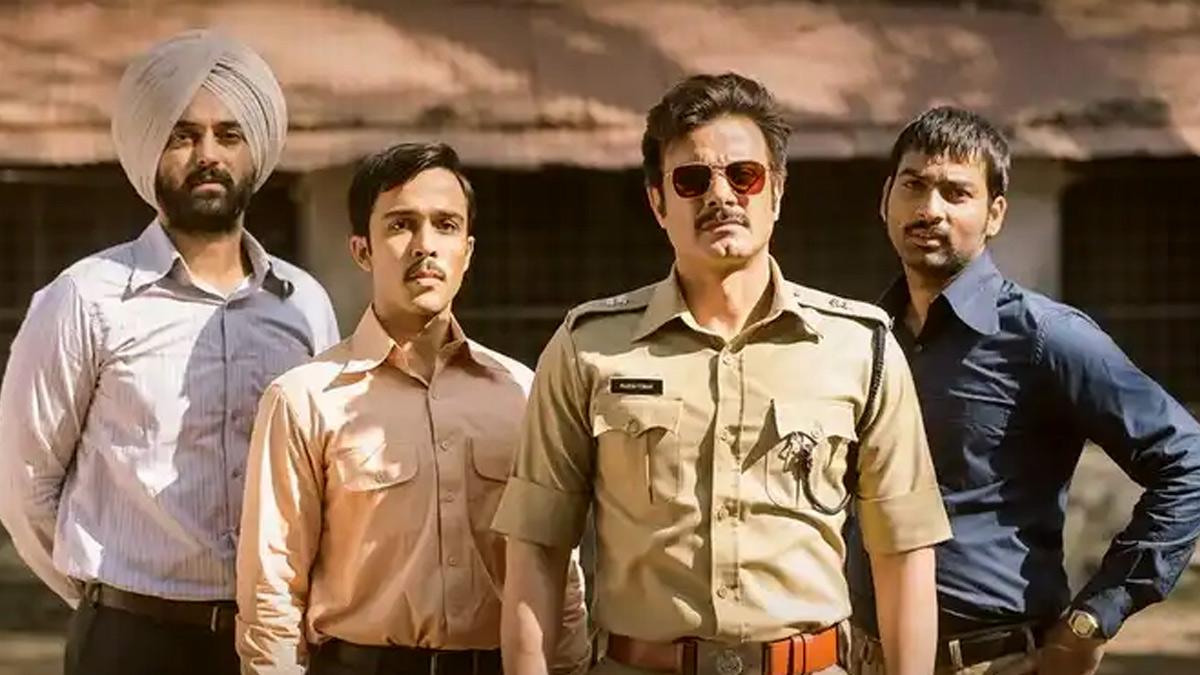
The
other
two
assistants
with
Sunil
are
the
tough
Sardar
Shivraj
Singh
Mangat
(Paramvir
Singh
Cheema)
and
the
uncouth
Haryanvi
Vipin
Dahiya
(Anurag
Thakur).
The
prissy-looking,
vegetarian
Sunil,
who
refuses
to
use
profanity,
whose
neatly
oiled
hair
and
moustache
that
make
him
look
even
more
boyish,
is
not
expected
to
last
but
he
is
the
one
who
actually
adapts
better
than
the
macho
louts.
The
real
life
Gupta
co-wrote,
with
Sunetra
Choudhary,
the
book,
Black
Warrant:
Confessions
of
a
Tihar
Jailer,
on
which
the
series
is
based.
The
time
is
the
1980s,
and
episodes
of
the
series
tell
the
stories
of
real
characters.
Apart
from
Sobhraj,
there
are
the
notorious
child
killers
Billa
and
Ranga,
Kashmiri
militant
Maqbool
Bhat
and
protesting
JNU
students.
There
are
also
events
from
that
period,
from
the
1983
World
Cup
victory,
the
Khalistan
movement,
the
then
prime
minister
Indira
Gandhi’s
assassination
and
the
Sikh
genocide
woven
into
the
script.
The
episodes
are
directed
by
Motwane,
Singh,
Ambiecka
Pandit,
Arkesh
Ajay
and
Rohin
Raveendran
Nair
with
empathy
towards
the
degrading
conditions
in
the
jail,
but
also
a
clear-eyed
understanding
of
what
the
inmates
and
the
staff
go
through.
As
the
stressed
and
alcoholic
Mangat
says,
some
of
the
inmates
will
be
released,
but
the
jailers
undergo
a
‘double
life
sentence’.
Gupta’s
first
bout
of
toughening
comes
when
he
witnesses
the
hanging
of
Billa
and
Ranga.
Over
the
show,
he
learns
to
swear
like
the
worst
of
them,
starts
eating
non-vegetarian
food
but
also
has
the
idealistic
temperament
that
allows
him
try
setting
up
a
legal
aid
cell
and
to
glimpse
the
mythical
Tihar
peacocks.
On
the
other
hand,
Tomar
looks
increasingly
weary
and
constantly
incensed,
as
he
has
to
balance
the
power
structures
set
by
the
gang
leaders,
his
personality
hardened
by
his
own
cruelty
and
pessimism.
He
advises
Sunil
not
to
trust
anyone.
‘Everyone
here
is
a
snake.
Some
bite,
and
some
get
bitten,’
he
says.
The
series
takes
small
detours
into
the
personal
lives
of
the
men
but
not
enough
to
distract
from
the
relentless
bleakness
and
violence
of
the
male
prison.
The
women’s
section
is
not
seen,
and
the
wives
or
girlfriends
have
little
to
do.
Rajshri
Deshpande
makes
a
brief
appearance
as
a
scoop-chasing
journalist.
There
are
absolutely
no
rose-tinted
clouds
over
this
black
world.
Over
the
years,
from
what
appears
in
the
media,
things
have
gotten
worse
in
the
prison
system.
All
the
talk
of
reform
and
human
rights
seldom
move
beyond
the
paper
they
are
written
on.
The
actors
are
perfectly
cast,
and
perform
with
sincerity,
from
Rahul
Bhat
with
his
many
shades
of
grey
to
Zahan
Kapoor,
who
keeps
up
with
his
zigzagging
character
arc.
The
supporting
actors,
even
the
ones
with
non-speaking
parts,
add
to
the
authenticity
of
the
characters
they
portray.
Black
Warrant
streams
on
Netflix.
Black
Warrant
Review
Rediff
Rating: