
‘Did
anyone
else
get
the
feeling
that
AWIAL
—
despite
being
ostensibly
based
in
the
Mumbai
of
today
—
is
actually
set
in
a
Neverland
of
Solemnity?’
asks
Sreehari
Nair.
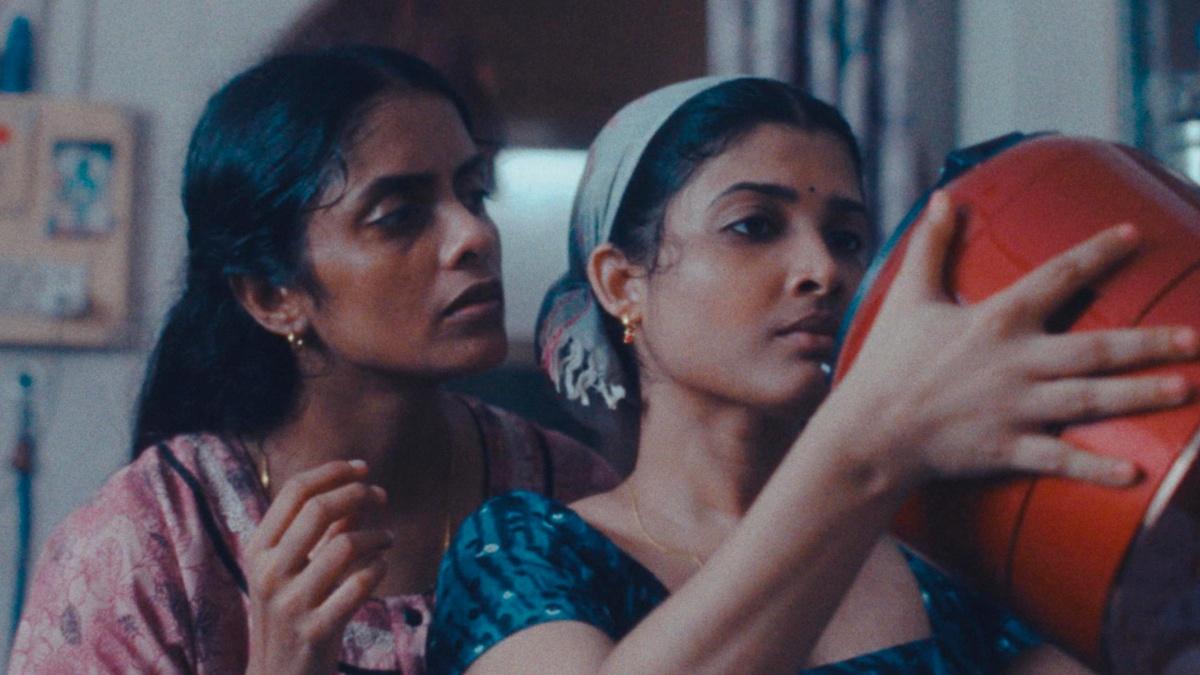
Kani
Kusruti
and
Divya
Prabha
in
All
We
Imagine
as
Light.
When
Payal
Kapadia’s
All
We
Imagine
As
Light
was
released
in
Kerala
last
year,
people
reacted
as
though
they
were
thrust
into
a
‘nudie
movie’
without
any
advance
preparation.
I
specifically
recall
a
young
gentleman,
decked
out
to
look
like
a
card-carrying
film
festival
type,
emerging
from
the
dark
room
and
complaining,
‘I
could
see
nothing
except
bare
breasts
and
bare
behinds.
Is
that
all
it
takes
to
impress
the
Cannes
jury?’
This
gentleman’s
romance
with
‘art-house
cinema’
was
over
before
it
had
a
chance
to
take
hold.
Needless
to
say,
he
was
shaking.
Though
I
feel
tenderly
towards
honest
tremors,
I
think
All
We
Imagine
As
Light
(AWIAL)
is
at
its
most
interesting
in
its
boldly
bodily
bits.
Not
only
are
there
candid
shots
of
dress
changes,
there’s
also
an
instance
of
open-air
wee-weeing
worthy
of
Bertolucci,
and
a
superbly
told
erection
joke
(Divya
Prabha’s
cagey,
cautious
rendering
gives
the
joke
an
unforgettable
hum).
The
scenes
of
squatting
are
majestic.
The
self-touching
is
unselfconscious.
These
moments
are
meant
to
underline
the
sensual
nature
of
the
protagonists’
profession
—
Divya
and
Kani
Kusruti
play
nurses
who
are
frequently
up
to
their
elbows
in
flesh,
blood
and
guts.
And
when
a
lecture
on
placenta
disposal
is
braided
into
the
narrative,
it
all
seems
to
come
together:
Kapadia
has
probably
planned
this
one
as
a
movie
that’s
clawing
its
way
out
of
a
womb.

Divya
Prabha
as
Anu
and
Hridhu
Haroon
as
Shiaz
in
All
We
Imagine
as
Light.
These
are
the
hardcore-bedrock
parts
of
AWIAL,
the
let-us-get-our-hands-dirty
parts,
the
can-you-face-the-truth-without-flinching
parts.
They
did
have
my
attention,
even
as
I
felt
slightly
force-fed.
Now
it’s
tragic
that
a
movie
that
wishes
to
have
its
feet
so
firmly
planted
on
the
ground
also
has
its
head
so
obstinately
in
the
clouds.
Please
allow
me,
if
you
will,
to
express
my
peculiar
peeves.
Did
anyone
else
get
the
feeling
that
AWIAL
—
despite
being
ostensibly
based
in
the
Mumbai
of
today
—
is
actually
set
in
a
Neverland
of
Solemnity?
Think
about
it:
‘The
times’
seem
to
have
little
to
no
bearing
on
the
story
being
narrated.
Those
electronic
distractions,
which
are
so
much
a
part
of
our
everyday
music,
have
almost
completely
been
snuffed
out.
Here’s
a
movie
that
doesn’t
seem
to
understand
that
the
corrupt
drone
of
a
ringtone
has
as
much
pulling
power
as
the
mist,
the
waves,
as
those
grave
disembodied
voices
and
that
dreamy
staring
into
the
camera.
Here’s
a
movie
that
puts
‘desire’
and
‘yearning’
within
quotation
marks
without
letting
them
naturally
emerge
from
the
beep-beeping
of
text
messages
or
the
quack
of
an
Instagram
reel.
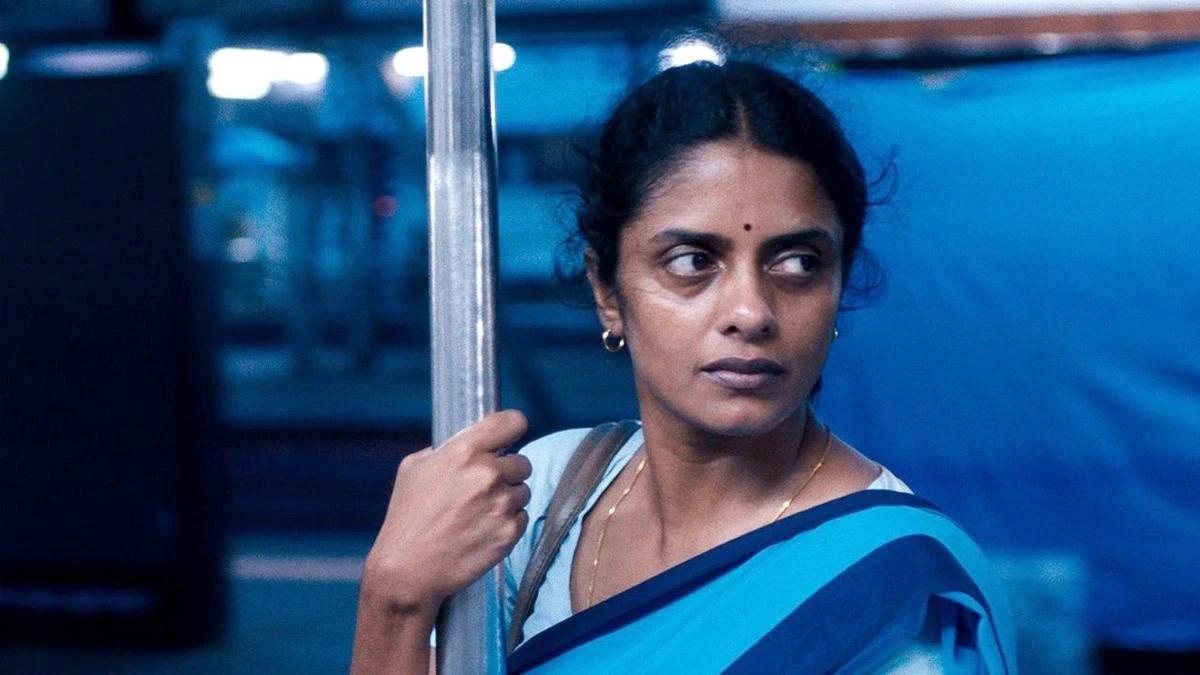
Kani
Kusruti
as
Prabha
in
All
We
Imagine
as
Light.
Payal
Kapadia
has
a
heroic
distrust
of
newfangled
devices
and
social
media.
But
when
she
mounts
a
local
train
sequence
in
which
faces
are
captured
only
for
their
piety
and
melancholy,
and
the
beauty
of
a
face
just
lost
in
her
mobile
phone
or
a
face
simply
typing
away
is
not
heeded,
the
story
stops
being
of
this
decade.
I
am
not
exaggerating
when
I
say
that
one
of
the
most
meaningful
uses
of
a
mobile
phone
in
this
movie
is
as
a
torch
to
read
poetry
at
night.
All
through
AWIAL,
I
had
the
feeling
of
being
subjected
to
an
anachronism
of
the
oddest
sort.
This
is
Cinema-Verite
but
with
a
very
selective
view
of
Verite.
And
the
deficit
not
only
holds
you
at
arm’s
length;
it
also
ends
up
upsetting
the
emotional
grid
of
the
story.
The
arc
of
a
senior
Malayali
doctor
who
decides
to
leave
Mumbai
because
he
cannot
keep
pace
with
Hindi
has
a
distinctly
1980s
and
1990s
ring
to
it.
If
you
have
grown
up
in
a
big
city
through
those
decades,
you
would
know
that
in
today’s
hyper-connected
electronic
world
‘language
issues’
and
other
such
‘dislocations’
are
set
to
a
more
casual
rhythm.
This
is
an
age
where
the
‘craving
for
solitude’
is
as
strong
as
the
‘struggle
against
loneliness.’
Consequently,
an
immigrant
of
today
experiences
cultural
deracination
in
a
tenor
very
different
from
how
he
would
have
25
years
ago.
I
am
not
saying
that
Kapadia’s
themes
aren’t
universal,
but
she
seems
not
to
realise
that
those
themes
have
been
transmuted
by
time.
As
I
see
it,
AWIAL‘s
conundrum
is
quite
unique:
it
wants
to
plunge
you
headlong
into
the
daily
rigors
of
life,
but
it
also
wants
to
suspend
or
regulate
certain
inconvenient
noises,
manners
and
mores
and
instead
play
you
a
liberal
tune.
Watch
out
for
a
scene
in
which
Divya
Prabha
and
her
boyfriend
go
through
pictures
of
her
suitors,
and
notice
how
dumb
and
debauched
each
of
those
men
has
been
made.
No
artist
with
a
commitment
to
such
terms
as
‘sensitivity’
and
‘gaze’
should
have
come
up
with
characters
so
perfect
for
mocking.
That
being
said,
I
think
the
real
issue
here
may
be
the
absence
of
a
truly
democratic
style
of
filmmaking.

A
movie
that
tries
so
hard
to
get
with
the
crowd
—
The
Gorgeous
Mumbai
Rhapsody,
as
a
critic
at
The
New
Yorker
calls
it
—
should
have
been
more
open
to
Happy
Accidents.
It
should
have
had
more
love
for
faces
observed
in
passing
and
for
lines
overheard.
It
should
never
have
felt
so
carefully
worked-out
or
‘written.’
When
Kapadia
projects
onto
a
cityscape
the
voiceover
of
a
woman
questioning
the
much-vaunted
Spirit
of
Mumbai,
it
doesn’t
sound
like
an
authentic
working-class
tirade,
but
rather
the
academic
mind-dropping
of
someone
who
fancies
herself
a
radical
because
an
advertising
tagline
has
troubled
her
soul.
A
too-easily-troubled
soul
or
not,
Payal
Kapadia
seems
to
have
the
critics
exactly
where
she
wants
them.
She
seems
to
have
them
pinned
at
that
precise
point
where
direct
response
fails
and
empty
epithets
take
over:
Gentle,
Delicate,
Lyrical
—
so
go
the
critical
hurrahs.
The
operative
meme
here
is
Tarkovsky
clutching
his
forehead
and
sighing,
‘Ah,
Poetic
Cinema!’
As
for
my
honest
non-Soviet
opinion,
I
think
the
movie
alternates
between
the
work
of
a
poet
manqué
and
that
of
someone
straining
for
poetry.
Had
the
strain
been
less
evident,
All
We
Imagine
As
Light
might
have
stayed
with
you
longer.
Its
cleverness
is
frequently
held
up
for
your
approval,
so
that
you
don’t
catch
anything
out
of
the
corner
of
your
eye,
and
this
works
against
making
it
memorable.
There’s
a
breakup
scene
that
I
liked,
and
which
at
the
same
time
is
symptomatic
of
the
problem
I
am
talking
about.
The
scene
has
been
staged
at
night,
in
a
municipal
park,
with
the
man
and
the
woman
nestled
inside
two
rusty
swings.
‘Lovers
looking
for
a
tiny
corner
of
the
city
on
which
to
perch
their
heavy
hearts’
—
the
symbolism
is
striking.
But
there’s
also
a
veiled
exhibition
of
‘nuance’
in
that
scene
that
deters
you
from
giving
yourself
over
to
it.
You
can
smell
the
sweat
behind
its
conception,
and
that
stops
it
from
being
affecting.
The
scene
is
a
little
too
embellished
to
move
you.
It
sniffs
more
of
the
park
swings
than
the
heavy
hearts.
Feature
Presentation:
Rajesh
Alva/Rediff.com