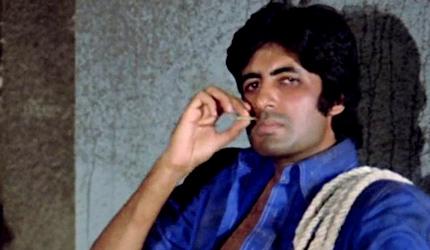
Though
Zanjeer
is
credited
as
Amitabh’s
breakthrough
film,
it
didn’t
immediately
enthrone
him.
Rajesh
Khanna
countered
with
a
huge
hit
in
Daag
that
year.
But
Deewar
upended
audience’s
cinematic
taste
and
filmland
hierarchies
at
the
very
start
of
1975.
Bachchan
emerged
as
a
one
man
industry,
the
angry
young
man
who
could
regulate
the
thermostat
of
the
entire
film
industry,
recalls
Dinesh
Raheja.
.
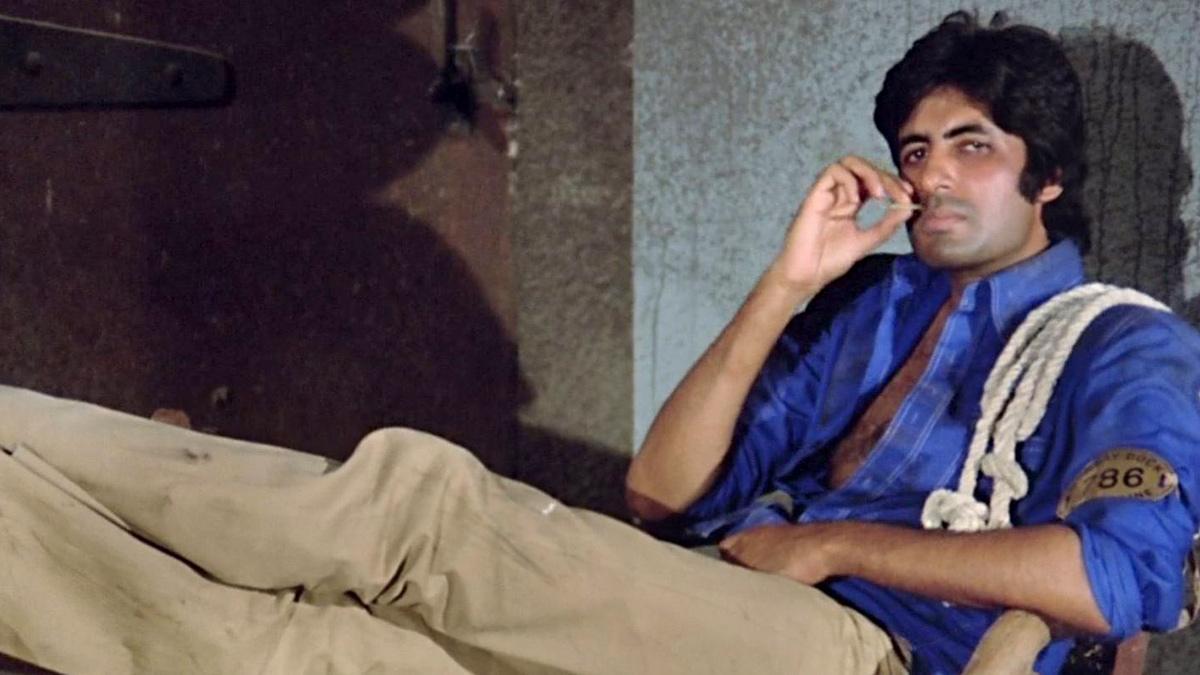
Amitabh
Bachchan
in
Deewaar.
50
years
after
the
release
of
Deewaar,
hindsight
suggests
that
this
1975
superhit
signalled
nothing
less
than
a
cultural
re-set.
A
darkly
sentimental,
action-laced
drama,
Deewaar
set
the
thematic
tone
for
Hindi
cinema
throughout
the
second
half
of
the
1970s
and
the
1980s.
A
grim
new
age
had
dawned.
Zanjeer
had
been
a
pathbreaker
but
it
was
with
Deewaar
that
the
musical
sixties
were
conclusively
over.
The
Kashmir-Simla
romances
and
the
Rajesh
Khanna
wave
had
crested
and
crashed.
Deewaar
nailed
the
zeitgeist
of
its
time.
This
nakedly
emotional
saga
is
about
the
forces
of
collision
and
cohesion
operating
within
and
without
its
morally
conflicted
crime
boss
protagonist.
Wittingly
or
unwittingly,
the
film
spoke
to
the
socio-political
climate
of
the
day
—
the
loss
of
innocence
as
the
clock
began
its
countdown
to
the
national
emergency
declared
later
that
year.
At
the
same
time,
the
moral
quandaries
it
poses
are
eternal.
Deewaar
made
Amitabh
Bachchan
A
Superstar
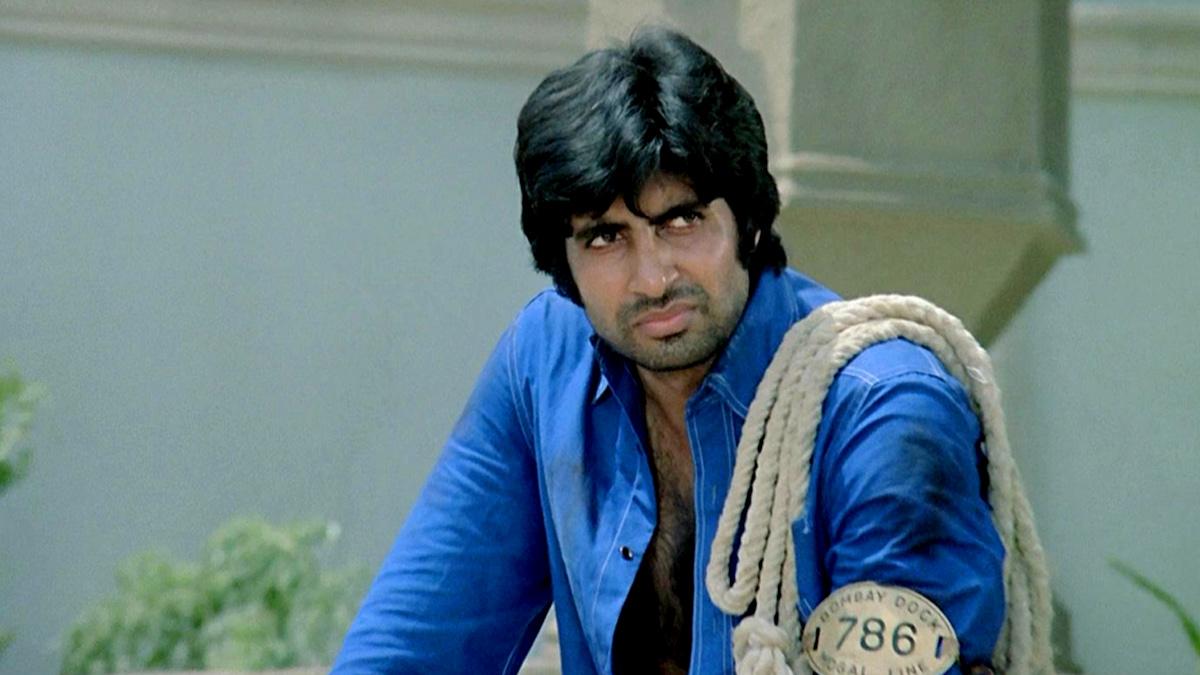
Amitabh
Bachchan
in
Deewaar.
Deewaar
also
fundamentally
changed
the
Hindi
film
leading
man.
It
made
its
brooding
yet
turbulently
emotional
protagonist
Amitabh
Bachchan
(not
pussyfoot
around
the
fact
that
Shashi
Kapoor’s
was
the
supporting
role)
the
era’s
indisputable
superstar.
Though
Zanjeer
(1973)
is
correctly
credited
as
Amitabh’s
breakthrough
film,
it
didn’t
immediately
clear
the
decks
and
enthrone
him.
Rajesh
Khanna
countered
with
a
huge
hit
in
Daag
that
year.
And
in
1974,
Khanna’s
hits
(Prem
Nagar,
Roti,
Aap
Ki
Kasam)
outnumbered
Amitabh’s
solo
success
(Majboor).
But
Deewar
upended
audience’s
cinematic
taste
and
filmland
hierarchies
at
the
very
start
of
1975;
and
Bachchan
followed
it
with
Sholay
later
that
year.
Simultaneously,
Khanna’s
films
also
fell
out
of
favour
and
Bachchan
emerged
as
a
one
man
industry,
the
angry
young
man
who
could
regulate
the
thermostat
of
the
entire
film
industry.
Deewaar
continues
to
remain
relevant.
It
is
director
Yash
Chopra’s
most
vital
work.
Amitabh
considers
the
Salim-Javed
script
to
be
perfect.
And
pithy
lines
such
as
‘
Mere
paas
maa
hai‘
or
‘Main
aaj
bhi
pheke
huey
paise
nahin
leta‘
still
enjoy
instant
recognition.
The
Mother,
The
Brother
And
The
Public
Enemy
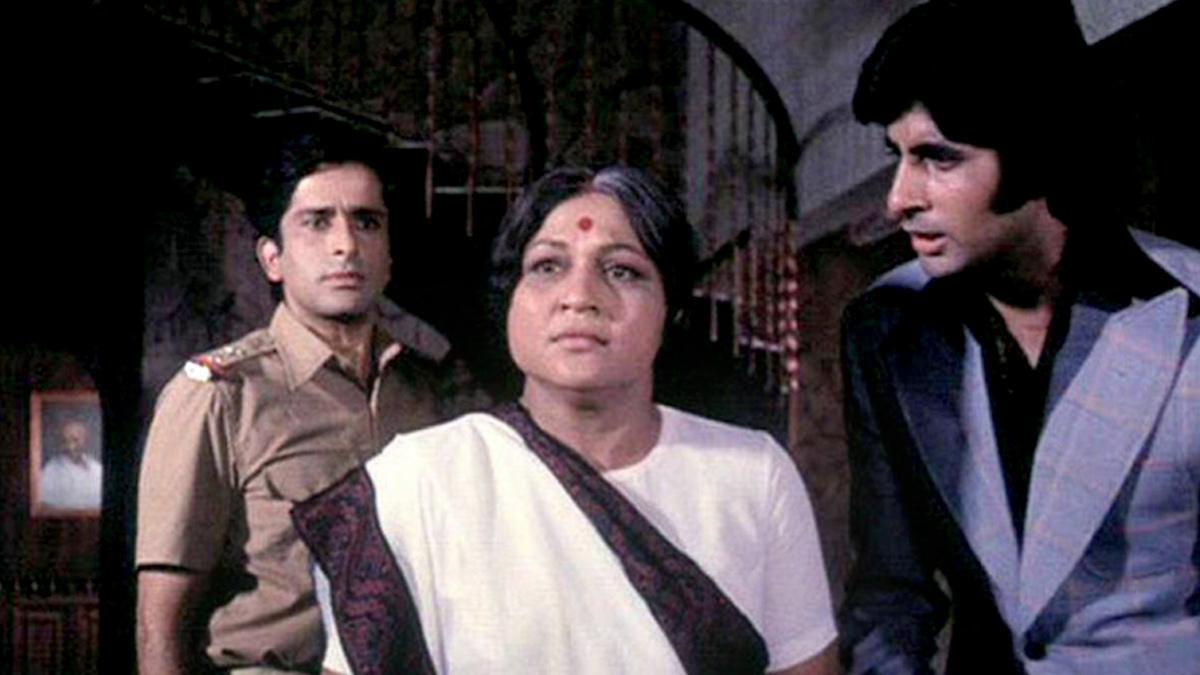
Shashi
Kapoor,
Nirupa
Roy
and
Amitabh
Bachchan
in
Deewaar.
Deewaar
seems
influenced
by
many
an
earlier
classic
like
the
seminal
1931
film,
The
Public
Enemy,
in
which
a
soft-hearted
mother
is
caught
between
her
two
sons
—
a
military
man
and
a
gangster
played
by
James
Cagney.
Ganga
Jamuna
(1961)
also
had
brothers
on
different
sides
of
the
law
and
Mother
India
(1957)
showcased
the
turbulent
relationship
between
a
highly
principled
mother
and
her
rebellious
son.
But
what
finally
crystallises
in
Deewaar
is
clearly
its
own
identity.
The
plot’s
poignant
pivots
are
in
the
vain
efforts
by
Vijay
(Amitabh)
to
find
the
payback
for
his
mother’s
humiliations
and
his
own
deprived
childhood
through
monetary
fulfilment
as
an
adult.
The
film’s
first
half
hour
follows
the
travails
of
his
mother,
Sumitra
(Nirupa
Roy)
who
pays
the
high
human
cost
of
her
coal
miner
husband’s
lofty
principles.
She
brings
up
her
two
sons
by
living
on
the
footpath
and
doing
manual
labour
on
a
construction
site.
Vijay
grows
up
embittered,
forever
branded
by
the
‘Mera
baap
chor
hai‘
forcefully
tattooed
on
his
forearm
but
his
younger
brother
Ravi
(Shashi
Kapoor)
has
a
sunnier
world
view
and
becomes
a
police
officer.
This
sets
up
the
stage
for
a
confrontation
when
Vijay
abandons
the
straight
and
narrow
path
of
virtue
adhered
to
by
his
brother.
Vijay
gets
his
rewards,
but
find
them
like
ashes
in
his
mouth
when
his
beloved
mother
resoundingly
rejects
him.
The
Salaries
of
Sin
And
The
Wages
of
Virtue:
What
Justifies
Them?
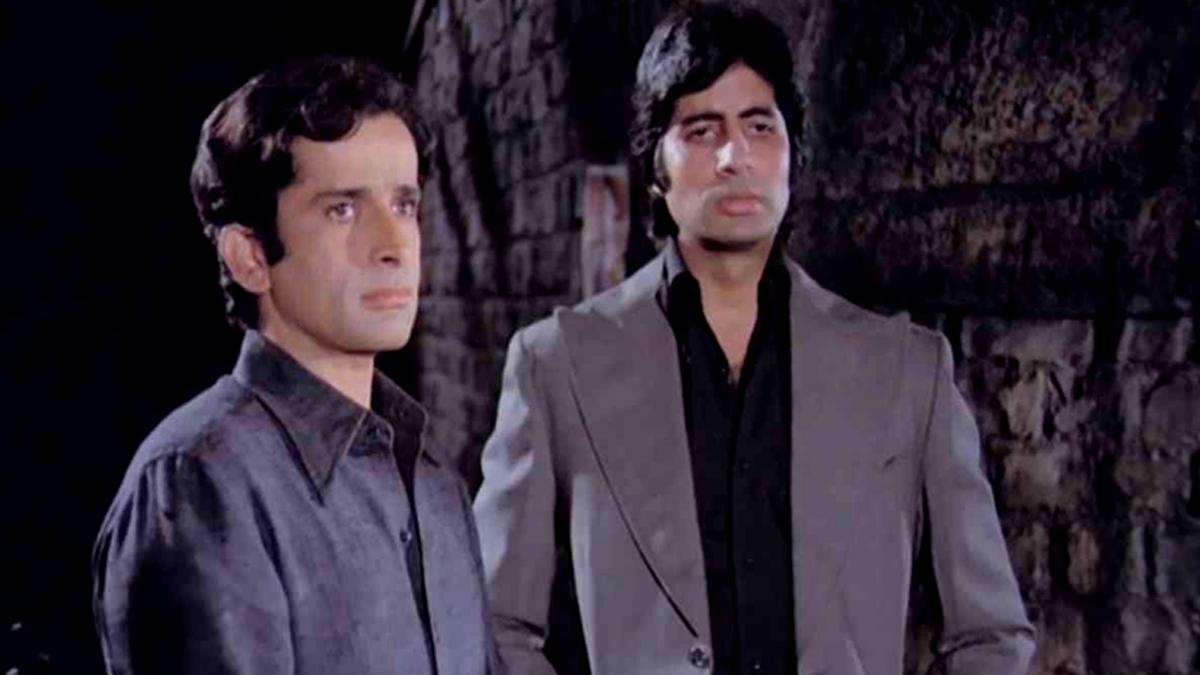
Shashi
Kapoor
and
Amitabh
Bachchan
in
Deewaar.
Salim
Javed’s
excellent
story-screenplay-dialogue
and
Yash
Chopra’s
direction
brilliantly
capture
the
moral
choices
and
imperatives
that
transform
a
dockyard
coolie
with
a
boulder-sized
chip
on
his
shoulder
into
an
underworld
don.
Deewaar
does
offer
a
rather
sympathetic
take
on
a
gangster
and
it
doesn’t
skimp
on
flaunting
the
glamorous
aspects
of
his
underworld
lifestyle
too
(Bachchan
in
snazzy
suits,
aviators
and
fast
cars).
But
the
film
is
ultimately
a
cautionary
morality
tale
about
the
anguished
life
and
times
of
a
transgressor.
It
acknowledges
that
the
wages
of
virtue
are
not
plentiful
but
pertinently
asks
whether
being
wronged
justifies
rolling
in
the
high
salaries
of
sin.
Ravi
pointedly
reminds
his
Bhai:
‘Doosron
ke
paap
ginaane
se
tumhare
apne
paap
kam
nahin
ho
sakte!‘
Deewaar
debates
still-contemporary
issues
—
the
price
people
pay
for
principles,
and
on
the
flip
side
the
high
cost
of
Faustian
bargains
struck
by
selling
the
soul.
And
that
is
why
the
film
is
not
dated
even
after
5
decades
but
continues
to
resonate
with
new
generations
of
viewers.
Also,
of
course,
it’s
still
an
engrossing,
albeit
heavy,
watch.
Sure,
details
of
Vijay’s
meteoric
ascent
are
conveniently
glossed
over
and
there
are
concessions
to
crowd-pleasing
sentiment
(the
mother
is
cured
when
the
atheist
Vijay
finally
prays
and
his
coolie
badge
number
786
saves
Vijay’s
life
multiple
times).
But
the
writers
here
definitely
understand
the
raw
potency
of
terrific
sequences
and
clap-worthy
dialogue.
Deewaar
is
chock
full
of
both.
The
Other
Mother,
The
Thief
…
And
Parveen
Babi

Amitabh
Bachchan
and
Parveen
Babi
in
Deewaar.
What
further
distinguishes
Deewaar
are
the
many
strong
supporting
roles.
Shashi
Kapoor
is
blazingly
earnest
in
his
character’s
righteousness
and
won
the
Best
Supporting
Actor
trophy
at
Filmfare
Awards
…
the
film’s
sole
acting
award.
In
one
of
the
films
best
sequences,
Ravi
shoots
down
a
young
thief
only
to
realise
he
had
stolen
just
a
loaf
of
bread
(yes,
like
Valjean
in
the
French
classic
Les
Miserables).
But
Deewar
takes
it
in
a
new
direction
when
Ravi
visits
the
thief’s
parents
with
food
and
is
met
by
the
mother
(Dulari)
who
flings
the
rotis
in
his
face
and
the
father
(A
K
Hangal)
who
rationalises
being
punished
no
matter
how
minor
the
crime.
This
centres
the
conflicted
Ravi
morally.
The
way
Yash
Chopra
treated
Parveen
Babi’s
cameo
defied
Hindi
film
norms
and
is
in
sharp
contrast
to
his
own
sucrose-saturated
latter
films
which
often
paid
overt
obeisance
to
traditional
morality.
Unlike
Neetu
Singh
who
played
Shashi
Kapoor’s
conventional
love
interest,
Parveen
is
a
leading
lady
who
not
only
flaunts
her
drink
openly
but
also
indulges
in
premarital
sex
with
her
lover,
Amitabh.
Parveen
said
she
liked
the
realistic
writing
and
the
fact
that
she
didn’t
have
to
sing
or
dance
(Kudos
to
the
makers
for
resisting
that/this
obvious
temptation).
Watch
her
as
she
stylishly
lights
two
cigarettes
in
bed
and
gives
one
to
Amitabh
(a
la
Bette
Davis
and
Paul
Henreid
in
Now
Voyager,
1942).
The
real
heroine
of
Deewaar
is
Nirupa
Roy
as
the
mother.
Only
44
years
old
then,
Roy
is
ideally
cast
(though
1960s
superstar
Vyajayanthimala
was
first
considered)
as
the
maternal
figure
overflowing
with
tenderness
but
with
a
spine
of
steel.
Roy
is
genuinely
moving,
whether
she
is
projecting
stoicism
or
having
a
breakdown.
Deewaar
established
her
as
Amitabh
Bachchan’s
screen
mother
in
numerous
subsequent
films.
The
Best
Anatomist
of
Angst
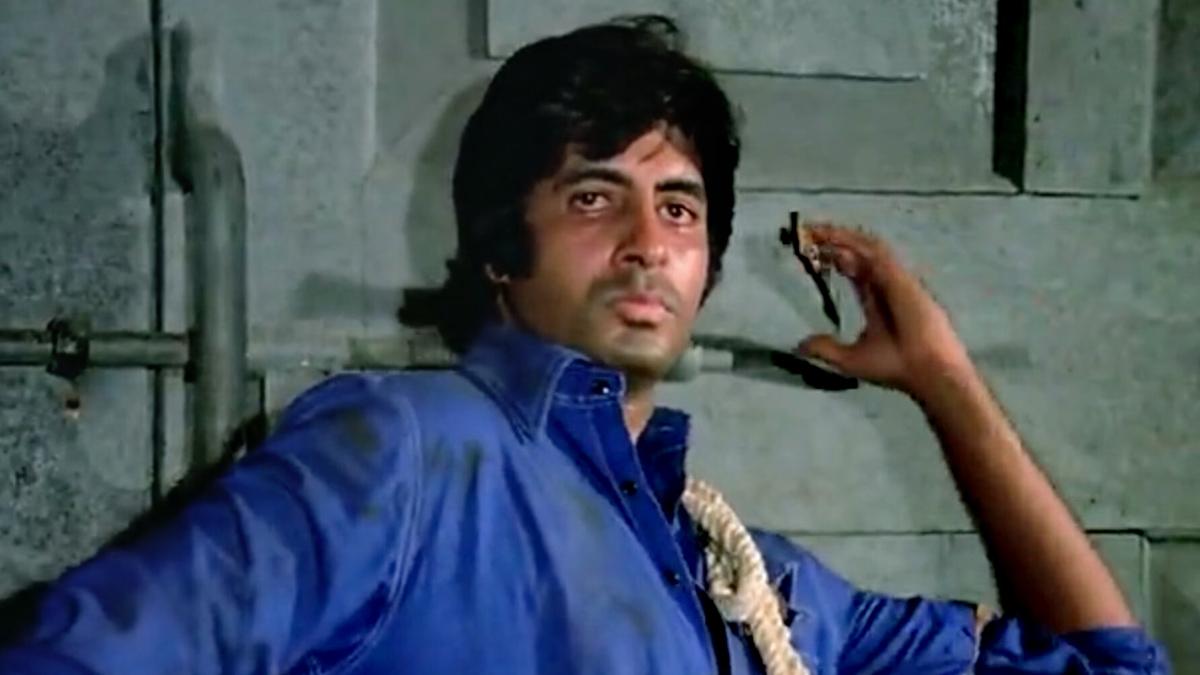
Amitabh
Bachchan
in
Deewaar.
Finally,
the
film
belongs
to
Amitabh
Bachchan.
Vijay
could
have
come
across
as
surly
if
played
by
a
lesser
actor
but
Bachchan
proved
he
was
the
best
anatomist
of
angst
in
modern
Hindi
cinema.
Bachchan’s
dry
laconic
approach
stops
certain
scenes
from
appearing
soap-operatic.
His
oratorial
skills
are
on
display
in
the
monologue,
and
his
agility
skills
in
the
action
sequence
—
he
aids
the
suspension
of
disbelief
when
he
is
required
to
single-handedly
thrash
seven
goons.
Incidentally,
Amitabh’s
famous
knotted
shirt
look
in
this
scene
happened
because
the
shirt
provided
was
too
long
to
be
buttoned.
And
because
of
Bachchan’s
long
sideburns
look
in
the
film,
the
joke
was
that
one
never
really
got
to
see
his
ears.
No
matter.
It
was
his
face
that
was
the
actor’s
canvas.
Deewaar
remains
a
must
watch
classic
for
all
cinema
enthusiasts.
Watch
it
for
Salim-Javed’s
era-defining
script
and
to
catch
Amitabh
Bachchan
in
his
prime.