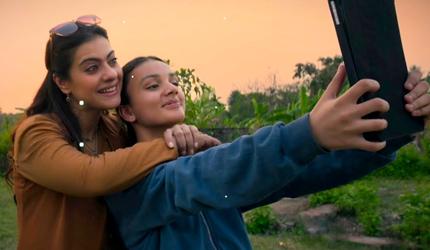
What
keeps
the
momentum
going
is
Kajol’s
fully
committed
performance
that
elevates
this
generic
material
to
a
surprising
degree
of
watchability,
feels
Mayur
Sanap.
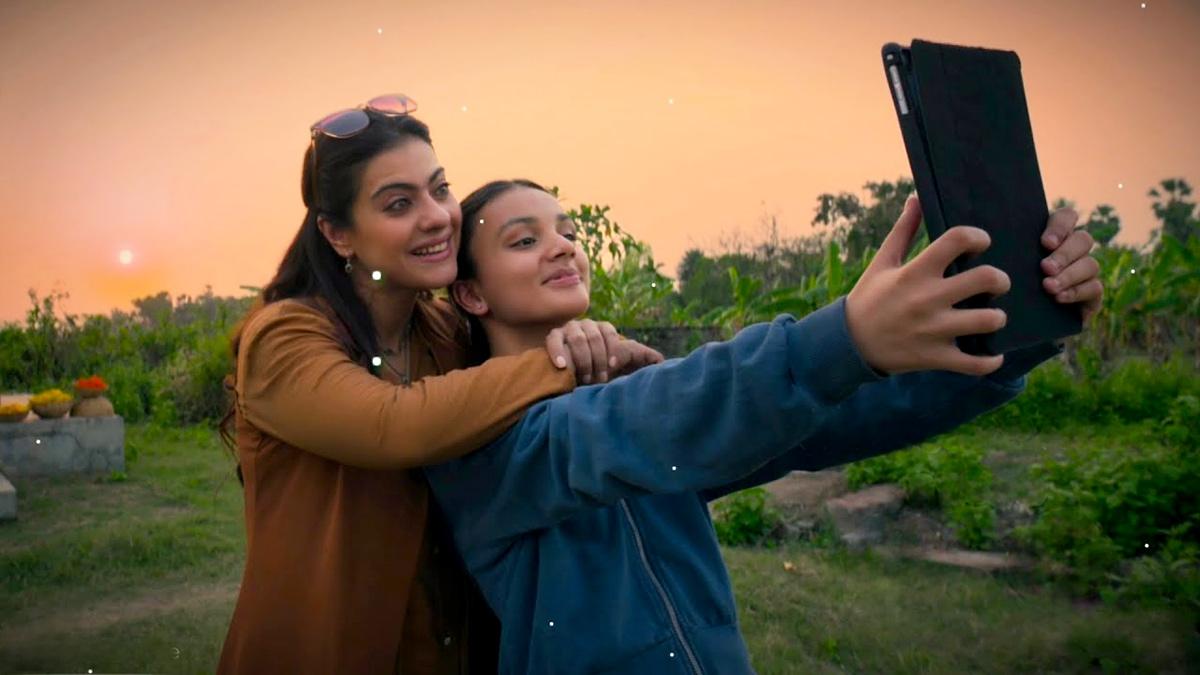
At
one
point
in
Maa,
a
battered
Kajol
comes
face-to-face
with
a
satanic
entity
that
has
her
daughter
clutched
under
its
influence.
She
strives
to
save
her
daughter
from
the
impending
danger,
only
to
be
mocked
by
the
devil,
‘Tum
kya
bacha
paaogi
isey.’
The
devil
obviously
doesn’t
know
that
it
is
up
against
Hindi
Cinema’s
most
beloved
character
—
maa
—
that
has
lent
itself
to
a
routine
fodder
for
stories
about
love
and
resilience.
These
days,
Kajol
is
experimenting
with
roles
that
paint
different
shades
of
motherhood,
be
it
her
care-giving
mother
in
Salaam
Venky
or
an
over-protective
mom
in
Helicopter
Eela
or
a
flawed
mother
in
Tribhanga
or
a
silently
suffering
mother
in
Lust
Stories
2.
In
Maa,
she
plays
Ambika,
an
everyday
mother
who
is
also
capable
of
emanating
fury
if
her
child’s
safety
is
at
risk.
This
is
a
flashy
role
that
comes
with
an
even
flashier
packaging
of
a
star
vehicle
where
Kajol
gets
to
do
high-decibel
theatrics
and
fiery
dialoguebaazi,
even
in
moments
where
her
character
is
bruised
and
broken.
The
story
revolves
round
a
village
named
Chandarpur,
which
is
ravaged
by
the
rakshas
called
Daitya.
It
is
a
tree-dwelling
entity
that
is
sustained
by
ritualistic
offerings
of
young
girls.
Ambika
(Kajol)
is
married
to
Shuvankar
(Indraneil
Sengupta),
a
native
of
Chandarpur,
who
left
his
ancestral
village
years
ago.
A
tragedy
strikes
and
Ambika
is
forced
to
visit
the
very
village
she
avoided
all
this
while.
There
she
meets
Joydev
(Ronit
Bose
Roy),
a
village
head
who
helps
Ambika
and
her
daughter Shweta
(Kherin
Sharma)
to
navigate
the
unease
in
their
new
surroundings.
Things
take
vicious
turn
when
Shweta
is
carried
off
by
the
evil
force.
A
distraught
Ambika
learns
a
terrifying
truth:
Her
daughter
has
been
chosen
for
Daitya’s
demonic
ritual.
Director
Vishal
Furia,
who
previously
helmed
the
riveting
Marathi
horror
Lapachhapi
and
its
tepid
Hindi
follow-ups
Chhorii
and
Chhorii
2,
once
again
shows
his
penchant
for
atmospheric
horror
that
explores
the
theme
of
maternal
instincts.
Certain
narrative
threads
are
strikingly
similar
to Chhorii
2,
along
with
Furia’s
usual
commentary
on
patriarchy
and
female
subjugation
forming
its
core
idea.
But
the
canvas
for
Maa
is
much
bigger.
This
is
a
film
that
comes
with
the
self-branding
of
‘mythological-horror.’
It
takes
a
piece
of
Indian
mythology
and
puts
up
a
cinematic
representation
of
Maa
Kali
as
the
Goddess
of
destruction.
The
experiment
of
blending
mythological
lore
with
thrills
and
chills
is
definitely
interesting,
but
Maa
delivers
only
flimsy
shock
and
awe
without
the
backing
of
a
strong
script.
To
compensate
that,
there’s
a
heavy
reliance
on
jump
scares
and
eerie
soundscape
to
amplify
the
fear
factor,
but
these
genre
cliches
are
off-putting in
a
decidedly
self-serious
horror
drama
like
this.
The
most
disappointing
aspect
of
all
is
the
monster’s
design.
As
the
creation
of
CGI
(Computer-Generated
Imagery),
the
character
of
Daitya
frequently
breaks
the
illusion
of
a
dreaded
monster,
losing
its
ability
to
truly
scare
us.
This
is
further
hurt
by
tacky
visual
effects
that
only
pulls
us
away
from
the
narrative.
The
design
is
an
obvious
knock-off
of
Night
King
from
Game
of
Thrones,
but
given
its
tree-like
characteristics,
Daitya
is
like
an
unreasonable
version
of
Groot
(Except
this
monster
speaks
chaste
Hindi
instead
of
monosyllables).
What
keeps
the
momentum
going
is
Kajol’s
fully
committed
performance
that
elevates
this
generic
material
to
a
surprising
degree
of
watchability.
This
holds
true
even
when
she
mouths
an
utterly
vanilla
line
like:
‘Jab
tak
teri
maa
tere
sath
hain,
tera
koi
kuch
nahin
bigaad
sakta.’
Her
Ambika
is
strictly
one-dimensional,
but
Kajol
draws
us
into
her
ordeal
and
ensures
it
hits
hard
when
it
needs
to.
She
especially
fares
best
in
the
film’s
emotionally-charged
finale.
Speaking
of
finale,
the
linkage
between
Maa
and
Shaitaan
is
established
by
the
appearance
of
digitally-rendered
visuals
of
R
Madhavan.
The
entire
sequence
is
so
haphazardly
placed
and
executed
that
it
comes
off
as
a
jarring
afterthought
with
its
forced
narrative
connection.
Without
any
clear
direction
to
move
ahead,
this
so-called
Devil’s
Universe
definitely
feels
wonky
right
now.
Maa
Review
Rediff
Rating: