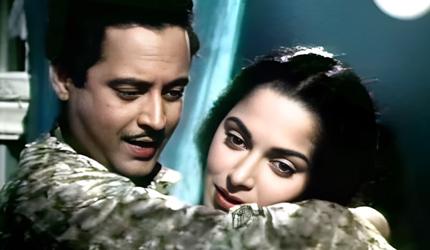
‘I
always
considered
him
as
a
director,
never
an
actor.
Do
you
know
he
always
considered
other
actors
for
his
films
first?’
‘For
Pyaasa,
he
wanted
to
cast
Dilip
saab;
only
when
Dilip
saab
refused
did
Guru
Duttji
decide
to
do
the
role
himself.’
Celebrating
Guru
Dutt’s
birth
centenary
on
July
9
with
this
must-read
excerpt
from
the
book,
Kagaz
Ke
Phool
and
Sahib
Bibi
Aur
Ghulam:
The
Original
Screenplay
by
Dinesh
Raheja
and
J
Kothari.
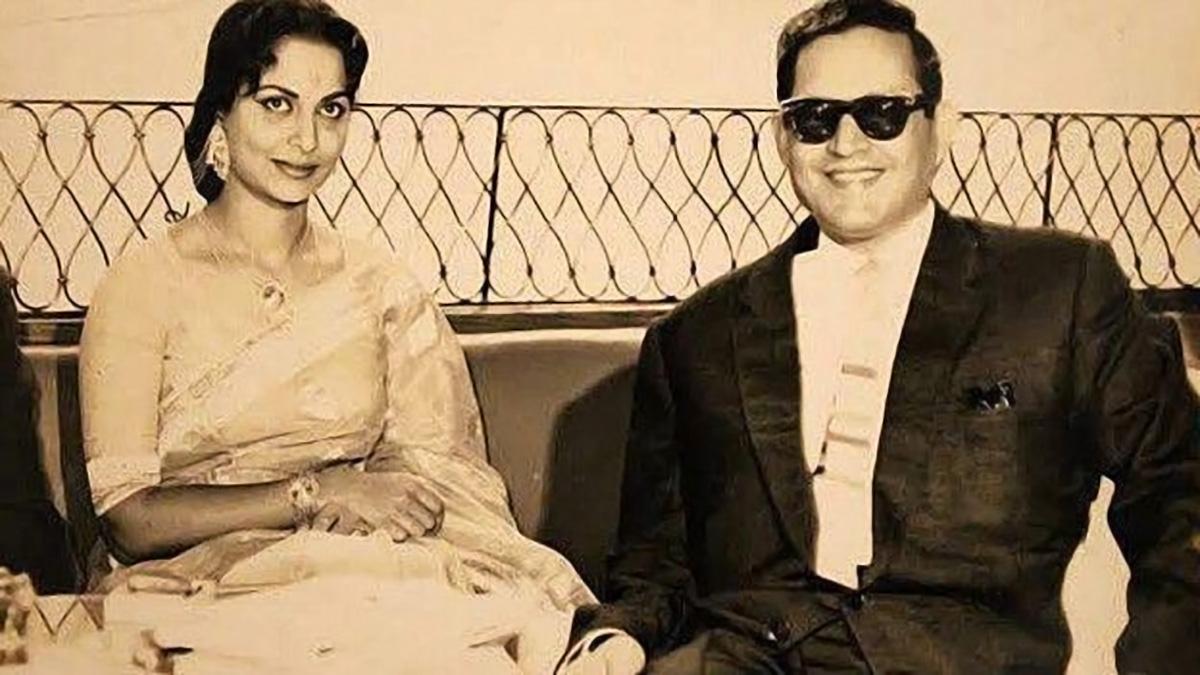
Waheeda
Rehman
and
Guru
Dutt.
Photograph:
Kind
courtesy
Film
History
Pic/X
“If
you
talk
about
me
today,
it’s
because
of
these
films,”
says
renowned
actress
Waheeda
Rehman
about
the
five
films
produced
by
Guru
Dutt,
CID,
Pyaasa,
Kaagaz
Ke
Phool,
Chaudhvin
Ka
Chand
and
Sahib
Bibi
Aur
Ghulam.
Here,
Waheeda
looks
back
at
her
eight
year-long
association
with
Guru
Dutt,
and
says,
“I
felt
Guru
Duttji
was
miscast
in
Sahib
Bibi
Aur
Ghulam;
he
looked
older
than
the
role.
Shashi
Kapoor
had
an
innocent
face;
he
would
have
looked
young
and
vulnerable.”
In
a
scene
from
Kaagaz
Ke
Phool,
a
film
director
played
by
Guru
Dutt
auditions
you,
and
a
panel
of
studio
executives
assess
your
character’s
screen
potential.
Did
you
have
to
undergo
a
similar
audition?
No.
They
shot
my
photographs
from
various
angles
but
I
wasn’t
asked
to
mouth
lines.
They
selected
me
instantly
thereafter.
However,
there
was
a
five
month
wait
before
the
screen
test.
Guru
Duttji
is
my
mentor
as
far
as
Hindi
cinema
is
concerned,
but
my
first
film
appearance
was
in
a
dance
number
in
the
Telugu
film,
Rojulu
Maraayi.
I
was
in
Hyderabad
and
Guru
Duttji
arranged
for
a
meeting
with
my
mother
and
me.
Guru
Duttji
hardly
said
a
word.
Four-five
months
later,
Guru
Duttji‘s
office
contacted
us
and
asked
us
to
travel
to
Bombay
for
a
screen
test.
Guru
Duttji
took
some
photographs
and
signed
me
on
a
contract
for
three
years.
During
your
association
with
Guru
Dutt,
you
saw
him
in
the
role
of
a
director
as
well
as
an
actor.
Do
you
think
Guru
Dutt
made
a
better
filmmaker
or
actor?
I
always
considered
him
as
a
director,
never
an
actor.
Do
you
know
he
always
considered
other
actors
for
his
films
first?
For
Pyaasa,
he
wanted
to
cast
Dilip
saab;
only
when
Dilip
saab
refused
did
Guru
Duttji
decide
to
do
the
role
himself.
For
Sahib
Bibi
Aur
Ghulam,
Guru
Duttji
wanted
to
cast
Shashi
Kapoor
in
the
role
of
Bhootnath.
However,
Guruji
wanted
bulk
dates
from
Shashiji
because
he
had
already
built
a
huge
set
and
had
acquired
Meena
Kumari’s
dates.
Shashiji
couldn’t
spare
the
required
dates
even
though
he
was
still
a
newcomer.
Guruji
spoke
to
Biswajeet
too.
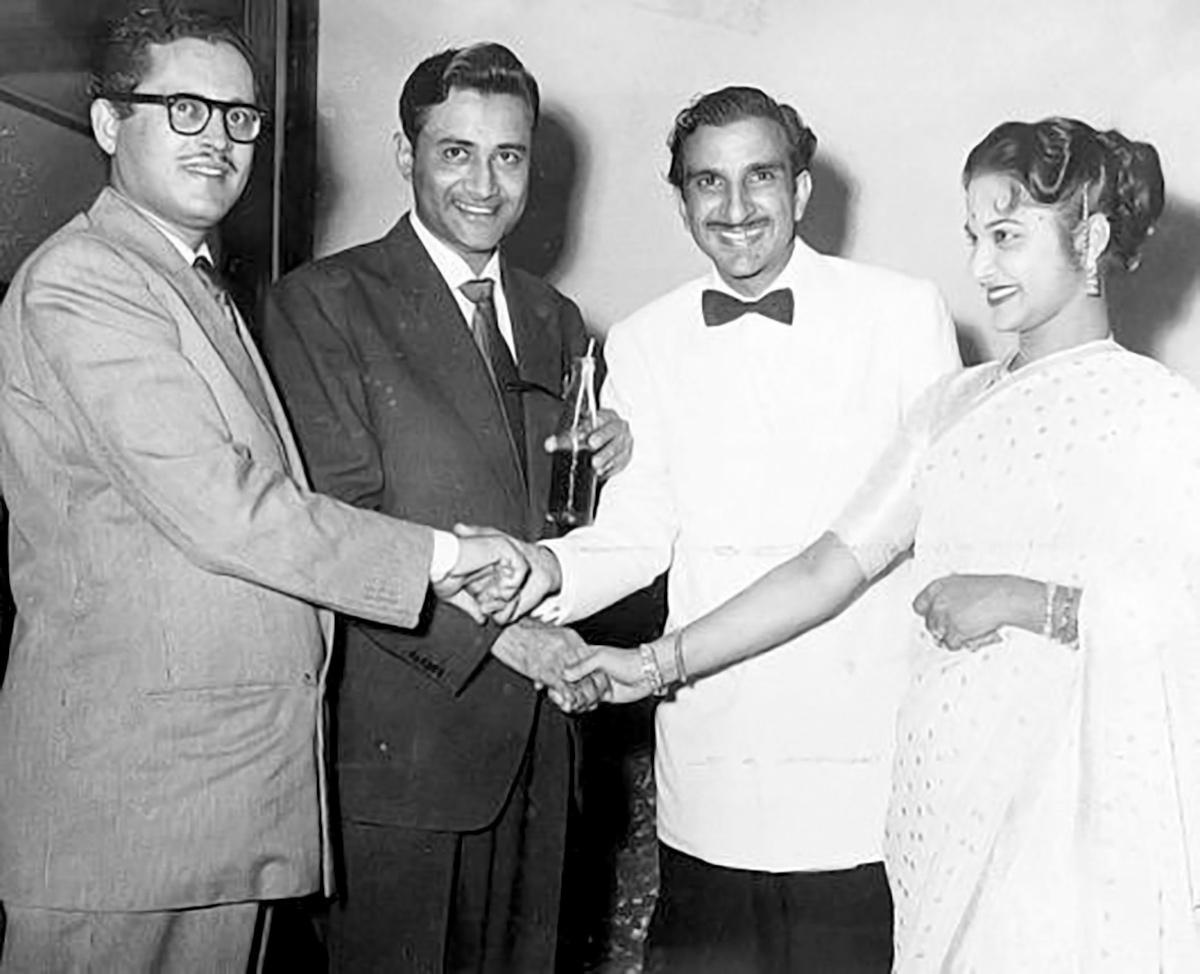
Guru
Dutt,
Dev
Anand,
Raj
Khosla
and
Waheeda
Rehman.
Photograph:
Kind
courtesy
Film
History
Pic/X
Eventually,
the
titular
Ghulam
was
essayed
by
Guru
Dutt,
and
he
seemed
apt
for
it.
No,
I
did
not
think
so.
I
felt
Guru
Duttji
was
miscast
in
Sahib
Bibi
Aur
Ghulam;
he
looked
older
than
the
role.
Shashi
Kapoor
had
an
innocent
face;
he
would
have
looked
young
and
vulnerable.
He
was
appropriate
to
portray
the
naïve
Bhootnath,
who
is
fascinated
by
the
Bibi,
played
by
Meena
Kumari.
As
an
actor,
what
was
it
like
to
be
directed
by
Guru
Dutt?
Guru
Duttji
was
a
very
understanding
director.
He
would
explain
the
scene
and
then
leave
it
to
the
artiste.
He
would
laugh
and
caution:
‘Don’t
copy
me,
I
performed
like
a
man
would.’
Raj
Khosla,
with
whom
I
worked
in
CID
(1956),
was
a
very
good
director,
but
he
was
not
very
understanding
of
a
newcomer’s
mindset.
While
shooting
a
close-up,
I
would
be
asked
to
remain
still
and
just
move
a
flicker;
and
as
a
result
I
would
grow
very
stiff.
Guru
Duttji
explained
to
me
the
degree
of
movement
required
in
the
shot.
Fortunately,
I
preferred
to
underplay;
and
Guru
Duttji
too
never
believed
in
excess.
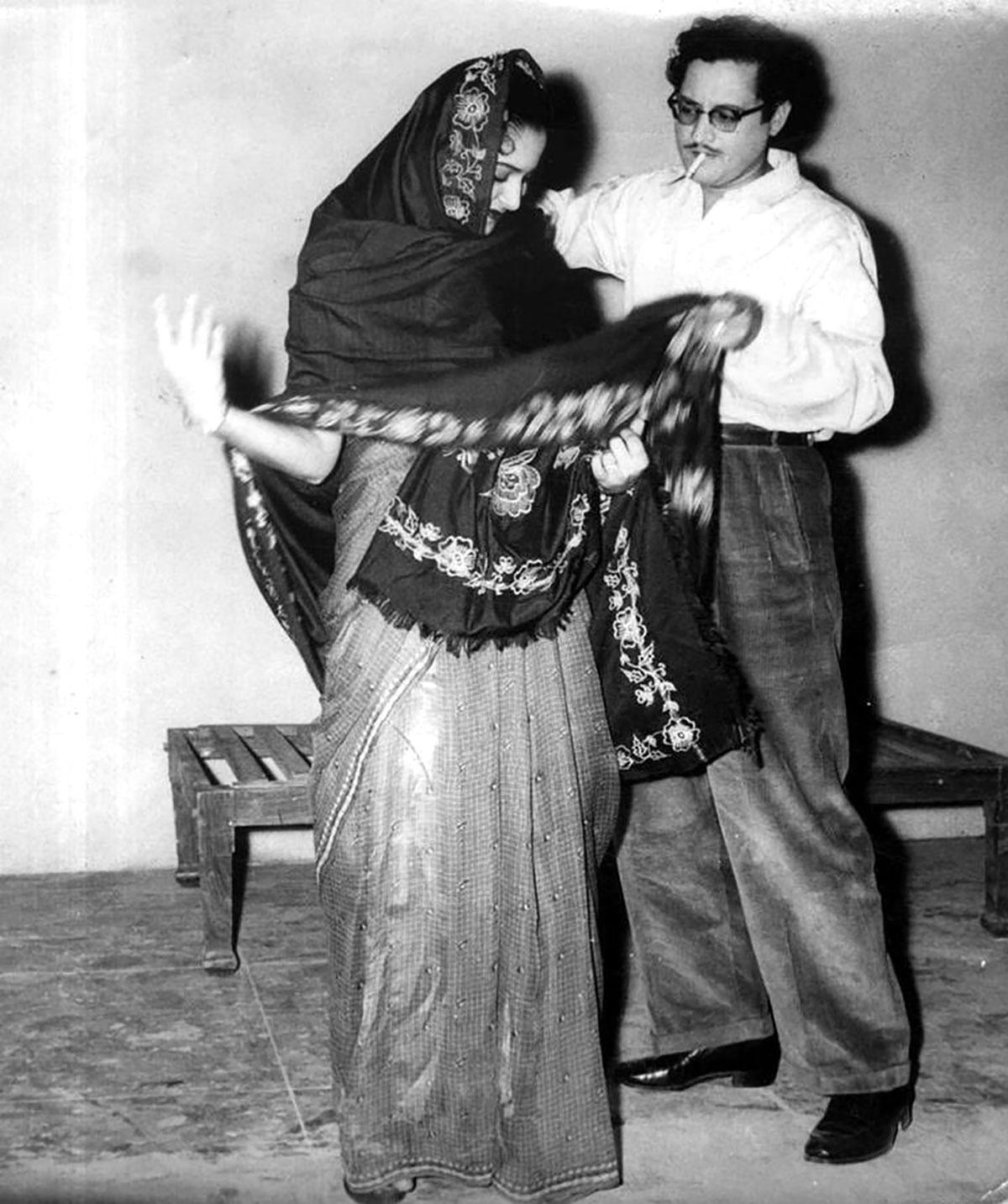
Waheeda
Rehman
and
Guru
Dutt
on
the
sets
of
Pyaasa.
Photograph:
Kind
courtesy
Film
History
Pic/X
You
achieved
stardom
thanks
to
the
success
of
Pyaasa
(1957).
Was
it
a
challenge
thereafter
to
play
a
naïve
ingénue
in
Kaagaz
Ke
Phool
(1959)?
I
never
felt
or
behaved
like
a
star.
In
my
personal
life,
I
would
wear
a
salwar
kameez
and
sport
two
plaits.
My
director,
Guru
Dutt,
was
very
down
to
earth
too,
Mala
Sinha,
my
co-star
in
Pyaasa,
pushed
me
to
take
care
of
my
looks,
makeup,
hair
and
costume;
and
not
leave
these
details
entirely
to
the
director.
She
was
very
sweet.
Was
Guru
Dutt
sensitive
to
an
artiste’s
state
of
mind?
My
mother,
whom
I
was
very
close
to,
died
around
two
months
before
we
began
shooting
for
Kaagaz
Ke
Phool.
One
day,
I
had
to
shoot
the
scene
in
which
Naaz,
who
played
Guru
Dutt’s
onscreen
daughter,
asks
me
to
step
out
of
her
father’s
life.
I
had
to
respond
with
‘Duniya
main
na
mera
koi
rishtedaar
hai
na
dost-saheli.’
Each
time
I
would
say
these
lines,
I
would
burst
into
tears.
Naaz,
who
was
a
star
in
her
own
right
by
then,
was
irritated.
Guru
Duttji
announced
‘pack
up’.
I
felt
guilty
that
shooting
was
being
cancelled
to
accommodate
me,
and
protested,
but
Guru
Duttji
wouldn’t
heed
me.
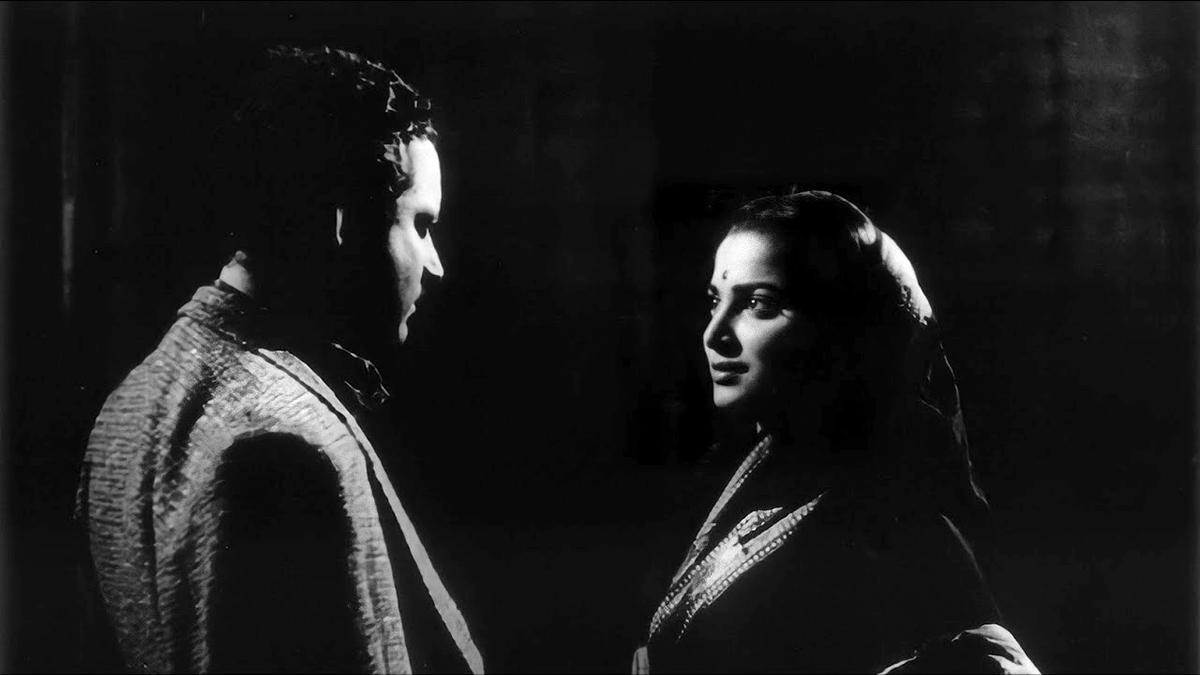
Waheeda
Rehman
and
Guru
Dutt
in
the
song
Waqt
Ne
Kiya
Kya
from
Kaagaz
Ke
Phool.
What
was
your
reaction
when
you
saw
how
cinematographer
V
K
Murthy
had
lit
you
in
the
song
Waqt
Ne
Kiya
Kya
Haseen
Sitam?
V
K
Murthy
was
the
hero
of
Kaagaz
Ke
Phool,
Guru
Duttji
came
second.
It
was
incredible
how
Murthy
created
the
famous
beam
of
light
in
Waqt
Ne
Kiya
Kya
by
placing
a
mirror
on
the
skylight
of
the
set.
Guru
Duttji
and
Murthy
were
great
collaborators
but
would
fight
very
often.
Guru
Duttji
would
demand
impatiently,
‘Murthy,
yaar,
jaldi
karo.’
In
Kaagaz
Ke
Phool,
Guru
Dutt
is
shown
to
be
devastated
after
the
public
violently
rejects
his
film.
We
came
to
know
at
the
premiere
that
the
film
had
not
been
accepted.
Now
when
I
attend
cinema-related
events
in
India
or
abroad
(I
went
to
Japan
some
years
back),
people
cannot
stop
praising
Guru
Dutt
and
Kaagaz
Ke
Phool.
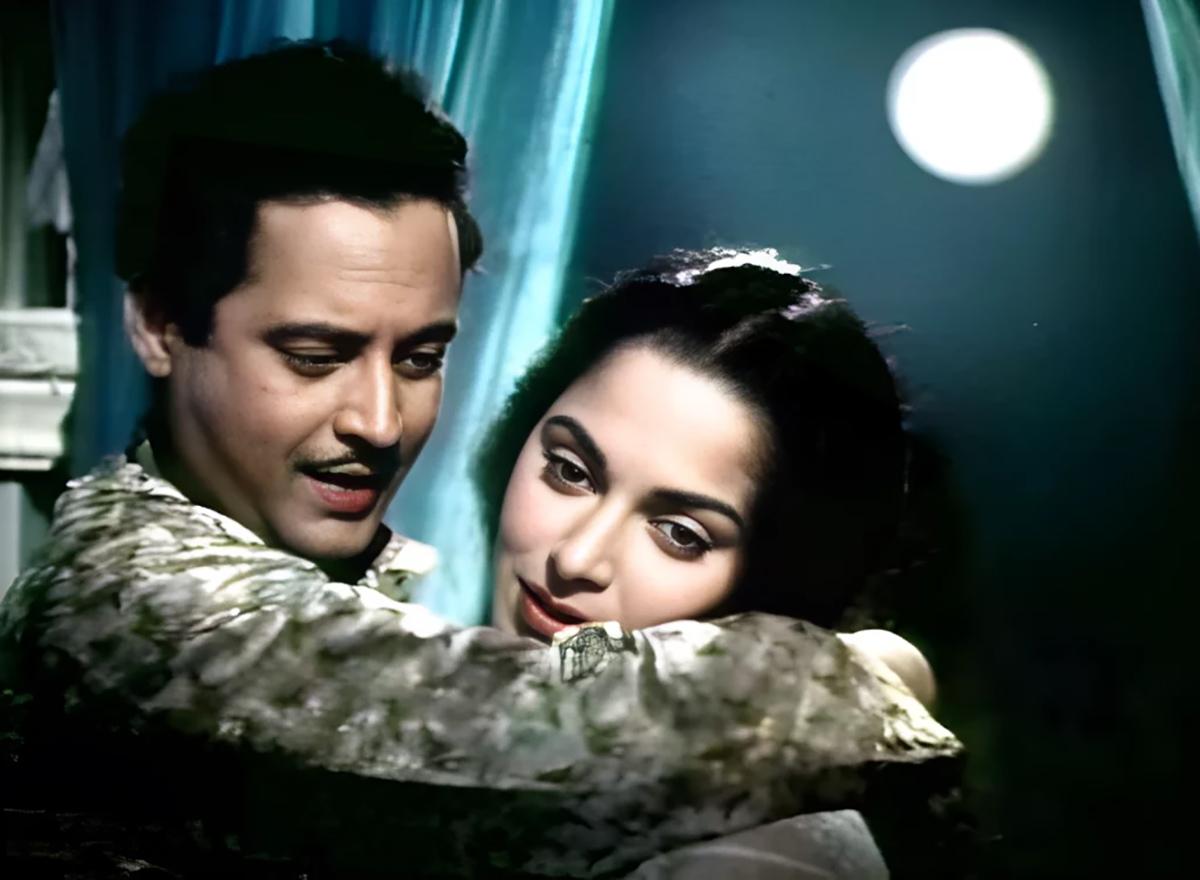
Waheeda
Rehman
and
Guru
Dutt
in
Chaudhvin
Ka
Chand.
It
is
a
long-held
belief
that
the
failure
of
Kaagaz
Ke
Phool
led
to
Guru
Dutt
producing
the
commercial
musical,
Chaudhvin
Ka
Chand
(1960).
No,
this
is
totally
untrue.
Chaudhvin
Ka
Chand
had
already
been
planned
before
Kaagaz
Ke
Phool
failed.
Despite
its
success,
why
did
Guru
Dutt
reshoot
the
song
Chaudhvin
Ka
Chand
Ho
in
colour,
and
add
it
to
the
film
much
after
its
release?
Somebody
suggested
that
we
should
reshoot
the
popular
title
song
in
colour
to
give
a
boost
to
the
collections.
We
had
to
show
the
film
to
the
censors
all
over
again.
After
viewing
the
song,
they
exclaimed,
‘Oh,
my
God!
Look
at
Waheeda’s
eyes,
they
are
so
red,
they
look
sensual!’
Guru
Duttji
patiently
explained
to
them
that
shooting
in
colour
required
harsh
lights,
and
this
resulted
in
the
eyes
looked
red
despite
the
application
of
Chamomile
tea
and
ice.
Finally,
the
censors
came
around.
If
the
Censor
Board
of
that
time
were
to
see
today’s
films,
they
would
have
a
heart
attack.
Don’t
Miss
Part
2
On
Wednesday!
Kind
Courtesy:
Kagaz
Ke
Phool
and
Sahib
Bibi
Aur
Ghulam:
The
Original
Screenplay
by
Dinesh
Raheja
and
J
Kothari.
Published
by
Om
Books
International
in
association
with
Vinod
Chopra
Films