
Audiences
will
hope
that
Rajinikanth’s
Coolie,
Lokesh
Kanagaraj’s
action
film
and
Rajkumar
Hirani’s
Dadasaheb
Phalke
biopic
are
not
marred
by
Aamir
Khan’s
disconcerting,
repetitive
performances.
Aamir’s
real
strength
lies
in
championing
stories
that
challenge
conventions
and
are
considered
risky
by
mainstream
filmmakers.
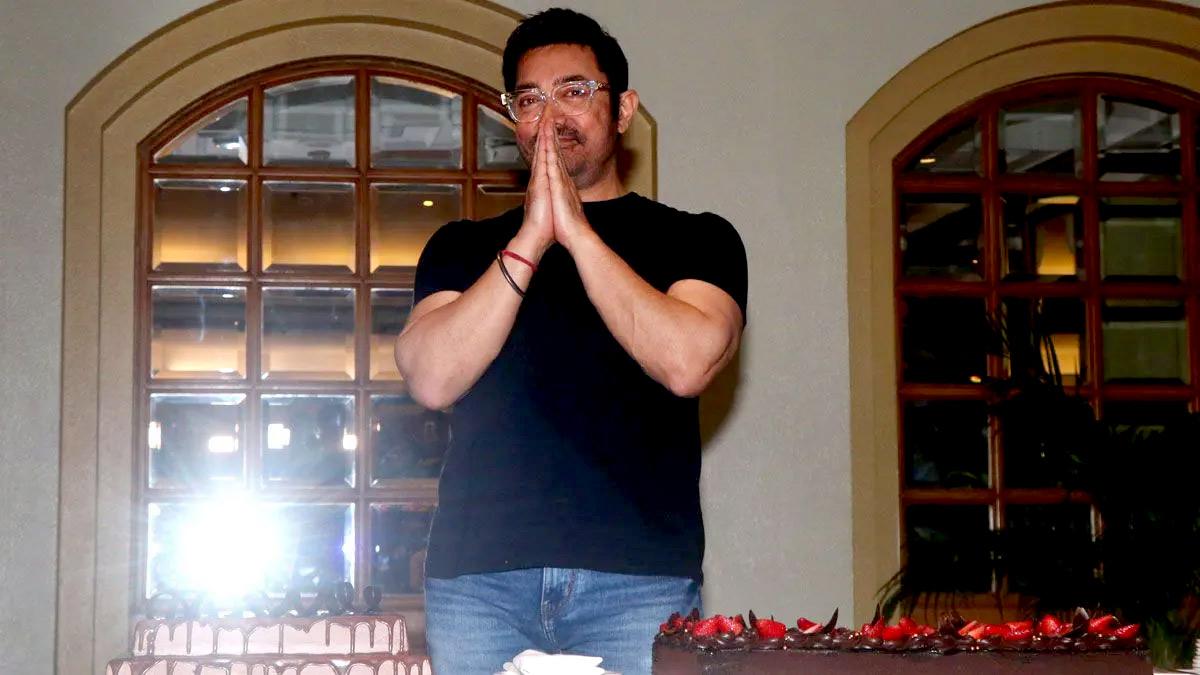
Aamir
Khan
Photograph:
Hitesh
Harisinghani/Rediff
When
he
sings
Pehla
Nasha
in
Jo
Jeeta
Wohi
Sikander,
you
feel
the
electric
rush
of
first
love.
When
he
proclaims:
“Mein
apne
mulk
ko
apna
ghar
samajtha
hoon,”
in
Sarfarosh,
it
strikes
a
deep
patriotic
chord.
And
when
he
quietly
steps
away
to
concede
a
painting
competition
to
his
dyslexic
protege
in
Taare
Zameen
Par,
you’re
left
with
a
lump
in
your
throat.
For
the
past
40
years,
Aamir
Khan
has
carved
out
a
career
as
an
actor
with
his
unique,
off-beat
choices.
Known
for
his
impeccable
work
ethic
and
the
ability
to
go
against
the
grain,
his
oeuvre
is
an
eclectic
mix
—
from
Dangal
to
Rang
De
Basanti,
Lagaan
to
Dil
Chahta
Hain
—
traversing
a
dizzying
array
of
genres.
In
March
this
year,
Khan
turned
60.
Four
decades
have
passed
since
his
first
onscreen
performance
in
Holi,
which
was
released
three
years
before
his
breakout
role
in
Qayamat
Se
Qayamat
Tak
in
1988.
When
his
contemporaries
were
dancing
in
front
of
the
Swiss
Alps,
Khan
was
busy
doing
films
that
held
up
a
mirror
to
life.
‘I
don’t
follow
logic
…
just
do
what
my
heart
tells
me
to,’
the
actor-producer
famously
remarked
when
asked
about
his
film
choices.
Last
month,
Khan
unveiled
his
latest
film:
Sitaare
Zameen
Par,
a
coming-of-age
sports
drama
that
explores
the
theme
of
neurodiversity.
Khan
calls
this
film
a
family
entertainer
and
a
spiritual
successor
to
his
2007
directorial
venture
Taare
Zameen
Par.
Khan
left
no
stone
unturned
in
promoting
the
film.
He
was
everywhere
—
on
billboards,
on
television
screens,
popping
up
on
mobile
phones,
and
giving
interviews
to
just
about
everyone.
In
these
four
decades,
Khan
the
movie
star
has
also
shown
his
penchant
for
innovation
in
film
promotion.
In
2009,
before
the
release
of
Three
Idiots,
he
embarked
on
a
Bharat
Darshan
in
incognito
mode.
He
landed
up
in
Ludhiana
as
a
Mexican
tourist
and
roamed
the
streets
of
Varanasi
as
a
vagrant.
His
detractors
called
it
a
gimmick.
But
the
film
went
on
to
become
a
blockbuster,
sending
Khan’s
stardom
into
orbit.
He
was
rechristened
‘Mr
Perfectionist’
by
fans
and
the
media
for
his
unwavering
attention
to
detail
and
hands-on
involvement
in
projects.
Perhaps,
he
took
this
tag
a
little
too
seriously.
By
then,
Khan
had
positioned
himself
as
the
superstar
with
a
conscience,
but
the
cracks
had
begun
to
surface
in
his
acting.
This
has
become
more
apparent
in
Sitaare
Zameen
Par,
where
he
plays
a
despicable
basketball
coach.
While
the
film
has
been
elevated
by
strong
performances
from
the
supporting
cast,
Khan’s
portrayal
is
underwhelming
—
botched
by
odd
mannerisms
and
bizarre
expressions.
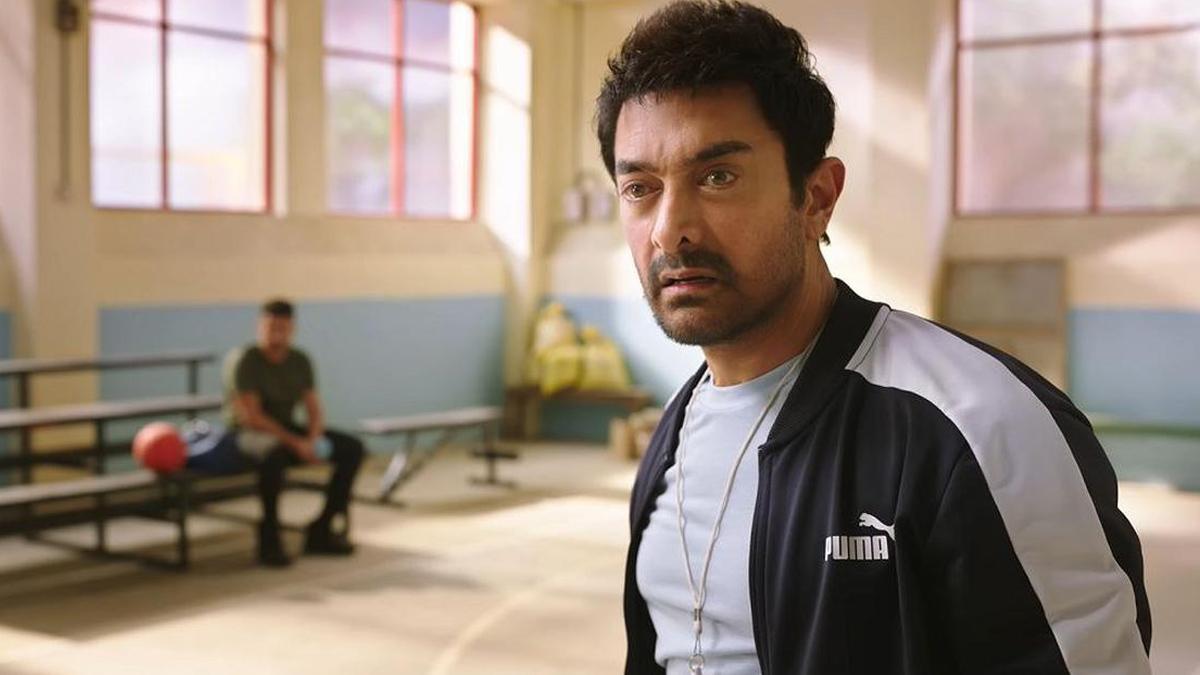
Aamir
Khan
in
Sitaare
Zameen
Par.
It
seemed
like
he
was
still
stuck
on
a
loop
from
the
character
he
played
in
his
previous
film:
Lal
Singh
Chaddha.
It
was
produced
by
Khan,
a
remake
of
the
1994
hit
Forrest
Gump,
starring
the
inimitable
Tom
Hanks
in
the
titular
role.
Khan’s
own
performance
in
that
film
was
loud,
over-the-top,
bordering
on
buffoonery.
It
was
a
far
cry
from
Hanks’
nuanced
Oscar-winning
portrayal.
Khan’s
labour
of
love,
which
was
over
two
years
in
the
making,
sank
without
a
trace
at
the
box-office.
The
telltale
signs
were
evident
when
in
2013
he
did
Dhoom
3,
where
he
looked
jarring
and
out
of
his
depth
as
a
circus
entertainer.
It
showcased
Khan’s
limitations
as
an
actor.
Lal
Singh
Chaddha‘s
debacle
sent
Khan
into
depression,
to
the
point
that
he
even
contemplated
stepping
away
from
cinema
altogether.
He
is
now
back
with
Sitaare
Zameen
Par,
which
has
had
a
decent
run
at
the
box-office.
But
it
did
little
to
mask
Khan’s
inconsistent
performance.
Going
forward,
Khan
has
an
interesting
lineup.
It
includes
a
high-octane
cameo
in
Coolie,
a
film
headlined
by
Rajinikanth,
an
action
film
with
Lokesh
Kanagaraj,
and
the
biopic
on
Dadasaheb
Phalke,
to
be
directed
by
Rajkumar
Hirani.
Audiences
will
be
hoping
that
these
big-ticket
films
with
seemingly
interesting
premises
are
not
marred
by
Khan’s
disconcerting,
repetitive
performances.
Khan’s
real
strength
lies
behind
the
camera,
as
a
director
and
producer,
championing
stories
that
challenge
conventions
and
are
considered
risky
by
mainstream
filmmakers.
In
doing
so,
he
will
continue
to
surprise
and
captivate
audiences
while
cementing
his
legacy
as
one
of
Indian
cinema’s
most
compelling
storytellers.
Feature
Presentation:
Aslam
Hunani/Rediff