‘The
value
of
a
human
being
is
being
lost.
That’s
my
biggest
worry.’
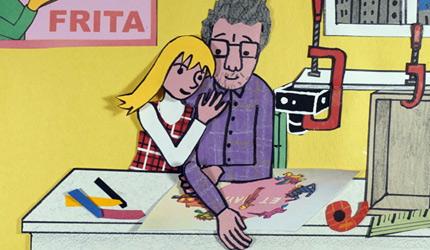
A
scene
from
Maya,
Give
Me
a
Title.
French
filmmaker
Michel
Gondry
was
late
in
using
a
smartphone.
By
his
own
admission,
the
Oscar
winner
(Best
Original
Screenplay
trophy
that
he
shared
with
Charlie
Kaufman
for
Eternal
Sunshine
of
the
Spotless
Mind)
felt
that
his
fingers
were
too
thick
to
type
text
messages.
But
when
he
got
a
smartphone,
Gondry
realised
it
was
a
wonderful
way
for
him
to
communicate
with
his
nine-year-old
daughter
Maya,
who
lives
in
France.
Gondry
would
often
have
to
travel
for
work
and
he
suddenly
came
up
with
an
idea
to
make
animated
stories,
using
12
photographs
(or
cutouts
of
colourful
papers)
a
second
and
moving
them
to
create
short
films
that
Maya
would
enjoy.
They
devised
a
plan.
Maya
would
come
up
with
random
titles
that
her
young
mind
would
think
of
and
Gondry
would
make
the
films.
Finally,
the
project
was
stitched
together
to
make
an
hour-long
animation
film
called
Maya,
Give
Me
a
Title.
The
delightful
film
premiered
at
the
Berlin
International
Film
Festival
in
the
Generations
section
and
won
the
Crystal
Bear
for
Best
Film.
The
stories
and
the
titles
include
Maya
watching
an
earthquake
and
making
a
plane.
In
one
story,
Maya’s
mother
shrinks
cucumbers
to
make
gherkins.
She
accidentally
drops
the
bottle
of
Concochon,
the
mixture
to
shrink
cucumbers
into
a
tub
where
Maya
is
having
a
bath.
And
voila,
Maya
shrinks
also.
Aseem
Chhabra
talked
to
Michel
Gondry
and
Maya
about
the
making
of
the
film
and
how
it
kept
the
father
and
daughter
close
even
though
they
were
living
on
different
continents.
Michel,
can
you
talk
about
your
love
of
stop
motion
animation?
You
have
used
it
before
but
why
do
you
particularly
like
this
animation
form?
Michel:
I
think
when
you
see
a
drawing,
it
is
just
a
drawing.
If
you
want
to
make
it
move,
you
have
to
make
it
move
with
your
hands.
But
when
you
animate
it,
you
take
a
picture
and
take
another
picture,
and
it
moves
on
its
own.
So
it’s
like
magic.
It’s
like
you
have
a
system
that
makes
you
see
another
dimension,
and
it’s
really
exciting.
You
think
in
this
time
of
hyper
technology,
you
wanted
to
have
a
take
on
the
most
basic
elements
of
creativity?
Michel:
Well,
yes,
sure,
but
as
not
a
statement.
You
can
be
as
creative
with
the
computer.
It’s
just
when
the
machine
does
too
much,
it
limits
your
creativity.
But
I
want
to
insist
that
it’s
not
the
goal.
The
goal
is
to
have
complete
freedom.
If
I
use
a
machine,
I
have
to
comply
with
the
guy
who
wrote
the
programme.
And
it
makes
me
very
angry
sometimes
because
there
are
shortcuts.
Things
that
are
automatic
are
made
for
people
who
are
a
bit
lazy.
So
I
pay
the
price
for
these
people.
I
don’t
even
try
because
what
I
like
in
animation
is
to
go
to
the
store
and
buy
all
colours
of
paper
I
can
find,
and
then
take
pictures.
I
don’t
want
to
be
nostalgic
and
say,
things
were
so
much
better
before.
I
use
computers
to
do
complex
projects
sometimes
but
it
has
to
be
different
than
typical
animation.
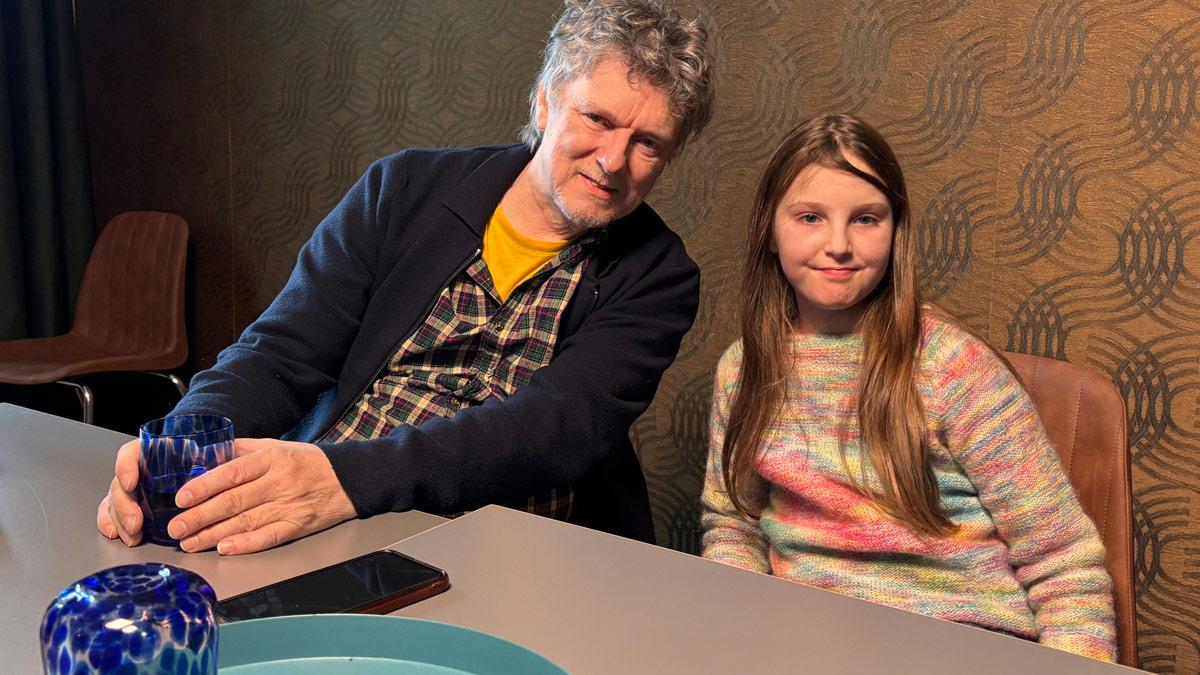
Michel
Gondry
with
daughter
Maya.
Photograph:
Aseem
Chhabra
You
were
at
the
Berlinale
12
years
ago
with
another
animation
film,
Is
the
Man
Who
Is
Tall
Happy,
the
film
you
made
about
Noam
Chomsky.
What
you
did
there
was
also
kind
of
a
dialogue
between
you
and
Chomsky,
as
this
is
a
dialogue
between
you
and
Maya.
Is
there
any
link
between
Maya
and
Chomsky?
Michel:
There’s
a
link
because
the
first
film
talked
about
acquiring
speech
and
language.
Maya
learned
three
languages
at
once,
English,
Swedish
and
French,
and
all
went
to
her
brain.
So
I
thought
of
Chomsky
while
working
on
this
film.
Maya,
how
was
this
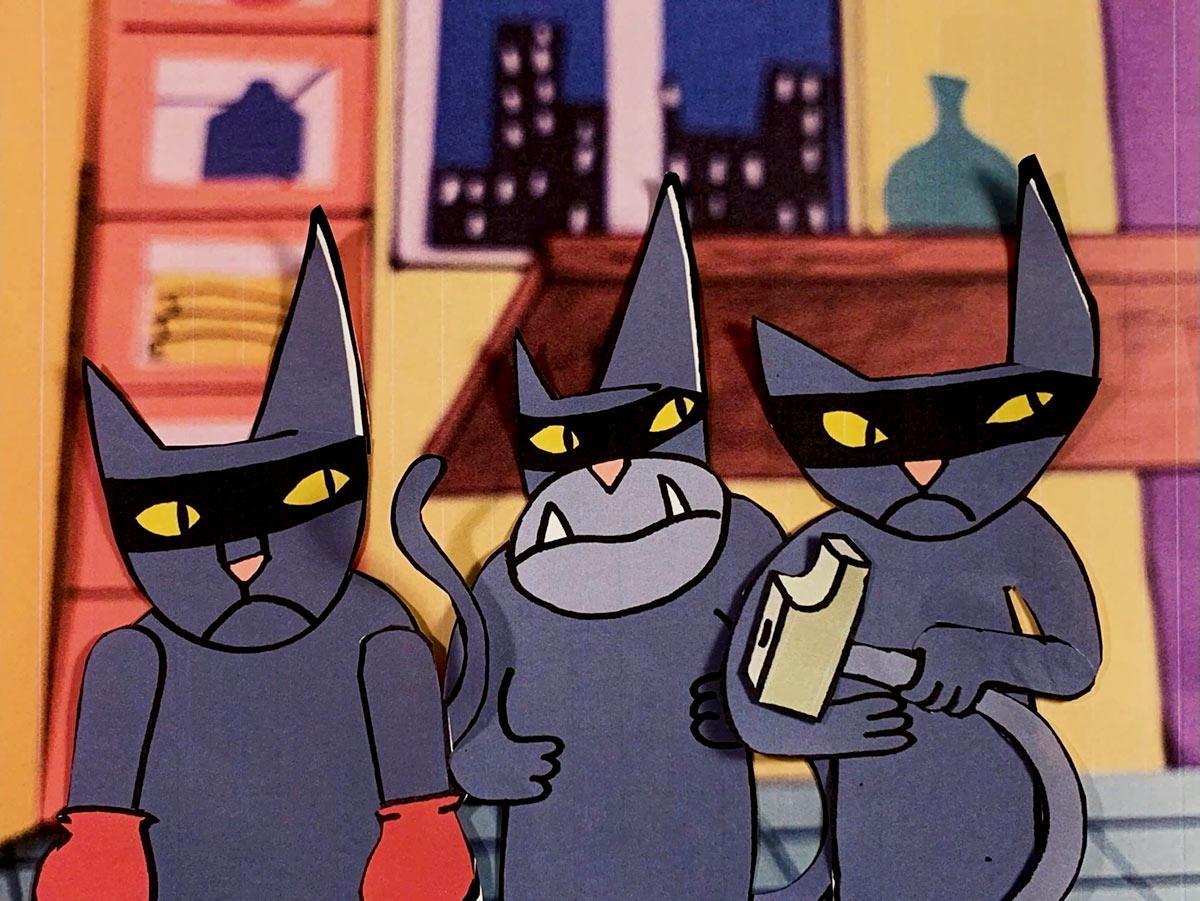
journey
been
for
you
with
your
stories,
including
my
favourite
The
Three
Burglar
Cats?
Maya:
I
had
no
idea
how
it
was
going
to
work.
I
was
in
France
and
now
I
am
in
Germany.
But
yes,
I
am
very
happy.
Did
you
like
when
your
father
shrunk
you
in
the
tub?
What
did
you
think
of
that?
Maya:
Well,
usually,
the
stories
have
a
good
ending.
So
actually,
it
was
okay
because
I
wouldn’t
have
liked
to
be
small
all
my
life.
Just
a
few
centimeters
in
height.
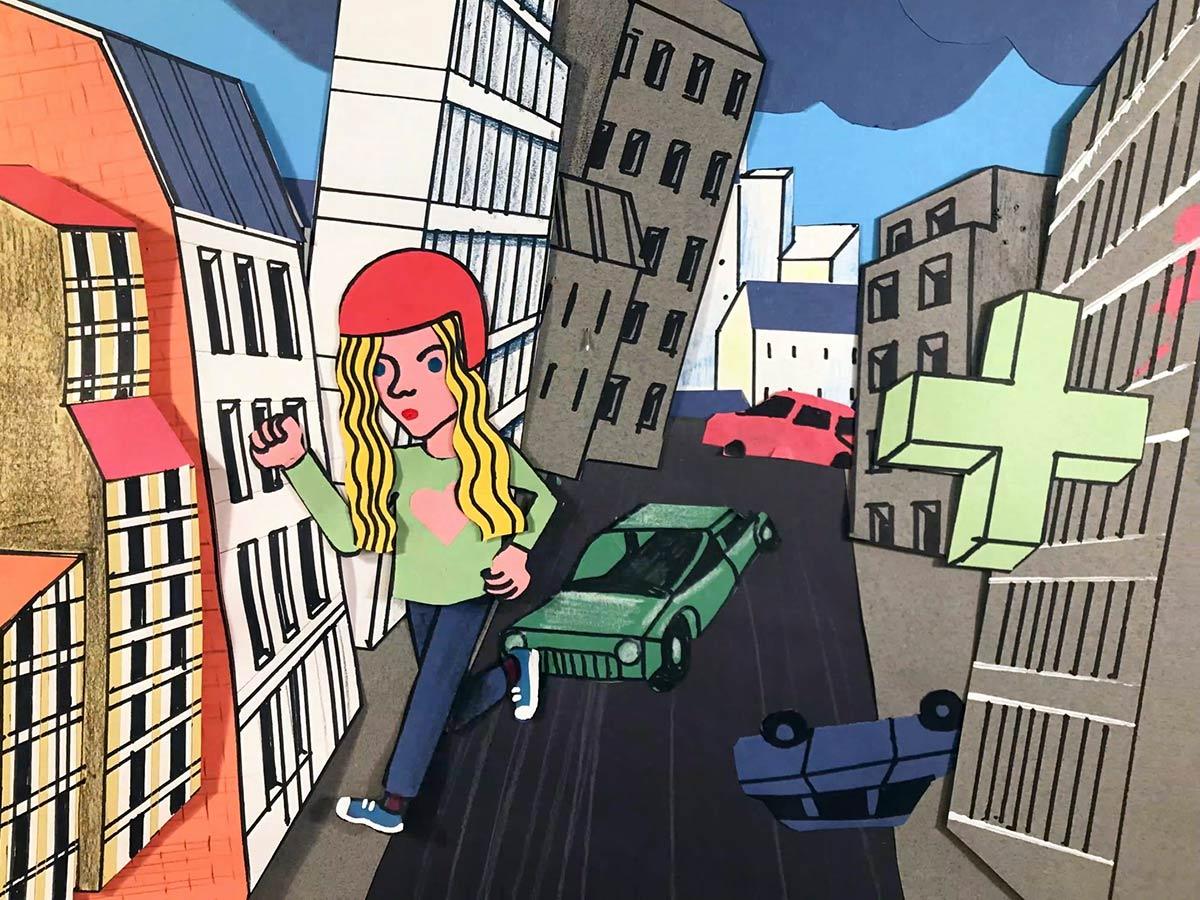
A
scene
from
Maya,
Give
Me
a
Title.
Michel,
has
Maya
seen
the
Hollywood
film
Honey,
I
Shrunk
The
Kids?
Michel:
No,
I
don’t
think
so.
(Turning
to
Maya
and
speaking
in
French)
You
should
watch
it
with
me.
Michel,
how
do
you
see
each
other’s
generation?
Michel:
I
don’t
wear
a
crop
top.
Maya:
I
also
don’t
wear
crop
tops.
Michel:
Sorry,
that
is
not
a
fair
answer.
I
think
because
it’s
handmade
work
I
do,
it’s
interactive
with
humans
and
not
a
machine.
It’s
me
doing
it,
mostly,
although
Maya
would
find
me
the
titles.
So
it
was
very
close
to
what
I
would
do
when
I
was
a
kid.
And
for
you,
Maya?
Maya:
Well
now,
we
all
have
phones.
When
you
were
small,
automatic
cars
didn’t
exist…
Michel:
You
had
a
string
in
between
the
thing
and
the
car.
Maya:
No,
I
mean
now
you
have
completely
electrical
cars,
and
a
lot
of
people
use
them.
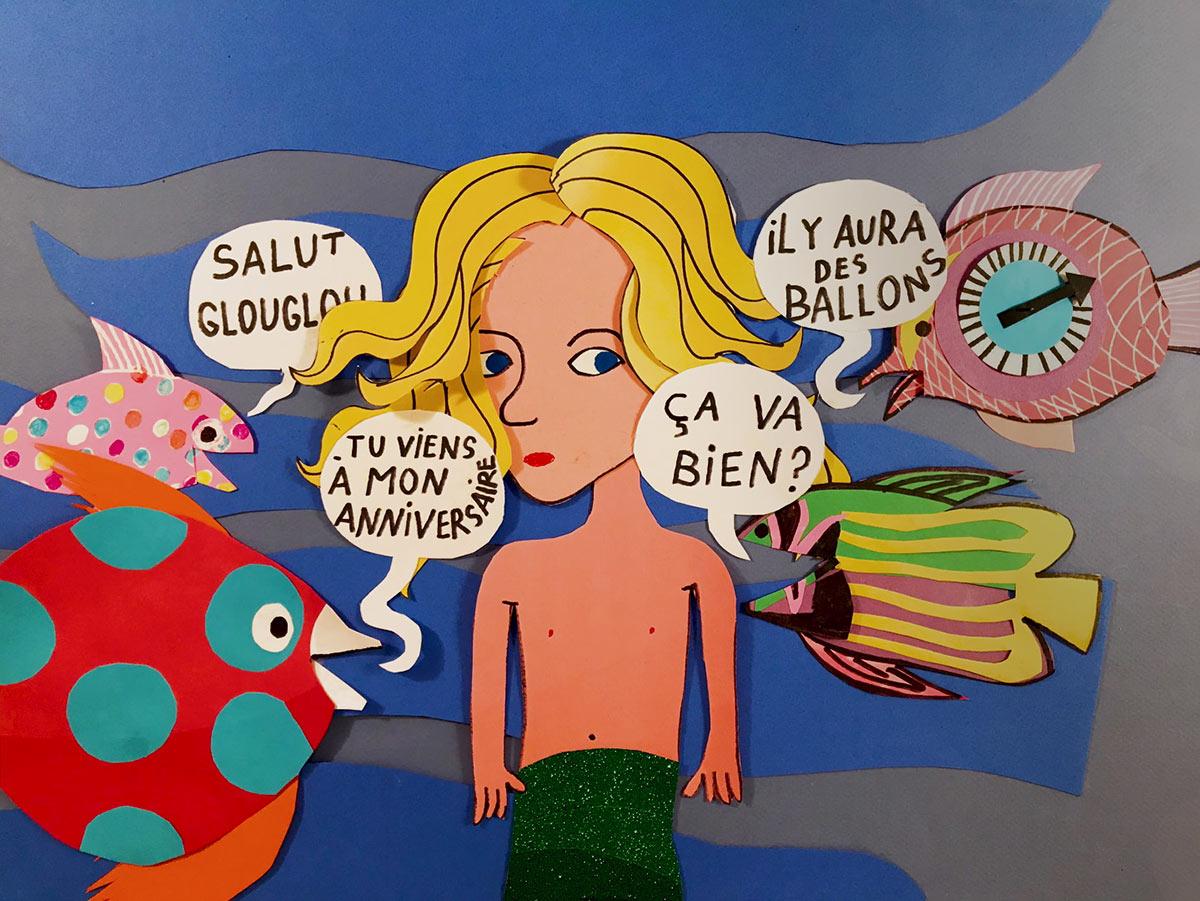
A
scene
from
Maya,
Give
Me
a
Title.
How
were
you,
Michel,
at
Maya’s
age?
When
did
you
start
getting
curious
about
making
things
happen
and
explore?
Michel:
We
are
very
different.
My
eye
is
more
about
story,
communication,
social.
Maya
is
the
opposite.
I
have
a
son
and
he
is
completely
different.
I
really
appreciate
how
genetics
work.
Paul
is
less
focused.
He
is
very
creative,
and
Maya
is
too.
But
Maya
is
learning
the
strings.
I
don’t
think
Paul
would
have
the
patience.
Maya:
Well,
sometimes,
I
don’t
have
the
patience.
Michel:
But
when
you
are
motivated,
it’s
good.
You
should
see
how
hard
she
works.
She’s
very,
very
good
at
school.
My
son
was
different.
My
son
was
very
good
at
psychology
to
get
the
answer
from
the
teacher
without
having
to
work
hard.
He’s
very
street
smart.
But
Michel,
do
you
remember
the
time
you
realised
that
stories
were
so
important
for
you
as
a
means
of
understanding
the
world
and
expressing
yourself?
Michel:
Initially,
I
was
more
about
discovery,
invention
and
trying
things.
For
instance,
when
I
was
Maya’s
age,
or
even
younger,
my
favourite
drinks
were
orange
juice
and
milk.
And
I
said,
‘Okay,
if
I
mix
them,
I
will
make
the
best
drink.’
Maya:
Oh,
that
is
gross.
Michel:
I
think
that
is
where
my
some
of
my
qualities
comes
from.
I
did
try
it
and
it
was
gross.
Later,
I
started
to
tell
more
and
more
stories.
Maya,
in
this
film,
did
you
feel
at
some
point
you
were
your
dad’s
boss?
Maya:
It
must
have
been
hard
for
him
to
come
up
with
stories
when
I
gave
him
the
titles.
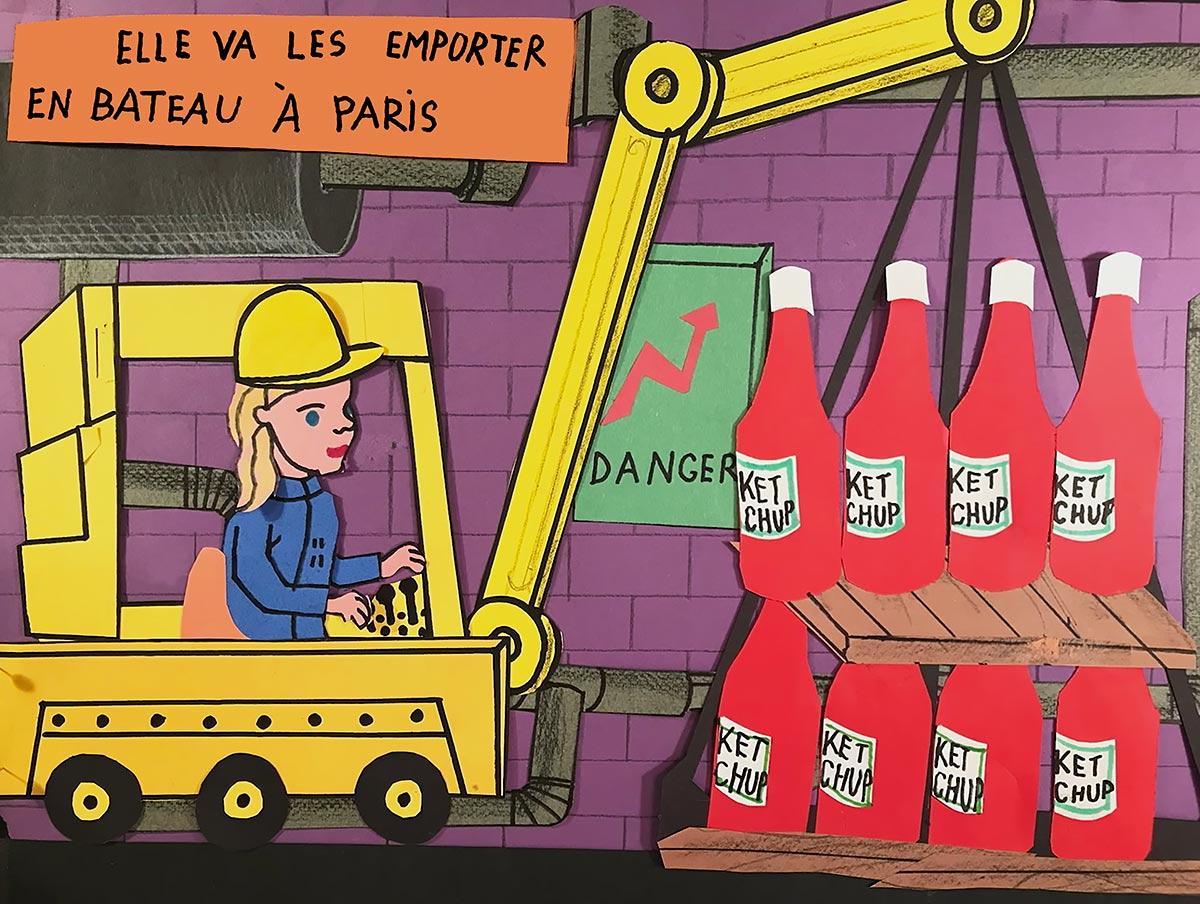
For
example,
Maya
in
the
Sea
with
a
Bottle
of
Ketchup.
He
would
have
to
make
good
value
in
the
titles.
A
scene
from
Maya,
Give
Me
a
Title.
Did
you
think
a
lot
about
the
titles
or
they
just
come
out
of
your
mind?
Maya:
I
think
they
would
just
come
out
of
my
mind.
Michel:
But
if
I
can
add
something,
you
would
think
there
is
a
limitation
in
creativity.
Limitation
of
freedom.
But
no.
I
will
never
think,
‘Oh,
she
takes
a
boat
and
she
transports
the
ketchup
bottles.
And
the
ketchup
is
very
powerful.’
I
will
never
dare
to
do
a
story
like
that
but
because
it’s
in
the
title,
I
said,
‘Okay,
I
am
fine.
It’s
justified.’
Was
it
a
way
for
you
to
tap
into
a
child’s
imagination?
It’s
like
what
you
thought
when
you
were
a
kid,
but
you
lost
that
when
you
grew
up?
Michel:
In
general,
there
is
a
bit
of
that
in
my
work.
For
this
reason,
I
don’t
have
to
think
of
who’s
going
watch
the
film.
I
mean,
I
know
she’s
going
to
watch
it
but
I
do
the
animation
exactly
like
I
would
make
it
for
myself.
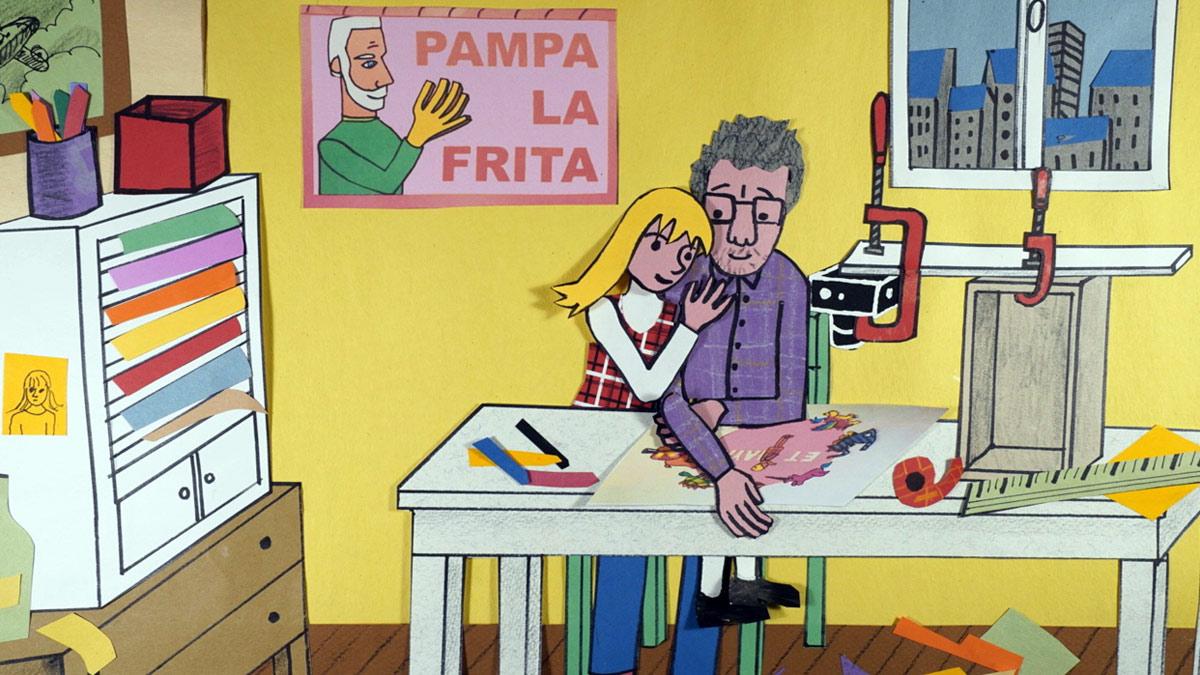
In
this
film,
I
tried
to
create
her
universe
—
her,
mom,
grandpa,
grandma
and
me
sometimes.
If
there
is
corner
of
the
house,
a
detail
that
she
would
remember.
If
she
feels
like
making
an
airplane,
I
would
use
stuff
from
house
so
she
can
identify
with
them.
A
scene
from
Maya,
Give
Me
a
Title.
Michel,
I
am
always
so
fascinated
by
how
creative
you
are
and
how,
as
an
artist,
you
are
not
boxed
in.
How
does
your
mind
work
that
you
every
project
you
do
is
so
diverse,
different,
challenging
and
yet
fun?
Michel:
Each
time
I
try
and
if
I
make
mistakes,
I
try
again.
Come
on,
that’s
not
true.
Michel:
But
I
go
where
I
have
opportunities
and
I
get
excited.
Are
you
concerned
about
artificial
intelligence?
Michel:
My
main
worry
is
that
we
are
a
little
group
of
people
who
are
lucky
to
do
creative
work,
and
we
are
all
fighting
to
keep
that
in
reality.
The
most
endangered
people
are
the
workers
because
there
will
be
in
more
control.
The
value
of
a
human
being
is
being
lost.
That’s
my
biggest
worry.
It’s
going
to
ruin
lives,
but
not
creatively.
A
scene
from
Maya,
Give
Me
a
Title.
Maya,
which
of
your
dad’s
movies
have
you
seen?
Maya:
I
have
seen
two:
Be
Kind,
Rewind
and
The
Book
of
Solutions.
What
about
Eternal
Sunshine
of
the
Spotless
Mind?
Maya
I
haven’t
seen
it
yet.
Michel,
are
you
still
in
touch
with
Kate
Winslet
and
Jim
Carrey?
Michel:
Mostly
Jim
Carrey,
yeah.
We
are
not
great
friends,
but
we
call
each
other,
and
he
painted
my
portrait.
Maya,
do
your
friends
know
that
you
are
at
the
Berlin
Film
Festival
and
you
have
been
involved
in
this
major
film?
Maya
No.
I
came
here
at
the
beginning
of
the
vacation,
so
nobody
asked
me.
So
they
haven’t
seen
the
film?
Maya:
Oh
my
friends
have
seen
the
film
because
I
invited
them
to
see
it.
But
I
don’t
think
they
know
I
am
at
the
Berlin
festival.
Michel:
She
doesn’t
brag.