
The
balance
was
so
perfect
in
that
moment,
the
irony
so
rich.
Those
who
cheered
on
Elia
Kazan
were
cheering
on
the
one
quality
that
made
him
such
a
singular
artist:
He
was
his
own
man
and
not
susceptible
to
groupthink.
Those
who
protested
Kazan’s
presence
were
protesting
that
very
quality:
They
were
saying
that
he
was
too
much
of
an
outlier,
a
wolf
in
a
radical’s
clothing.
Sreehari
Nair
captures
his
Kodak
moment
at
the
Oscars.
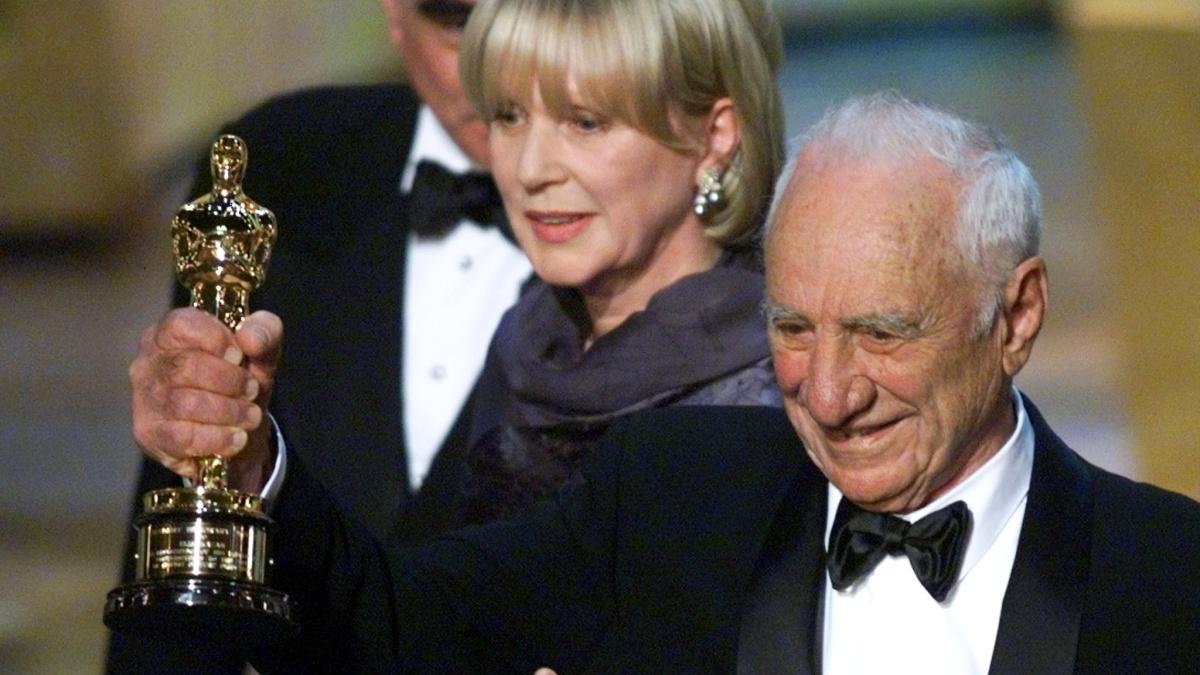
Director
Elia
Kazan
holds
up
his
Oscar
after
receiving
it
for
Lifetime
Achievement
in
Film
at
the
71st
Annual
Academy
Awards
in
1999.
All
photographs:
Reuters
My
favourite
Oscar
moment
did
not
involve
singing.
Nor
did
it
involve
such
specialities
as
silhouettes
pirouetting
against
a
starry
background.
My
favourite
Oscar
moment
did
not
involve
wisecracking
or
cheap
shots.
It
did
involve
a
master
of
cinema,
yes,
but
there
were
no
heartfelt
speeches
beamed
from
a
hospital
bed
or
interjections
by
some
cute,
curly-haired
translator.
And
although
it
did
not
involve
slapping
or
manhandling
of
any
kind,
it’s
safe
to
say
that
punches
were
thrown
and
points
were
made.
Well,
it
was
the
sort
of
moment
that
validated
William
Faulkner’s
bourbon-breathed
assertion:
‘The
past
is
never
dead.
It’s
not
even
past.’
My
favourite
Oscar
moment
happened
in
March
of
1999,
but
its
roots
stretched
back
as
far
as
1952.
1952.
Two
years
before
Terry
Malloy
cleaned
the
docks,
and
a
year
after
Stanley
Kowalski
had
poured
grease
and
sweat
over
a
Republican’s
vision
of
sweet,
temperate
America.
1952
was
when
Elia
Kazan
had
a
legacy
to
protect
and
a
future
to
look
forward
to.
He
had
demonstrated
that
he
could
shape
Tennessee
Williams’
meandering
genius
into
quotable
poetry
and
create
a
Brando
out
of
thin
air.
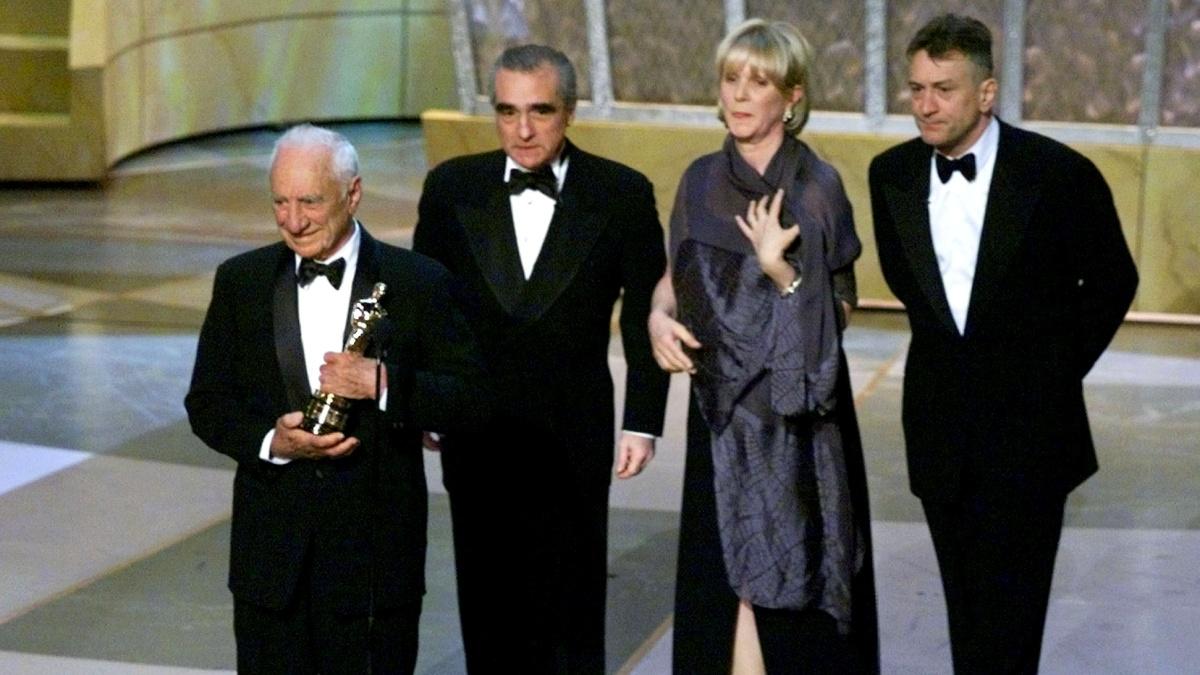
Elia
Kazan
holds
his
Oscar
for
lifetime
achievement
in
film
after
being
presented
the
award
by
Martin
Scorsese
and
Robert
De
Niro.
1952
was
also
when
Elia
Kazan
was
called
upon
as
a
witness
by
the
House
Un-American
Activities
Committee
(HUAC)
to
identify
communists
from
his
days
with
The
Group,
a
theatre
troupe
that
in
its
prime
functioned
as
a
haven
for
Soviet
sympathisers.
1952
was
when
Kazan
threw
it
all
away.
Under
no
pressure
to
testify,
Kazan
‘named
names,’
more
than
a
handful
of
ex-comrades,
many
of
whom
were
by
then
disillusioned
with
the
Soviet
model.
Those
named
by
Kazan
were
blacklisted.
Many
never
got
their
jobs
back.
Careers
were
terminated,
families
suffered.
Kazan
never
expressed
the
slightest
of
remorse,
citing
everything
from
the
publication
of
The
Gulag
Archipelago
to
the
Fall
of
the
Berlin
Wall
as
evidence
that
he
was
right.
But
the
stigma
followed
him
all
his
life.
Nobody
gave
two
hoots
about
communists
being
fingered.
The
charge
against
Elia
Kazan
was
that
he
had,
in
his
desire
to
establish
himself
as
a
patriot,
proved
himself
to
be
a
traitor
to
his
artistic
community,
to
his
band
of
brothers.
And
the
worst
part
of
it
was
that
he
did
what
he
did
without
any
special
prodding
from
the
HUAC
people.
The
tenor
of
Kazan’s
actions
was
best
summed
up
by
Orson
Welles:
“Friend
informed
on
friend
not
to
save
his
life
but
to
save
his
swimming
pool.”
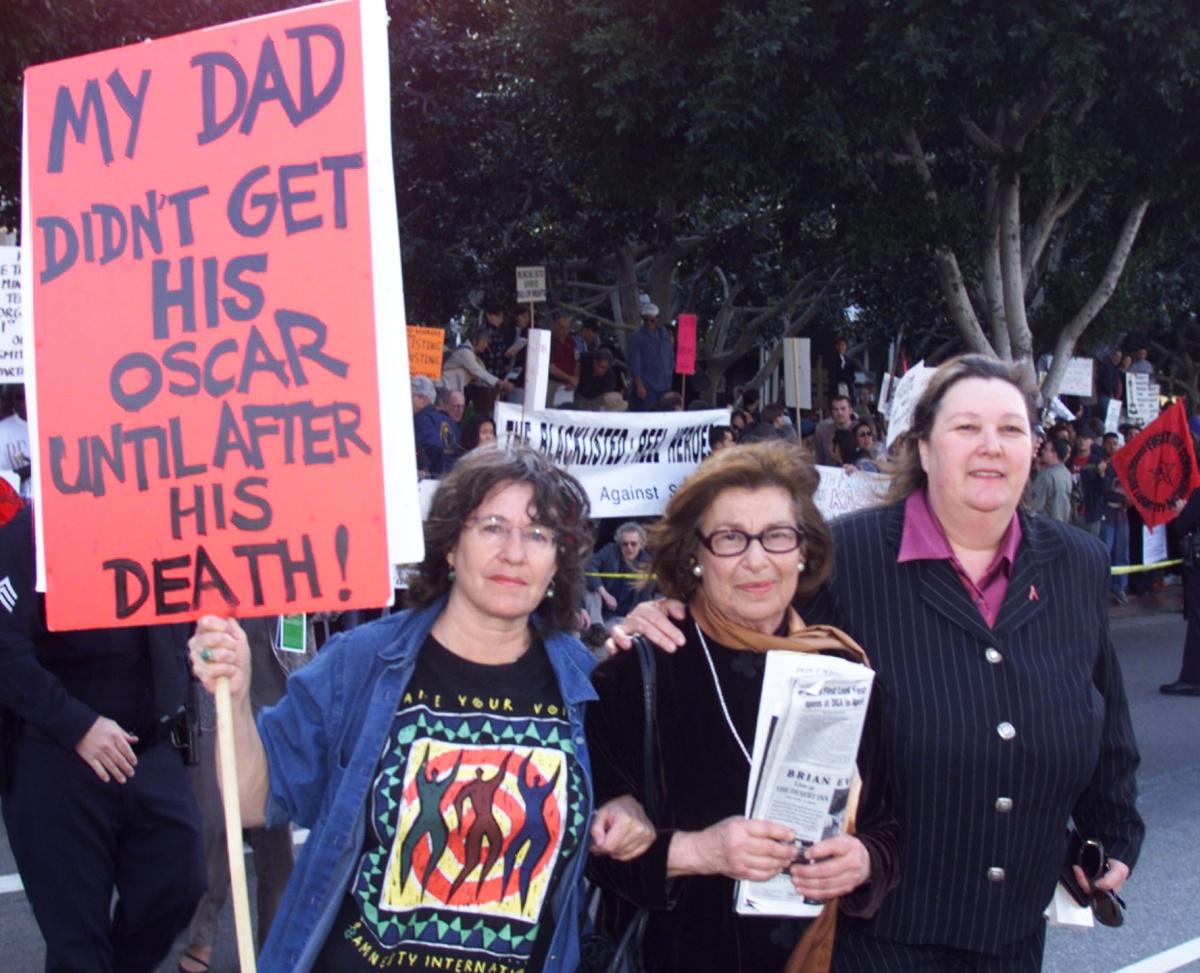
Becky
Wilson,
black-listed
writer
Michael
Wilson’s
daughter,
and
Norma
Barzman,
centre,
protest
the
presentation
of
Oscar
to
Elia
Kazan
at
the
Dorothy
Chandler
Pavilion
in
Los
Angeles.
1999.
The
echoes
of
that
legendary
betrayal
hovered
in
the
air
as
Robert
De
Niro
and
Martin
Scorsese
took
to
the
stage
to
introduce
Elia
Kazan,
who
was
to
be
awarded
an
honorary
Oscar
that
year.
De
Niro
spouted
generalities
about
Kazan
being
a
great
director
of
actors,
but
he
was
cut
off
by
Scorsese,
who
spoke
about
the
Greek
emigrant
and
his
relationship
with
his
adopted
country.
There
it
was
—
a
reminder
of
Elia
Kazan’s
love
for
America!
There
it
was
—
a
reminder
of
the
price
others
had
paid
when
Kazan
chose
to
publicise
his
love!
If
the
picketers
outside
the
Chandler
Pavilion
weren’t
enough,
this
bit
of
introduction
by
Scorsese
must
have
turned
the
trick.
What
happened
next
was
drama
of
the
subtlest
yet
most
electrifying
kind.
A
montage
of
Kazan’s
greatest
hits
was
played,
and
when
it
was
over,
out
walked
a
grizzled
man
in
a
spiffy
suit
supported
by
his
third
wife.
Recipients
of
lifetime
achievement
awards
are
apt
to
be
met
with
unanimous
applause,
but
here
was
a
version
of
that
custom
so
checkered
that
it
was
nothing
short
of
stunning.
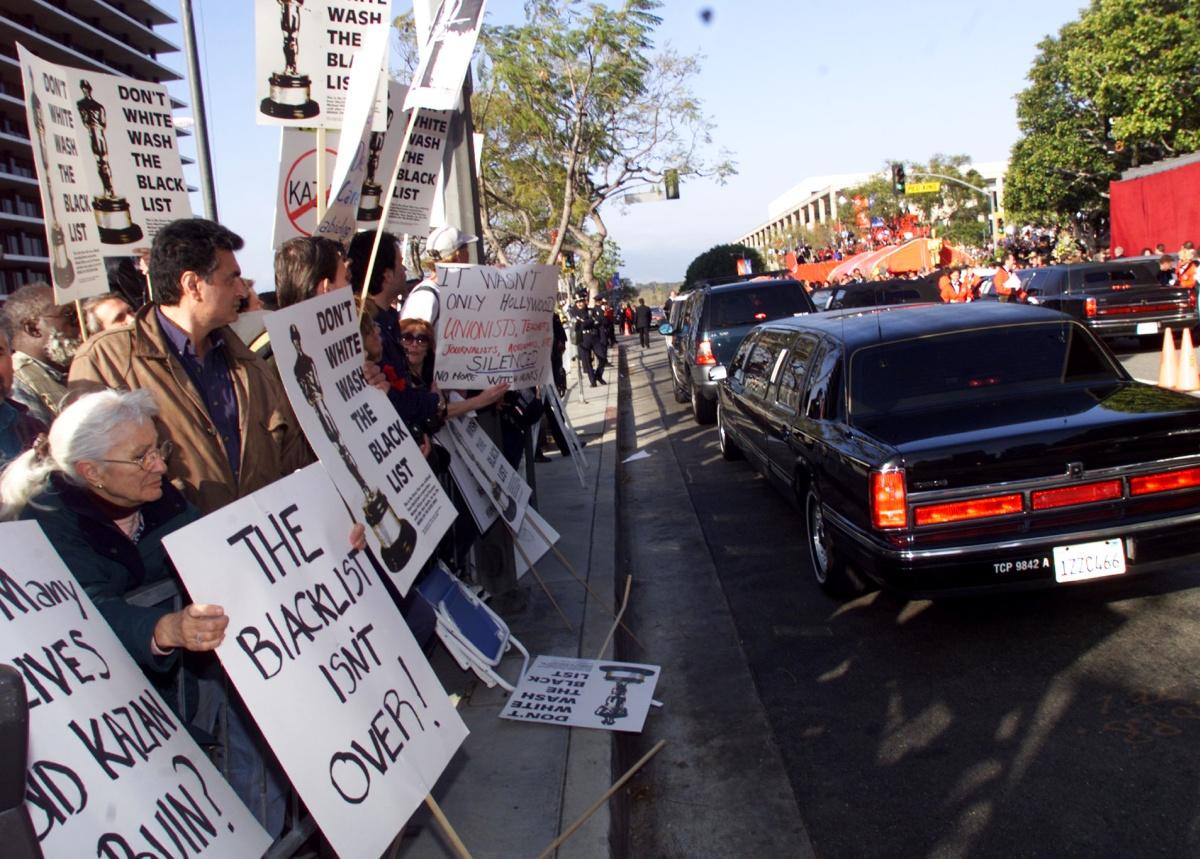
Demonstrators
protest
the
Oscar
for
Elia
Kazan
as
limos
arrive
at
the
71st
Annual
Academy
Awards.
For
all
of
Oscars’
efforts
to
promote
an
egalitarian
face,
this
was
when
the
awards
ceremony
took
on
a
truly
democratic
colour.
Warren
Beatty,
Kathy
Bates,
and
Meryl
Streep
stood
up
and
gave
a
rousing
welcome.
Jim
Carrey
and
Steven
Spielberg
applauded
without
leaving
their
seats.
Nick
Nolte
did
not
just
stick
to
his
seat
but
also
made
sure
that
his
arms
were
firmly
crossed
lest
his
hands
involuntarily
give
into
the
trend.
And
Ed
Harris
and
Amy
Madigan
went
a
step
further:
They
stared
straight
at
Kazan
with
eyes
reserved
for
unreckoned
souls.
The
balance
was
so
perfect
in
that
moment,
the
irony
so
rich.
Those
who
cheered
on
Elia
Kazan
were
cheering
on
the
one
quality
that
made
him
such
a
singular
artist:
He
was
his
own
man
and
not
susceptible
to
groupthink.
Those
who
protested
Kazan’s
presence
were
protesting
that
very
quality:
They
were
saying
that
he
was
too
much
of
an
outlier,
a
wolf
in
a
radical’s
clothing.
It
would
have
been
easy
to
spot
the
self-deceptions
of
those
who
did
not
clap
for
Kazan,
but
it
was
the
sheer
wordlessness
of
their
demonstration
that
made
it
so
compelling.
When
you
cancel
an
artist
for
his
past
transgressions,
what
you
are
essentially
trying
to
do
is
erase
an
unpleasant
chapter
from
history.
But
when
you
look
such
chapters
in
the
eye
—
as
Amy
Madigan
and
Ed
Harris
and
Nick
Nolte
did
that
night
—
you
are,
in
effect,
suggesting
that
uncomfortable
truths
are
never
forgotten
and
therefore
never
condoned.
Something
came
over
Kazan’s
face,
something
like
a
mixture
of
pride
and
shame.
He
waited
for
the
applause
to
get
louder,
for
the
dissenters
to
change
their
stance.
But
try
as
he
may,
he
could
not
find
their
G-spots.
His
jowls
quivered,
his
fat
nose
twitched
a
little.
He
attempted
to
compose
half
a
speech,
but
his
words
turned
into
air,
and
he
vacated
the
stage,
sighing,
“Thank
you
all.
I
think
I
can
just
slip
away.”
If
I
return
to
the
video
of
Elia
Kazan’s
honorary
Oscar
every
now
and
then
on
YouTube,
it
is
to
experience
that
feeling
that
can
be
safely
described
as
an
‘ecstasy
of
sadness.’
This
was
a
great
Oscar
moment
precisely
because
it
violated
the
clean-cut
tradition
of
the
awards
ceremony.
This
was
a
great
Oscar
moment
because
there
was
nothing
soft
or
moist
about
it.
We
watch
the
Oscars
for
quick
resolutions
and
snap
judgements,
but
here
was
an
instance
of
stubborn
artists
holding
on
to
their
beliefs
without
offering
us
an
easy
escape.
This
was
a
great
Oscar
moment
because
it
produced
no
clear
winners.
Feature
Presentation:
Rajesh
Alva/Rediff.com