
‘Post
COVID,
people
are
much
more
enthusiastic
about
going
to
concerts.’
‘The
live
music
scenario
has
suddenly
become
very
relevant
to
people’s
lives.’
‘They
see
that
it
is
cooked
on
the
spot.’
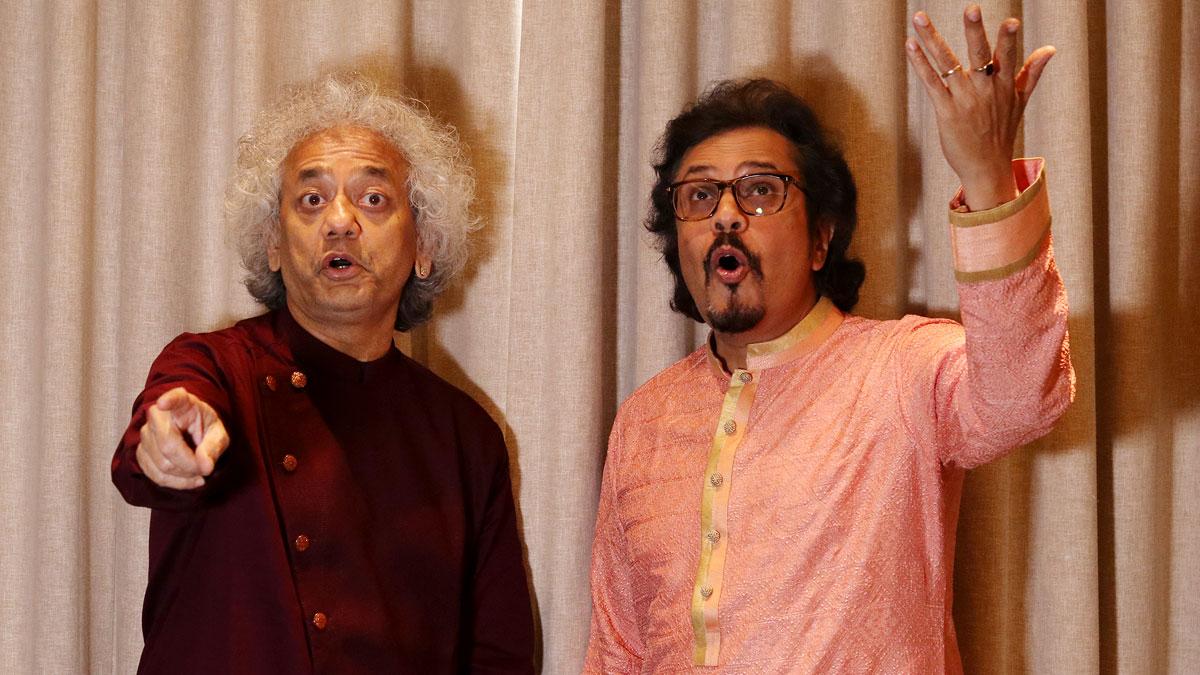
A
tiny
room
of
a
plush
Mumbai
hotel
reverberated
with
rhythmic
sounds
as
we
caught
up
with
Ustad
Taufiq
Qureshi
and
Pandit
Bickram
Ghosh.
The
maestros
merge
musical
paths
for
their
first
collaborative
album,
RamTa:
Masters
of
Rhythm,
putting
their
unique
talent
of
percussion
to
the
forefront.
For
Qureshi
and
Ghosh,
the
name
RamTa
—
Ram
from
Bickram
and
Ta
from
Taufiq
—
is
emblematic
of
their
30-year
friendship
that
spans
generations.
Born
into
revered
musical
families,
both
of
them
come
with
a
lineage
of
music
that
shaped
their
interests
over
the
years.
As
they
experiment
with
rhythm,
they
indulge
in
delightful
antics
showcasing
their
affection
and
reverence
for
each
other
both
as
friends
and
celebrated
artists.
The
maestros
talk
about
music,
family
lineage,
friendships,
and
bonding
beyond
music.
On
the
genesis
of
RamTa
Bickram
Ghosh:
We
have
been
playing
at
concerts
on
and
off
for
several
years
but
have
never
done
a
project
together.
At
one
of
the
concerts,
I
suggested
to
him
that
we
should
do
something
together.
There’s
chemistry
and
a
certain
vibration.
We
started
recording
in
my
studio
at
Kolkata.
RamTa
is
a
result
of
camaraderie,
a
result
of
knowing
each
other
for
years.
It’s
a
result
of
the
kind
of
music
we
believe
in.
And
for
many,
many
years,
there’s
not
been
a
percussion
album.
Taufiq
Qureshi:
In
fact,
I
think
his
Rhythmscape
came
in
2003
and
my
Rhydhun
came
in
2000.
There
was
nothing
in
this
genre
for
so
long.
And
now
we
have
come
up
with
RamTa.
We
are
the
RRR.
(Both
laugh)
Bickram
Ghosh:
That’s
a
big
coincidence.
Wow,
I
just
realised
that.
On
their
family
ties
and
time-tested
friendships
Bickram
Ghosh:
Look
at
the
legacy
that
we
bring
on
board:
His
illustrious
father
Ustad
Alla
(Rakha)
Khan
Sahib,
his
illustrious
brother
Ustad
Zakir
Hussainji
and
my
father
Pandit
Shankar
Ghosh.
We’ve
been
brought
up
in
the
world
of
tabla,
in
the
world
of
percussion,
in
the
world
of
rhythm.
There
was
a
commonality
of
meeting
grounds
but
to
bring
that
into
a
project
was
very
special.
We
didn’t
know
where
it
was
going
to
go.
I
just
saw
it
coming
together
from
the
word
go
and
it
was
seamless.
We
were
like
two
excited
kids,
with
the
toys
in
our
hands.
Taufiq
Qureshi:
Our
friendship
goes
back
a
long
way.
Tabla
is
what
he
plays,
I
play
the
djembe.
I
have
been
transposing
all
the
knowledge
which
I
received
from
my
father
onto
the
African
djembe
(a
musical
instrument).
The
other
thing
is,
as
a
percussionist,
he
is
also
exploring
multi-percussions.
He
is
playing
kanjira.
That
way,
there
is
a
commonality
between
us.
The
tabla
has
come
to
us
from
our
fathers
and
we
also
explore
different
kinds
of
percussions.
So
if
I
were
to
sum
up
in
simple
words,
RamTa
is
the
essence
of
30
years
of
experience
of
both
of
us.
Rhythmically,
what
we
have
experienced,
learnt,
listened
to,
we
have
taken
it
out
in
RamTa.
Bickram
Ghosh:
One
thing
I
would
like
to
say
here
is
that
when
we
listen
to
this
word
‘Sufi’
and
the
connotation
of
Sufi
is
primarily
melody.
But
I
think
the
trope
must
believe
that
there
is
a
Sufiana
in
rhythm.
If
you
hear
RamTa,
in
some
of
the
tracks,
you
will
find
a
Sufiana
there.
You
will
see
there
is
a
spiritual
moment.
WATCH:
Taufiq
Qureshi
and
Bickram
Ghosh’s
body
drumming
performance
On
body
drumming
as
a
niche
space
Taufiq
Qureshi:
Body
drumming
is
very
difficult.
You
can
do
anything,
be
it
body
percussion
or
anything,
but
we
both
explore
one
concept
which
Bickram
does
a
lot
in
live
concerts.
It
is
the
cheek
rhythm.
He
calls
it
face
and
drum.
He
does
it
brilliantly.
VIDEO:
Taufiq
Qureshi
and
Bickram
Ghosh
perform
the
‘cheek
rhythm’

WATCH:
‘Zakirbhai
used
to
babysit
Bickram
in
America’
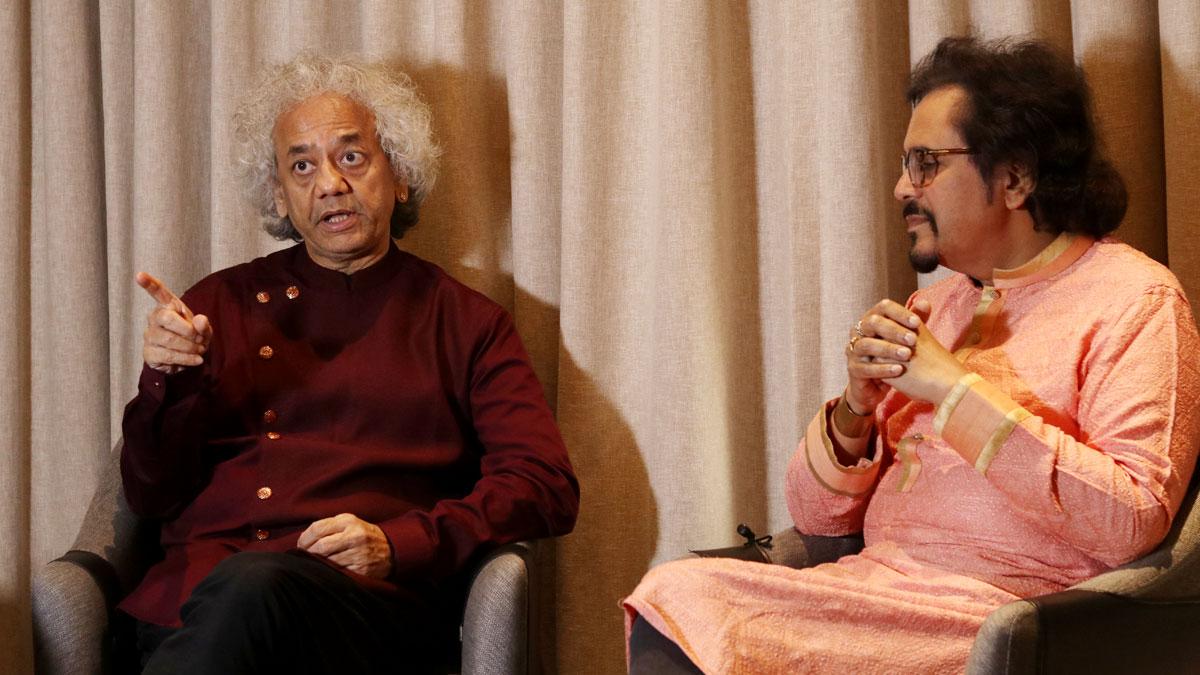
On
body
drumming
finding
its
space
in
the
Indian
music
space
Bickram
Ghosh:
Though
it
is
duly
given
credence
to
the
African
tradition,
the
body
drumming
that
we
do
has
about
80
per
cent
of
Indian
content
in
it.
It
is
shiksha,
the
gurumukhi
vidya
(knowledge)
that
we
have
learnt
which
we
bring
to
the
body
drumming
concept.
We
are
living
in
an
era
which
is
very
experimental.
There
is
a
necessity
of
discovery.
There
is
something
fresh
about
this
album;
it
is
attractive
to
the
youth.
A
lot
of
youngsters
came
to
the
RamTa
shows
in
Calcutta
and
Delhi.
The
fact
that
we’re
trying
to
take
India
and
combine
it
with
Africa
or
on
world
music,
it
is
like
we
are
making
a
melting
pot
of
cultures
through
our
percussion.
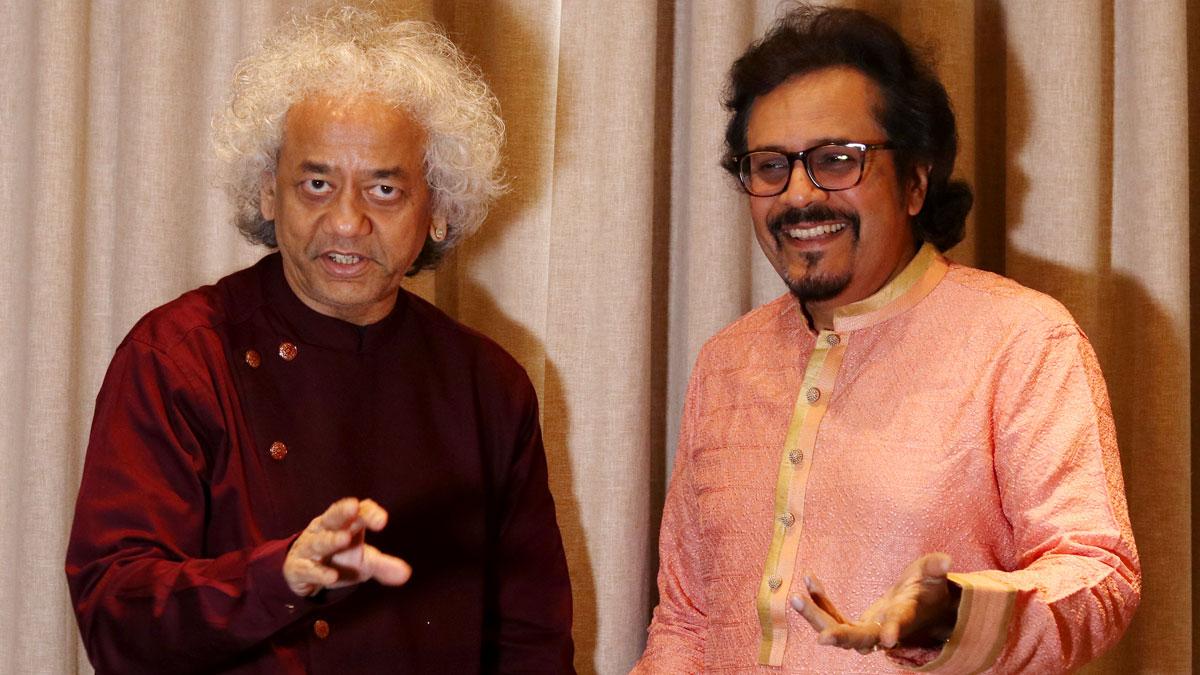
Taufiq
Qureshi:
Our
aim
was
to
take
music
that
we’ve
been
learning
from
over
the
years
and
bring
it
in
front
of
the
audience
and
we’ve
tried
our
best
to
make
it
fresh.
Let
the
audience
hear
it
and
say
this
is
something
which
is
very,
very
different
and
new.
Bickram
Ghosh:
There
is
a
very
interesting
change
that
has
come
in
the
last
few
years,
say
post
COVID,
because
now,
people
are
much
more
enthusiastic
about
going
to
concerts.
The
live
music
scenario
has
suddenly
become
very
relevant
to
people’s
lives.
They
see
that
it
is
cooked
on
the
spot.
There,
they
can
see
if
it
is
true
or
false.
Because
in
the
background,
you
can
put
auto-tune
and
calibrate
but
when
you
are
doing
it
on
stage,
there
is
no
place
to
hide.
So
if
you
are
doing
something
right,
that
is
what
people
want
to
see.
We
want
them
to
listen
to
RamTa,
then
come
to
the
RamTa
concerts
and
see
what
we
did
in
the
studio
is
actually
what
we
do
on
stage
also.
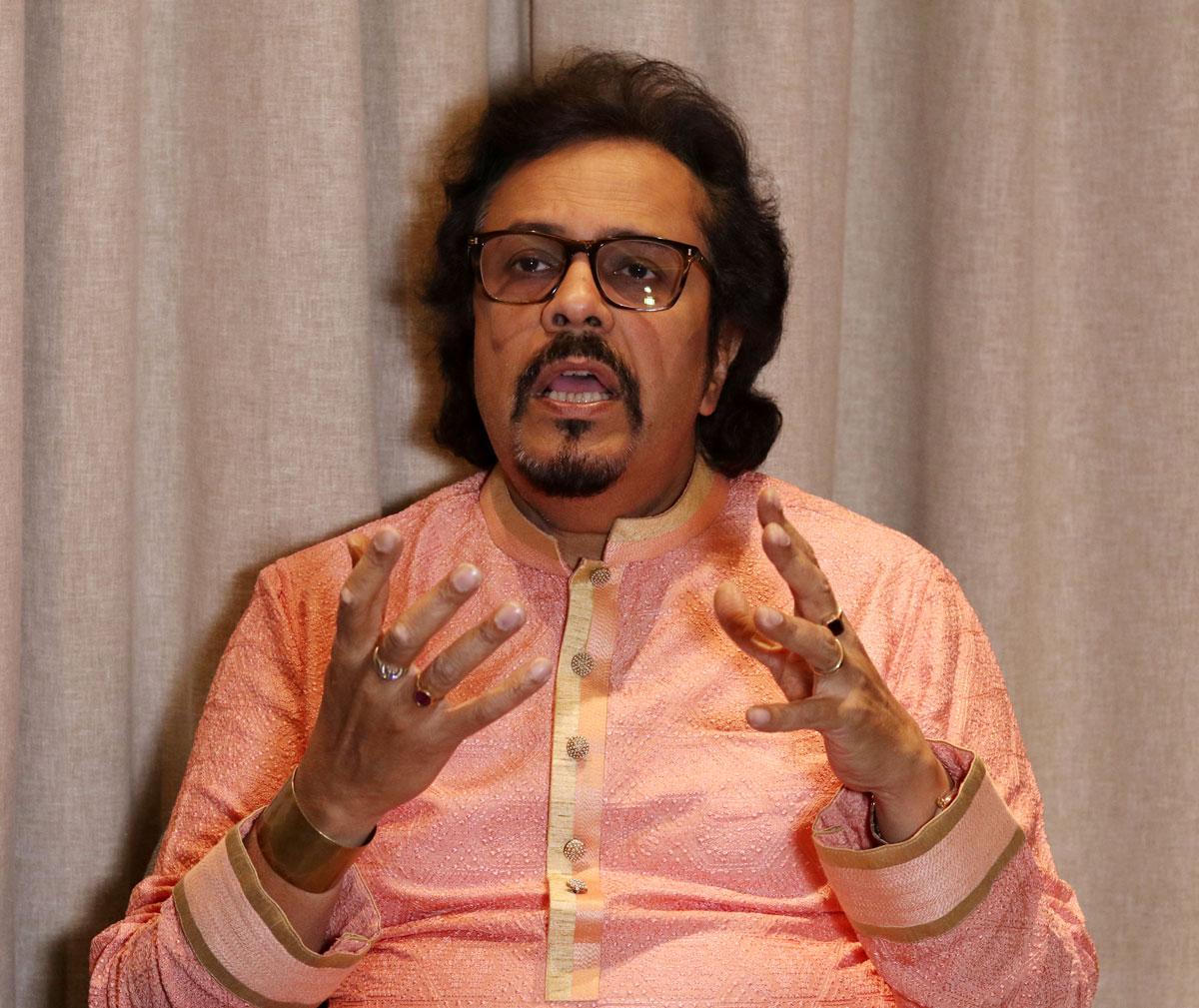
On
possibility
of
body
drumming
in
the
Indian
film
space
Bickram
Ghosh:
I
think
the
filmwallahs
will
have
to
figure
out
a
nice
big
chunk
where
it
gets
that
kind
of
screen
time.
But
until
then,
the
shows
are
there.