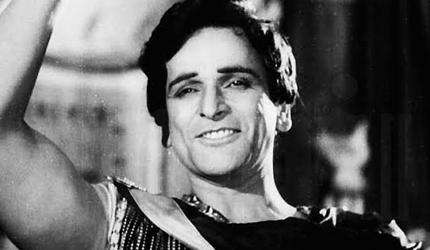
Salman
Khan’s
Sikandar
may
not
be
the
spectacle
one
hoped
it
would
be.
Many
decades
ago,
Sohrab
Modi
made
the
historical
extravaganza
Sikandar
that
continues
to
inspire
audiences
today.
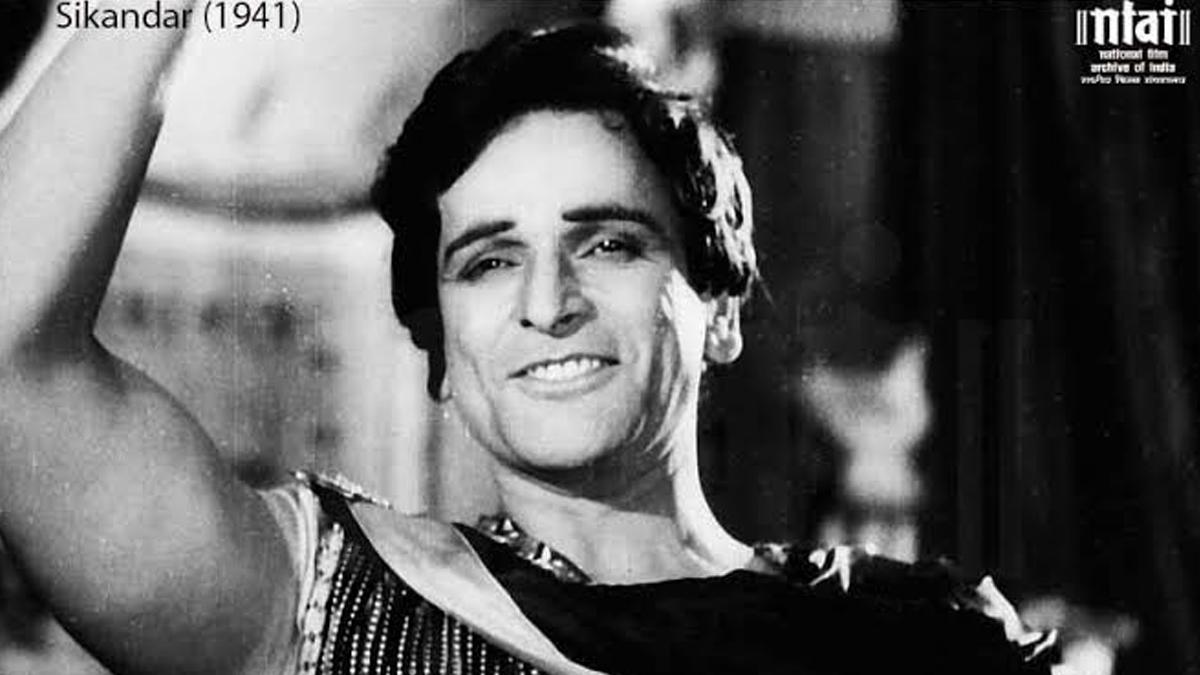
Prithviraj
Kapoor
in
and
as
Sikandar.
Photograph:
Kind
courtesy
National
Film
Archive
of
India/Facebook
Thanks
to
his
background
in
Parsi
theatre,
when
Sohrab
Modi
started
making
films,
he
specialised
in
costume
dramas
and
grand
historical
extravaganzas
and
they
continue
to
inspire
filmmakers
today.
After
historicals
like
Pukar
and
Taj
Mahal,
he
started
work
in
what
would
be
his
production
company
Minerva
Movietone’s
most
ambitions
production
till
then:
Sikandar.
The
1941
film
was
about
Alexander
The
Great
and
his
epic
confrontation
with
Indian
King
Puru
(played
by
Modi).
Who
else
could
he
have
cast
as
Alexander
but
the
handsome
and
regal-looking
Prithviraj
Kapoor?
Modi
asked
Kapoor
what
he
would
be
able
to
contribute
to
the
role.
According
to
an
anecdote
quoted
in
the
book
The
Prithviwallahs,
Shashi
Kapoor
recalled
that
his
father
Prithviraj
Kapoor
thought
over
the
question,
then
sent
his
family
back
home
to
Peshawar.
For
the
next
three
months,
he
worked
on
building
his
physique
and
fleshing
out
the
character
in
his
mind.
‘It
was
his
idea
to
turn
Alexander
into
an
impish
character,
and
give
him
the
affable
gesture
of
slapping
his
thigh.’
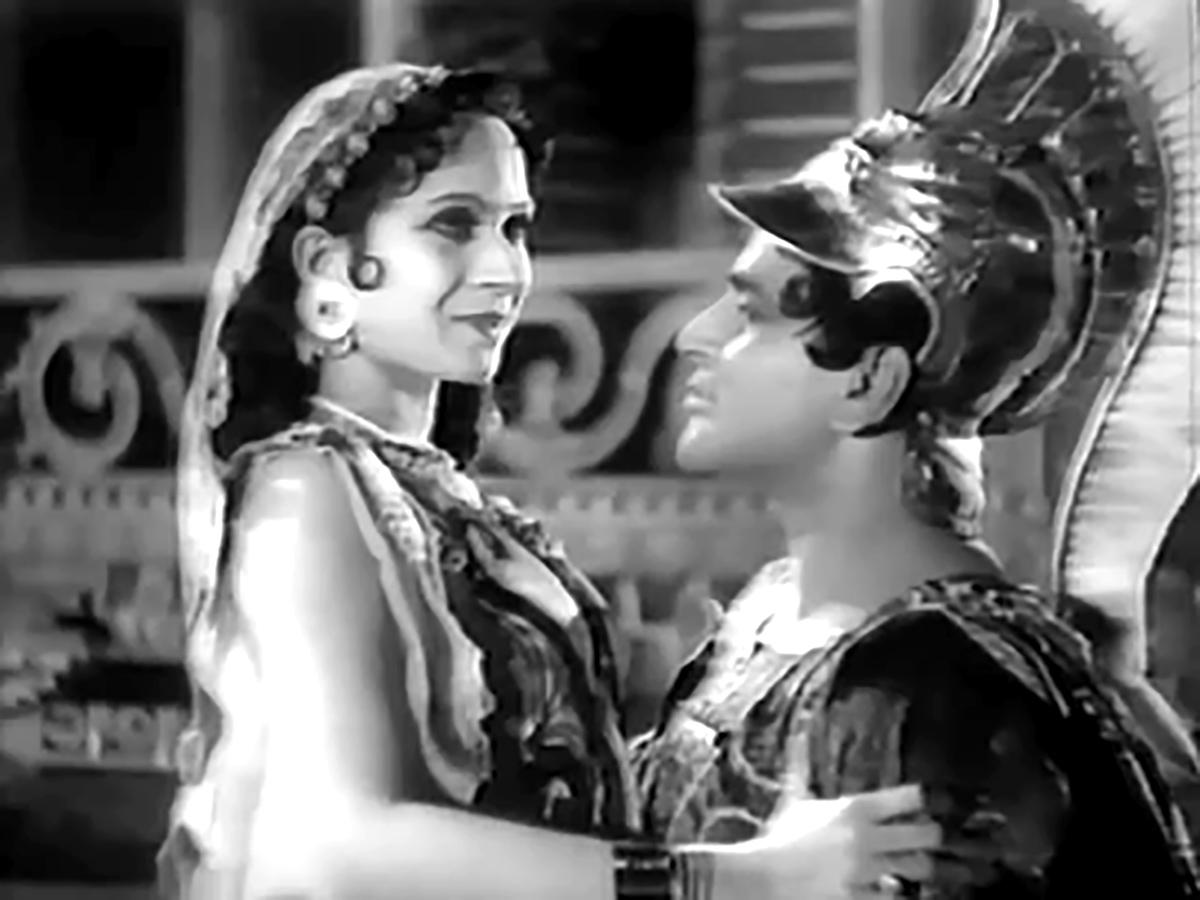
Prithviraj
Kapoor
and
Vanmala
in
Sikandar.
By
the
time
the
film
went
on
the
floors,
Prithviraj
had
transformed
himself
into
a
Greek
hero,
so
much
so
that
history
text
books
of
the
time
printed
his
picture
as
Alexander
The
Great.
Shashi
Kapoor
narrated
another
interesting
incident.
Prithviraj
Kapoor
was
in
costume
when
Modi
entered
the
set,
and
did
not
stand
up
to
greet
him
as
was
customary.
When
Modi
asked
him
the
reason,
he
replied,
‘Sikandar
does
not
know
Sohrab
Modi.’
The
actor-filmmaker
saluted
Kapoor
and
said,
‘But
I
know
Sikandar.’
The
film
begins
in
the
year
327
BC,
in
Persia,
occupied
by
Alexander.
He
has
fallen
in
love
with
a
Persian
woman,
Rukhsana
(Vanmala),
and
it
is
only
when
rebuked
by
his
mentor
Arastu
(Aristotle,
played
by
Shakir),
does
he
set
out
again
to
conquer
new
lands.
Rukhsana
follows
in
disguise.
After
a
long
and
successful
military
campaign,
Sikandar
and
his
vast
army
arrive
by
the
banks
of
the
River
Jhelum.
King
Ambhi
(K
N
Singh)
of
Takshila
throws
in
his
lot
with
the
Greek
emperor.
Angered
by
his
cowardice,
his
sister
Prarthana
(Meena
Shorey)
leaves
to
seek
shelter
with
King
Puru
(Sohrab
Modi),
where
she
falls
in
love
with
his
son,
Tamar
(Sadiq
Ali).
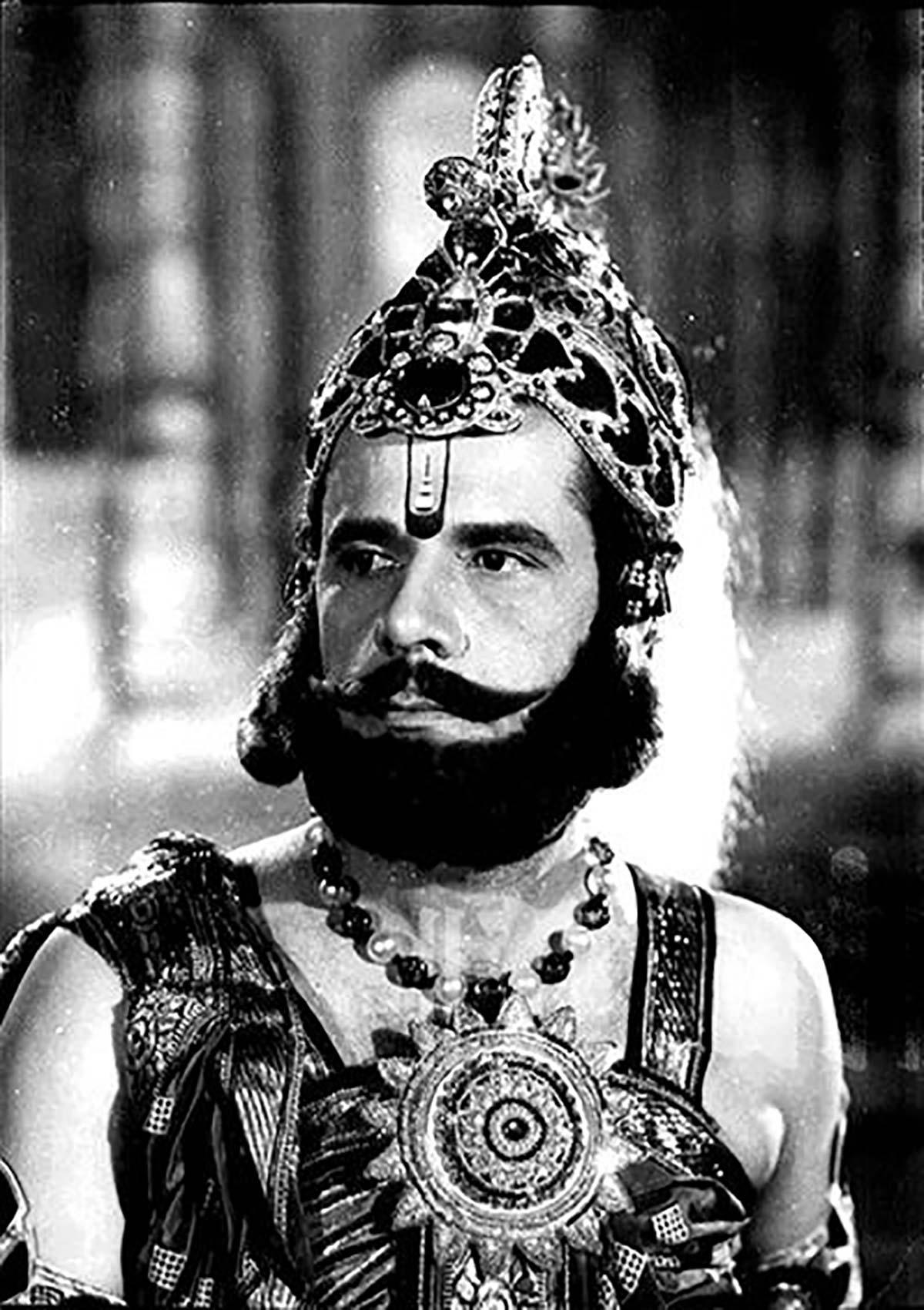
Sohrab
Modi
as
King
Porus
in
Sikandar.
Rukhsana,
now
reverting
to
female
clothing
and
spending
some
time
in
an
Indian
village,
lands
up
in
Puru’s
palace
and
ties
a
rakhi
on
his
wrist.
She
also
extracts
a
promise
from
him
that
he
will
not
kill
Alexander.
A
lot
of
embellishment
to
historical
facts
here:
Alexander
comes
to
Puru’s
court
disguised
as
a
messenger
and
is
allowed
to
walk
away.
Sikandar
defeats
Puru
by
underhand
means
and
keeping
his
promise,
Puru
does
not
kill
Sikandar
when
he
has
the
chance.
Brought
before
the
victorious
emperor
and
asked
how
he
should
be
treated,
Puru,
pride
intact,
says,
‘The
way
a
king
is
treated
by
another
king.’
Sikandar
is
impressed
with
Puru’s
courage,
spares
his
life
and
his
kingdom.
He
also
grants
him
the
lands
around
the
Jhelum
that
he
had
conquered
and
offering
his
friendship,
gives
him
the
Greek
name
of
Porus.
In
the
era
before
CGI,
Modi
created
spectacular
battle
sequences,
shot
brilliantly
by
Y
D
Sarpotdar,
with
thousands
of
extras,
impressive
weaponry,
chariots,
dozens
of
horses
and
elephants.
They
were
shot
in
Kolhapur,
with
the
help
of
the
royal
family,
Maharani
Tarabai
Saheba,
who
is
thanked
in
the
credits.
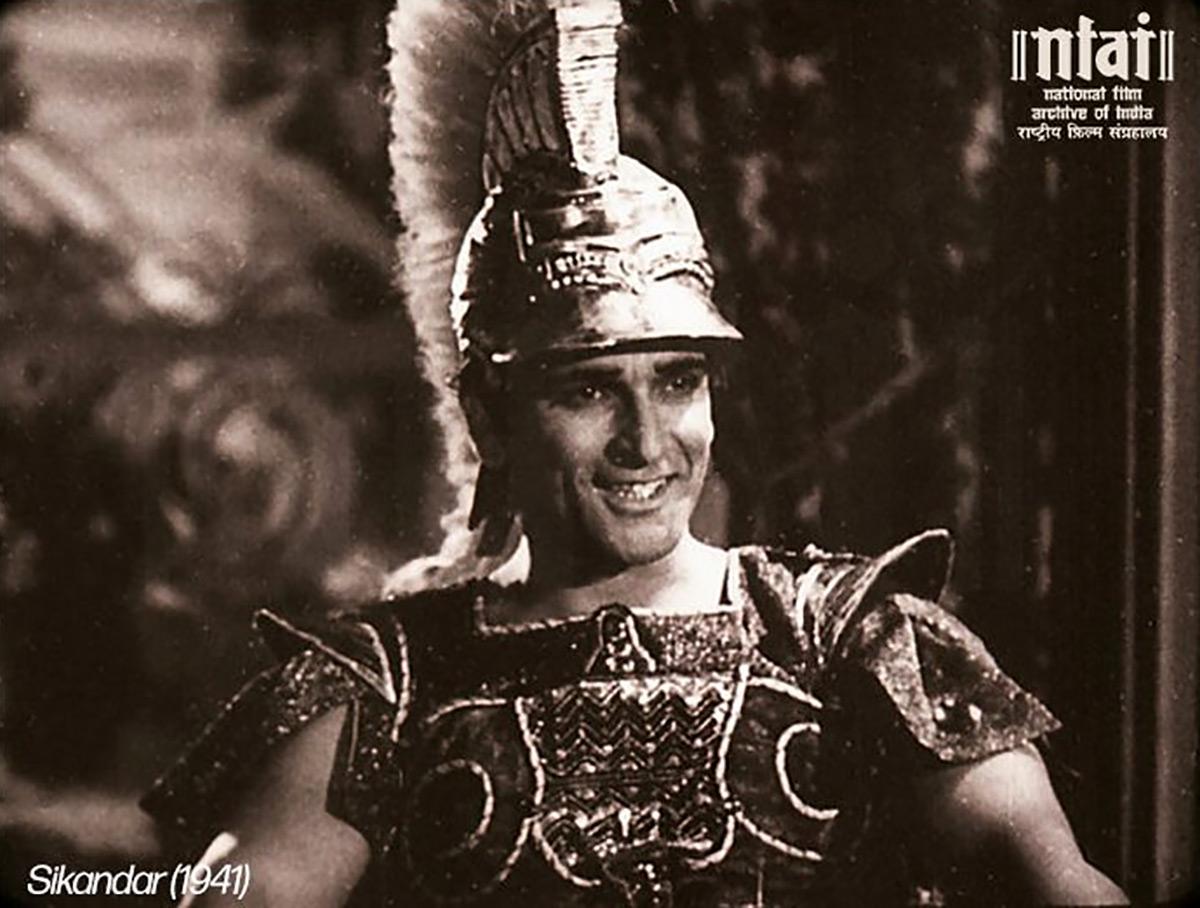
Prithviraj
Kapoor
in
Sikandar.
Photograph:
Kind
courtesy
National
Film
Archive
of
India/Facebook
Written
by
Pandit
Sudarshan,
the
Urdu
lines
are
flowery
and
use
the
declamatory
style
popular
at
the
time.
The
costumes
and
sets
(Rusi
Banker)
have
a
theatrical
look
but
even
in
black
and
white,
they
look
striking.
The
music
by
Rafiq
Gazhnavi
and
Mir
Saheb
may
not
have
contributed
any
memorable
songs
but
they
work
for
the
film.
Made
before
Independence,
Modi
included
lines
about
resisting
foreign
invasion,
leading
to
the
film
being
banned
from
being
screened
in
British
Indian
Army
cantonments.
Sohrab
Modi
went
on
to
direct
other
lavish
costume
dramas
like
Prithvi
Vallabh,
Jhansi
Ki
Rani
(India’s
first
technicolour
film,
starring
his
wife
Mehtaab),
Mirza
Ghalib
and
Nausherwan-e-Adil.
Interestingly,
in
1965,
Kedar
Kapoor
made
Sikandar-e-Azam
(in
Eastman
Colour),
in
which
Prithviraj
Kapoor
played
Porus
with
Dara
Singh
played
Alexander.
It
was
not
a
patch
on
Modi’s
magnum
opus.