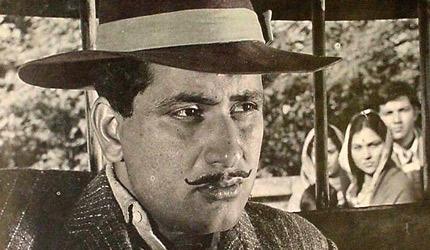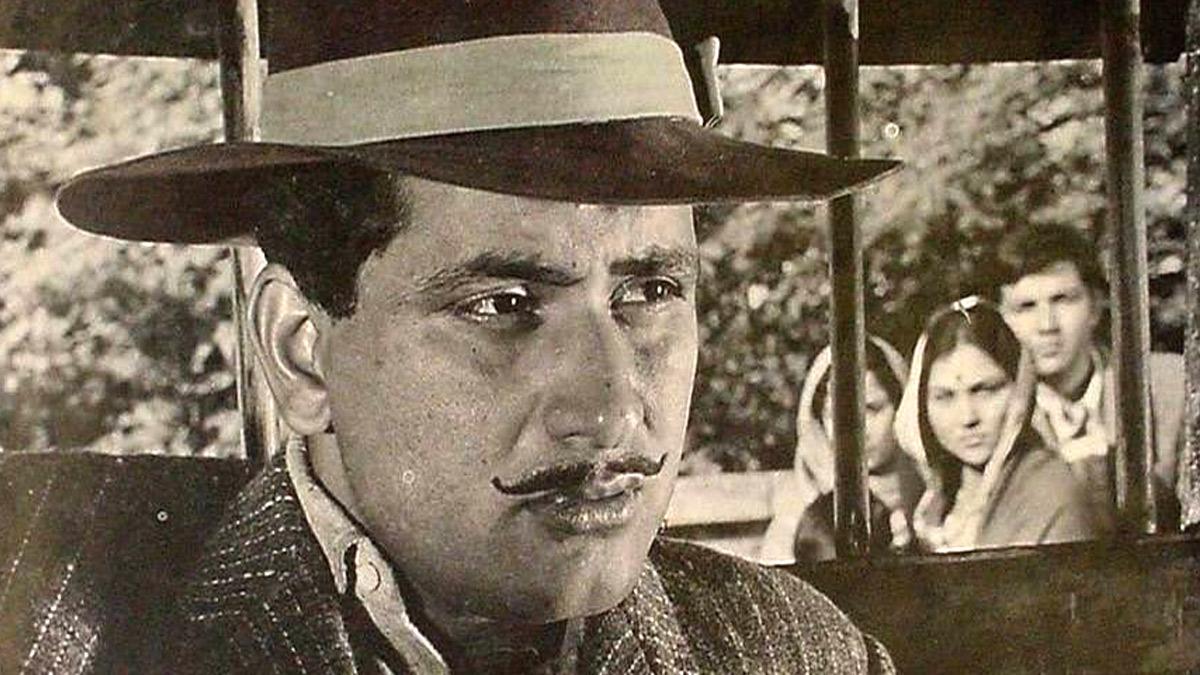
Manoj
Kumar
in
Shaheed.
Shaheed
was
Manoj
Kumar’s
first
patriotic
success.
This
small-budget
black-and-white
film
had
enormous
impact,
besides
laying
the
foundation
for
Manoj’s
famous
flag-waving
Mr
Bharat
image
that
was
strengthened
by
a
string
of
subsequent
films
like
Upkar,
Purab
Aur
Paschim
and
Kranti.
Though
an
oft-told
story,
this
1965
retelling
of
Bhagat
Singh’s
martyrdom
is
remembered
even
today.
Shaheed
presented
nationalist
fervour
through
a
deeply
human
story
rooted
in
emotion.
This
biopic
begins
with
a
young
Bhagat
Singh
growing
up
in
colonial
India
pressed
under
British
rule.
The
bruise
of
heartache
clear
in
her
voice,
his
staunchly
nationalistic
mother
(Kamini
Kaushal)
explains
to
her
little
boy
that
the
British
who
had
originally
come
as
guests
are
now
hamare
desh
ke
maalik
(owners
our
of
country).
The
young
boy
asks
pertinently,
‘Hum
bahar
kyon
nahin
nikal
dete
(Why
don’t
we
throw
them
out)?’
What
gave
rise
to
Singh’s
determination
to
free
India
from
the
shackles
of
foreign
rule
is
lucidly
etched
in
the
film
—
he
is
inspired
by
his
mother
and
by
his
freedom
fighter
uncle
who
gives
up
his
family
life
to
continue
his
struggle
from
outside
the
country.
His
undeniable
earnestness
(he
holds
his
hand
unflinchingly
over
an
open
flame)
convinces
freedom
fighter
Chandrashekhar
Azad
to
let
him
join
his
organisation.
Singh
teams
up
with
fellow
patriots
Sukhdev
and
Rajguru
and
gets
involved
in
a
plot
to
shoot
British
officer
Scott.
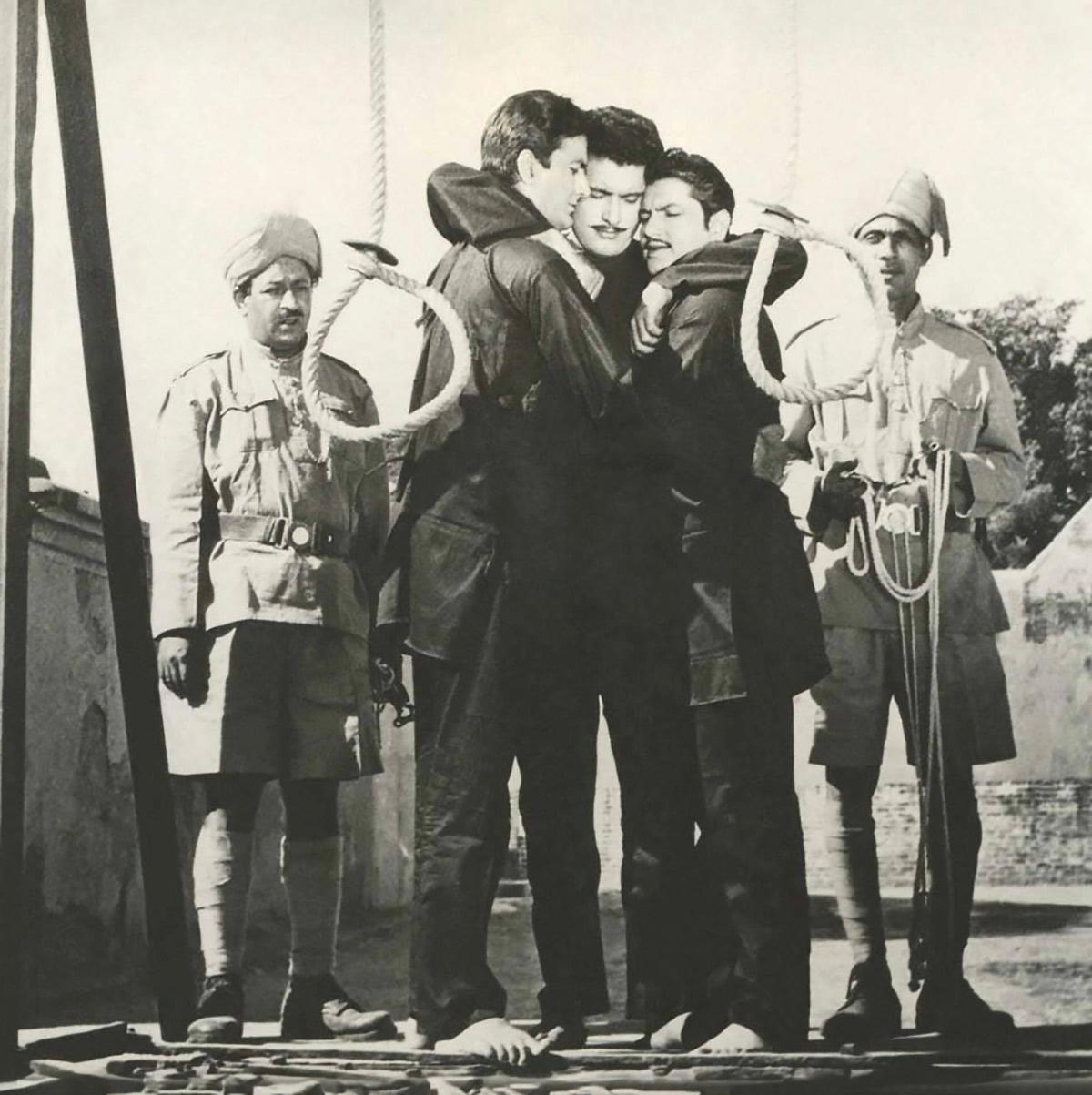
Prem
Chopra,
Manoj
Kumar
and
Anand
Kumar
in
Shaheed.
In
a
tense
sequence,
with
a
background
score
like
a
pulsating
heart,
another
Britisher
named
Saunders
is
assassinated
and
Singh
becomes
a
fugitive.
Donning
a
Western
disguise
and
enlisting
the
help
of
his
bhabhi
(Nirupa
Roy)
to
pretend
she
is
his
wife,
Singh
makes
good
his
escape.
After
he
decides
to
employ
the
totally
nonviolent
protest
of
throwing
a
bomb
(which
does
not
hurt
anyone)
in
Parliament,
Singh
willingly
surrenders
to
the
police.
He
aims
to
spread
his
Inquilab
Zindabad
message
to
the
masses.
Justice,
however,
is
denied
him
in
a
keenly
contested
court
case
and
Singh
is
sent
to
jail.
Shaheed
effectively
captures
the
camaraderie
between
the
young
freedom
fighters,
in
the
hearty
greetings
Singh
accords
to
his
compatriots
in
jail.
They
hail
each
other
with,
‘Lagta
hai
barso
baad
mile
hai
(It
feels
like
we’re
meeting
after
ages),’
only
to
have
the
jailor
retort,
‘Fiqr
mat
karo,
ab
barso
saath
rehna
padega
(Don’t
worry,
you
will
stay
together
for
ages).’
That
line
proves
poignantly
prescient.
The
freedom
fighters
are
tortured
in
jail.
Adamantly
refusing
to
submit
to
subhuman
conditions,
Singh
goes
on
an
affectingly
filmed
40-day
hunger
strike
and
the
jail’s
inmates
follow
suit.
The
case
against
Singh,
Sukhdev
and
Rajguru
ends
with
a
death
conviction.
And
they
go
to
the
gallows
with
their
heads
held
high.
Their
unbroken
spirit
is
captured
in
the
snatch
of
song
played
much
earlier
in
the
film
when
Singh
who
is
being
taken
to
jail
in
a
jeep
crosses
paths
with
Nirupa
Roy
and
her
son
(representing
the
nation
of
the
morrow)
in
a
tonga,
Hum
na
dekhenge
kal
ki
subah
par
tumko
dikha
jayenge…
Mera
rang
de
basanti
chola.
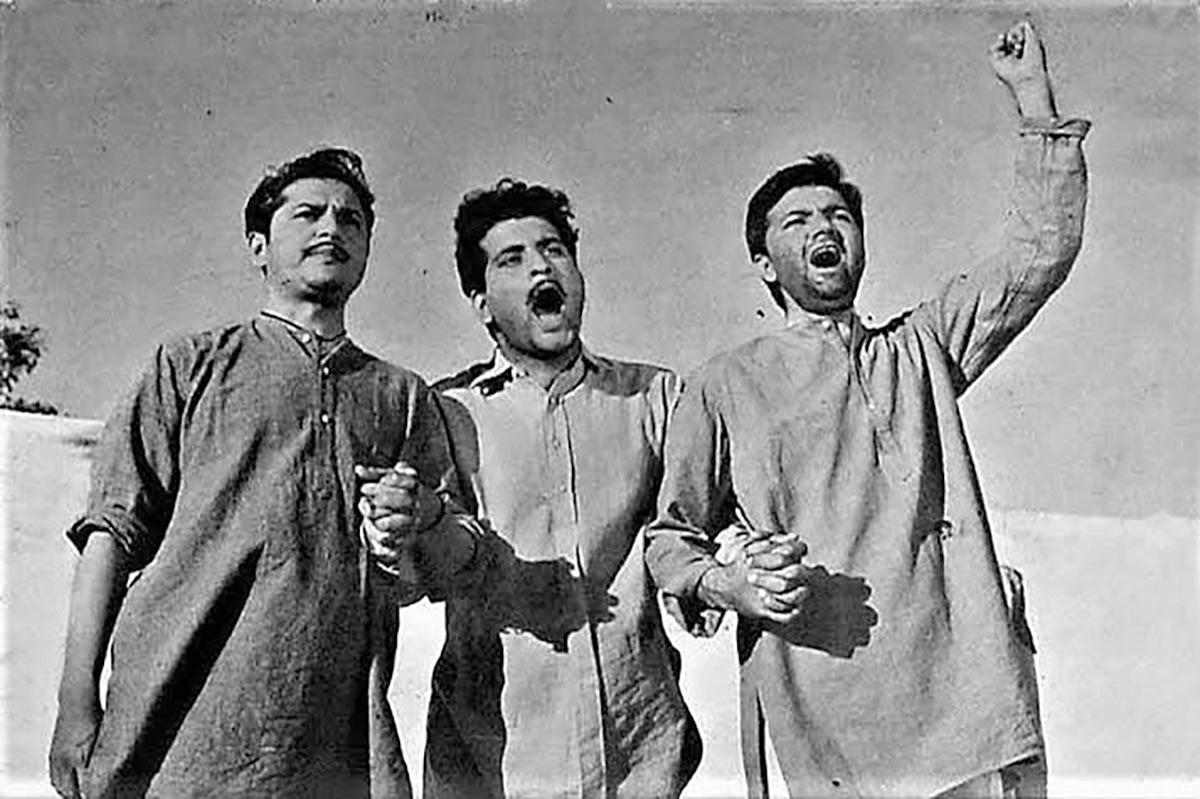
Anand
Kumar,
Manoj
Kumar
and
Prem
Chopra
in
Shaheed.
Besides
the
brief
interlude
with
the
Jogi
song
in
the
initial
reels,
Shaheed
emerges
as
a
tautly
paced,
well-crafted
tribute
to
a
legendary
figure
and
his
associates.
The
women
in
the
film
come
off
as
strong
and
pragmatic.
Despite
their
own
miseries,
they
don’t
weaken
Bhagat
Singh’s
resolve.
Nirupa
Roy
is
particularly
adept
at
mixing
emotion
with
earthy
practicality.
This
glimpse
of
women
power
calls
to
mind
the
role
of
countless
women
in
India’s
freedom
struggle.
The
pieces
seem
to
fit
in
naturally
into
the
main
story.
When
Pran
makes
his
entry
late
in
the
film,
you
wonder
at
his
character’s
relevance.
But
Bhagat
Singh’s
ability
to
inspire
his
fellow
human
beings
is
cogently
conveyed
through
Pran’s
character
who,
before
being
sent
to
the
gallows,
says:
‘Zindagi
mein
kisi
nek
aadmi
se
haath
nahin
milaya.
Milayega
haath
(I
have
not
shaken
hands
with
a
noble
man
in
my
life.
Will
you
shake
hands
with
me)?’
Manoj
has
some
well-written
dialogue
for
his
own
character.
When
the
jailor
(Madan
Puri)
pleads
with
him
to
give
in,
excusing
himself
by
saying,
‘Main
majboor
hoon
(I
am
helpless),’
Manoj
retorts,
‘Aap
hukum
se
majboor
hai,
main
dil
se
majboor
hoon
(The
law
makes
you
helpless,
my
heart
makes
me
helpless).’
The
auteur
touches
are
evident
in
the
upside-down
framing
of
the
shots
when
Sukhdev
is
being
tortured,
the
roti
burning
unattended
on
the
stove
as
Singh’s
mother
runs
out
when
she
hears
of
Saunders’
assassination
and
the
hooded-eye
encounter
between
Sukhdev
and
Singh
when
each
is
led
to
believe
the
other
has
become
a
sarkari
gawah
(government
witness).
In
the
prime
of
youth
and
with
a
palpable
desire
to
leave
an
impact,
a
moustache-sporting
Manoj
gives
a
memorable
performance.
The
studied
mannerisms
(a
finger
on
a
lip)
do
make
a
stray
appearance
but
Manoj
imbues
his
role
with
subtle
strength
of
conviction.
It
is
his
best
performance
ever.
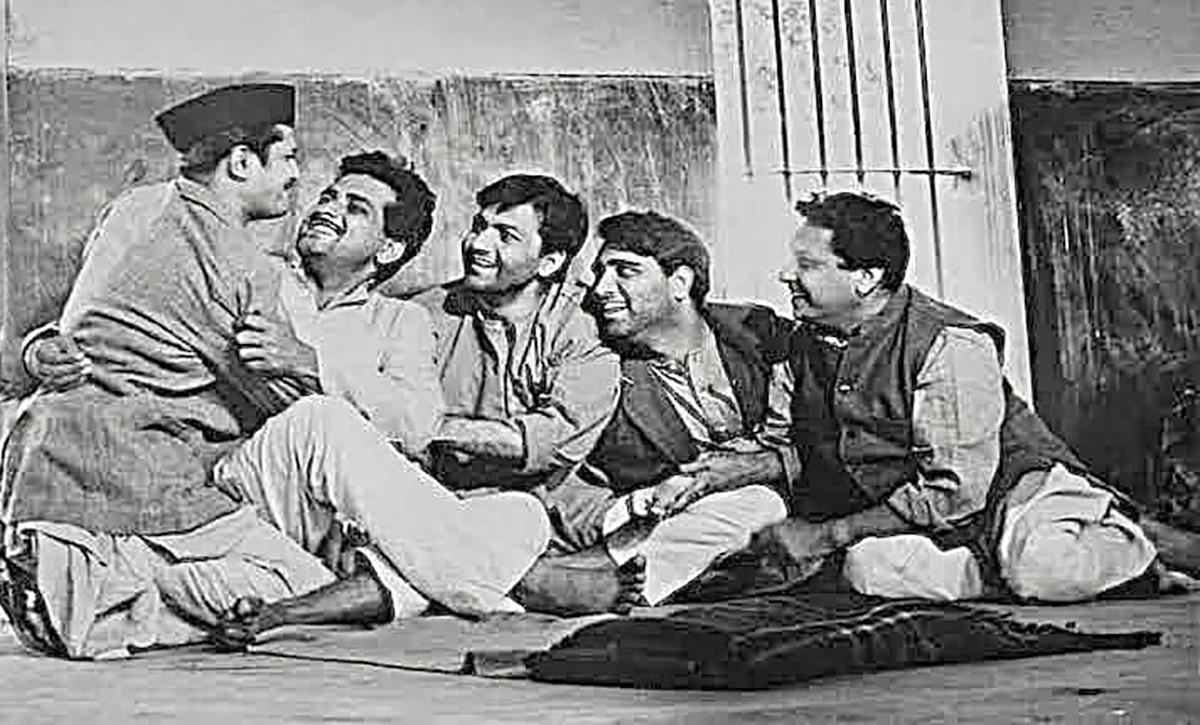
Anand
Kumar,
Manoj
Kumar
and
Prem
Chopra
in
Shaheed.
Sidelights:
-
Besides
Shaheed,
Manoj
had
two
other
hits,
Himalay
Ki
God
Mein
and
Gumnaam,
in
1965
and
this
trio
firmly
established
him
as
a
star. -
The
film
was
shot
on
a
tight
budget
in
black-and-white
when
colour
was
already
predominant.
It
won
three
National
Awards
and
was
appreciated
by
then
prime
minister
Lal
Bahadur
Shastri. -
Two
famous
villains
Pran
and
Prem
Chopra
played
positive
roles
in
the
film.
Pran
was
the
leading
villain,
yet
did
the
role
for
a
pittance.
When
Manoj
made
his
directorial
debut
with
Upkar
next,
he
gave
Pran
a
positive
role
that
changed
the
course
of
his
career. -
The
success
of
Shaheed
enabled
1940s
and
1950s
star
Kamini
Kaushal
to
make
a
comeback
and
start
a
successful
second
innings
in
Hindi
films,
now
as
a
mother.
Music:
-
Prem
Dhawan
made
a
name
for
himself
as
a
lyricist
in
the
fifties
and
sixties
with
such
hit
songs
as
Seene
Mein
Sulagte
Hai
Armaan
(Taraana),
and
Chhodo
Kal
Ki
Baatein
(Hum
Hindustani),
when
the
makers
of
Shaheed
asked
the
multifaceted
virtuoso
to
compose
music
for
their
film. -
Dhawan
distinguished
himself
with
the
music
of
Shaheed.
Subsequently,
when
he
composed
for
an
occasional
film
like
Pavitra
Paapi,
he
came
up
with
notable
numbers
like
Teri
Duniya
Se
Hoke
Majboor
Chala.
Famous
songs
from
Shaheed
Aye
Wattan
Aye
Wattan
sung
by
Mohammed
Rafi
Mera
Rang
De
Basanti
Chola
sung
by
Mukesh,
Mahendra
Kapoor
Pagdi
Sambhal
Jatta
sung
by
Mahendra
Kapoor
Jogi…
Hum
Toh
Lut
Gaye
Tere
Pyar
Mein
sung
by
Lata
Mangeshkar