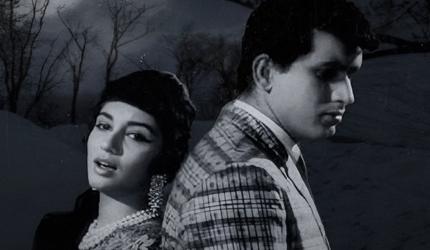
Dinesh
Raheja
looks
back
at
Manoj
Kumar’s
brilliant
1964
thriller
Woh
Kaun
Thi,
and
explains
just
what
made
it
an
audio-visual
treat.
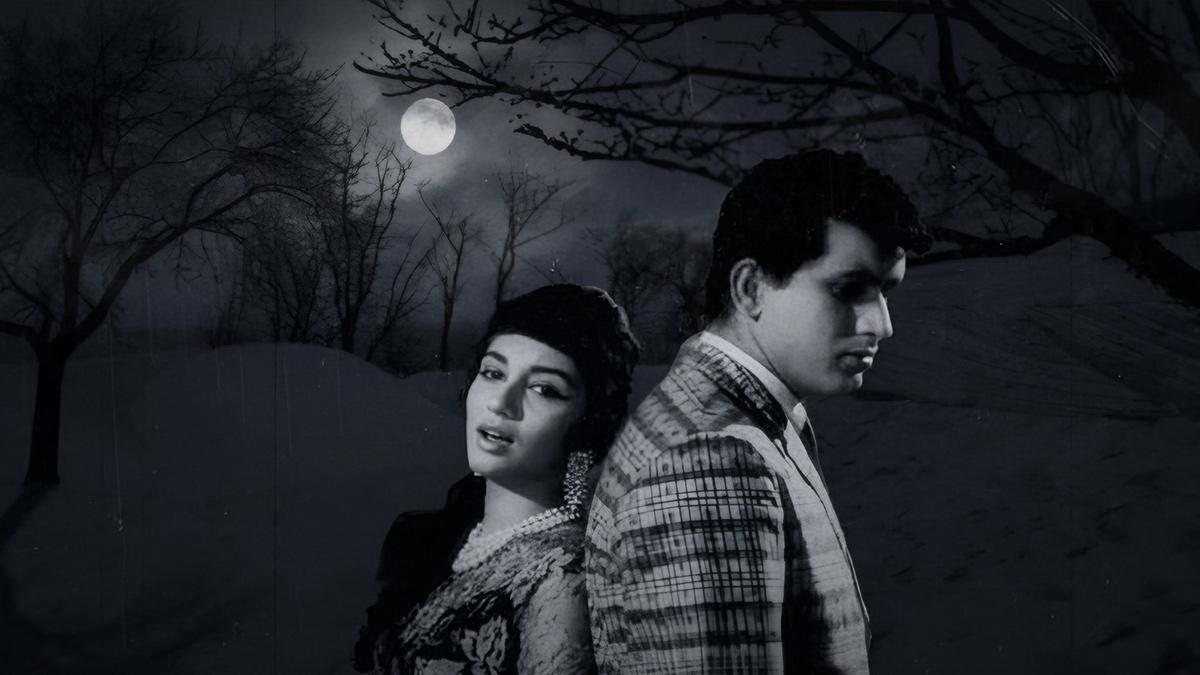
Manoj
Kumar
and
Sadhana
in
Woh
Kaun
Thi.
It
is
a
dark,
rain-splattered
night.
A
car
comes
to
a
screeching
halt
on
a
deserted
road
as
a
strikingly
beautiful
woman
dressed
in
white
appears.
She
sports
wet
tresses,
vacant
eyes
and
an
enigmatic
half-smile.
She
accepts
a
lift
but
seems
to
possess
an
extraordinary
electromagnetic
field
—
the
windshield
wipers
stop
working
as
soon
as
she
sits
in
the
car.
The
motorist
can’t
see
the
foggy
road
ahead;
she
can,
clearly.
Her
finger
begins
to
bleed.
‘Mujhe
khoon
pasand
hai
(I
like
blood),’
she
admits.
She
asks
him
to
stop
the
car
at
a
crematorium.
A
gate
swings
open
to
let
her
in.
Mist
envelopes
this
polymorphous
presence
even
as
the
haunting
song
Naina
Barse
Rimjhim
Rimjhim.
mingled
with
the
squawking
of
bats,
fills
the
soundtrack.
The
title
Woh
Kaun
Thi
rolls.
With
well-honed
skill,
Director
Raj
Khosla
deploys
every
spooky
genre
staple
and
more
to
kickstart
Woh
Kaun
Thi.
The
film
then
hurriedly
establishes
that
the
befuddled,
befogged
motorist
in
the
opening
frame
is
Dr
Anand
(Manoj
Kumar).
Anand
loves
Seema
(Helen),
much
to
the
chagrin
of
fellow
doctor
Lata
(Praveen
Choudhury).
Though
director
Khosla
lavishes
two
songs
too
many
(Tikiri
and
Chhodkar
Tere)
on
the
Anand-Seema
romance,
he
keeps
the
suspense
element
ticking
by
introducing
red
herrings
(a
mute,
bouquet-holding,
curly-haired
shadow
presumably
spying
on
Seema)
and
portentous
lyrics
(‘Hum
khushi
se
na
aaj
mar
jaaye‘)
in
the
song
preceding
Seema’s
murder.

Manoj
Kumar
and
Sadhana
in
Woh
Kaun
Thi.
Subsequently,
a
harried
Anand
is
summoned
by
an
emergency
midnight
caller
to
a
gothic,
bat-infested,
cobweb-ridden
haveli.
Armed
with
a
candle,
Anand
climbs
a
flight
of
rickety
stairs
to
reach
the
room.
When
he
throws
open
the
door,
a
banshee-like
wail
warns:
‘Chale
jao,
chale
jao
(Go
away,
go
away)’.
Next
to
a
seated,
ashen-faced
woman
lies
the
apparition
in
white
Anand
met
on
the
rainy
night.
He
leaves,
shaken.
But
at
an
inspector’s
insistence,
retraces
his
steps
to
the
haveli.
He
returns
within
minutes,
but
the
haveli
has
no
inmates.
Anand
desultorily
complies
with
his
mother’s
desire
and
marries
a
girl
of
her
choice.
On
the
wedding
night,
when
he
raises
his
wife’s
ghunghat,
he
is
flabbergasted.
It
is
the
woman
in
white.
But
she
claims
to
be
Sandhya
(Sadhana),
an
orphan.
Yet,
each
time
her
husband
confronts
her
with
their
eerie
encounters,
she
gives
a
mysterious
half-smile.
In
a
nail-bitingly
tense
scene,
Anand
forcibly
takes
Sandhya
to
the
haunted
haveli.
Khosla
frames
the
opening
of
the
sequence
in
the
haveli‘s
room
with
Anand
and
Sandhya.
As
Anand
proceeds
towards
the
bed,
the
camera
accompanies
him
and
Sandhya
is
edged
out
of
the
frame.
When
Anand
turns,
the
camera
pulls
back
—
there
is
no
Sandhya!
Yet,
when
Anand
returns
home,
Sandhya
opens
the
door
—
dressed
exactly
as
he
had
last
seen
her
(pearl
string,
printed
sari,
et
al).
Moreover,
Anand’s
mother
confirms
that
Sandhya
was
at
home
all
evening!
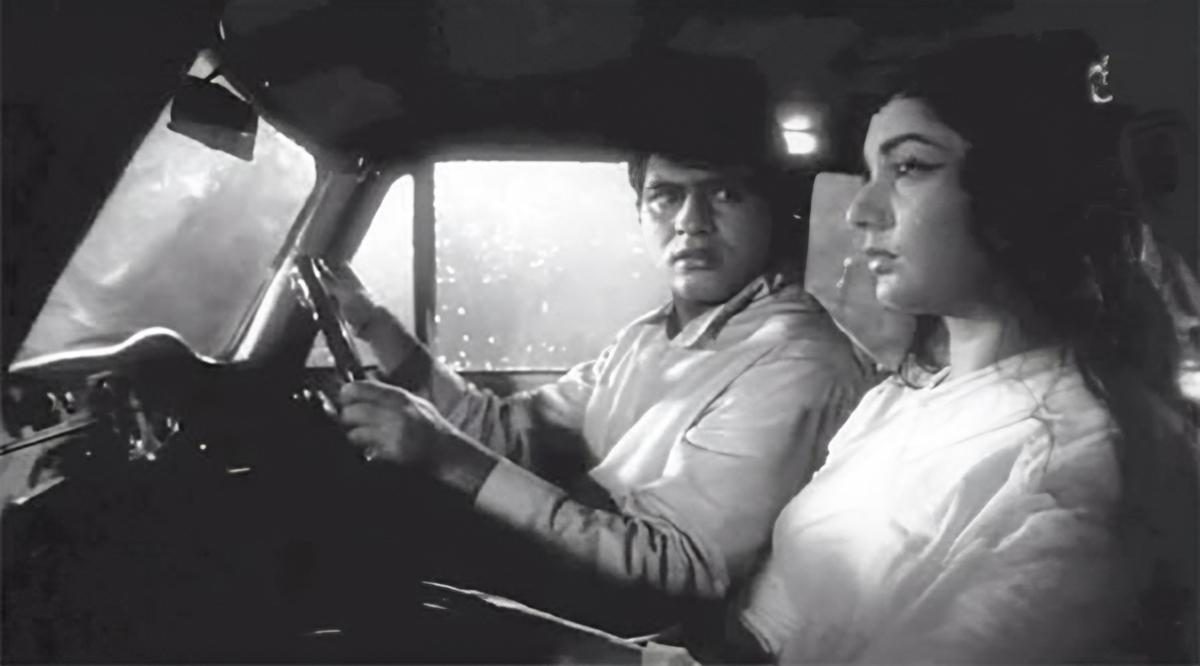
Manoj
Kumar
and
Sadhana
in
Woh
Kaun
Thi.
Sandhya’s
ice-in-the-veins
demeanour
alienates
her
mother-in-law.
Her
refusal
to
face
an
exorcist
only
exacerbates
matters.
Claiming
that
her
marriage
is
on
the
rocks,
Sandhya
says
she
is
returning
home.
But
her
train
has
an
accident
and
she
is
presumed
dead.
Bordering
on
insanity
now,
Anand
is
advised
to
take
a
holiday
in
Shimla.
But
the
apparition
in
white
(Sandhya?)
trudges
through
the
snow-clad
mountains
of
Shimla
too
and
beckons,
Chala
Aa
Mere
Parwane
Wafa
Ki
Shama
Jalti
Hain.
Four
decades
later,
I
would
still
rather
not
give
away
the
denouement.
Suffice
to
say
that
the
resolution
of
the
mystery,
taken
with
a
pinch
of
salt,
is
imaginative
and
involving.
Don’t
expect
all
the
loose
ends
to
be
neatly
tied
up.
If
you
ask:
How
did
the
car’s
wipers
stop,
automatically,
scriptwriter
Dhruv
Chatterjee
teasingly
offers
no
explanations.
Manoj
Kumar
looks
handsome
and
effectively
strikes
pensive
poses,
many
of
which
became
part
of
his
acting
arsenal
in
latter-day
suspense
thrillers
(Anita,
Gumnaam,
Saajan).
The
show-stopper
is
Sadhana.
She
is
enchanting
as
the
wife,
choosing
to
invest
the
role
with
an
intriguing
Mona
Lisa-like
smile.
Simultaneously,
she
infuses
an
air
of
disenchantment
and
overt
sensuality
(inviting
Manoj
with
open
arms
in
Lag
Jaa
Gale)
to
the
‘nether-world’
woman.
To
Khosla’s
credit,
though
he
repeated
Sadhana
in
a
similar
double
role
in
Mera
Saaya,
he
clearly
delineated
her
two
performances.
Unlike
Mera
Saaya,
where
the
wife
yearns
for
her
husband’s
acceptance
and
vociferously
fights
for
his
love,
the
self-respecting
Sandhya
of
Woh
Kaun
Thi
is
a
study
in
pent-up
emotion
and
restraint.
With
the
aid
of
Sadhana,
his
ear
for
music
and
perceptive
eye
for
song
picturisation,
Khosla
cooks
up
an
atmospheric
thriller
that
ensures
an
audio-visual
treat.
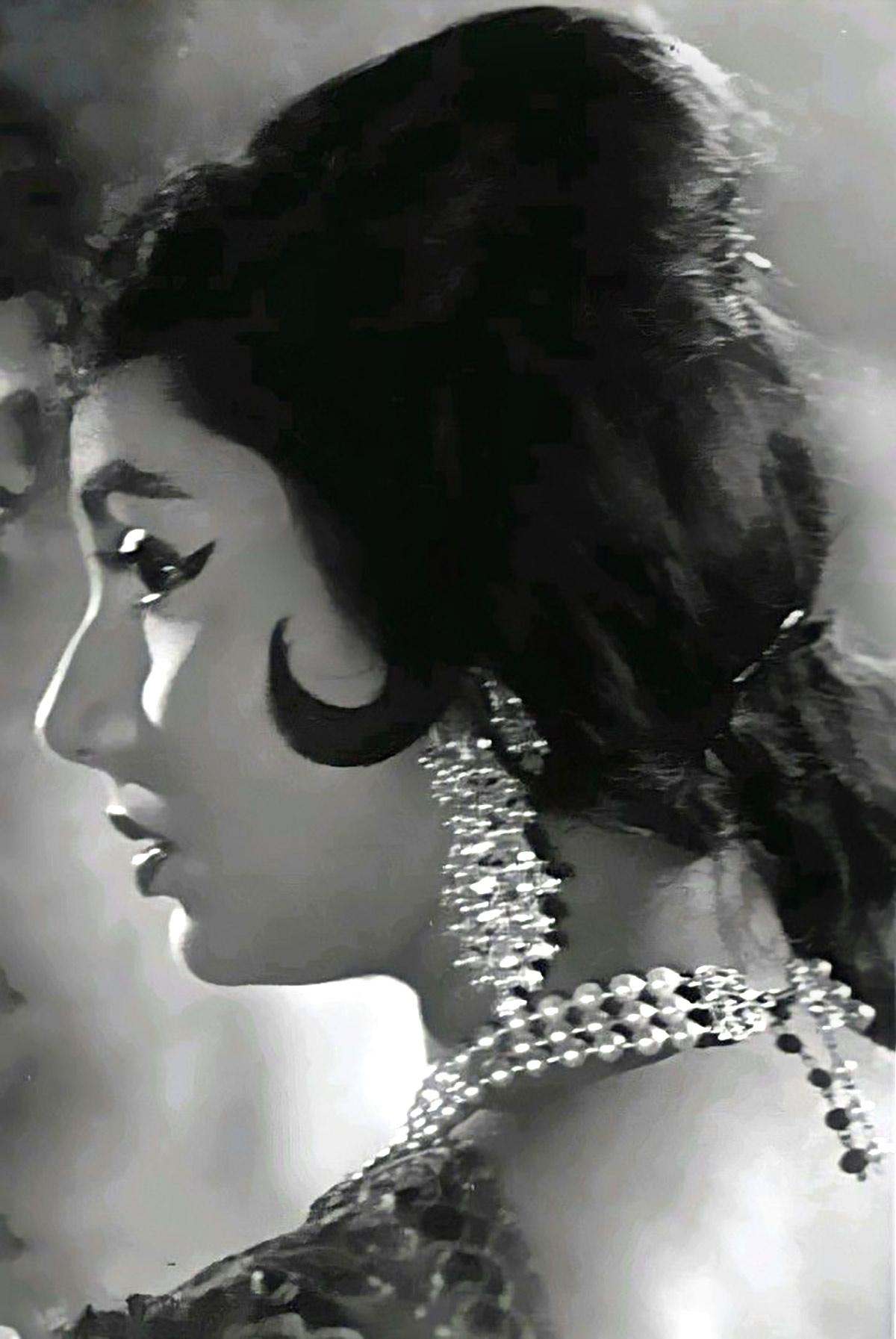
Sadhana
in
Woh
Kaun
Thi.
Sidelights:
-
Sadhana
says
she
didn’t
turn
a
hair
while
shooting
the
eerie
bits
alongside
a
huge
unit
but
was
scared
out
of
her
wits
when
she
saw
the
final
print
of
Woh
Kaun
Thi
with
R
K
Nayyar
(her
husband-to-be). -
After
the
success
of
the
black-and-white
Woh
Kaun
Thi,
Sadhana
and
Raj
Khosla
went
on
to
work
in
a
series
of
suspense
thrillers
in
colour
like
Mera
Saaya
and
Anita.
In
all
three,
Sadhana
played
double
or
multiple
roles. -
Woh
Kaun
Thi
was
remade
in
Tamil
as
Yar
Nee. -
Nimmi
was
once
considered
for
the
title
role
opposite
Manoj
Kumar. -
Manoj
Kumar
designed
the
film’s
posters
and
even
offered
valuable
tips
on
the
writing.
Music:
-
An
unwell
Lata
Mangeshkar
was
unable
to
record
Naina
Barse
Rimjhim
before
the
unit
left
to
shoot
in
Shimla,
and
Madan
Mohan
recorded
a
dummy
version
of
the
song
in
his
own
voice.
When
it
was
picturised
on
Sadhana,
onlookers
were
amused
to
see
her
give
lip
sync
to
a
man’s
voice. -
The
much-cherished
Madan
Mohan
melodies
have
become
an
integral
part
of
Lata
Mangeshkar’s
stage
repertoire.
To
Lata’s
dismay,
Madan
Mohan
did
not
win
a
major
award
for
this
film.
Famous
songs
from
Woh
Kaun
Thi
Lag
Ja
Gale
sung
by
Lata
Mangeshkar
Jo
Humne
Dastaan
Apni
Sunayee
sung
by
Lata
Mangeshkar
Naina
Barse
Rimjhim
sung
by
Lata
Mangeshkar
Shokh
Nazar
Ki
Bijliyan
sung
by
Asha
Bhosle
Tikkire
Tikkiri
Takiri
sung
by
Rafi-Asha
Chhod
Kar
Tere
Pyar
Ka
sung
by
Lata-Mahindra
Kapoor
This
story
was
first
published
on
Rediff
in
2003.