With Piravi,
Shaji
N
Karun
joined
the
select
group
of
great
masters
of
film.
Malayalam
once
upon
a
time
used
to
produce
such
films.
Today,
it
is
only
mindless
violence,
politics
and
grotesque
humour.
The
films
have
no
soul,
although
they
are
technically
quite
good.
With
Shaji’s
passing,
and
earlier
with
his
mentor
G
Aravindan’s
untimely
death,
an
era
is
coming
to
an
end.
Rajeev
Srinivasan
salutes
the
master,
who
passed
into
the
ages
on
April
28.
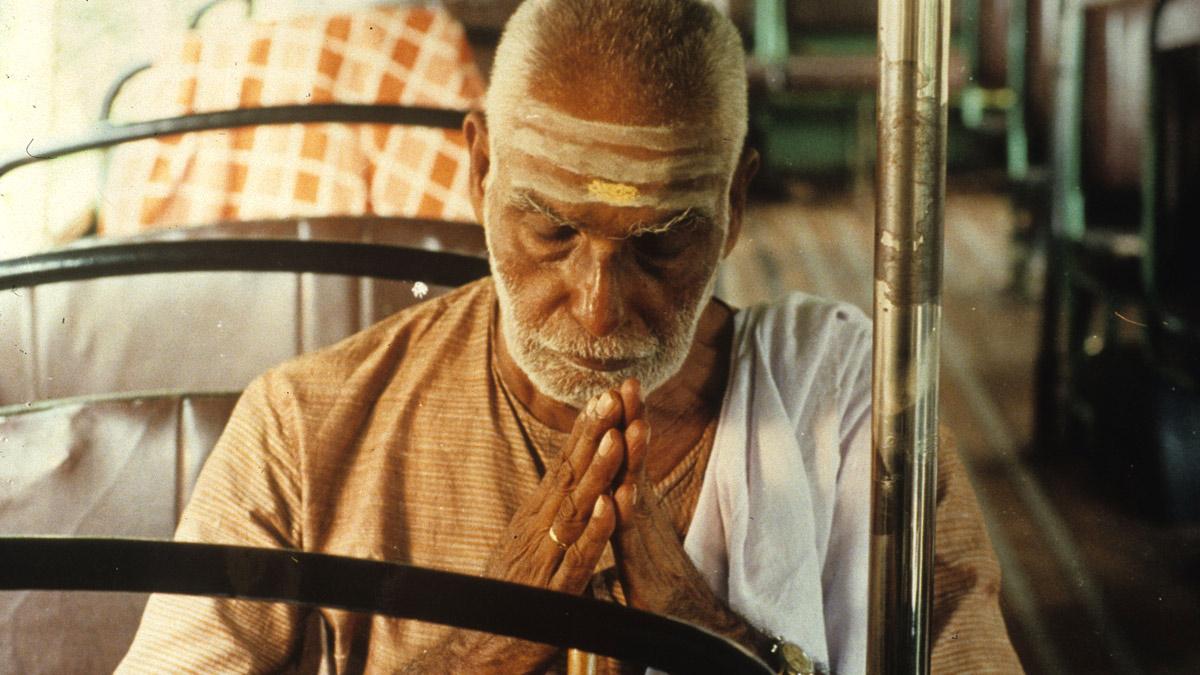
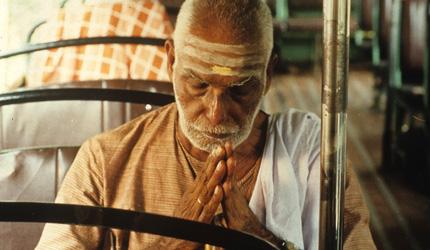
Premji
in
Piravi.
Just
last
week,
I
read
in
the
local
Trivandrum
papers
about
Shaji
N
Karun
receiving
an
award
in
the
name
of
J
C
Daniel,
an
early
pioneer
in
Malayalam
films.
That’s
when
I
realised
that
the
master
film-maker
had
named
his
house
‘Piravi’
in
memory
of
his
extraordinary
directorial
debut
in
1988.
It
brought
back
a
flood
of
memories
of
that
film,
whose
title
means
‘birth’
but
whose
theme
was
death
and
loss.
Now
comes
the
news
of
his
own
death,
aged
73,
from
cancer.
Om
shanti,
Godspeed,
Shaji,
as
you
join
the
Great
White
Whirligig
in
the
Sky!
I
met
the
director
twice.
Once,
about
50
years
ago,
when
we
both
were
volunteers
for
a
local
science
fair,
and
he
was
a
student
at
the
Film
and
Television
Institute
in
Pune.
Then
in
1988
or
1989,
when
he
spoke
at
the
San
Francisco
International
Film
Festival,
where
Piravi
was
featured.
The
film
had
won
the
Cannes
Camera
d’Or-Mention
d’Honneur,
among
many
other
prizes,
including
at
Locarno,
Edinburgh
and
so
on,
possibly
more
than
any
other
Indian
film.
What
impressed
me
about
his
talk
was
his
humility
and
reticence.
Even
though
he
was
an
acclaimed
cinematographer
and
Piravi was
received
very
well,
he
was
quiet,
even
shy.
He
explained
his
use
of
the
blue
tints
in
the
film.
It
is
the
colour
of
apasmaram,
he
said,
using
the
Malayalam/Sanskrit
word
for
madness,
which
the
father
of
the
‘disappeared’
youth
in
the
film
falls
into.
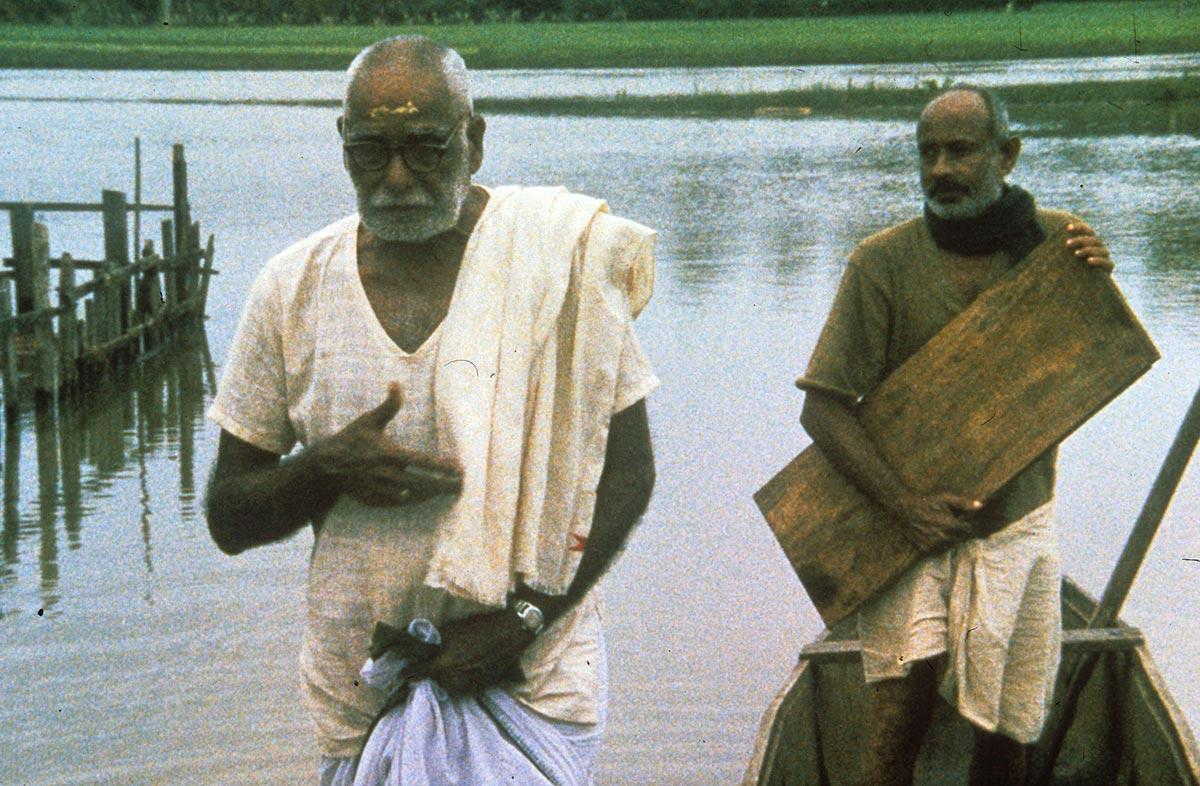
Premji
and
Sreeraman
in
Piravi.
Even
though
he
made
several
other
films,
and
he
was
the
cinematographer
who
shot
most
of
the
works
of
legendary
Malayalam
film-maker
G
Aravindan,
it
is
Piravi that
marked
the
zenith
of
his
career.
I
can
say
without
hesitation
that
it
is
stunningly
powerful.
As
an
art-film
fan,
I
have
seen
hundreds
of
superb,
even
outstanding
films,
but
this
one,
alone,
spoke
to
me.
I
wept
seeing
it,
tears
streaming
down
my
cheeks.
No
other
film
has
ever
affected
me
so
much.
For
a
Malayalam
speaker
and
one
who
had
seen
the
Emergency,
it
was
a
viscerally
powerful
experience,
especially
because
it
was
based
on
the
real-life
story
of
Rajan,
a
‘disappeared’
engineering
student.
As
I
wrote
some
years
ago, I
could
easily
have
been
another
Rajan,
another
number.
Rajan’s
character
is
never
seen
in
the
film,
except
as
a
child.
His
father,
played
by
octogenarian
Premji,
fills
the
screen
with
his
presence,
his
anguish,
at
the
loss
of
his
only
son
born
late
in
his
life.
In
real
life,
the
father, Professor
Eachara
Warrier,
who
was
one
of
my
heroes,
spent
the
rest
of
his
life
demanding
justice
from
the
uncaring
State.
The
film’s
minimalist
dialogue
and
focus
on
human
despair,
grief,
and
the
struggle
against
systemic
injustice
resonate
universally,
transcending
cultural
boundaries.
Its
subtle
yet
poignant
exploration
of
loss
makes
it
relatable
to
global
audiences.
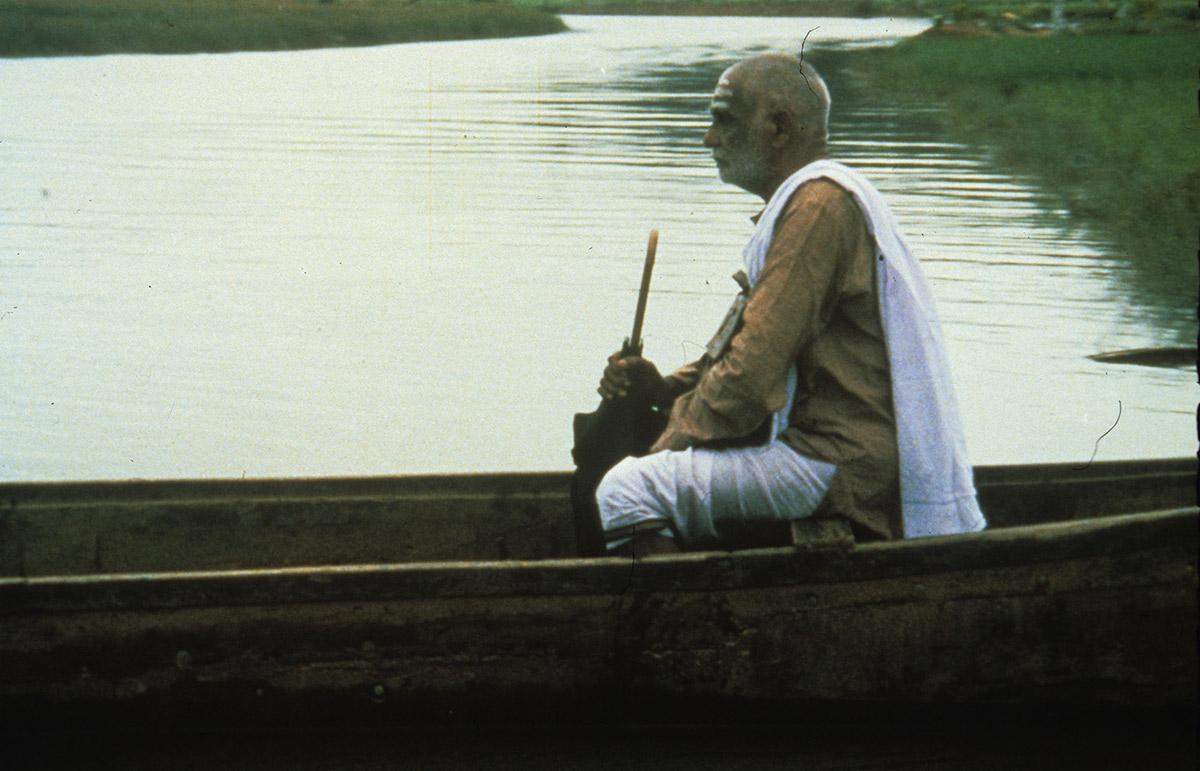
Premji
in
Piravi.
Apart
from
the
universal
message
of
grief,
there
is
also
the
story
of
the
father-son
relationship.
I
was
strongly
affected
by
passages
from
the
film
where
you
realise
how
much
the
predatory
State
took
from
the
father,
as
per
the
Hindu
tradition.
I
remembered
my
father
10,000
miles
away
in
India,
who
too
had
no
son
to
help
him.
The
film
begins
with
an
invocation
from
the
Kaushitaki
Upanishad;
a
dying
man
bequeaths
his
life
to
his
son.
The
son
accepts
each
of
his
gifts.
‘My
speech
in
you
I
would
place.’
‘Your
speech
in
me
I
take.’
‘My
sight
in
you
I
would
place.’
‘Your
sight
in
me
I
take.’
‘My
mind
in
you
I
would
place.’
‘Your
mind
in
me
I
take.’
‘My
deeds
in
you
I
would
place.’
Your
deeds
in
me
I
take.’
‘My
vital
breath
in
you
I
would
place.’
‘Your
vital
breath
in
me
I
take.’
‘May
glory,
luster
and
fame
delight
in
you.’
‘Heaven
and
desires
may
you
obtain.’
From
the
Brihadaranyaka
Upanishad,
‘Whatever
wrong
has
been
done
by
him,
his
son
frees
him
from
it
all…
By
his
son,
a
father
stands
firm
in
this
world.’
Personally
for
me,
I
think
the
film
was
a
catalyst
in
my
decision
to
return
to
India,
specifically
back
to
Kerala.
Another
Indian
friend
(I
think
he
was
a
Telugu)
who
saw
it
with
me
in
San
Francisco
said,
‘I’m
so
tempted
to
chuck
it
all
and
go
live
in
a
Kerala
village.’
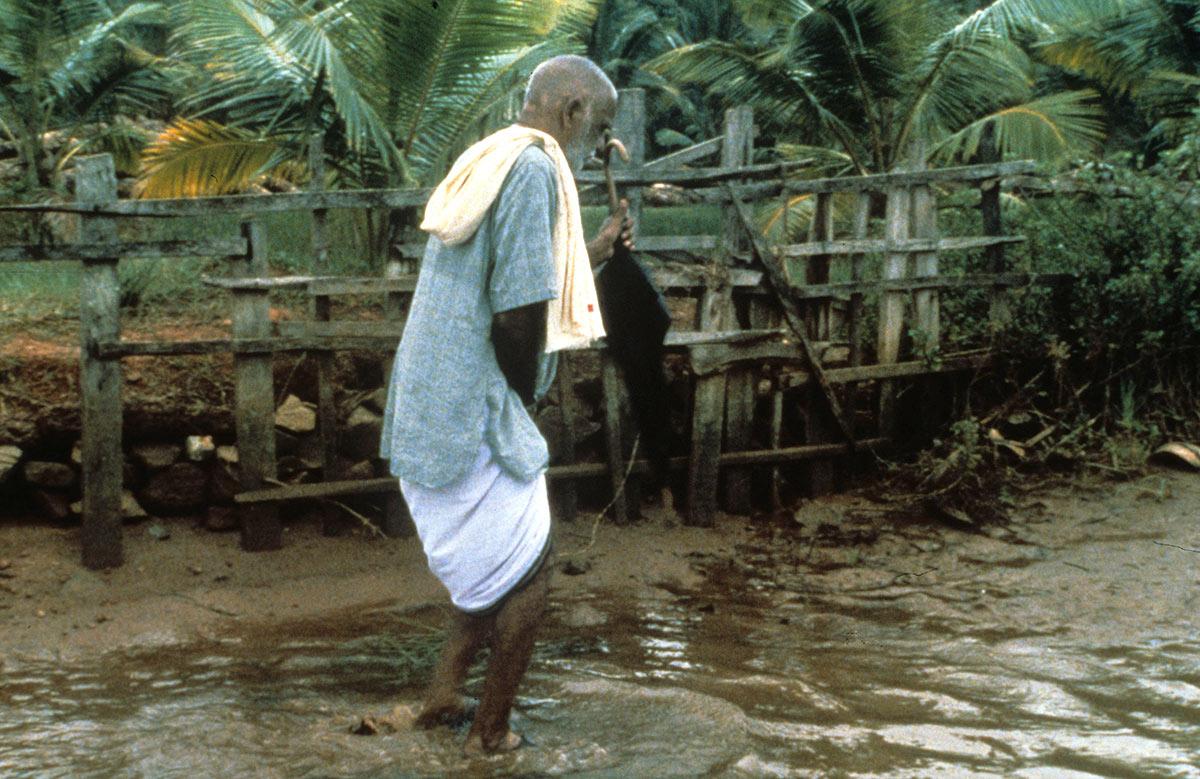
Premji
in
Piravi.
Apart
from
the
overwhelming
sense
of
loss,
the
film
is
remarkable
from
two
points
of
view:
visual
storytelling
and
innovative
techniques.
The
muted
lighting,
traditional
architecture,
and
atmospheric
elements
like
rain
mirror
the
characters’
emotional
turmoil.
The
film’s
stillness
and
sparse
dialogue
amplify
the
actors’
expressive
performances,
particularly
their
eyes,
conveying
deep
emotion.
The
monsoon
rain
is
a
palpable
presence
with
the
sense
of
anticipation
as
we
wait
for
its
arrival,
and
then
later,
when
the
father
falls
in
the
rain,
the
ferryman’s
dilemma:
if
he
helps
him
up,
his
boat
will
drift
away.
The
ferryman’s
compassion
prevails.
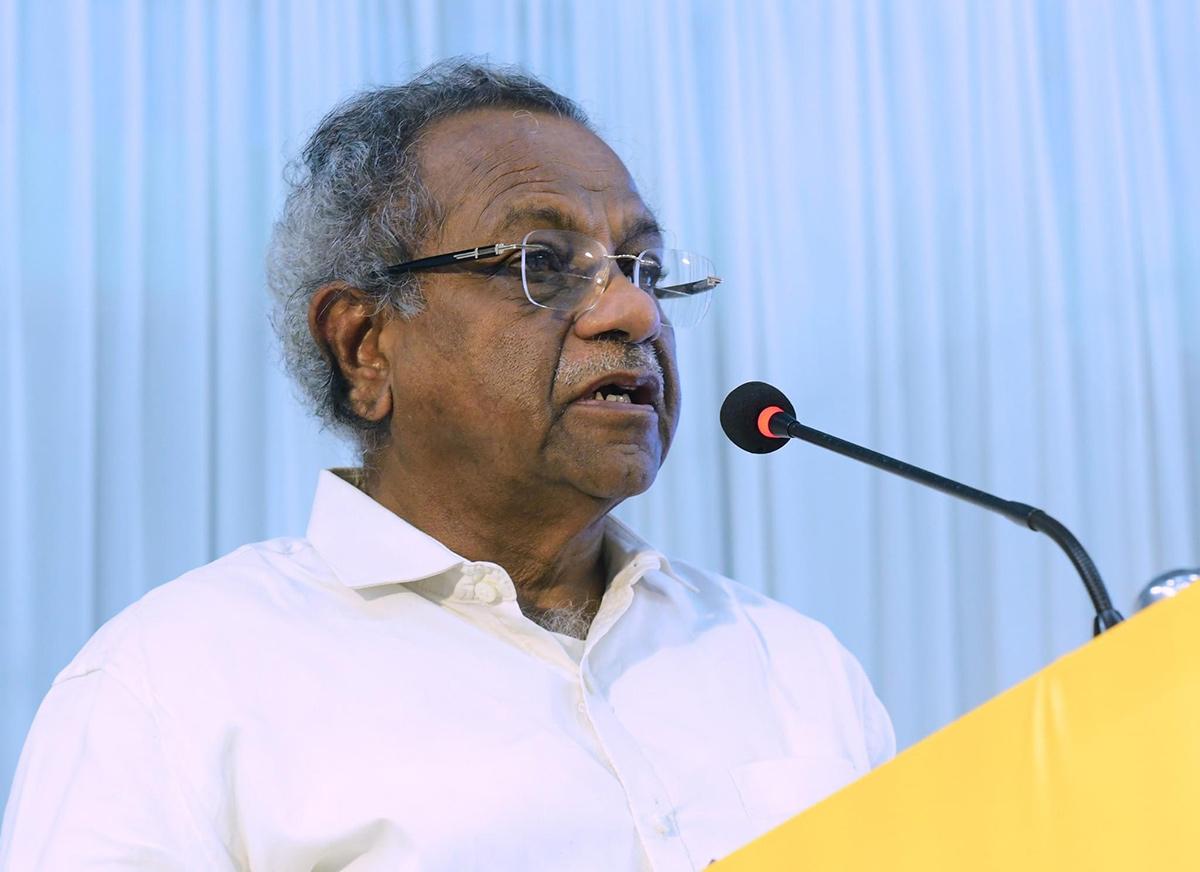
Photograph:
Kind
courtesy
Shaji
N
Karun/X
The
film’s
use
of
weather,
sound
(like
the
bubbling
of
water
evoking
anxiety),
the
simple
everyday
beauty
of
Kerala
village
life,
and
deliberate
pacing
created
a
meditative
yet
intense
atmosphere.
The
use
of
colour
to
invoke
emotion
(as
in
traditional
ragas)
is
another
technical
innovation.
With
Piravi,
Shaji
N
Karun
joined
the
select
group
of
great
masters
of
film:
film
as
witness,
sakshi,
film
as
literature.
Malayalam
once
upon
a
time
used
to
produce
such
films.
Today,
it
is
only
mindless
violence,
politics
and
grotesque
humour.
The
films
have
no
soul,
although
they
are
technically
quite
good.
With
Shaji’s
passing,
and
earlier
with
his
mentor
Aravindan’s
untimely
death,
an
era
is
coming
to
an
end.