‘Session
musicians,
background
singers,
and
studio
instrumentalists
fill
out
the
sound
of
India’s
biggest
hits.’
‘But
their
names
rarely
show
up
on
screen.’
‘Their
royalties
never
arrive.’
‘And
their
contribution,
no
matter
how
iconic,
vanishes
once
the
track
is
mastered.’
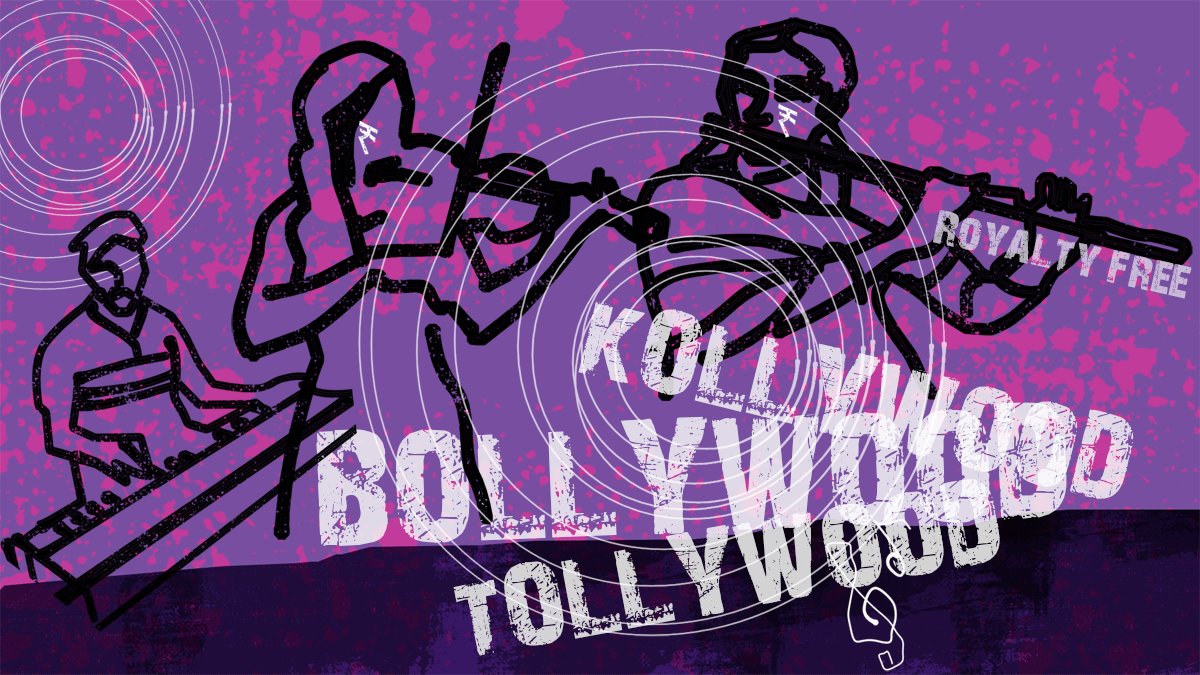
Illustration:
Dominic
Xavier/Rediff
Every
hit
song
has
a
hidden
side.
Behind
the
shimmering
vocals,
viral
melodies,
and
expertly
produced
beats
are
dozens
of
hands
that
brought
it
to
life
—
the
violinist
who
added
an
aching
swell,
the
flautist
whose
solo
became
the
song’s
signature,
the
percussionist
whose
rhythm
tied
it
all
together.
They
are
the
session
musicians,
background
singers,
and
studio
instrumentalists
who
fill
out
the
sound
of
India’s
biggest
hits.
But
their
names
rarely
show
up
on
screen.
Their
royalties
never
arrive.
And
their
contribution,
no
matter
how
iconic,
vanishes
once
the
track
is
mastered.
India’s
music
industry
has
never
been
louder.
Streaming
platforms
have
turned
chart-toppers
into
overnight
sensations,
regional
voices
into
global
exports,
and
bedroom
producers
into
brand
names.
The
Indian
Performing
Right
Society
(IPRS)
disbursed
over
Rs
600
crore
(Rs
60
billion)
in
royalties
in
2024-2025
alone,
much
of
it
driven
by
digital
plays.
But
behind
this
digital
boom
lies
a
stubborn
analogue
problem:
non-featured
artistes
—
session
musicians,
backing
vocalists,
instrumentalists
—
remain
locked
out
of
the
royalty
system
that
their
work
fuels.
The
shift
from
cassettes
to
clicks
has
transformed
India’s
music
economy.
The
IPRS
now
reports
that
nearly
70
per
cent
of
its
royalty
collections
come
from
streaming.
Independent
and
regional
artistes
are
flourishing;
some
earn
over
Rs
50
lakh
(Rs
5
million)
annually.
Yet,
as
lyricist,
screenwriter,
and
National
Award-winning
songwriter
Varun
Grover
(known
for
films
like
Masaan,
Dum
Laga
Ke
Haisha,
Gangs
of
Wasseypur
and
the
Netflix
series
Sacred
Games),
puts
it,
“Session
musicians
deserve
way
more
than
what
they
are
getting.”
These
non-featured
artistes
typically
work
on
a
one-time
session
basis.
They
show
up,
perform,
and
leave.
Their
names
rarely
appear
in
streaming
metadata.
Their
contracts,
if
they
exist
at
all,
often
cede
all
future
rights.
Their
artistry,
stitched
into
the
DNA
of
a
song,
is
monetised
endlessly
by
others.
Independent
composer
Joell
Mukherji,
who
has
collaborated
with
Amit
Trivedi
and
Pritam,
composed
over
150
ad
films,
and
created
the
viral
song
Credit
De
Do
Yaar,
confirms
the
problem
runs
deep.
“The
concept
of
royalty
distribution
is
still
in
a
very
nascent
stage
in
India…
Even
FM
stations
do
the
same,”
he
says.
Veteran
violinist
Jeetendra
Javda,
whose
bow
has
swept
across
decades
of
Bollywood,
echoes
this,
pointing
to
a
complete
lack
of
paperwork:
“The
typical
work
which
we
do
here
does
not
have
any
discussed
contract…
It
is
like
the
hours
we
work
for
them
or
the
instrument
we
like.”
“We
don’t
even
have
proper
documentation
of
who
played
what,”
adds
Madhav
Ajgaonkar
(Maddy),
a
seasoned
music
composer.
“Forget
money.
Even
credits
are
missing.”
India’s
Copyright
(Amendment)
Act,
2012,
was
heralded
as
a
landmark
reform.
But
the
law’s
benefits
have
largely
bypassed
non-featured
performers.
Though
performers
are
recognised
in
theory,
few
musicians
are
registered
with
collective
management
organisations,
and
fewer
still
negotiate
royalty-bearing
contracts.
Grover
recalls
being
coerced
into
contracts
where
labels
disguised
royalties
as
advance
fees.
“They
would
say,
‘Here’s
Rs
10
lakh
for
your
song…
Rs
9
lakh
is
advance
royalty
for
50
years.’
They’d
even
add
wild
clauses
about
‘perpetuity
across
all
galaxies’…”
The
systemic
inequality
stems
from
the
deep-rooted
practice
of
work-for-hire
agreements
under
Section
17
of
the
Copyright
Act.
Javda
admits
most
of
his
work
is
based
on
“mutual
understanding”
—
a
handshake
deal,
with
no
formal
contract,
no
enforceability.
Maddy
underlines
this
rot.
“Even
in
the
1960s
and
70s,
we
don’t
know
who
played
what.
Musicians
were
just
tools…
R
D
Burman
may
be
the
only
one
who
gave
his
session
artistes
visibility.”
Across
Europe,
non-featured
performers
enjoy
legal
mandates
for
equitable
remuneration.
Collective
societies
in
Germany,
France,
and
Spain
facilitate
this
distribution.
But
implementation
isn’t
seamless.
“Unless
you’re
formally
registered
and
actively
claiming
rights,
even
European
systems
tilt
towards
power
players,”
says
Grover.
The
difference?
In
Europe,
there
are
enforceable
mechanisms.
In
India,
it’s
mostly
goodwill,
inertia,
or
luck.
Some
changes,
however
small,
are
underway.
Javda
notes
a
five-year
trend
of
composers
crediting
musicians
more
consistently.
Grover
himself
released
the
soundtrack
of
his
film
All
India
Rank
on
his
own
YouTube
channel,
carefully
crediting
every
instrumentalist.
But
credit
alone
doesn’t
pay
bills.
Maddy
points
to
a
deeper
injustice.
“They
don’t
even
know
what
investing
means.”
Industry
insiders
agree
that
reform
must
begin
with
enforceable
contracts
and
awareness.
“Even
when
contracts
exist,
they
aren’t
notarised,”
says
Maddy.
“Anyone
can
deny
they
signed
it.”
The
Indian
Singers’
and
Musicians’
Rights
Association
and
IPRS
have
set
precedents
for
featured
artistes.
A
similar
push
is
needed
for
session
musicians.
“Start
with
credit,”
Maddy
says.
“Then
fight
for
the
money.”
As
Javda
puts
it,
“In
1992,
none
of
us
even
dreamed
of
royalties.
In
2025,
at
least
we’re
talking.
Maybe
in
10
more
years,
we’ll
be
counted.”
For
now,
the
soundtrack
of
India’s
digital
music
boom
carries
with
it
an
echo
—
of
violins
played
in
silence,
flutes
forgotten
in
metadata,
and
lives
that
sang
so
others
could
shine.