
Guru
Dutt
took
an
overdose
of
pills
twice,
once
even
swallowing
opium,
calling
out
for
Geeta
Dutt
even
when
he
was
not
fully
conscious.
One
suicide
attempt,
according
to
sister
Lalita
Lajmi,
was
definitely
deliberate
with
Guru
Dutt
leaving
a
letter
for
brother
Atma
Ram
asking
him
to
take
care
of
the
production
company,
his
wife
and
the
kids.
But
she
always
wondered
if
the
third
attempt
was
actually
suicide
since
there
were
no
calls
and
no
letters.
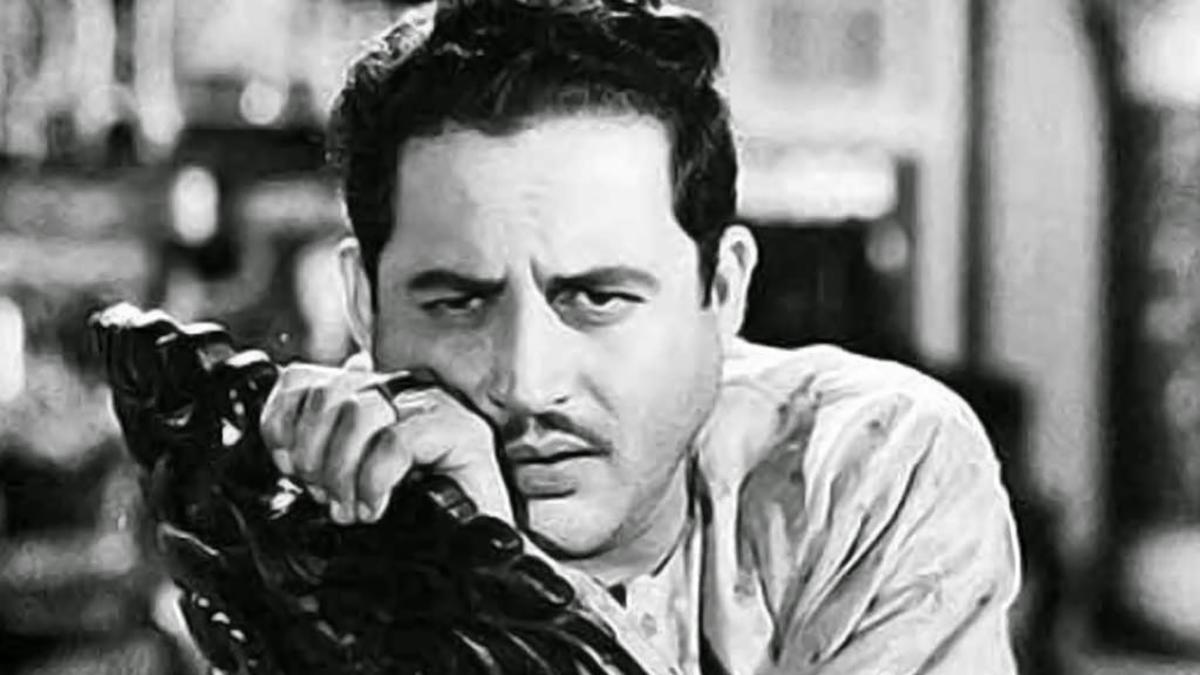
Guru
Dutt
in
Kaagaz
Ke
Phool.
It’s
been
over
six
decades
since
Guru
Dutt
went
to
bed
and
never
woke
up.
But
the
magic
he
wove
on
screen,
the
mystery
around
his
untimely
demise,
and
the
mystique
he
brought
to
the
screen
have
kept
him
alive
in
our
hearts.
On
his
birth
centenary,
July
9,
2025,
Rediff
Senior
Contributor,
Roshmila
Bhattacharya
remembers
conversations
with
his
mother,
sister
and
a
writer-friend
to
understand
the
man
we
lost
too
soon,
Shadow
play
on
the
walls

Guru
Dutt
and
Meena
Kumari
in
Kaagaz
Ke
Phool.
Dusk
had
fallen
and
it
was
time
for
the
sandhya
aarti
(evening
prayers).
In
their
two-bedroom
flat
near
Paddapukur
tank
in
Calcutta
(now
Kolkata),
three
youngsters
are
watching
their
nani
(grandmother)
light
the
diyas.
Suddenly,
the
quiet
room
is
buzzing
with
activity
as
a
deer
leaps
off
the
wall
and
a
swan
glides
across,
fishes
dart
and
birds
flutter.
A
little
girl
watches,
mesmerised,
as
her
brother’s
slender,
dancing
fingers
bring
these
creatures
to
life.
Years
later,
the
world
was
just
as
fascinated
by
the
play
of
light
and
shadow
in
films
like
Pyaasa,
Kaagaz
Ke
Phool
and
Saheb
Biwi
Aur
Ghulam,
the
boy,
Gurudatta
Padukone,
having
grown
up
to
become
writer,
choreographer,
actor,
director
and
producer
Guru
Dutt.
His
sister,
seven
years
younger,
Lalita
Lajmi,
a
celebrated
artist,
recalled
that
when
she
had
her
first
exhibition,
though
her
eldest
brother
didn’t
turn
up,
he
did
buy
two
of
her
paintings.
When
love
blossomed…

Waheeda
Rehman,
Baby
Farida,
Guru
Dutt
and
his
wife
Geeta
Dutt
at
a
Chaudhvin
Ka
Chand
event.
Photograph:
Kind
courtesy
Film
History
Pics/Instagram
In
1951,
Guru
Dutt
made
his
directorial
debut
with
Baazi,
produced
by
Dev
Anand
—
he
also
played
the
lead
—
whom
he
had
befriended
when
working
for
Prabhat
Film
Company
in
Pune.
Baazi‘s
mahurat
shot
was
taken
on
the
song
Tadbeer
Se
Bigdi
Hui
Taqdeer
Bana
Le.
The
S
D
Burman
composition
was
sung
by
playback
singer
Geeta
Roy
and
Guru
Dutt’s
mother,
Vasanthi
Padukone,
present
on
the
occasion
was
not
just
impressed
by
her
lovely
voice,
but
years
later,
still
spoke
about
her
beautiful
eyes
and
her
unstarry
warmth.
Soon,
whenever
she
had
a
day
off
from
recordings,
Geeta
would
drive
down
to
Guru
Dutt’s
Matunga
residence
in
central
Mumbai,
tuck
her
sari
pallu
into
her
waist
and
join
his
mother
in
the
kitchen,
pitching
in
with
the
chores
and
sometimes
the
cooking
too.
She
also
never
turned
down
a
request
to
sing,
and
Guru
Dutt,
who
loved
Bengali
songs
from
his
years
spent
in
the
City
of
Joy,
had
a
particular
favourite,
Tumi
Jodi
Bolo
Bhalobasha
Dite
Jaani
Na.
He
was
in
love
and
would
occasionally
whisk
Geeta
off
on
long
rides,
his
assistant
Raj
Khosla
and
sister
Lalita
accompanying
the
couple.
All
through
their
courtship,
Lalita
was
both
a
chaperone
and
courier,
slipping
their
letters
to
each
other.
Cupid’s
arrow
had
unerringly
found
its
mark,
but
there
was
a
hitch.
Geeta’s
family
wanted
her
to
marry
the
Bengali
boy
she
was
engaged
to
rather
than
a
struggling
actor-filmmaker
from
another
community.
Even
after
Baazi
and
Jaal
became
hits,
the
Roys
were
not
keen
on
the
match,
and
after
two
years,
a
frustrated
Guru
Dutt
took
Geeta
to
the
Haji
Malang
shrine
and
asked
her
to
choose
whom
she
wanted
to
spend
the
rest
of
her
life
with.
She
chose
him
and
they
finally
tied
the
knot
on
May
26,
1953.
Casting
merry-go-round

Waheeda
Rehman
and
Guru
Dutt
in
Kaagaz
Ke
Phool.
According
to
his
writer-friend
Abrar
Alvi,
who
directed
Sahib
Biwi
Aur
Ghulam,
Guru
Dutt
never
considered
himself
a
good
actor.
Dev
Anand
was
his
first
choice
for
the
lead
in
his
debut
production
Aar
Paar,
but
dates
were
a
problem
and
he
had
to
step
in.
Alvi
also
shared
that
Kaagaz
Ke
Phool
had
been
offered
to
Chetan
Anand,
but
his
price
was
too
steep
for
Guru
Dutt.
According
to
Lalita
Lajmi,
her
brother
had
wanted
Ashok
Kumar
to
play
Suresh
Sinha,
the
fast-fading
director
in
Kaagaz
Ke
Phool,
but
eventually
did
the
role
himself.
After
the
debacle
of
the
1959
drama,
Guru
Dutt
couldn’t
afford
a
big
star,
so
he
had
to
play
Aslam,
with
his
real-life
friend
Rehman
as
his
reel
life
buddy
Pyare
Miyan
in
Chaudhvin
Ka
Chand.
After
shooting
three
reels
of
Pyaasa,
he
had
approached
Dilip
Kumar,
but
the
actor
was
hesitant
about
doing
another
dark
film
after
Devdas
and
remuneration
was
an
issue
too,
so
Guru
Dutt
had
gone
back
to
playing
the
disillusioned
poet
Vijay.
Interestingly,
Johnny
Walker
had
shot
for
three
days
as
Shyam,
Vijay’s
scheming
friend,
but
his
director-friend
quickly
realised
that
the
comedian
would
never
be
accepted
as
a
villain.
Replacing
him
with
his
assistant
Shyam
Kapoor,
Guru
Dutt
conceived
the
role
of
a
malishwala
for
him
and
even
got
S
D
Burman
to
compose
a
song
for
him,
Sar
Jo
Tera
Chakraye
which
remains
evergreen.
Biswajit
was
to
be
launched
in
Hindi
cinema
with
Sahib
Biwi
Aur
Ghulam,
but
when
Bengal’s
matinee
idol
returned
home,
he
was
warned
against
sighing
an
exclusive
contract
with
him
since
Guru
Dutt
was
notorious
for
starting
and
shelving
films,
and
declined
the
offer.
And
that’s
how
Guru
Dutt
shaved
off
his
trademark
mustache
and
stepped
into
the
role
of
Bhoothath,
Biswajit
making
his
Bollywood
debut
with
Hemant
Kumar’s
Bees
Saal
Baad
opposite
Waheeda.
And
suddenly,
curtains…

Guru
Dutt,
Rehman
and
Mala
Sinha
in
Baharen
Phir
Bhi
Aayengi
,
which
was
later
made
with
Dharmendra
and
Mala
Sinha
and
directed
by
Shaheed
Latif.
Photograph:
Kind
courtesy
Film
History
Pics/Instagram
However,
another
thriller,
Raaz,
an
adaptation
of
Wilkie
Collins’
1860
novel
A
Woman
in
White
with
Waheeda
in
a
double
role,
being
produced
by
Guru
Dutt
and
directed
by
his
assistant
Niranjan,
was
shelved
even
after
he
replaced
Sunil
Dutt
in
the
lead.
The
script
was
later
reworked
and
the
film
resurrected
by
Raj
Khosla,
Woh
Kaun
Thi?
was
a
superhit!
Even
Gouri
a
Hindi-Bengali
bilingual
with
Geeta
Dutt
in
the
title
role,
was
shelved
after
a
few
reels
as
differences
between
the
couple
escalated.
In
1961,
after
Guru
Dutt’s
father
passed
away,
their
bungalow
in
Pali
Hill,
north
west
Mumbai,
was
razed
and
he
moved
to
a
flat
in
Peddar
Road,
south
Mumbai,
while
Geeta
shifted
with
the
kids
to
Santa
Cruz,
north
west
Mumbai.
The
separation
was
painful
for
both
because
despite
all
the
fights,
they
still
loved
each
other
and
found
solace
in
alcohol
and
sleeping
tablets.
Guru
Dutt
took
an
overdose
of
pills
twice,
once
even
swallowing
opium,
calling
out
for
Geeta
even
when
he
was
not
fully
conscious.
One
suicide
attempt
according
to
Lalita
was
definitely
deliberate
with
Guru
Dutt
leaving
a
letter
for
his
brother
Atma
Ram
asking
him
to
take
care
of
the
production
company,
his
wife
and
the
kids.
She,
however,
always
wondered
if
the
third
attempt
was
actually
suicide
since
there
were
no
calls
and
no
letters.
He
was
shooting
for
K
Asif’s
ambitious
love
story,
Love
and
God,
and
till
2
am,
had
been
working
on
the
dialogue
of
his
next
production,
Baharen
Phir
Bhi
Aayengi.
He
had
complained
of
chest
pain
and
his
personal
physician
had
dropped
by
at
8
am
on
October
10,
1964,
but
his
bedroom
door
had
remained
stubbornly
shut.
Geeta,
who
is
said
to
have
had
a
premonition
and
had
wanted
to
drive
down
to
Peddar
Road
the
previous
night,
but
since
it
was
so
late,
had
agreed
to
wait
till
morning
by
when
he
was
gone.
The
last
scene
he
shot
was
for
Baharen
Phir
Bhi
Aayengi.
In
it,
he
hands
his
resignation
letter
to
Mala
Sinha,
saying,
‘I’m
leaving.’
Prophetic?
Or
just
ironic
coincidence?
