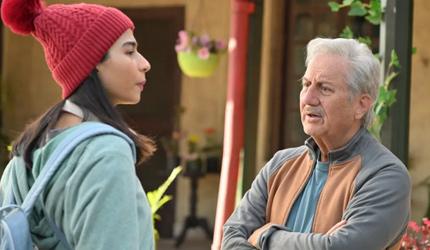
The
film
lurches
from
one
melodramatic
situation
to
another,
for
nearly
160
minutes,
before
culminating
in
an
ending
that
embodies
Director
Anupam
Kher’s
personal
philosophy:
Kuch
bhi
ho
sakta
hain,
notes
Mayur
Sanap.
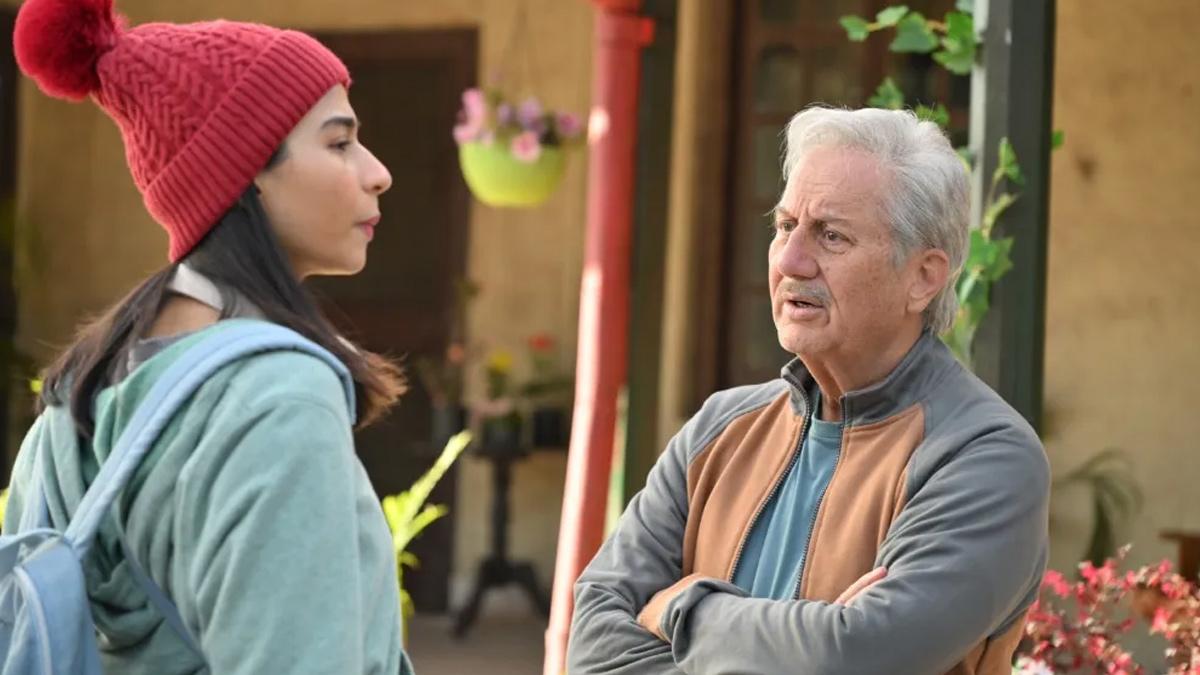
If
Sitaare
Zameen
Par
emphasised
that
everyone
has
their
own
unique
‘normal’,
Tanvi
The
Great
puts
a
new
perspective
to
it.
In
the
film,
which
revolves
around
an
autistic
girl,
we
hear
a
character
saying:
‘Opposite
of
normal
is
not
abnormal.
Opposite
of
normal
is
extraordinary.’
Anupam
Kher,
whose
2002
directorial
debut
Om
Jai
Jagadish
had
the
themes
of
pyaar,
parivaar
and
sanskaar,
returns
to
direction
23
years
later
with
the
story
of
hope
and
resilience
(the
inspiration
for
the
film,
as
Kher
earlier
said,
came
from
his
13-year-old
autistic
niece,
Tanvi).
There
is
a
well-meaning,
feel-good
appeal
to
the
simplistic
and
earnest
ideas
of
Tanvi
The
Great,
but
it
doesn’t
quite
reach
the
wholesomeness
it
aspires
to
because
of
the
deliberate
sappiness
that
prevents
us
from
connecting
to
the
material.
Kher
keeps
the
narrative
light-hearted
around
the
titular
character
who
is
often
told
that
she
is
different,
but
no
less.
She
is
played
by
debutante
Shubhangi,
a
gold
medalist
from
Kher’s
acting
school
Actor
Prepares.
Shubhangi
plays
20-something
Tanvi
Raina,
a
girl
with
autism
who
is
raised
by
her
single
mother
Vidya
(Pallavi
Joshi)
after
her
army
officer
father
(Karan
Tacker)
is
martyred
in
the
line
of
duty.
When
Vidya,
an
autism
expert,
is
headed
to
the
US
for
a
conference,
she
takes
Tanvi
to
the
Himalayan
town
of
Lansdowne
to
stay
shift
with
her
grandfather
(Anupam
Kher),
a
retired
army
officer.
As
Tanvi
warms
up
to
her
new
surroundings,
she
learns
about
her
late
father’s
unfulfilled
dream
—
to
salute
the
Indian
flag
at
the
world’s
highest
battlefield
on
the
Siachen
Glacier.
This
discovery
ignites
a
fire
in
Tanvi
as
she
makes
a
life-altering
decision:
To
join
the
Indian
Army.
Penned
by
Kher,
along
with
Ankur
Suman
and
Abhishek
Dixit,
the
story
tries
very
hard
to
pull
your
heartstrings
with
all
its
heavy-handed
emotional
manipulation.
The
very
relevant
subject
of
autism
feels
like
a
mere
narrative
tool
without
presenting
anything
new
in
our
understanding
of
the
complex
issues
surrounding
it.
Pallavi
Joshi’s
Vidya
is
shown
to
add
some
weight
on
this
topic,
as
she
tries
to
make
a
world
better
place
for
autistic
kids,
but
this
track
never
cuts
deep
due
to
its
superficial
treatment.
Without
conveying
any
true
emotional
depth,
it
feels
like
the
film
is
relying
too
heavily
on
its
good
intentions
while
it
resorts
to
cliched
ways
to
jerk
tears.
This
is
further
punctuated
by
M
M
Keeravani’s
uninspired
musical
score
that
compulsorily
highlights
all
sorts
of
emotions
that
leaves
you
feeling
more
annoyed
than
uplifted.
Shubhangi
is
achingly
sincere
and
does
give
a
bright
charm
to
her
Tanvi,
but
her
acting
feels
stifled
at
times
due
to
inadequate
writing.
Her
physical
acting
also
fluctuates
according
to
the
gravity
of
scenes.
There’s
an
emotionally
charged
moment
towards
the
end
when
Tanvi
meets
her
mother.
Her
character
is
supposed
to
be
strong
and
confident,
but
it
looks
like
the
actor
is
snapped
to
her
real
self
as
her
autism
act
is
completely
cast
aside.
The
film
features
an
ensemble
cast
with
Boman
Irani
as
a
sweet
music
teacher,
Arvind
Swamy
as
Tanvi’s
stern
military
trainer,
Jackie
Shroff
as
an
amiable
commandant
and
a
wasted
cameo
by
Iain
Glen
(Ser
Jorah
Mormont
from
Game
of
Thrones)
that
barely
registers.
Most
of
these
actors
feel
like
a
set
of
bullet
points
rather
than
fully-realised
characters,
which
feels
disappointing
for
their
stature.
The
film
lurches
from
scene
to
scene,
with
one
melodramatic
situation
after
another,
for
nearly
160
minutes,
before
culminating
in
an
ending
that
embodies
Kher’s
famous
personal
philosophy:
Kuch
bhi
ho
sakta
hain.
At
one
point,
Kher’s
character
is
pointed
out
the
implausibility
of
an
autistic
girl
joining
the
army,
to
which
he
replies
one
cannot
stop
someone
from
dreaming.
The
retort
comes:
‘No
philosophical
answers
please.’
This
film,
hell-bent
on
sentimental
uplift,
needed
the
same
reality
check.
Tanvi
The
Great
Review
Rediff
Rating: