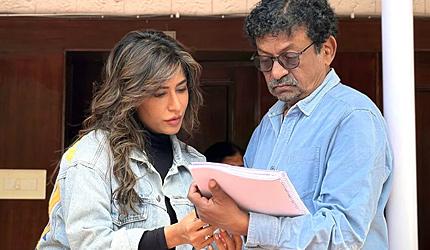
‘I don’t know how long cinema will survive.’
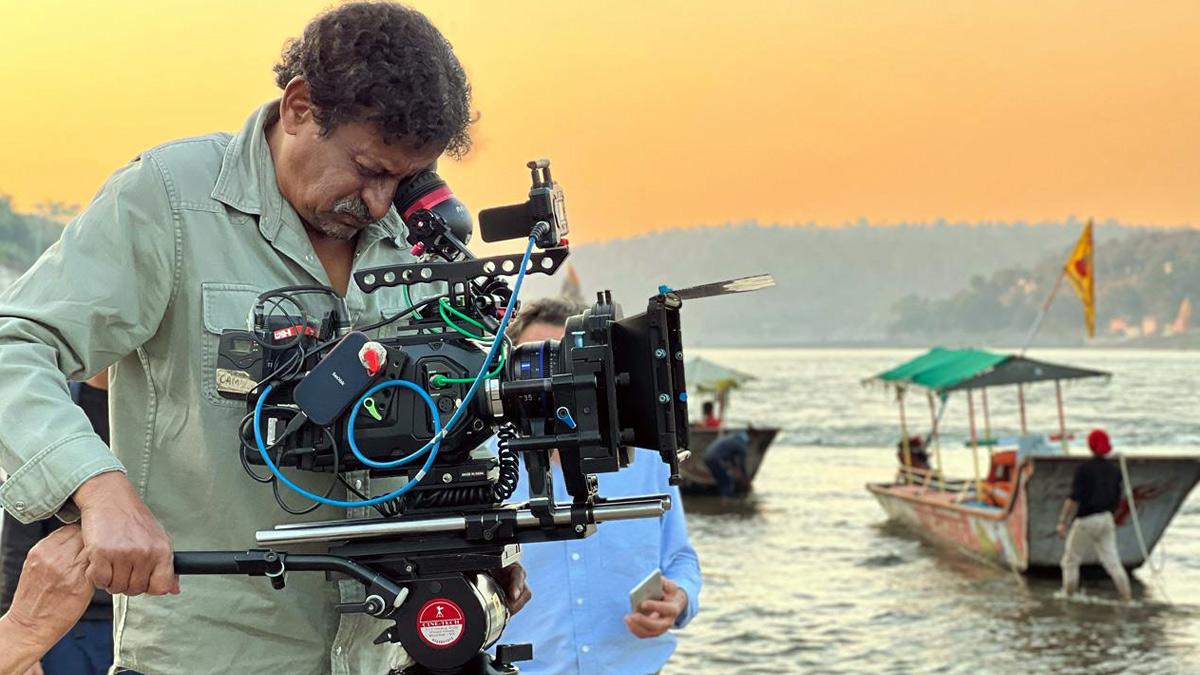
Goutam Ghose is one of India’s most celebrated contemporary film-makers.
He has bagged multiple National Film Awards, along with the Golden Peacock for Best Film (Moner Manush) at the 41st International Film Festival of India.
He is also the proud recipient of the Vittorio De Sica Award in Italy, 1997, and in 2006, was awarded the Knighthood of the Star of the Italian Solidarity.
Ghose, who turns 75 on July 24, is still chasing cinematic adventures.
In a two-part interview, he tells Rediff Senior Contributor Roshmila Bhattacharya, “This year, at the first Asian Art Film Award in Macau, my son and I won the Best Cinematography Award jointly. I don’t know about world cinema, but I don’t think there’s a precedent in Indian cinema for a father-son duo winning an award jointly.”
How does it feel to bring in a milestone birthday?
I don’t count the years I have lived. As long as my spirit is alive, I’m fine.
(Smiles) I have no outstanding debts, I don’t pay EMIs. That gives me peace of mind, the freedom to chase adventures and yes, write haikus too.
What is the greatest challenge film-makers are facing today?
Their greatest challenge is how to separate cinema from Reels.
Today, we usually shoot from just two angles; we either click a picture or take a selfie.
Honestly, I don’t know how long cinema will survive. Maybe in future, it will become like opera, playing to a select audience.
But all is not lost yet because the small, digital camera has really benefited indie film-makers, making film-making easier and cheaper.
Shooting on celluloid was very expensive. Your script and pre-production had to be watertight to ensure that no raw stock was wasted.
I still follow the discipline instilled by celluloid.
When I shot Raahgir: The Wayfarers, which is finally releasing after five years, my actors, Tillotoma Shome, Neeraj Kabi and Adil Hussain, were surprised I didn’t want to take the shot from different angles as is common today.
I told them that for me, every shot is a master shot because while working in the celluloid era, particularly in Bengal with a stringent budget, we mostly followed a 3:1 ratio and could go for a maximum of three takes.
In the digital age, young film-makers like my son Ishaan can work far more freely even within a tight budget.
Jhilli, the first feature film Ishaan directed, was shot in a dhapa (garbage ground) in Kolkata with characters drawn from that area.
He used a small Sony camera, Sony A7, Canon 16-35mm lens and a hand-held stabiliser, recreating the sound completely during post-production.
I remember during Paar, I also shot with Shabana (Azmi) and Naseer (Naseeruddin Shah) on the busy streets of Kolkata, but I was wielding a heavier, more conspicuous camera, and we managed to pull off the shoot only because my stars were completely unrecognisable thanks to their costumes and make-up.
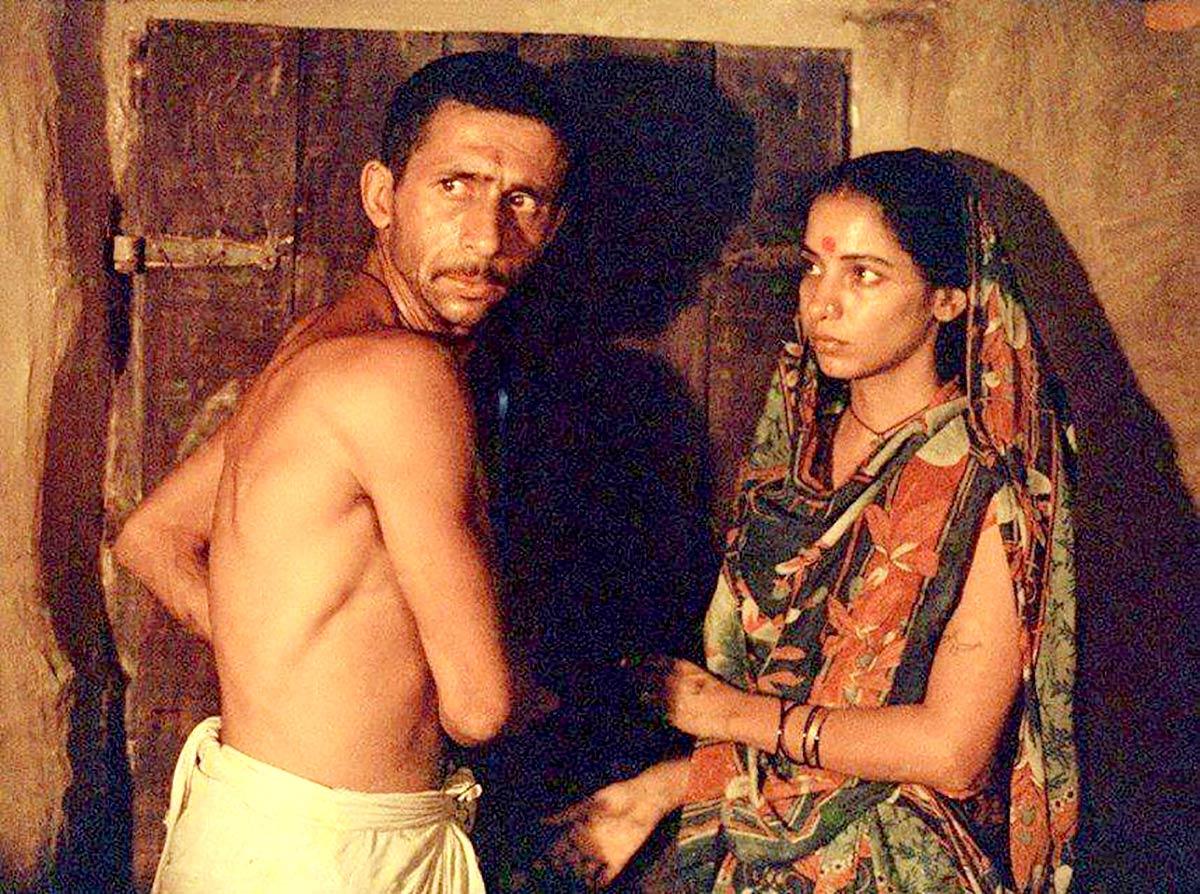
Paar won three National Awards, along with the UNESCO Award at the Venice International Film Festival in 1985, with Naseer winning the Volpi Cup for Best Actor.
It was also the recipient of the FIPRESCI Award and the Red Cross Award at the Verna Film Festival and even after four decades, you are still remembered for this 1984 Bengali film about two Dalit fugitives.
Many still remember Satyajit Ray for Pather Panchali, his first film as a director, and Shyam Benegal would sigh that he will always be known for his debut directorial Ankur.
So, not just me, this happens with a lot of other film-makers as well.
When I made Paar, I didn’t have the advantage of visual effects.
Shabana and Naseer, along with the rest of the crew, actually risked their lives, the latter almost drowning twice, crossing the gushing Hooghly river with a herd of pigs and that crossing remains unforgettable.
Whether it is Paar, Antarjali Yatra, Padma Nadir Majhi or your most recent film Parikrama, the river has been a leitmotif in your narratives.
Yes. One reason for this could be that my family, during Partition, came as refugees from Faridpur in East Bengal (now Bangladesh).
It is located on the banks of the river Padma and I’ve heard stories of the river from my grandmother and father.
I was born in Kolkata and West Bengal is perhaps the only state to be bordered by lofty mountains in the North and the Bay of Bengal in the South, the meandering valleys in between bound by water bodies.
I grew up playing football, hockey and cricket by the Hooghly, also known as the Kali-Ganga and Bhagirathi-Hooghly river.
I would sit by the river and remember that it was this waterway which had brought the Portuguese, French, Dutch and finally, the English to India.
Also, from the time we are conceived to our birth, we are swimming in our mother’s womb, so the river is embedded in my subconscious.
(Laughs) Govind Nihalani would jokingly say that given my obsession with the river, I must have been a fish in my previous birth.
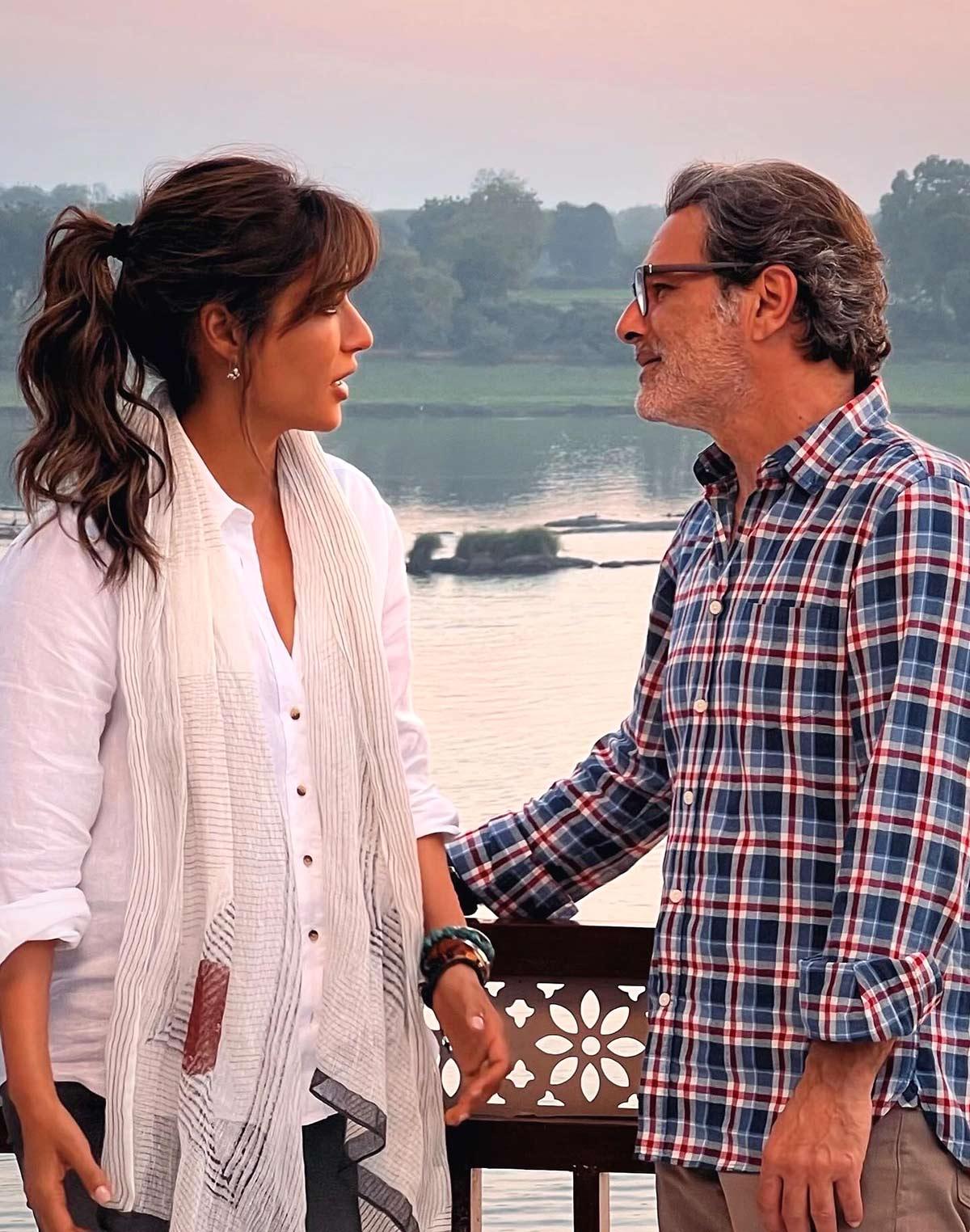
One understands your fascination with Padma and the Hooghly. But how did you come to helm an Indo-Italian co-production revolving around the river Narmada?
Parikrama is based on a children’s novella, The Story of Lala, written by my Italian producer-friend Sergio Scapagnini.
He gave me the manuscript to read, beautifully illustrated by his three daughters, and it touched my heart.
In 1999, the Italian edition won the prestigious Elsa Morante-Isola di Arturo Award and thereafter, Sergio wanted to come out with an English translation.
I recommended the novella to my friend V K Karthika who was agreeable to Red Panda, Westland Books, publishing it in English, provided they could carry a blurb on the book cover stating that it would soon be filmed by Gautam Ghose.
As I had told Sergio almost two decades ago, I could see a film in this inspiring story of an 11-year-old boy from Raipur, who runs away to Mumbai hoping to make enough money to buy a piece of land so his tenant farmer father does not have to beg in front of the tax collector when crops fail.
But I wanted to give the story a larger, more layered context.
So, you brought in the Narmada?
Yes. In the postscript, Sergio had written that he met Lala in Mumbai, while walking on Juhu beach.
I decided to orchestrate their meeting in the Narmada Valley after reading Amrit Lal Vegad’s book Narmada: River of Beauty, which describes his parikrama (pilgrimage) around India’s oldest river.
Legend has it that if you look at the Narmada even once, it can bring you salvation.
My film begins in Italy, with a documentary film-maker, Alexander (played by Marco Leonardi of Cinema Paradiso and Maradona, Hand of God fame) as he prepares for his trip to India to shoot a documentary on the annual Narmada parikrama.
Alexander, the second protagonist I created, meets Lala, the first, at Amarkantak, the source of the Narmada.
He learns that the young hawker boy’s (played by Aayan Badkul) home and village were submerged by the reservoir project and decides to draw him into his documentary.
Life when juxtaposed with death is ironic and Alexander’s son Francesco has lost his mother while Lala, who is around the same age, has been distanced from both, his birth mother and his metaphorical mother, the Narmada.
While following the river, the film follows their lives too.
Didn’t Sergio object to changes in his original story?
No. He respects me as a film-maker and told me that I could adapt his book freely.
(Laughs) I had met him at the Venice film festival where after a screening of Paar, he chased me, shouting, ‘Mr Ghose, I’ve seen your film, could I speak to you?’
We subsequently became good friends.
What I loved about his story is that young Lala, despite all his trials and tribulations, does not lose hope or courage, as he migrates to the city and makes a success of his life.
Sergio introduced me to this wealthy guy who dealt in diamonds and had offices in Europe and Rajasthan.
I later learnt that the man was Lala and he had not lost his humour or humility.
(Smiles) The kids I met in the Narmada Valley during my recce for Parikrama had the same cheeky humour.
Your son and you worked together on Parikrama, right?
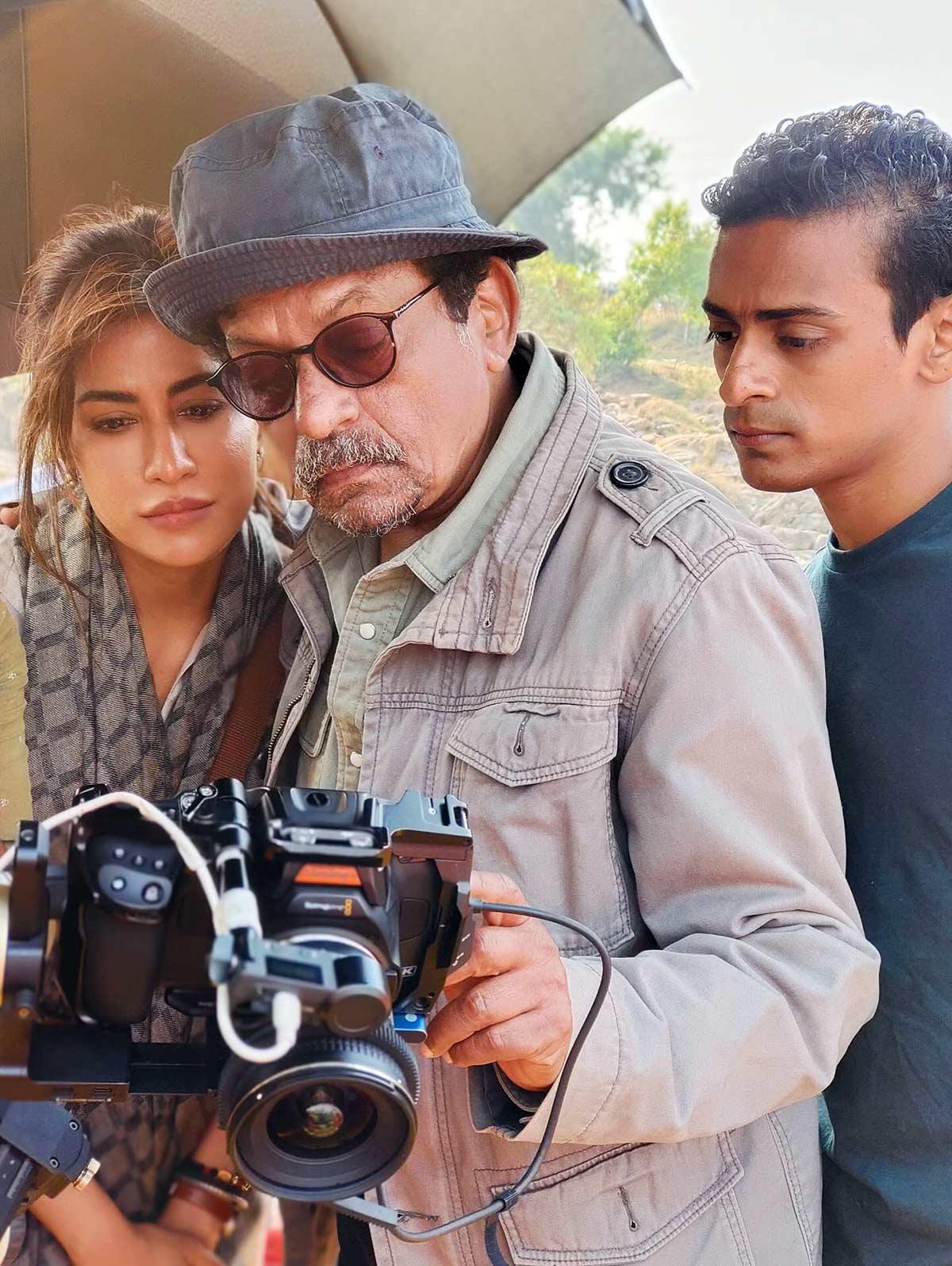
(Beams proudly) Yes, Ishaan had shot one of my films earlier. This one we did together, as father and son.
This year, at the first Asian Art Film Award in Macau, we won the Best Cinematography Award jointly.
I don’t know about world cinema, but I don’t think there’s a precedent in Indian cinema for a father-son duo winning an award jointly.
Ishaan actually went to the US to study music, but he was soon fascinated by the camera I had given him, and on his return, he joined my film unit.
(Laughs) We are the Filmwallahs.
My wife Nilanjana has been working with me since 1978, when I flagged off my first film Maa Bhoomi; she does the costumes.
My daughter Anandi was also involved with my films, but now works independently in Mumbai, making ad films. My son-in-law is a sound designer.
You have won several National Awards. Of late, there has been the occasional controversy over the national honours. How do you react to that?
I remember the Golden Lotus I won for Dakhal adjudged Best Feature Film.
The chairman of the jury that year was Ashok Kumar, and on the panel with him were B R Chopra, Bhupen Hazarika and Salil Chaudhury.
We still have intelligent and illustrious people on the jury, but might need to review the selection process to make the awards attractive.
Aren’t film festivals losing their shine, increasingly becoming promotional platforms and money-making endeavors?
I have attended many festivals when they were a place for film lovers.
I was at the Cannes film festival this year and was encouraged to see that they have managed to seamlessly combine art and commerce.
Venice is also trying, but many of the others have become more business-oriented.
I was the founder chairperson of the Kolkata International Film Festival and in 2024, at the request of the West Bengal chief minister (Mamata Banerjee), I agreed to return as the chairperson of KIFF in its 30th year.
I have agreed to come back as the chairperson this year too and hope to screen many more interesting films from across the world.