‘The idea was to not give any morality lessons.’

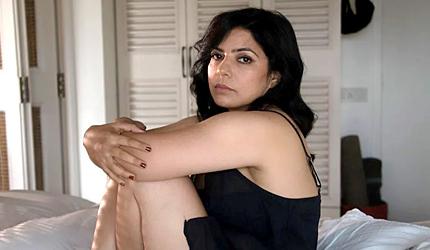
As someone who brought remarkable intensity to her roles in Sacred Games, Manto, Sexy Durga, Angry Indian Goddesses, and Trial By Fire, you might assume Rajshri Deshpande to be a very serious person in real life.
As she walks in for the chat, the very first thing she’s interested about is what the names of her interviewers are.
Each name is met with a warm smile that instantly sets an easy vibe around her.
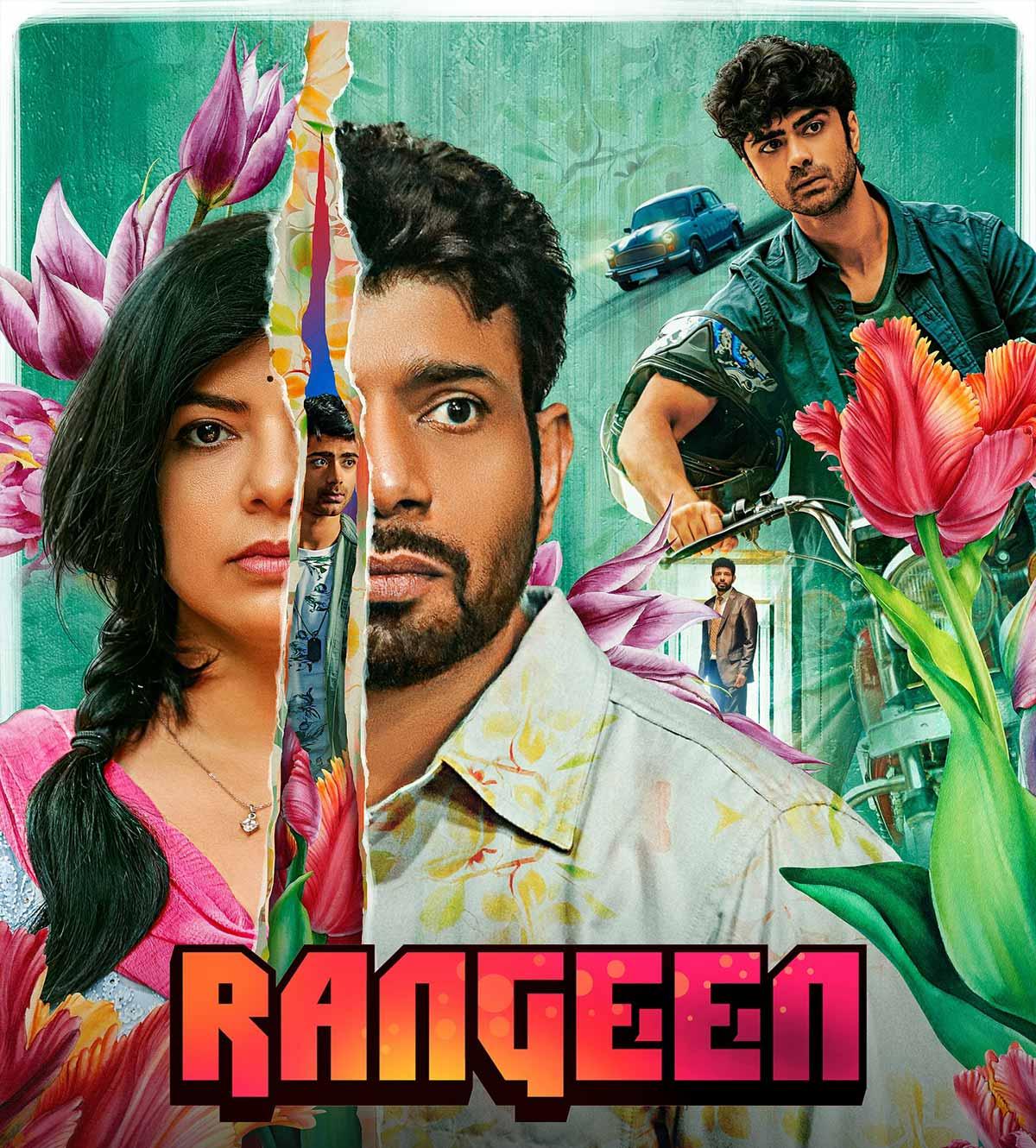
Rajshri brings the same lighter side to her latest OTT show Rangeen, co-starring Viineet Kumar Siingh.
She plays Naina, a bored housewife who hires a lover to spice up her mundane life, only to be caught red-handed by her husband.
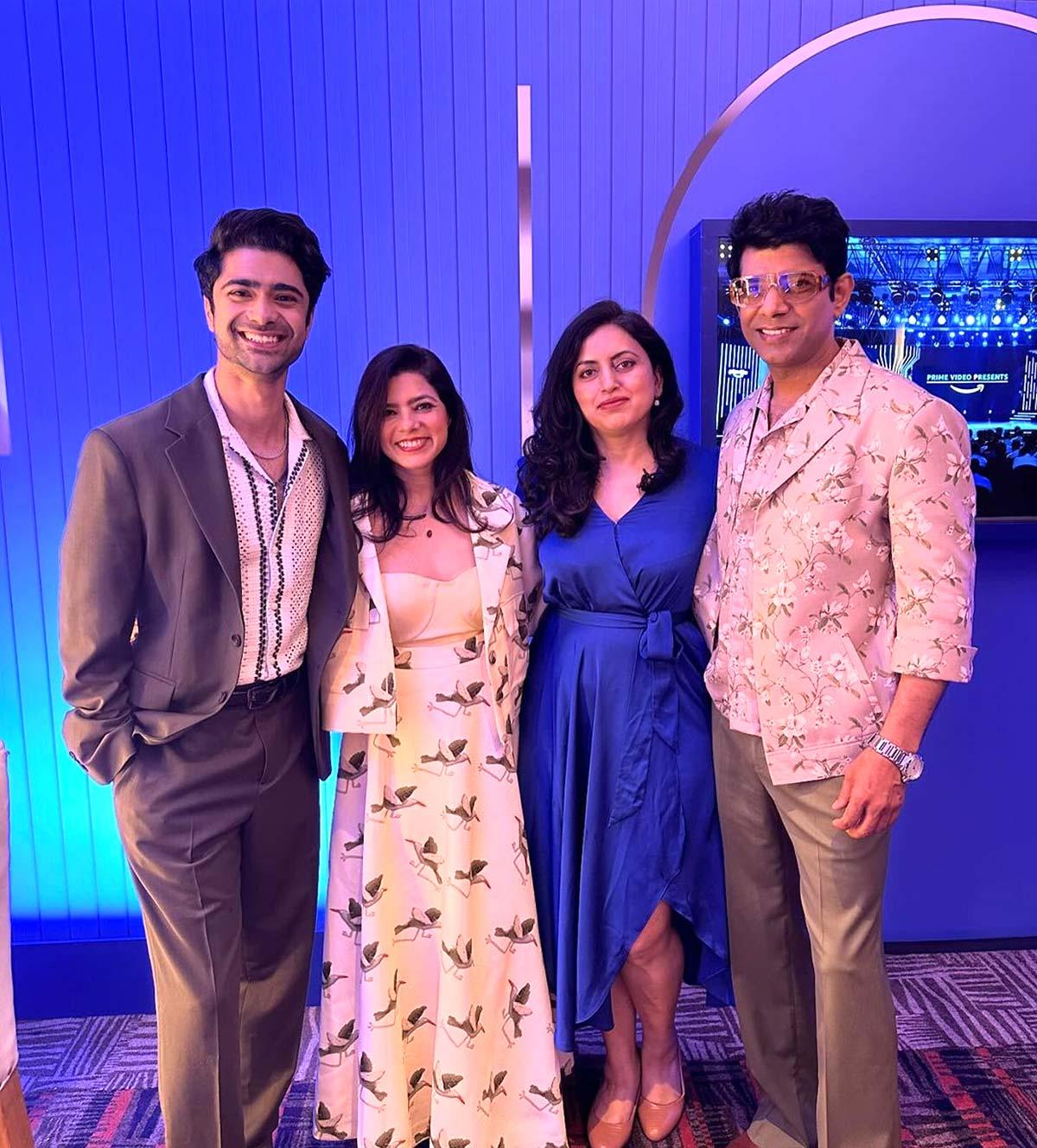
The actor and Rangeen‘s co-writer Amardeep Galsin sit down with their steaming cups of green tea as they discuss the various facets of the show with Mayur Sanap/Rediff.
“Honestly, people are bored to see these stars acting a character. They want to see a human being there. They want to see a person they can relate to,” Rajshri says.
Rangeen is about the unabashed female desire and the bruised male ego. What was the genesis of this story for you and your writing partner Amir Rizvi?
Amardeep: All the characters, both genders, were meant to be flawed.
They were meant to be in some sort of identity crisis.
A lot of it came from research, from a few articles that intrigued us. Then we deep-dived into it.
We read about people who are involved in this world, both from the client side and the service side.
People do ridiculous stuff when they are heartbroken.
The show was a mix of our messiness, our desires, and how we sometimes don’t make perfect choices.
Rajshri, what was your reaction when you first heard the story?
Rajshri: I thought it’s high time.
Women have always been labelled in a certain way and when it comes to a subject like this, I have seen how people have handled it.
This subject is very sensitive.
Amar (Amardeep) sent me a couple of episodes and I felt she was dealing with it in a very sensible way.
I’m glad she had approached the women characters in this show very sensitively.
I felt that it’s the right script for me to be part of.
It’s refreshing to see that your character Naina is not apologetic about her desires. But was there ever a concern that the show might veer towards justifying cheating?
Rajshri: Women should not be apologetic about anything. Unless, of course, if you are killing someone.
We should choose ourselves, but not at the cost of harming anyone.
Women like Naina don’t choose themselves. They are never the centre of anything.
It starts from so many choices a woman has to go through. This is the reality of our society.
The whole conditioning which our family system has given us, we are not realising that we are actually putting someone so down that we are forgetting that the person is actually going through a lot of mental trauma in her life.
Naina has made the decision because of the emptiness in her life.
And when it came out, she chose dignity. She chose grace to reply back to her husband.
But what did the do? He took on his ego. He went on another trip, maybe because of his upbringing.
We are not here to justify anything; it’s just the situation we are in.
Amardeep: I don’t think we can justify any right or wrong here; it’s an individual’s choice.
Like I said before, we did not try to create a perfect character here.
We haven’t given any right or wrong answers in the show either.
The idea was to not give any morality lessons.
Rajshri: You won’t believe the kind of responses we are getting.
People are writing and are discussing if it is right or wrong, what she has done, what he has done.
It’s amazing because the whole point of art is to have a conversation.
How fun is that!
Art should move our society.
p>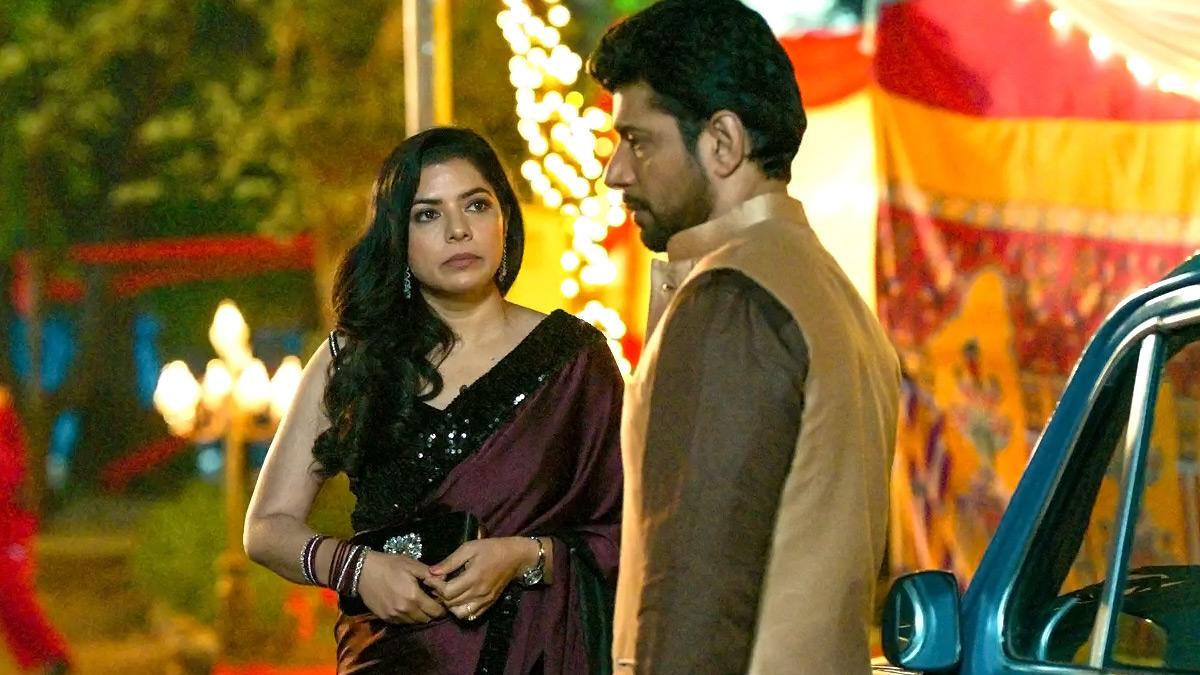
You once said that you like to observe people in order to prepare for your characters. Was there a backstory for Naina in your mind?
Rajshri: A lot, yaar! (I was inspired by) my friends.
For me, it’s very important to bring in elements from everyone’s life.
Naina is a manifestation of many, many women.
That’s why every character has to look different, behave different, wear a very different set of clothes, because the reactions of human beings are different.
VIDEO: ‘Comparisons with Tribhuvan Mishra CA Topper didn’t bother me at all.’
Are you choosy with your work or good offers are hard to come by?
Rajshri: Actually, it’s both.
I am choosy about whom I want to work with and the kind of project I want to be part of because I completely immerse myself into that.
I can’t take up five projects and put my foot into each project.
If I am doing something, I have to give my 100 per cent to it.
Also, there are very few women characters that we normally write.
If you see in the past five years, there are just a handful of projects where the women are leading or having a really meaty part.
But if you look at the male characters, there are tons of male characters.
Someone was just telling me about Rajkummar (Rao), Gulshan (Devaiah), Vijay (Varma)… we started together but look at the kind of choices my male counterparts have got!
And look at the characters we have received.
We have hardly anything to do.
I feel more women characters should be written.
It’s unfortunate that the directors and creators stereotype women actors.
I have no idea when things will change.
There are so many other factors that matter: Like how famous you are, who knows whom, what kind of followers you have, all that starism.
If someone wants craft, that’s when they come to us. They are like, ‘Okay, we want someone who can go beyond what is just written on paper.’
The choices are less and there are tons of amazing actresses out there.
Honestly, people are bored to see these stars acting a character.
They want to see a human being there.
They want to see a person they can relate to.
VIDEO: Is ‘out of sight is out of mind’ in the industry? Rajshri answers
Rangeen is backed by Kabir Khan with whom you started your creative journey back in 2006 with Kabul Express. What’s the story behind this long-standing friendship?
Amardeep: My very first job was assisting Kabir on his documentaries. At that time, he hadn’t made feature films yet. This was in 2001.
My co-creator Amir and I were assisting Kabir.
I love the documentary format. That reality is stranger than fiction and we got to know that very early on in life.
After that, Amir and I opened a production house and did a lot of unscripted content, including TV shows, docus.
But between both Amir, Kabir and I, we always knew that we will work together on some project, and Rangeen happened to be that project.
What do you think about the kind of hyper-masculine, macho men that cinema is projecting these days?
Amardeep: People make stories for various reasons, we have to respect their reasons behind it. There is space for all kinds of stories.
As a creator myself, I would like to create raw, real, and honest characters. I don’t mind exploring the vulnerability of hyper-masculinity.
I would like to still see beyond it.
Rajshri: It is important to have all kinds of vulnerability on screen but it’s unfortunate that our industry follows a trend. We have to look beyond that now.
We have forgotten about storytelling and the rawness.
We need good producers on board who can support such stories, rather than just following a formula and give wrong messages to society.
VIDEO: ‘I have 30 children now’
Photographs curated by Satish Bodas/Rediff