‘Dharmendra,
Shashi
Kapoor
and
I
were
inseparable
while
we
struggled
together.’
‘When
a
disillusioned
Dharmendra
was
packing
his
bags
to
return
home,
I
prevailed
upon
him
to
give
himself
two
months.
Five
days
later,
he
was
signed
for Shola
Aur
Shabnam and
I
signed Picnic.’
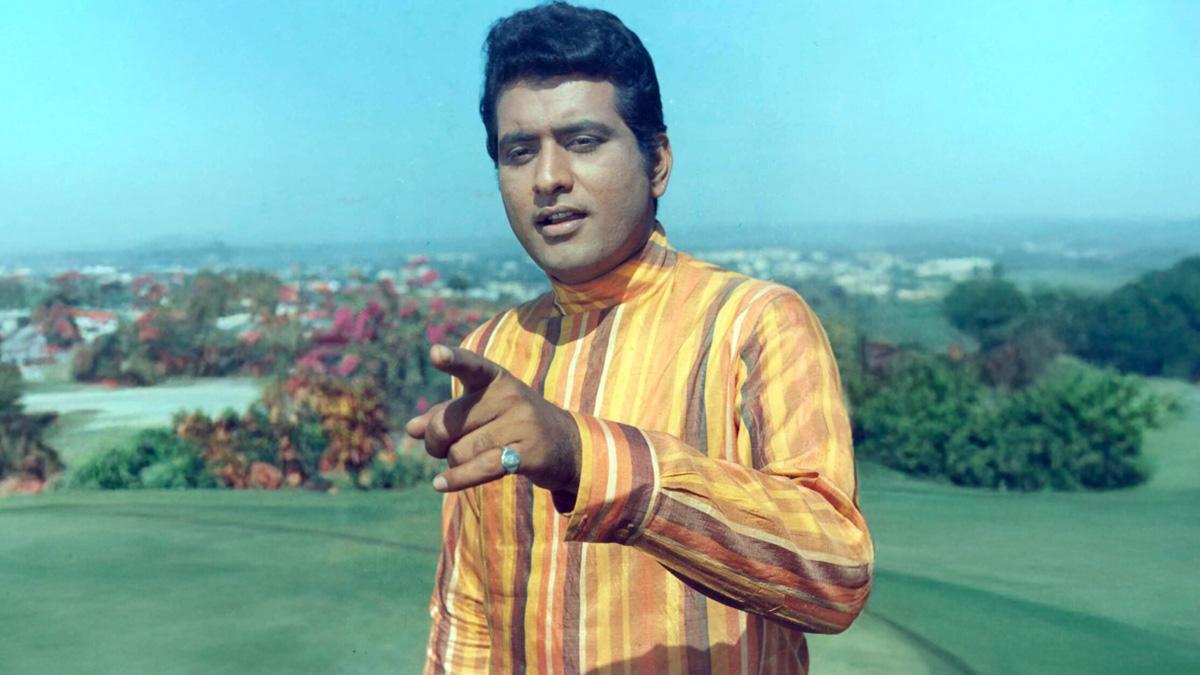
Manoj
Kumar
in
Purab
Aur
Paschim.
Manoj
Kumar’s
passion
for
films
was
evident
in
his
famous
repertoire
as
well
as
in
his
interactions.
An
intelligent,
literate
man
(he
could
cite
literary
works
like
Kamayani
in
the
midst
of
a
conversation),
Manoj
Kumar
was
also
humble
and
easy-going.
Excerpts
from
the
many
interviews
the
actor
did
with
the
then
Movie
magazine
Editor
Dinesh
Raheja
through
the
years,
where
he
says,
“My
films
dwelt
on
idealism
and
siddhants.
You
can’t
talk
about
patriotism
in
one
moment
and
jump
into
bed
with
a
woman
in
the
second.”
As
a
child
of
the
Partition
of
India,
how
did
you
develop
this
patriotic
zeal
which
informs
most
of
your
famous
films?
I
was
born
on
July
24,
1937
in
Abbotabad,
a
military
cantonment
founded
by
Sir
Abbot
in
the
North
West
Frontier
Province,
now
in
Pakistan.
We
lived
in
Lahore
but
just
before
Indian
independence
from
the
British
on
August
15,
1947,
we
come
to
Delhi
by
train.
We
stayed
in
a
refugee
camp
in
a
single-room
barrack.
My
mother
was
very
sick
and
in
hospital,
my
baby
brother
died.
On
Independence
Day,
my
father
woke
me
up
early
and
I
saw
Pandit
Nehru
hoisting
our
flag
at
the
Red
Fort.
My
father,
who
had
been
crying
in
desolation
at
his
many
personal
tragedies,
clapped
along
with
the
huge
crowd
and
shouted
‘Jai
Hind‘.
The
fact
that
my
grief-stricken
father
could
still
be
enthusiastic
about
our
country’s
freedom
made
me
realise
its
importance.
As
a
10
year
old,
the
Red
Fort
had
another
significance
for
me.
Since
Partition
had
uprooted
me
from
my
house
at
such
a
tender
age,
I
yearned
for
the
streets
of
Lahore.
The
name
evoked
memories
of
a
patriotic
song
we
children
used
to
sing
in
Lahore:
‘Lal
Qile
Se
Aayee
Awaaz,
Saigal,
Dhillon,
Shah
Nawaz‘.
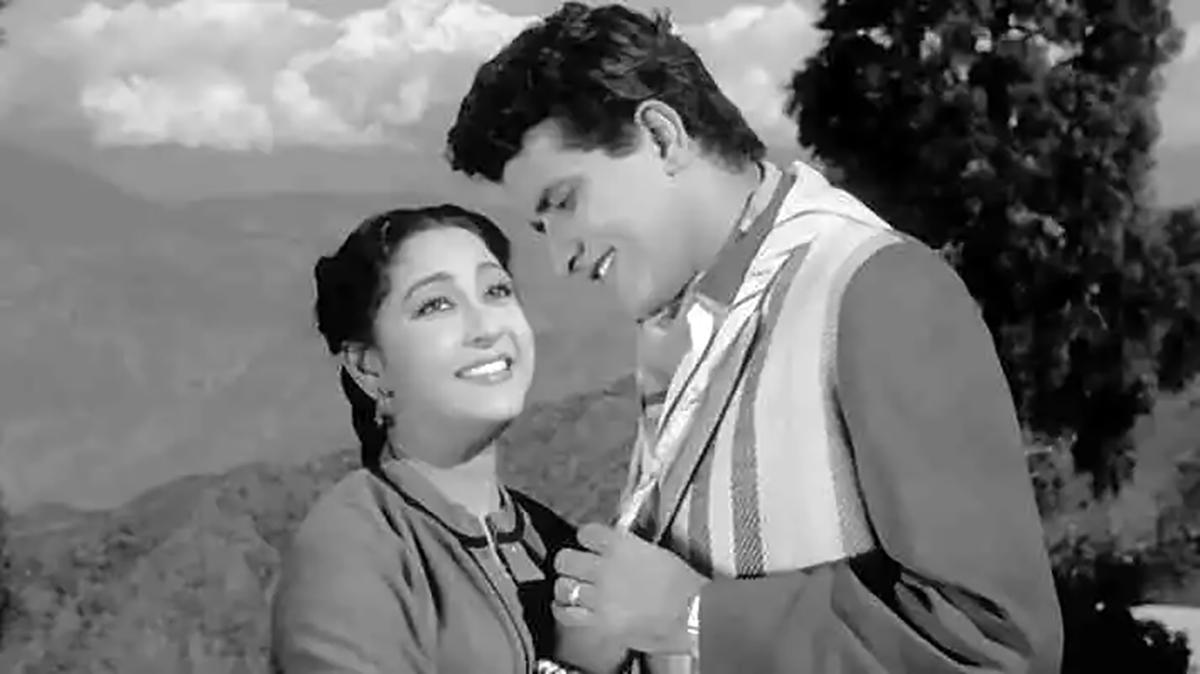
Mala
Sinha
and
Manoj
Kumar
in
Hariyali
Aur
Raasta.
How
did
you
make
a
move
from
Delhi
to
Bombay
and
the
world
of
films?
I
was
only
19
when
I
came
to
Bombay
to
become
a
hero
in
films.
It
was
on
October
11,
1956,
that
I
took
the
Dehradun
Express
which
took
two
long
days
to
reach
Bombay
but
it
was
the
train
with
the
cheapest
fare.
Within
a
month,
my
cousin
Lekhraj
Bhakri,
a
filmmaker,
conducted
my
first
screen
test,
which
was
at
Prakash
studios.
I
still
have
the
reels
of
that
screen
test.
I
began
my
career
as
a
junior
artiste.
I
played
an
old
man
in
the
Pradeep
Kumar-Mala
Sinha
film,
Fashion
(1957).
The
first
song
picturised
on
me
was
sung
and
composed
by
Hemant
Kumar.
The
words
were
Maati
Ko
Lajaana
Na
Yeh
Desh
Hai
Mahaan.
I
guess
from
the
onset,
I
was
fated
to
have
a
relationship
with
Mother
Earth.
You
had
to
struggle
hard
for
half-a-decade
to
make
a
name
for
yourself.
What
were
those
days
like?
I
stayed
with
my
chacha
in
a
poky
little
room
at
Shivaji
Park
(central
Mumbai).
One
day,
I
overcame
my
timidity
and
asked
Lekhraj
if
he
was
considering
giving
me
a
break.
He
replied,
‘Tumhare
toh
joote
ka
ek
sole
nahin
ghisa
ab
tak,
yahan
toh
logon
ke
pair
ghis
jaate
hain.’
Dharmendra,
Shashi
Kapoor
and
I
were
inseparable
while
we
struggled
together.
When
a
disillusioned
Dharmendra
was
packing
his
bags
to
return
home,
I
prevailed
upon
him
to
give
himself
two
months.
Five
days
later,
he
was
signed
for
Shola
Aur
Shabnam
and
I
signed
Picnic.
For
these
films,
we
were
promised
a
salary
of
Rs
350
per
month
and
a
first
class
train
pass.
Dharmendra
and
I
celebrated
by
taking
a
train
ride
from
Churchgate
to
Borivali
for
four
days
in
a
row!
Rajendra
Kumar
was
like
an
elder
brother.
He
would
take
me
home
for
dinner
and
even
trust
me
with
his
tijori
keys.
I
came
to
films
with
the
intention
of
earning
three
lakhs,
to
be
distributed
equally
between
my
parents,
siblings
and
myself.
I
was
focused
on
the
thought
of
making
money
and
convincing
my
parents
to
let
me
marry
a
non-Brahmin
girl,
Shashi.
Eventually,
I
married
Shashi
a
month
before
the
release
of
Hariyali
Aur
Rasta
(1962)
which
was
my
first
big
hit.
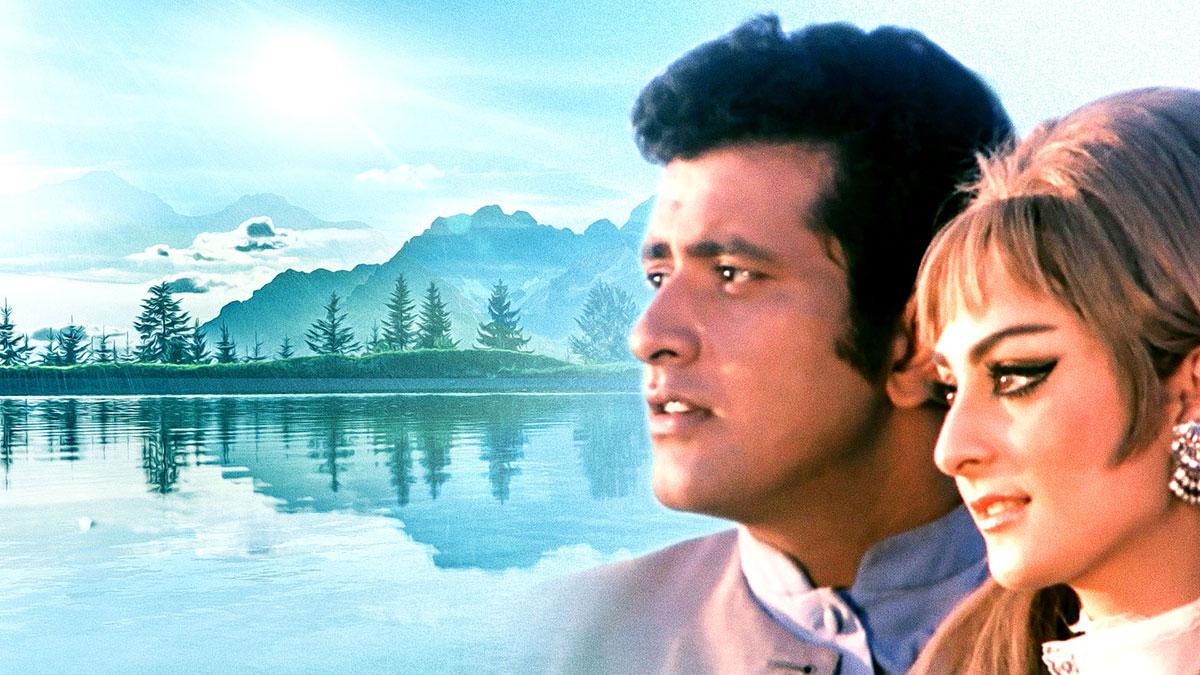
Manoj
Kumar
and
Saira
Banu
in
Purab
Aur
Paschim.
Did
your
wife
contribute
to
your
creative
pursuits,
if
at
all?
She
gave
me
the
idea
for
Purab
Aur
Paschim
(1970).
A
harsh
critic,
she
rarely
praises
my
work.
I
am
grateful
to
her
for
that.
Jin
filmmakers
ki
biwiyan
unke
kaam
ki
tareef
karti
hain,
unki
pictures
ki
taarif
log
nahin
karte
hain.
She
is
also
knowledgeable
about
films.
During
our
three-and-a-half-months-long
courtship,
my
wife
and
I
saw
109
films
together!
Despite
your
romantic
views
and
many
initial
romantic
films
like
Woh
Kaun
Thi,
your
cinema
has
rarely
depicted
any
intimacy
between
your
alter
ego,
Bharat,
and
his
women.
Even
after
a
marriage,
the
honeymoon
takes
place
in
the
privacy
of
a
suite,
doesn’t
it?
My
films
dwelt
on
idealism
and
siddhants.
You
can’t
talk
about
patriotism
in
one
moment
and
jump
into
bed
with
a
woman
in
the
second.
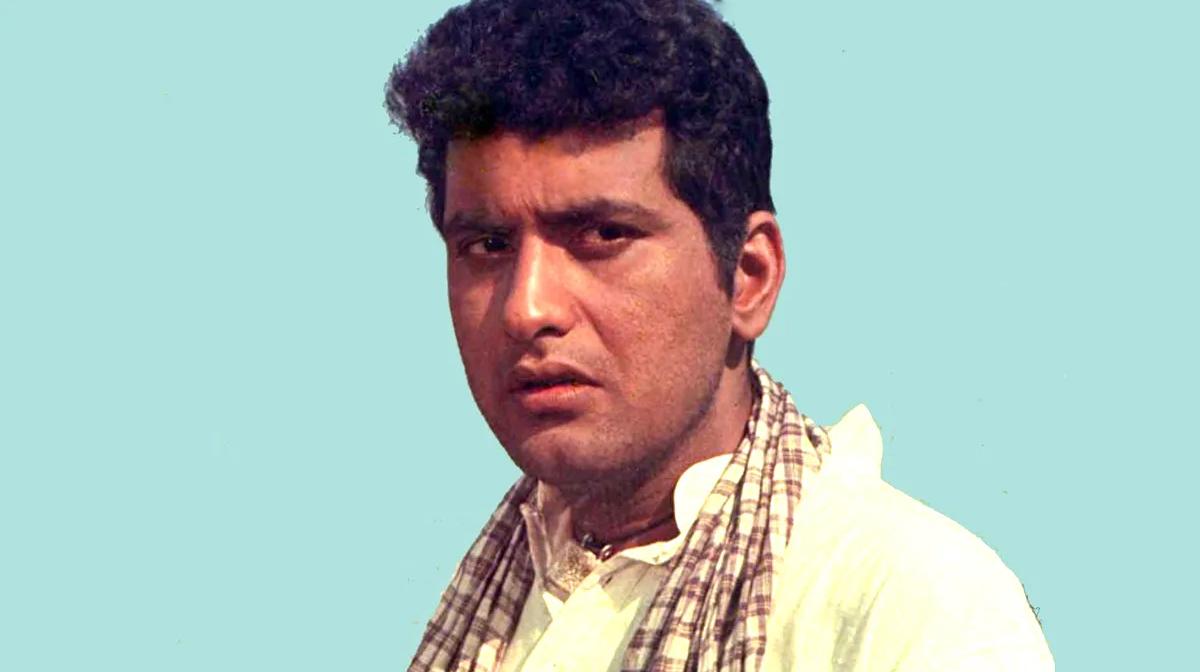
Manoj
Kumar
in
Upkar.
Which
are
the
most
beautiful
screen
images
of
women
in
your
opinion?
From
the
films
I
directed,
I
really
like
a
shot
of
a
half-lit
Asha
Parekh
in
Upkar.
Nanda
looked
ethereal
in
the
Ek
Pyar
Ka
Nagma
Hai
number
in
Shor.
Meena
Kumari’s
close-up
in
Dil
Apna
Aur
Preet
Parayi,
Bina
Rai
in
Kali
Ghata
and
Anarkali‘s
O
Aasmanwale
number
and
Vyjayanthimala
in
Nagin.
Sadhana
in
Mere
Mehboob
and
as
the
dulhan
in
Woh
Kaun
Thi.
How
do
you
look
back
on
your
rich
career?
Right
from
my
first
directorial
venture,
Upkar
(1967),
I
have
made
films
with
conviction
and
planned
them
on
a
grand
scale.
I
am
told
that
three
films
made
under
my
banner
are
perennially
popular:
Roti
Kapda
Aur
Makaan
(1974),
Purab
Aur
Paschim
(1970)
and
Kranti
(1981).
The
theme
of
these
films
is
relevant
today.
Kranti‘s
claim
to
fame
is
its
grand
scale,
music,
story
and
performances.
More
than
10,000
people
were
involved
in
making
the
film.
It
would
take
four
months
to
build
the
sets
of
the
fort.
We
shot
a
strenuous
schedule
for
the
film
aboard
a
ship
too.
Most
of
the
cast
and
technicians
became
seasick.
I
am
not
fond
of
flying
but
on
board
the
ship,
I
remained
as
fit
as
a
veteran
sailor.
When
people
asked
me
my
secret,
I
would
just
smile
and
say,
‘Homeopathy’.
I
had
to
mortgage
my
house
for
Kranti.
Fortunately,
it
ran
for
50
weeks
at
Apsara
cinema,
Mumbai.
After
seeing
the
film
Raj
(Kapoor)
saab
remarked,
‘This
is
our
answer
to
Hollywood.’
(Akira)
Kurosawa,
who
heard
about
the
film,
sent
me
a
fountain
pen
and
a
letter
of
appreciation.
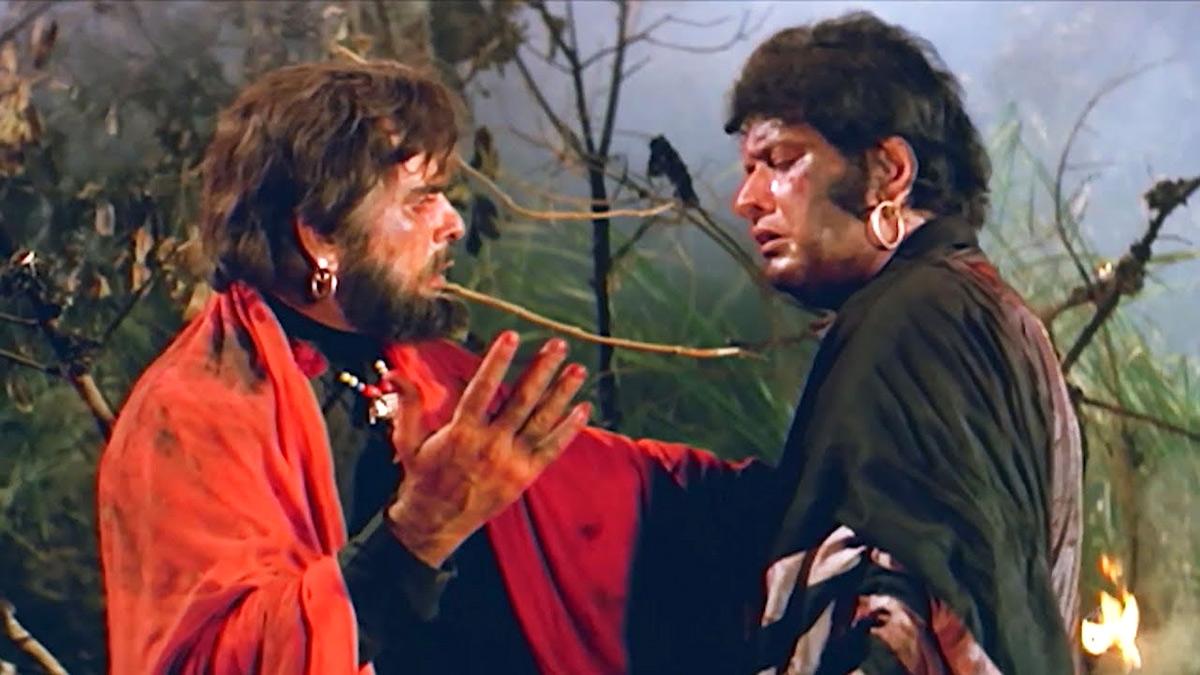
Dilip
Kumar
and
Manoj
Kumar
in
Kranti.
Do
you
sit
with
your
son
Kunal
and
watch
contemporary
films?
Yes,
why
not?
I
was
very
bashful
once.
My
father
would
take
me
every
Saturday
evening
to
a
restaurant
in
Connaught
Place,
Delhi,
that
held
cabarets.
He
realised
that
I
was
extremely
shy
because
I
would
run
away
from
home
even
if
relatives
came
over.
This
was
probably
his
chosen
way
of
helping
me
overcome
my
inhibitions.
What
is
your
life
like
after
retirement?
My
sons,
Vishal
and
Kunal,
treat
me
well.
I
am
equally
fond
of
my
grandson
Vansh
and
my
granddaughter
Muskaan
—
the
first
girl
born
in
my
house
after
42
years.